[00:00:08] Speaker A: You're listening to faith in healthcare, the cmda matters podcast. Here's your host, Dr. Mike chubb.
[00:00:19] Speaker B: Welcome, friends, to Faith in Healthcare. You know, across America, rural hospitals are disappearing at an alarming rate.
Financial pressures, physician shortages and rising demands have left many communities at risk of losing access to essential health care.
Yet for Christian healthcare professionals, this crisis also presents an opportunity to serve where the need is greatest.
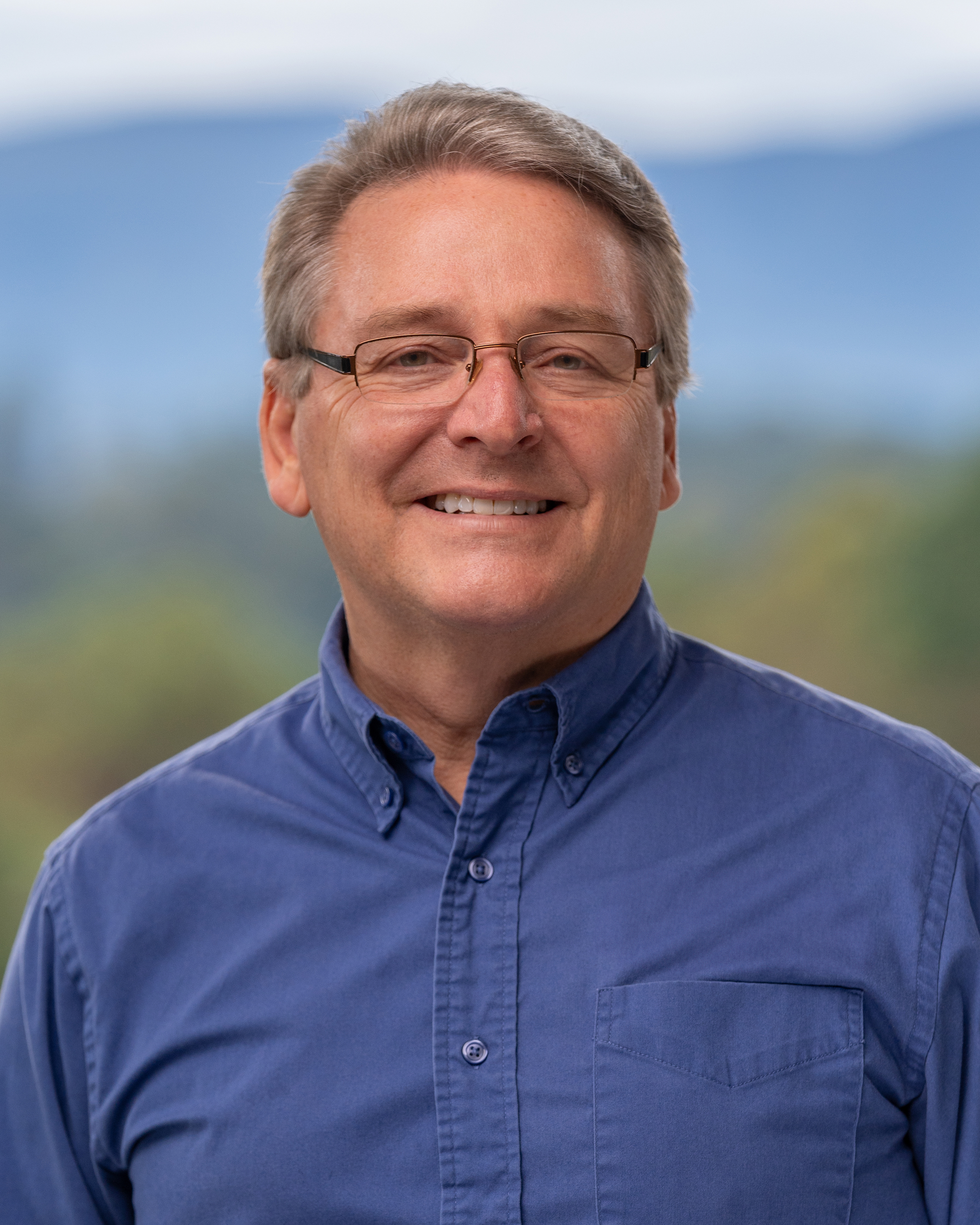
In this episode, I'm joined by Mr. Ben Anderson. He's a longtime rural healthcare leader who has spent much of his career helping struggling hospitals not just survive, but thrive through innovative leadership through mission driven physician recruitment and a deep commitment to underserved communities.
We're going to talk about what's at stake for rural health care, innovative approaches to strengthening rural hospitals, and how Christian physicians and healthcare leaders can make a lasting impact in communities that are too often over overlooked. So let's dive in.
Well, a couple of months ago, our faith and healthcare producer, Ms. Kat Denton, brought to my attention an article on Reuters News Service about the crisis for so many rural hospitals and clinics across America. And she said, mike, I think we ought to have a conversation. This seems important right now. So do you know anybody in this space that could come and talk to us with great insight? And immediately I thought of one of the founders of our specialty section, the Christian Healthcare Executive Collaborative, and that is Mr. Ben Anderson. And so today Ben is with me all the way from Hutchison Regional Healthcare System in Kansas. Welcome Ben.
[00:02:19] Speaker C: Thank you for having me. Thank you, Dr. Chapp. It's a pleasure to be here.
[00:02:22] Speaker B: A little bit about Ben before we get going.
He there at Hutchinson Regional Healthcare System is responsible for management, direction and coordination of all organizational operations.
And before moving to Hutchinson was in Colorado as part of a rural healthcare association, as a vice president there. And before that, actually when I met Ben, he was at Kearney County Hospital in Laken, Kansas as the CEO and had all sorts of news articles written about him because a very innovative, visionary approach to recruiting healthcare professionals to one of the most rural areas in America because he matched mission driven doctors who cared about missions, even overseas missions and this service to so many different nationalities. He was just talking to me about the world's largest meatpacking plant and that drew workers from all over the place, different nationalities. And so I'm talking today to a very creative visionary leader, Ben Anderson. So Ben, you're in Kansas, where you told me the other day by phone a lot of hospital systems are in trouble. Tell us a little bit about that.
[00:03:33] Speaker C: Yeah, Kansas leads the country in hospitals. In immediate risk of closure somewhere in the mid-40s. As far as the number of hospitals that are at risk of closure, somewhere in the neighborhood of 70, 80% are operating at a negative operating margin.
And most of them are subsidized in some way by local tax appropriations or property taxes, sales taxes, something like that, at the local level to offset the losses. But we are to the point in Kansas where many of those rural communities can no longer tax their local population to offset the growing cost of healthcare and the losses that we're running. And so it places Kansas in a pretty vulnerable place as a state and as a healthcare delivery system.
[00:04:19] Speaker B: It's not the only state in that situation. The article entitled Fragile Economies at the heart of rural Hospitals lists so many, many of them in what some people would call flyover states in America. Why do you think Kansas is at the top of that list that you don't want to be at the top of?
[00:04:36] Speaker C: So we have gaps in health insurance coverage. I spent the first 11 years of my life as a hospital CEO anyway in Southwest Kansas, in one of those areas was one you mentioned, which is lake in Kansas. And we were subsidized, if you will, or part of our payer mix rather was a large number of Blue Cross insured folks there. And so we were able to make ends meet, if you will, because we had an unusual situation in a large number of privately insured immigrants and refugees that were working at a Tyson Beef packing plant. But most of the hospitals around us didn't have the benefit of that. And so they had trying to maintain a hospital and a local skilled nursing home facility. And so we hadn't expanded Medicaid in this state. And so we had this 10 or 15% of our population that was uninsured. And so they were using our ER as their only access point. So I moved to Colorado in a state that had expanded Medicaid. And again, this is apolitical to me. It's not, you know, whether, whether we should or shouldn't or whatever, but I was in a state that didn't and then did. And Colorado hospitals didn't have the same rural Colorado hospitals didn't have the same financial challenges because we didn't have an uninsured population that we were subsidizing through the emergency department. And because we have not been innovative enough in our system to find ways for employed people to maintain insurance. A lot of the unemployed folks, I'm sorry, a lot of the employed folks still are uninsured and there for are using the most expensive form of healthcare that we've got.
So I saw that in Colorado. We didn't have the same financial challenges in Colorado as we do in Kansas, then came back to Kansas two and a half years ago and then abruptly walked back into place where the decline had progressed.
And we're seeing hospitals that are more and more vulnerable to closure here, but there is an insurance gap that exists, and so we're trying to subsidize that through local taxes. So we either tax ourselves at a federal level or we tax ourselves at a local level. But in some way, we have to figure out how to care for the old and the poor.
And, and as Christians, we know well, that's, that's the foundation of our belief system is care for the vulnerable. But it's difficult when you mix that with government and, you know, yeah, it's, it's, it's, it's a thorny, difficult issue. And there are different philosophies on how to get there, but we've got to figure out how to care for the old and the poor in an organized way that does not include the emergency room as the primary access point.
[00:07:06] Speaker B: I think what surprised me a great deal shouldn't have, but it did as I began to read the article that was brought to my attention and others about rural hospitals, how much they have in common with mission hospitals like the one that I worked in for so many years. And I suppose many of our listeners are not familiar with the challenges that a critical access hospital in rural America faces. Why don't you tell our listeners just a little bit, Help us understand how deeply these hospitals matter to their communities.
[00:07:34] Speaker C: They are often the largest employer. Dr. Chubb, a. Almost always the largest employer, the second largest employer being the school system. And without a hospital in a school, the town dies. And so it starts when a rural hospital cancels its women's health program, or ob, and they quit delivering babies. Well, then young families that are seeking that care go elsewhere and they stay with the person or the health system that delivered their baby. And so we start seeing the decline there when they shut down ob.
But without those systems, the community craters. And so they are largely subsidized right now, in fact, widely subsidized by Medicare money through what's called a critical access hospital program, which will reimburse rural hospitals at their cost for caring for Medicare patients. And 80, 90% of their patients will be Medicare recipients. And so that's really how they're being subsidized at this point is through this increased Medicare funding. And then Also through what's called a rural health clinic, which most critical access hospitals have attached provider based rural health clinics and where an urban clinic would get maybe 50 bucks per encounter for a Medicare patient. See a Medicare patient in the outpatient setting, a rural health Clinic may get $200 or more dollars per Medicare encounter and where they may get 39, $40 per Medicaid encounter in an urban center at a private clinic, you might see up to $400 per encounter with a patient on Medicaid in, in a rural health clinic. And so they're subsidized, subsidizing these, these clinics with increased rates and even then with the low volumes out there, it's difficult to manage.
[00:09:17] Speaker B: Give us a little background. I'm just curious. You know, you got an MBA out in the Northeast, and what drew you, what has drawn you basically throughout your career to be a leader, a faithful leader in these rural systems association or hospitals?
Tell us what motivated you to be, to be in this place you are right now?
[00:09:36] Speaker C: Well, there's two answers to that, Dr. Shepp. One is what I'm doing and two is where I'm doing it. And in the first, what I'm doing.
I grew up very poor.
And for 10 years of my life or so I was uninsured. And I really didn't even realize in those early years how vulnerable I was because had I gotten cancer, Dr. Shepp, I'd be dead. Had I gotten seriously injured, it would have destroyed our family financially because we just didn't have the resources to access care. But I didn't happen to need care, you know, in my, in my teen years and into my early 20s. And so until I graduated from, from college. And so we were pretty poor. And I'd always promised the Lord if I could ever get out of that situation, if I could ever end up with a, an education or in a position of influence, I'd spend the rest of my life sending the elevator back down. And so God's been faithful in that way. I'm now the president of a health system. I trained at Dartmouth College, got a degree in healthcare delivery science from there. And a lot of that involved breaks I didn't earn. But we're gifted.
I think there's providence involved for sure. And so with that comes a great sense of responsibility for me. So I always felt more called to helping elevate or lift up the well being or economy within a community. And if, if I have to run a hospital, then let's, let's run a really good hospital because to have any credibility to do the former work. You have to run a really good hospital to have the credibility doing that. And I found that a hospital CEO is as good a seat to do that. It could be the mayor, it could be superintendent of schools, it could be a pastor, it could be any number of roles. But just found that this one makes sense to me. And so I've always wanted to do that. And so I went through steps to get there. But the reason we live in Kansas is five foot one and she's beautiful and she is like a homing pigeon coming back to the rectangular state in the middle. And she always wanted to live here and I always wanted to live with her. And so Kansas works well because she really wants to be here. And, and I've fallen love, fallen in love with, with Kansas over the years. You know, we've been here most of our married life. And so this month is our 18th anniversary and, and 15 or 14 of those 18 years we've lived here in Kansas together. So certainly love doing the work.
[00:11:49] Speaker B: And you and Kayla have raised up four beautiful children.
So just briefly for our listeners, because I know the story, but I want them to hear about this incredible innovation in Lake in Kansas because it had really a significant impact upon international missions.
[00:12:06] Speaker C: Yeah, we got there. So it really started out in a town called Ashland, Kansas. Mike. The town had no doctor and had no CEO when I arrived there. And so the facilities were 55 years old, the finances were upside down, no doctor, no CEO, Morales, low turnovers, high rolling pennies to pay the gas bill, so to speak, holding accounts payable to make payroll, literally. And so we had to do something there. And so I went to a mission driven physician named Todd Stevens, who's a faculty member still at Via Christie's Family Medicine residency in Wichita, Kansas as part of the K School of Medicine. He was from the county where I was living and just said, hey, what do we have to do to get one of your residents to come out here and practice? And he said, well, you'll get two or you' get none, you won't get one.
Because we're training them not to go anywhere alone, but always to go in pairs. And it was an international missions model that you don't go out as a lone ranger, you go as a team. And. And he was a very mission driven, believing physician. He, he gave the Lord his 30s when he got out of medical school and residency and served in Kibagora, Rwanda, Kibagora District Hospital in Rwanda, and practiced full scope family medicine there. And he really mentored me into this work. And he just said, you know, if you really are serious, them coming, you need to recruit too. And I said, well, how do I afford that in a town of 900? And he said, figure it out because you won't get one. You're going to have to. I'm not the CEO. You're the CEO, figure it out. But then he said, if you really are serious, then you recruit two. You give them four day work weeks in the clinic. You give them no more than one night a week on call, no more than a weekend a month in a low volume setting.
He said, make sure that they have a mentor, even if that mentor is not local. Make sure they have access to a mentor that can mentor them into to practice.
And then give them 8 to 10 weeks of paid time off to do international mission work. And I thought, all right, wow.
I said, then I said, I think impulsively, I'm in. And he said, are you serious? And I said, yeah. He said, then go to Africa with them.
I'd never been overseas in my life. And I said, whoa, this just got real. I looked at my wife and she's like, what'd you just sign us up for? And ultimately, six months later, we ended up with a half a dozen shots in our arm, my wife and I, and we ended up going to Zimbabwe to build screens on the windows of missionary housing at Corona Mission Hospital in Corona, Zimbabwe, where these international fellows were training as part of a teams model or a teams mission model. There they needed something to keep the mambas and the cobra snakes and the malaria mosquitoes out of the missionary housing because it was 100 degrees at night when they were sleeping. And, and there's no electricity, so there was no fans that could run. And so it was a challenge there. And so we. And of course, every One of the 56 windows is built in a different size. Never anything efficient, right? So we had to go do that. But the two weeks we spent doing that transformed my life because I realized, as you said on this interview, that we have in rural Kansas have more in common with rural Zimbabwe than we do with Boston, Massachusetts. That, that a lot of the same challenges exist around housing and health disparities and transportation.
But we have safety nets here that they don't have.
The Medicare critical access model is a safety net model, imperfect as it may be. It's a safety net model and they don't have that. People are paying with chickens. I mean, they're paying with goats or with the sadza cornmeal that they make. I mean, they're paying with what they have, and they have to figure out how to make that work. And so far more efficient in some ways than we are. And in some ways, the American system is more efficient. And so learned a lot that we could bring back here through just some reverse engineering, and then brought that back and said, okay, well, I guess we're going to recruit doctors that way. And we just began designing a model using a proforma, using some business intelligence to say, all right, what are we paying in Locum's fees? What are we paying in salaries, and what are we paying temporary folks to come in here? And how do we design this in such a way collaboratively? So maybe one of our two doctors works in a neighborhood clinic somewhere else to be able to subsidize our. How do we set it up? And we ended up doing that and recruited five providers into that community and then moved on to Laken, where they really needed about 15 providers to serve a region of 20 or 30,000 people. And so we just recruited in that same way. But once we. Once we got momentum around it and we took a look at the motivations of physicians that work there or they're willing to work there, then the momentum built, and we actually were receiving more requests from doctors that wanted to work there than we could even hire. And so we helped folks, folks recruit, helped our neighbors recruit the same way into the region and end up with about 30 or 40 medical providers in southwest Kansas covering, you know, several, you know, 40, 50, 60,000 people.
Primary care access for them.
[00:17:00] Speaker B: Have other systems caught the vision?
Has that been reproducible?
[00:17:03] Speaker C: I think so. I can think of some across the country that are doing this, that really are willing to recruit this way. One that comes to mind is in Del Norte, Colorado.
Arlene Harms is a believer. She's really, really good CEO and led a pretty significant turnaround there. Has been there for a long time. She definitely recruits that way. Her chief medical officer, also a Dartmouth grad, is Heidi Helgeson, is a family physician and chief medical officer there.
They are willing to customize experiences that would allow for this type of work there. It's certainly accommodating the healthy integration of faith in medicine. Of course. Of course it can be done well and it can be done poorly, but integrating faith in medicine in that location. Yeah, I can think of some across the country, Midwest and on the coast that really are intentional about this.
[00:17:50] Speaker B: Yeah. You mentioned Todd Stevens. I don't know if you remember a very good friend of Mine, my neighbor, my first neighbor at Tenwick Hospital over the course of a couple, three years. And Todd is also our Wichita CMDA area director. So very grateful for the influence that he's had on your life and healthcare system as well as my own life.
[00:18:09] Speaker C: He definitely is influential to me. He taught me really early on that the, the, the job of a CEO, the role of a health system president is to help doctors help other people. That's the function. If you're not effective doing that, what good are you? Let's move out of the way.
Because medicine started with physicians and then when it became so complex administratively that, that it was tying down physicians time and we realized we needed people that could take that burden off of physicians so they could continue to practice medicine. And it's become backwards in recent years and we've, what we've gotten to is now a situation where administrators tell doctors what to do do. I have no business practicing medicine without a license. I have no business telling a doctor how to practice medicine. But what we can do is develop a trusting relationship where they know what I'm working with, I know what they're working with, the challenges they're facing. Because the system Mike, pits us against each other.
One you the doctor has to figure out how to provide care to vulnerable people and I, the president or the CEO, the administrator have to figure out how to pay for it it. And invariably because of how perverse our system is and how many takers that are part of the system, whether they be consultants or they be vendors or they be pharmaceutical companies or whatever like we, we, we have so much of this money outside of the, the general care delivery system. The money's not in the right places to get it working skills. So it comes down to physicians and administrators with shared values who choose to walk into trust with each other and say I'm going to choose to trust you even though the system tells me I shouldn't, even though my faculty tell me, even though my mentors, even though my CEO, all those may not tell me that that's wise. I'm choosing to step into a space where I'm going to trust you and you're going to trust me. And that's what Todd taught me.
[00:20:01] Speaker A: Before we continue with this week's episode, here's a special announcement for you.
Healthcare students and trainees. You're investing countless hours in developing your clinical skills. But who are you becoming along the way?
CMDA Coaching invites you to join who Are youe Becoming? A Christ centered coaching experience designed specifically for healthcare trainees this coaching series goes from July 19th through December 14th and is led by Dr. Darlin Falk, an experienced physician, coach and mentor.
This six month virtual program combines evidence based coaching tools to help you strengthen your identity in Christ, clarify your values and strengths, overcome challenges like burnout and imposter syndrome, and grow into the healthcare professional God is calling you to be.
Through monthly group and individual coaching sessions, you'll be equipped to thrive personally, professionally and spiritually.
To learn more or register, visit CMDA.org events.
Something exciting is happening at CMDA Healthcare professionals across the country are stepping up and becoming lifetime members of CMDA at record pace and we want to invite you to join them.
This is more than a membership, it is a declaration that your faith and your calling are permanently connected, that you are committed to the mission to help bring the hope and healing of Christ to the world while being a champion to the next generation of believers.
To learn more and join a community committed to transforming healthcare For Christ, visit CMDA.org Lifetime to go even deeper with CMDA.
If you've ever wanted to become a more effective mentor or help others grow with greater purpose, join us September 25th and 26th for mentoring with a coach approach.
This two day intensive course will equip you with practice, practical coaching tools, resilience building strategies and a coaching mindset to strengthen mentoring relationships plus foster both personal and professional growth.
Led by experienced coach and emergency physician Dr. Darren Falk and a physician life Development coach Ken Jones, this CE eligible course is designed for healthcare professionals who want to invest in the next generation with wisdom and lasting impact.
To learn more or register, visit CMDA.org events and if mentoring is something God has placed on your heart, be sure to also explore CMDA's mentoring and discipleship Commission.
The Commission exists to equip Christian healthcare professionals to invest in the next generation through Christ centered mentoring and discipleship.
By providing practical resources, training mentors, fostering meaningful relationships between experienced clinicians and trainees, and advocating for spiritual formation in healthcare education, the Commission is helping shape healthcare professionals who are grounded in both clinical excellence and biblical truth.
Learn
[email protected] mentoring let's jump right back into this week's episode.
[00:23:47] Speaker B: So tell us a little bit about the kinds of healthcare professionals that are willing to take those risks and assume that trust that you're talking about that thrive in these environments and the factors that determine whether someone's going to grow and thrive there long term. Whether it's the current system you're in or or laken in the past or in those rural hospital systems in Colorado.
[00:24:10] Speaker C: In 15, 20 years, almost 20 years of recruitment, I found six common profiles of doctors who willing to live and work in hard places.
One is the local kid coming home. You find that one, Happy holidays, Merry Christmas.
Local kid that's trained exactly as you need him to come home.
And they've already have a support system built in. It's great, often really good fit. But we don't have enough of those doctors being trained in the places, from the places that are needed most to be able to meet that. And there are a lot of reasons for that, but we just don't, we're not producing those, those doctors. Two is this one's the, the H1B work visa doctor that here for three to five years. Generally don't want to be the only one speaking Arabic in the rural Midwest. And so they'll come for their three to five years until they get that coveted green card at which point, you know, they're out, they want to move to where their kid can be in a really specific, you know, preschool or they can be a part of a culture, a cultural community that mirrors their own sometimes providing great care. Sometimes, you know, if you're from a, if you're from, for example, a Middle Eastern culture that treats farmers like third rate people, you're probably not going to do well in a farming community.
There's going to be an adjustment there. So that's the second kind. The third one's the troublemaker.
This one cuts up goats in the front yard or drinks a mysterious red potion, slurs his words or has an in and out service for high school kids or throws instruments at people, sleeps with the nurses, yells F bombs. I mean no one knows any of them of course, right? But if you get on the Kansas State Board of Healing Arts, there's some doozy stories on, you know, when you look at what's been reported even in the state of Kansas. And I'm, I'm very sure that Kansas is not alone in that, that there are other places. But a lot of times it's the only ologist. So to spe. Like I'll go out there and be alone. I'll be the only one because you really need me. You'll put up with my thingy, you know, my revolving door of work based relationships or whatever the challenge is. And so there's plenty of them, but they generally wreak havoc. Then there's the money. Doctor, if you pay me a million two, I'll go anywhere until somebody pays me a million two. And one dollar or just a little bit more.
And generally rural or frontier health care delivery systems can't sustain that. Right. That, that kind of, there's, there's not, not enough money in the system to be able to pay them to do that. There's the coaster. That's the fifth kind, the coaster, which is I'm done working, but I'm not done getting paid.
I, I worked, I was on call 12 straight years in the 90s, and I've done my time, and now it's these young guys that have to do the 12 straight years. I'm just coming to be, to be, do outpatient care only and, and either dump on my partners or you can get locums to cover mine on to my ER shifts, because I'm done being on call. But maybe bought too many Harleys or, or went through some, you know, didn't plan enough or whatever, but they need to still work into their 60s and 70s. And so they're, they're coasting. And then the last one is the missionary, the one that's driven by a sense of mission or purpose that's greater than themselves. The greater the need, the more they're drawn there.
They're, they're your members, Dr. Chubb. They're, they're CMDA's membership.
And they actually believe what they said in their med school interviews.
And the system hasn't beaten it out of them.
They still believe in the great commandment to love God, love our neighbor, and they still believe it can be done through medicine. And they are fighting like heck to stay in, stay in the fight, stay in the battle, and care for the least of these among us.
And that's the one we determine. We're going to set up systems whereby they can thrive.
And that's been a life mission for me professionally, is to create systems that would prevent doctors from burning out from moral injury. And because it is systems that are, that are doing to these doctors, it's not a good or bad doctor or a good doctor on a bad day, these mistakes are happening or the damage is happening because of systems that are designed to get that outcome.
And we've been focused on redesigning those systems and using improvement science to do it well.
[00:28:27] Speaker B: Just like I care about those who are considering overseas missions in Africa or Asia or wherever, wanting them to thrive.
You want Christian healthcare professionals like you've just described our members and constituents who haven't had the system beat it out of them. You want them to thrive. So what advice do you give to Christian healthcare professionals? Physicians, PAs, NPs, dentists, the whole gamut.
When they're considering moving to a rural hospital system, whether it's Kansas or another state, what should they be looking out for? And then tell us a little bit you told me before a few weeks ago about an APGAR system that you use for those listening to assess a system.
[00:29:09] Speaker C: Yeah, I would say advice first. I go back to, I was a global health missions conference in Louisville and doing a talk there and a missionary doctor approached me afterward and he said, said, you know, I, I think it makes sense that, you know, we, we got to get administrators into these places that, that know what they're doing. You know, I, I've always said we need to find the kids that, excuse me, that didn't get into medical school, teach them some business classes so they can help run our hospitals. And I, I said to him, just very frankly, is that who you want running your healthcare delivery system and preventing the burnout of the medical staff or the one that didn't get into medical school?
Or do we, do we want the best and brightest, the ones that were student body president and the ones that are just natural, gifted, God gifted leaders into these spaces and do we want them to get the best training in the world to go in and design systems so that they can work alongside, not only protect from burnout, but work alongside as administrative dyad partners to develop systems that really can transform the health of communities? Wouldn't you want people with masters of public health training, MBA training, the most elite training in the world, running these systems?
[00:30:19] Speaker B: And I hope that was a big aha moment for him at that time.
[00:30:22] Speaker C: You know, I don't know but, but it was an aha moment for me because I'd never really verbalized that because I'd never heard somebody say, well, why don't we get the kid that, that didn't get into medical school and have him run the hospital?
That I think is an old school mentality. So I think to the new medical providers that are coming out of training, you don't have to view a CEO as the enemy.
And CEOs are a rough bunch.
They get the reputation for a reason. And so I think you got to look for, just like I was a president would look for mission driven medical stuff. I mean, physicians are the moral compass of a health system.
When you introduce a crop of, of faith based, humble, well trained, mission driven physicians into a health system, the whole standard for a health system goes up. So we evaluate are they compassionate, are they hard working, are they teachable, are There people, men and women of good character, and I think physicians, PAs, nurse practitioners, need to be evaluating the administrative partners they will be working with. Are they compassionate? Are they hard working? Are they teachable? Are they humble? Are they men and women of good character? Would I want to entrust my, my livelihood and my ministry to them? And so you can evaluate that. And if they can't, state very clearly what motivates them, meaning the physi, meaning the, the CEOs or the administrators, don't work with them. Give them what's called the heebie GB test.
If they give you the heebie jeebies, don't work with them.
Because just like we would say, if a doctor gives us the heebie jeebies, I wouldn't want them doing a pap smear on our Sunday school teacher.
No.
So we just say no and we wait and find the right one. And so I think it's really important that medical providers know very clearly their mission, vision and values. And they evaluate the mission, vision and core values of the health system that will employ them and then analyze. Is there a match here?
Does that make sense?
[00:32:29] Speaker B: Yes. And then what about this apgar?
You equated a score system to the health.
What about that?
[00:32:37] Speaker C: Yeah. So there's a guy named Dr. Dave Schmitz at the University of North Dakota School of Medicine.
He, as a department of Family medicine, used the newborn Apgar framework 15 years ago to develop what was called the community APGAR score, which is 50 criteria and five categories that measure or determine a community and organization's readiness to recruit and retain medical staff. Staff went in the community. It's been expanded into nursing and administration and other areas. But it, basically, it's, it's a way you could do some qualitative interviews, but the, but the answers are, I mean, the, the questions are always the same. You interview local medical staff, say, what is it like to live and work here under these criteria? And you develop a score that determines the organization's readiness. And, and we've actually taken that further and used a biblical soil analogy, which is if a new physician is like a seedling into what are we planting him or her?
Is it rocky, sandy, yucky stuff? Is it fertile? Is it somewhere in between? But what's in the soil? Because you can often tell the condition of the soil by looking at the condition of what's growing in it.
And if it's wilted, if it's struggling, if it's failing to thrive, it may not just be the weather, it may be something deeper. Than that. And so what we did was we cross analyzed that data through the community APGAR framework into what the United States Department of Agriculture calls the four principles of soil health, which were literally developed after the Dust bowl and the Great Depression, which came about. The Dust bowl came about because urban farmers, I'm sorry, European farmers, came and were working the ground in rural America and they didn't know, know about the wind coming. And so they, they left the ground exposed in between harvest. And that led to just dirt, nutritious dirt flying everywhere and, and nearly killing people or in some way, some cases killing people. It was a horrible situation.
And so what, what the United States Department of Agriculture did was they, they said, all right, the four principles to prevent this from ever happening again are maximize living roots, right? Minimize disturbance, maximize biodiversity, and maximize soil cover. So maximize living roots translated to people is take care of your existing people, make sure they don't leave, make sure they're healthy, minimize disturbance, address the gnarly stuff that's running people off.
Okay?
It's the stuff that's bothersome and dysfunctional. Third is maximize biodiversity. Simple remove bio.
What's the organization's holistic view on diversity? Not only race or gender, but look at the whole picture.
And is this an organization that invites differing opinions or perspectives or healthy conflict? Or does the leadership represent the front line? Does the front line represent the community?
And do we invite that diversity within the organization? And lastly, it's soil cover. Maximize soil cover, which is keeping something on the ground in between harvests, the innovation in between the high times. Because we go through highs and lows, we go through six seasons and healthy seasons, and there's going to be fluctuations in volume within a health system. And we got to make sure that we're prepared for the long haul with innovation between ours. So we looked at that data and we said, okay, we have what we need now to address. And so in our case in Hutchinson, Kansas, we did this two and a half years ago.
Bad news is most of the issues had to do with hospital administration.
The good news was most of the issues have to do with hospital administration. We could do something about that. We could fix the nursing workforce stuff. We can fix the call schedules and the quality problems that are leading to moral injury. We can fix those things easier than we can fix schools or housing access in the community, or that we don't have entertainment in town or those types of things. We can fix those things. And as we address them, even before they were all fixed, just proof that we were addressing them Them, the floodgates opened and we started getting more applicants than we could hire here in the community.
Does that make sense?
[00:36:44] Speaker B: Yes. But I'm just wondering, how does a budding surgical resident getting ready to finish and start practice, or primary care ob. Name the specialty nurses.
How do they get that data? How do they find out the facts about a particular community that's vigorously recruiting them to come?
[00:37:01] Speaker C: It starts well, first of all, a surgery resident or any residential incident that's coming out, they are in the driver's seat.
So the first thing I would do is say, would you mind coming to see me?
You want to interview me? You want to recruit me? Instead of simply summoning me to your community, would you mind coming to see where I practice? I can't get away very easily while I'm in training, but I'll invite you to Oklahoma City or to Detroit or wherever I'm training, come see me. Yeah, that's not really what we do. Okay. That tells me something about you. You.
Rarely in my career have we ever recruited a doctor without first going to them. Wow. We go to them because it sets the tone for a relationship that we're equal here. We're partners. You're worth traveling to.
You're worth coming to. And often, to her credit, my wife comes along, Kayla comes along, and. And we sit down with them. And 80% of our conversation doesn't have anything to do with medicine. It's, why did you get into medicine? To be. Begin with, who are you?
Where are you from? What motivates you? And in. In the Christian context, tell me about your faith story.
Brought you to the Lord. I mean, and. And we don't. We don't ask those questions in an interview context in any way. That's. That's outside the boundaries of hr. We generally just start with, here's our story, here's what motivates us. And then we don't have to ask.
They just share. Oh, you're willing to be vulnerable. You're willing to share your story.
Here's ours.
And almost always, or always, I would even say using a superlative on purpose, they'll share if they know there's genuine interest and there's no intention to discriminate or anything like that. So we're really careful about adhering to HR standards and things like that. But when we go to them, we. And we just ask questions about what. What does thriving outside of work look for you, look like for you? What are your dreams for your kids?
Or if you're not. If you're not wanting to have kids. If you're single, what are your dreams as a single person? What do you feel called to do? And as we do that, it solidifies a relationship. And then when they're coming, it's like a homecoming. It's not a traditional interview. It's like, I can't wait to get there and see what you hear about. Yeah, we start there. So I would say to a surgery resident, start with the invitation to come and see you and then ask. You can ask, what's your mission? What's your vision? What's your core values? And if it's some paragraph from a lawyer in the 1980s, they haven't looked at it in a while.
Red flag. And I would also say beware of the wells.
What I mean by wells is to say, how often will I be on call?
[00:39:31] Speaker B: Well,
[00:39:34] Speaker C: or what's the compensation structure? Is it equitable across all the physicians? Well, there's this guy who's been here a while and, you know, no, beware of the wells. And if there's not clarity, clear. Clear is kind. If there's not clarity around that, beware of what happens there.
Well, so I think you can ask those questions.
[00:39:53] Speaker B: Some really good advice. And I just wonder, because I've never heard of a CEO traveling to meet a prospective young new staff.
Does your board or do those on your team, VPs and chief officers, do they ever give you grief that that's not the best way to invest your time as CEO?
[00:40:10] Speaker C: I don't think the board does. I think the outcomes speak for themselves. I think they do, you know, acknowledge that my time is limited. And I think there's. There's an appreciation for that. And I can't go every time. You know, sometimes it's others that go.
But the other thing that we do is we summon folks here in large groups where the local chamber of commerce will sponsor a weekend where we fly in two dozen residents in for a week. And just to imagine what it would be like to practice with their friends and near their friends. And so I don't always have to go there, but we can bring them here in large group groups, too, and just host things for them in the community that are very family focused and personal. And so that's a way of getting folks engaged, too. But when you have more candidates wanting to come to a rural area in an area that's traditionally very difficult to recruit, we don't generally criticize the method, just grateful for the outcome.
[00:41:01] Speaker B: You called me the other day with another CEO you were looking for an obgyn and wanting to know what connection we might have from our placement services. And it caused me to remember that in this article from March about these fragile economies in rural hospitals, that the first specialty to go often is ob gyn, followed by the surgeons. Why is that, Ben? Why is it OBGYN so tough to maintain and then it's the first to go and then the dominoes start falling?
[00:41:29] Speaker C: I think it's the call burden is where it starts. OB in a rural community, even in a city of 40,000, is hard to maintain because if you're on call, one is and three, that's 10 days a month that you're shackled to the health system. And any more than a week, a month, it's very difficult. And so we are redesigning our system here where we'll end up with four OBGYNs and six or seven full scope family doctors and some midwives. So that OB may be on call one week a month, but their backup call for fellowship, trained, surgically trained fpob and midwives. And so the bulk of the deliveries are covered by trained full scope family physicians in collaboration with OBGYNs. And then there's a maternal fetal medicine specialist that's from an hour away that has really solidified that collaborative where they're all rowing in the same direction. So we're actually looking for two OBGYNs to join two others that would eliminate our need for any locums coverage. It's sort of the last of the locums coverage in our health system system, but two more mission driven OB GYNs that would want to work in collaboration with surgically trained family physicians that came out of unopposed programs and fellowships and would really solidify a team that will deliver about ultimately seven or 800 babies a year here and serve as a regional hub for women's health. But women's health, because of the call burden, OBGYNs are the first to go because it's hard to maintain it in an obgyn only model, which is why we're focusing on family medicine. Others, same with surgery. One in three call is really hard. This fall we'll have four general surgeons here, but ultimately when we'll retire, we go back to three. And that's 10 days a call a month. That's a lot to ask of a doctor. And so we really want to go four deep in as many specialties as we can.
[00:43:19] Speaker B: I remember when we first met, Ben, you told me about your first experience with cmda. I think it was at Ridgecrest, North Carolina, at a National convention. And you got there and just said, wow, I can't believe this environment. This group exists.
And then fast forward a few years and you together with Greg Neal, Warren White and Scott Dooley and others were saying, we've got to have a group of Christian healthcare executives working together and thinking missionally and having discussions.
So talk to us a little bit about this effort to bring together, collaborate, communicate between Christian healthcare execs.
[00:43:59] Speaker C: Yeah, I noticed. I vividly remember who was speaking. There was a guy named Os Guinness that was there. Another guy named Dr. Thompson was there. He was part of the Pan American Surgeon group in Africa.
I vividly remember the talks there. I could still recite their key points. So impactful for me. And I also remember being the only CEO though in that whole audience thinking, where's the miss here? Like, all I knew was Todd Stevens and we can work together. And Todd encouraged me to go to that conference and I got so much out of it. And I thought, where are my people? Like, like where, where, where's the tribe here?
And that led, you know, visionaries like Greg Neal and others to, to kick off this Christian healthcare executive collaborative. And I think the most effective recruitment tool to grow that small but mighty group right now are physicians.
Your membership, CMDA membership going to administrators they know and trust who likely feel isolated as believers in this industry saying, hey, I got a group you could be part of. You want to come?
And even easier so than administrators recruiting each other because physicians are so powerful. When a physician asks an administrator to do something and they have that rapport relationship, administrator is likely to do it. Yeah, they'll say, hey man, you invite me into something, I'll go. That's a connection point for you. And I, I know if a physician asked me to do something, I'm listening. And so I think there's an opportunity to really grow that and the medical staff can drive it as they drive so many other good things in healthcare.
[00:45:34] Speaker B: And right now I'm aware that the initiative that Greg and Warren and Scott and others are focused on is so many mission sending agencies, short and long term, understand how desperate the need is for effective administration in these mission hospitals around the world and somehow coming along with support. And so everybody agrees it's just getting a consortium, a group of organizations to work together to figure out how are we going to pull this off, how are we going to have experienced teachers. The international CMDA body realizes how important this is and has started a diploma course. So I'm very excited for any many of those listening as Ben has just said have colleagues who are strong Christians, faithful believers in their churches and communities that would be interested in such an effort. Just reach out to Chuck. You can get our website and find the check section as well as the email to get ahold of Greg or Warren or others.
And as Ben, you've just shared the impact view in that first visit to Karanda Hospital and how that changed your life. I just want to encourage others listening, whether or not they're healthcare executives, to consider such an experience.
[00:46:42] Speaker C: Absolutely. I endorse what you're saying. I think it's so important that we develop that skill set. And I'm encouraged to see more and more of that at global emissions conferences as well. And just a recognition that I have a good friend of mine who was a general surgeon in Somaliland. It was part of a residency there and I knew him since residency here in the United States. The United States before he went to teach there. And he was there until and through Covid. And he said practicing in the United States as a surgeon is like being handed the keys to a vehicle and every once in a while you got to stop for gas.
Practicing medicine in Somaliland is being handed a junkyard and being told, build the vehicle. Oh, but by the way, we already need to go, so we better be moving forward while you're building the vehicle and you're running around and you're looking for this piece and that part and trying to put things together and everyone. The gas station is where, where's the gas station? Right? And trying to figure out how to design all this. He said, when I was in the US I put out my right hand and someone put a scalpel in it. And here I'm digging through boxes in the bottom of a supply closet looking for one more clean scalpel because I've got a patient dying in trauma.
And we need administrators that can run supply chains and we need administrators that can, can manage the finances, and we need administrators that can manage the team and ensure that nurses and CRNAs and others are scheduled on time. And he said, I took that for granted until I got here. And I just believe so much that we need these systems in place and these leaders to do these things. And so CHEC is really about strengthening that capacity. And I just believe so much that there's opportunity there.
[00:48:21] Speaker B: Well, Ben, I want to thank you for joining me today on Faith and Healthcare. Hey, if someone has found heard something, something that you shared just really resonates with them or they maybe have felt a little bit of a call to do rural healthcare. How could they reach out to you and get in touch with you to ask some questions and to introduce themselves to you?
[00:48:39] Speaker C: Yeah, so the easiest way is through LinkedIn.
That's the only social media I'm connected to, but LinkedIn has profiles and we can message each other. That's the easiest way. Or my email also is
[email protected] which is H U T C hregional.com and I check those emails. I can't get to every single one every day, but I do check every one of them. And so LinkedIn being first and then email CEoutregional.com, i'd be happy to connect with folks and it's important that we stay in this mission together and also
[00:49:11] Speaker B: receive greetings as we close from a good friend who directs our medical education international efforts, who's also herself and her husband. Rural docs who had that great win that you were talking about early on. Their daughter is coming to join them as a family physician in Hiawatha, Kansas.
Dr. Julie Rosays Yes, I saw her
[00:49:33] Speaker C: daughter yesterday at an international potluck here in Hutchinson. She came and spent time with us. So yeah, roses are wonderful people.
[00:49:42] Speaker B: God bless you Ben Anderson, together with your wife Kayla, your four kids and your work for the kingdom there in your hospital system.
[00:49:49] Speaker C: Thank you for your leadership, Dr. Chubb.
[00:50:00] Speaker B: As Ben reminded us today, rural healthcare isn't simply about hospitals or healthcare systems. It's about people.
It's about faithfully serving communities that are often over overlooked and ensuring that those who are most vulnerable have access to compassionate, Christ centered care.
When healthcare professionals lead with a heart to serve, they reflect the love of Christ to their patients, to their colleagues and the communities that they're in. And whether God is calling you to rural medicine, to healthcare leadership, or simply to be right where he's placed you, remember that God often does his greatest work in the places that the world overlooks.
If you're a Christian healthcare executive, consider Learning more about CMDA's Christian Healthcare executive Collaborative, or CHEC for short. And you can find all about that specialty section by going to CMDA.org this incredible community seeks to connect and engage Christian healthcare leaders with one another as a source of encouragement and counsel.
And if you found our conversation encouraging, please share it with a fellow healthcare professional who needs to hear it today and subscribe so that you don't miss future episodes of Faith in Healthcare.
Next week, I'm excited to be joined by two guests that I've known perhaps better than almost any others any other colleagues in my career. Longtime medical missionaries Dr. Russ White and Dr. Carol Spears from Tenwuk Hospital in Kenya where my wife and I had the privilege of serving for close to 20 years.
Together, we're going to discuss how God is using a world class cardiothat thoracic surgery center to bring both physical healing and the hope of the Gospel to patients from all across East Africa. You don't want to miss it.
I want to thank you for listening to Faith and Healthcare where our promise to you as a listener or better yet, a subscriber to this podcast is this.
We will do everything that we can to help keep your Faith and Health healthcare connected. We'll see you next time, Lord willing.
[00:52:30] Speaker A: Thanks for listening to Faith in Healthcare, the CMDA Matters Podcast if you would like to suggest a future guest or share a comment with us, please email cmdamatterscmda.org and if you like the podcast, be sure to give give us a five star rating and share it on your favorite social media platform.
This podcast has been a production of Christian Medical and Dental Associations.
The opinions expressed by guests on this podcast are not necessarily endorsed by Christian Medical and Dental Associations.
CMDA is a nonpartisan organization that does not endorse political parties or candidates for public office.
The views expressed on this podcast reflect judgments regarding principles and values held by CMDA and its members and are not intended to imply endorsement of any political party or candidate.