[00:00:08] Speaker A: You're listening to faith in healthcare, the cmda matters podcast. Here's your host, Dr. Mike chubb.
[00:00:20] Speaker B: Welcome, friends, to Faith in Healthcare.
What does faithfulness to Jesus mean when it comes to where we live and whom we serve as Christ followers in healthcare?
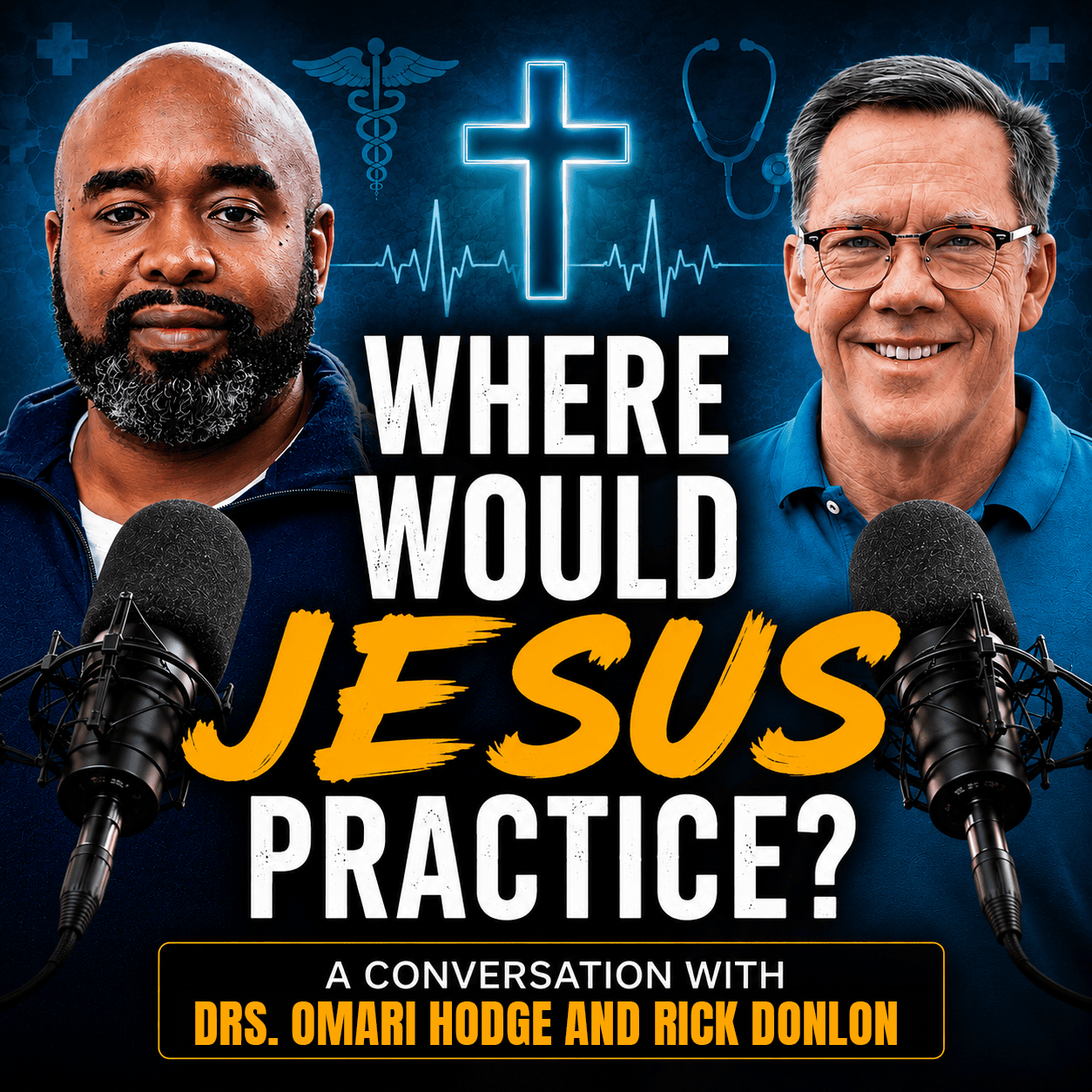
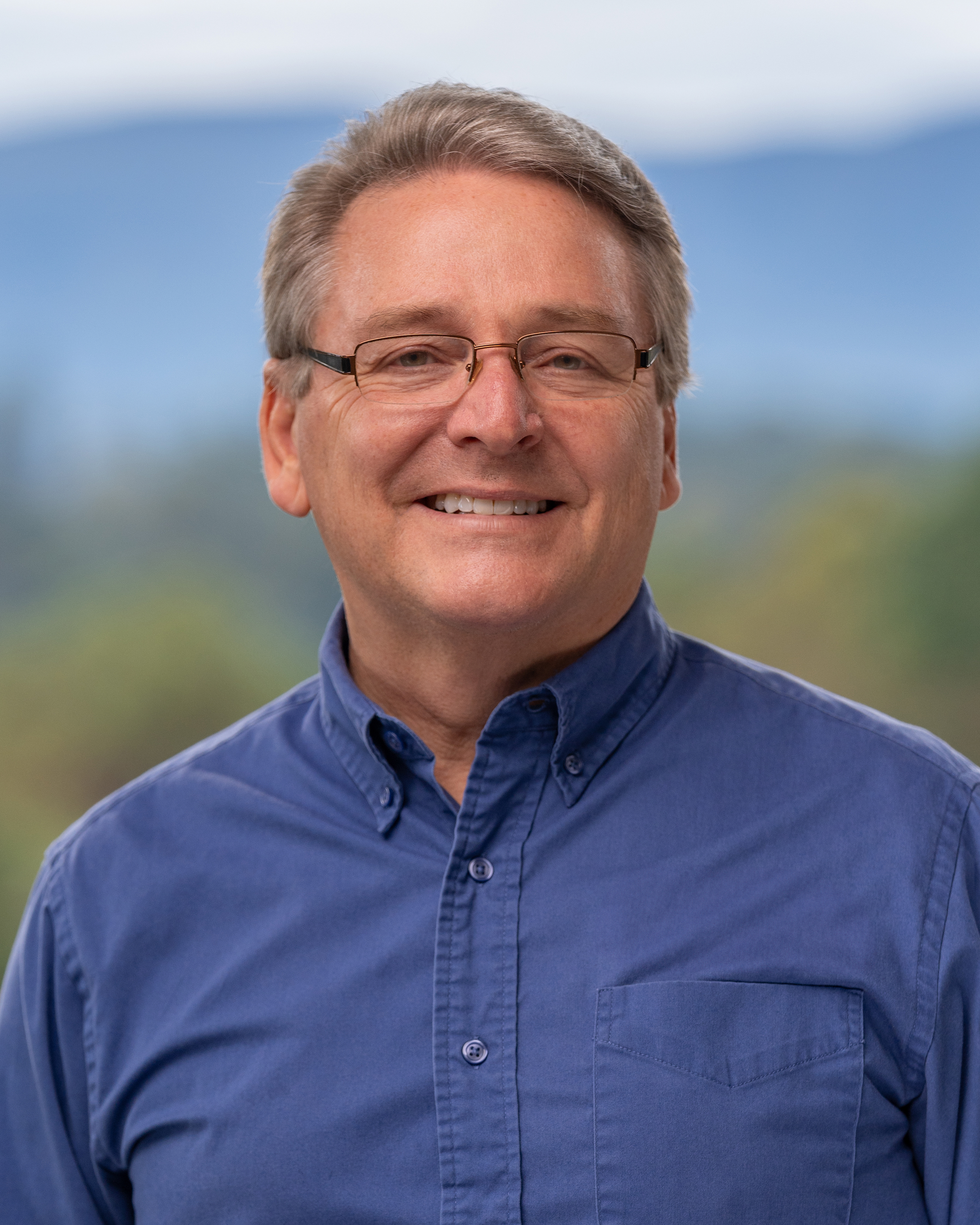
Well, in our episode today, we're sharing an interview from another CMDA podcast, which is called the Read out loud podcast. Our CMDA president, Dr. Omari Hodge, sits down with Dr. Rick Donlon, who's the CEO of the Christian Community Health Fellowship, as well as the co founder of Christ Community Health services in Memphis, Tennessee.
Thirty years ago, Dr. Donlin and three colleagues that he first met through a CMDA student chapter opened a health center in one of the most underserved neighborhoods in all of Memphis.
A few years later, he did something even rarer. He moved his family into one of the communities that their health center served. And what he learned there, I think it's going to challenge you. It certainly challenged me.
Whether you're a student choosing a specialty or decades into your practice, Dr. Donlin is going to bring up the real tension that is faced by more and more Christ followers in healthcare as employees of large healthcare systems.
What are we going to do with those who don't have resources and who need our services in those employment settings?
I'm guessing that you face that critical question regularly.
An ardent Christ follower who desires to imitate Christ and please him in the way that you practice your profession. So buckle up and let's listen in.
[00:02:11] Speaker C: Well guys, today I'm here with Rick Donlin and I'm so fortunate to be able to steal a few minutes of yours today. My good sir, we sincerely thank you for being on our podcast. I know a lot of our members are looking forward to hearing what God has been doing in your life. But before I let you speak, let me just jump in here with a little bio because there may be some young padans who don't know the wise sage of Dr. Rick Donlin. Dr. Donald is a physician, community builder and prophetic leader in Christian healthcare. He co founded Christ Community Health Services in Memphis, one of the largest FAI health centers in the US Rooted in a call to serve the poor and embody the Gospel through neighborhood based care. Now serving as CEO of Christian Community Health Fellowship, Rick leads a national movement of healthcare professionals committed to justice, equity and incarnational ministry. His work challenges Christians in medicine to reimagine faithfulness not through power or prestige, but through proximity to the vulnerable and radical commitment to the way of Jesus.
A husband, father and former Jesuit turned Evangelical Rick speaks with conviction about the lived experience and a deep love for the church.
Rick, thank you for coming. My good sir. How are you?
[00:03:29] Speaker D: Thank you for inviting me. Did you write that introduction?
[00:03:32] Speaker C: Hey, man, you know, in my spare time, I.
I like to put some amazing pen to paper, even if AI assists me a little, you know?
[00:03:41] Speaker D: Yeah, the only correction I would make, I went to a Jesuit school for one year, so I. I wouldn't want to imply that I was.
[00:03:51] Speaker C: Oh, see, this is why you must always double check AI. Okay.
Yeah, Skynet is real.
Let me stop before we get in
[00:04:04] Speaker D: trouble, before we even get started.
[00:04:07] Speaker C: So, hey, you know, from the first time I met you some years ago until now, I've always found you to be inspirational. And when we were deciding upon this podcast, you were one of the first names that came to my mind, so. And we recently had you at our board training seminar at cmda. So thank you again for that. And I just think a lot of our listeners will really be challenged and encouraged at the same time as I prod you with some questions. So in the interest of time and allowing you to give thoughtful consideration on these questions, we'll just jump right in, if that's okay.
[00:04:42] Speaker D: Yeah, that's great.
[00:04:43] Speaker C: So you've been practicing medicine now for decades, and what first drew you to integrate your faith and medicine, particularly where it intersects underserved communities?
[00:04:56] Speaker D: I think it was sort of amalgamation of my upbringing. My parents were both faithful Roman Catholics. I was just culturally Catholic myself before I had a really dramatic conversion to Christianity late in high school. But I always knew about the Catholic commitment to people who commit their whole lives to educating children or caring for the poor. And so that was sort of part of my upbringing. When I converted, I learned a lot through campus ministries. I read some important books. I wrote a book called Rich Christians in an Age of Hunger by Professor Ron Feider, really helped me.
I grew up in New Orleans, and then I spent a lot of time in Memphis, so I had a reasonably good exposure to some civil rights leaders who are 20, 30 years older than me. But, you know, the wound of, for instance, Dr. King's assassination in the city I've lived in for 35 years is still here. So that influenced me a great deal, I think. Just some other random things.
No small part was the Christian Medical and Dental Society, or sorry Association. It was a Christian medical society when I joined it in 1987, but I've been involved with CMDA for a long time also. So I think we're all kind of formed by you know, our, we read and who we hang out with and our churches and so all of that kind of came together, I think.
[00:06:24] Speaker C: Yeah, I'm glad you brought that up because I was going to talk about the fact that you kind of before me in CMDA and now as I sit here as the President, I'm amazed. Well, I shouldn't even say amazed. I'm, I'm pleased to see my brother as the CEO of one of our biggest sister organizations. Before you joined CMDA and now as you sit as the CEO at CCHF and, and you were already kind of alluding to how certain associations kind of play a role in how we develop. What kind of role did CMDA play? Because I think some of our listeners would be intrigued to hear that, especially with you being the CEO of cchf.
[00:07:02] Speaker D: Yeah, well, I think CMD has been really important to me. It was church honestly for me during medical school when I was back in my hometown of New Orleans, it was through this CMD chapter that I met three other medical students who helped co found Christ Community in Memphis with me. And I had connection through CMDA to MAP International. I spent a couple of months as a 4th year medical student in West Africa through that connection was really helpful and important.
You know, I've been influenced by relationships with David Stevens, with John Patrick, influential people in the CMDA world.
I worked for CMDA for a time. I was, for a short time I was the Memphis area director, did that kind of halftime.
So gmhc, I think the big global missions conference in Louisville every year, big. Got CMDA fingerprints all over that too. That's been big influence on me. So I think, you know, the things that we love about cmda, the way it connects Christian doctors, I think its commitment to biblical values has always been helpful to me.
You? Yeah, I would say honestly the interest I've had in working in low income settings, it's not inconsistent with CMD at all. In fact for a time I was part of the Domestic Missions Commission which we had at cmda. But the decision was made organizationally and I agreed with it was to see cchf, the Christian Community Health Fellowship as a partner that really sort of first, second and third looks to healthcare among low income people and the marginalized. It's kind of a, you know, the association and the arm of CMDA that's involved in sort of those issues.
[00:08:49] Speaker C: That's great. And I'm gonna, I'm gonna push you a little bit further because I think you're reading my mind because I really wanted you to from your vantage point having been a part of both wonderful and really God breathed organizations but are very different. But as somebody who has been a member of CMDA and is now a member of CCHF and has done so much work in areas where our paths intersect, I heard you speak about some of the good things that and the wonderful ways that CMDA was impactful. But I've always been curious from somebody who sits at a strategic vantage point like yourself, what did you feel like we here at CMDA maybe should focus on more or maybe we didn't focus on enough or we didn't do as well as you thought we ought to while you were a member of us. What's that scripture? Judgment starts at home, you know, so let's hear what one of our own things.
[00:09:48] Speaker D: And you know, it hasn't been a secret over the years. I think of myself as just, you know, a voice within CMDA who is promoting those ideas again.
And I came from the same background. I'm, you know, I'm from a wealthy ish, white, middle upper class family, people involved in health care. And so I think the fights for CMDA have been important fights about the dignity of human life.
A real interest I think in making sure the gospel is proclaimed around the world that we can all completely embrace. But yeah, I have been trying to be a voice within CMDA for a number of years about the poor among us and about the tradition in the Christian church that goes back to the first century of having those concerns and moving deliberately toward the marginalized and demonstrating the kingdom of Jesus and the justice and righteousness of Jesus's kingdom by looking after the people who are kind of left behind in our health care system, which I think everybody can honestly say is largely driven by profit, that finances are the biggest force as we look at a world now where giant health systems and universities and even private equity are using influence to direct the course of health care. And so in everything since Adam and Eve fell, you know, the ground is cursed and humans are given sometimes to selfishness. And we can forget that even in our own country there are millions of people who have difficulty getting the most basic in care. And so I've always argued, I think it's true that one of our marks from the very beginning of the Christian church all the way through history, including the, you know, the founding of hospitals in the middle centuries, like all of what we really understand is Christian of healthcare now has roots in Christianity. And so that's who we are. That's a ton of the things that Jesus talked about. You mentioned me speaking with the leaders of CMDA at the conference recently. We looked, if you remember, at the Gospel of Luke and how important those themes were in the Gospel of Luke, about concern for the poor, even the dangers of wealth, which Western healthcare workers, especially physicians and dentists, I think are in the top 0.0001% of wealth accumulation in the history of our world. And yeah, I've been sort of the guy trying to just remind us about those roots and trying to put those agenda items forward in the same way that we've done such a great job in issues about public policy, for instance, and thinking about ethics and those kinds of things where we've excelled.
[00:12:39] Speaker C: I think the way that you answer that question, really, it resonates with me because I can hear how you have lived in close proximity with people who are affected by issues that I really think Jesus would have a minister to.
And I think that many of us here at this organization do align ourselves, at least from a hard stance with what you're saying. So I appreciate that, brother.
Now, okay, now this is the fun part, because this is where you and I just talk and maybe we get ourselves in trouble a little bit. I don't know.
You know, we live.
I. Every time I turn on the television, I can't. There's so many reasons why I can't recognize where we live. Or maybe it's more about revealing who we really are, unfortunately, and I'm speaking about America as a country right now. Not necessarily. Not our organizations. There are many of the people who are listening to the podcast right now who are extremely right leaning. There are probably some who are extremely left leaning. It seems like common ground is constantly eroding and disappearing right in front of our face. And the simple ability to communicate is lost as well.
So how do we navigate this terrain? How do I, as a believer, figure out which way is true north without getting caught up in these political storms that try to tell me I either love Israel or I hate Palestinians, or I, you name it, that's just the hot one right now.
How do you keep your people navigated towards true north?
[00:14:14] Speaker D: Yeah, I think just an incredibly difficult question to answer.
You know, a few years ago, I think a lot of us thought, well, Christian people are reasonable and we could find common space. And unfortunately, we've seen churches ripped apart and ministries ripped apart. And I've had exactly the same experience that people just go to the extremes and then almost demonize anyone who has an opinion that is different than their own. And so my only hope for Christian people, and I think it's a legitimate hope, is that the power of the truth of the Scriptures especially, and the principles that we're supposed to be operating on, which, if I understand them correctly, are like forbearance and love and like some pretty direct instructions in the New Testament against arguing about foolish things and quarreling and that sort of stuff.
[00:15:10] Speaker C: So just.
[00:15:12] Speaker D: I think the key is love and truth. And of course, problem is people have different definitions of what's true and that sort of thing. But I just believe that time, you know, we live in these different times. I. I think there are a lot of similarities with our time now than there was compared probably with the late 1960s, when there's all kinds of upheaval, war and the civil rights movement going on, and people were polarized and really exercised. And I think we just, as Christian people, we understand, like times come and times go and like our message, the things that we're rooted in are true.
And as much as we can, we love and forbear and stick with the truth and try to have dialogue. I think the most remarkable part of our faith and the mark of Christianity is that we're supposed to love everybody, including people that we might even view as our enemies.
[00:16:10] Speaker C: Amen, brother.
[00:16:11] Speaker D: That's easier said than done. Yeah, but I mean, we both.
You're leading in the elected position that you're in. You're leading an organization that's got a, as you said, kind of a broad constituency. And I'm the same way. We've got a lot of things going on in the public space, government policy regarding the poor and Medicaid and things like that. And I've got a pretty broad tent also, I'm certain.
I wrote an email a couple weeks ago just sort of trying to encourage our people about the changes that the Trump administration has put in place. And I got 17 people who unsubscribed that.
[00:16:52] Speaker C: Oh, man.
[00:16:55] Speaker D: Almost 3,000 people who opened the email, as far as we know. But still.
And I was as deliberate as I think I could be about not being political in the content, but people are almost just ready to go if something comes up. This to be, you know, they're in opposition to you.
[00:17:14] Speaker C: So opposition with. I totally agree, man. We're like ticking time Bobs. You know, when you say the right word and. And we're going. Which is totally not.
I just don't see. I just don't see Christ exhibiting that throughout this to text. So we, we certainly have some work to do.
[00:17:32] Speaker D: Yeah.
[00:17:33] Speaker C: I would not be being true to the purpose of this podcast if I didn't get into issues of race, reconciliation, equality and diversity, which is something that's near and dear to us at the Red Team. It's something that I've never been one to shy away from.
[00:17:46] Speaker D: Yeah.
[00:17:47] Speaker C: And I don't think it matters who's in office because Jesus is still on the throne. So I think these issues still matter.
So.
We mentioned early on about your intention and your intentionality to live in close proximity to people who are in the greatest need, who are underserved. And I think that has put you in to a great degree in close proximity with people of different backgrounds.
I think diversity has been something that you have experienced firsthand. And I wonder how has living in close proximity and living with a diverse.
Our varying cultures affected you not just as a person, but as a faith based, a person who, who abides by the principles of Christianity. How has it impacted your ability to live for the kingdom because of this decision that you've made many years ago?
[00:18:52] Speaker D: Yeah, so I just. Because I, I have to assume that some of your listeners aren't familiar with my background like I have since the time I finished my training with some medical student classmates who were CMDA members with me. We opened a health center initially Memphis 1995, 30 years ago.
And that grew into a network of multiple clinics across the city and became the largest provider of primary care in our, in our city of Memphis. Six or seven years into that we began to move into the neighborhoods where we had health centers. And so I was living in a suburban context, but driving into the city to, to, to work. And through the leadership of some people who we recruited to Memphis from Chicago to help us, we started never more than about a third to a half of our providers and employees at Grace Community began to live within the neighborhoods where we had health centers which were the most medically underserved and therefore the low income communities in Memphis. And so shortly after doing that 22 years ago for myself and my family, we also started to educate our kids in the local schools which were technically alien public schools. And most of the time I have ridiculously large families, seven children most of the time my kids were like the only white kids in their class in a community that was overwhelmingly African American and then has gradually also become about half Latino.
So I, I found myself, you know, this is an age I think we moved. I was 38 years old.
So later in life I wish we had had the courage to do this earlier, but my family was living and working and churching and educating our kids in a community where we were the minority.
And I think especially the connection we had with our neighbors through the schooling of our children in the same school really helped us to develop connections that were beyond what you can do in an exam room when you're caring for somebody, for instance, or getting invited to birthdays and anniversaries and weddings and going to graduations with our kids and other neighbors kids. I came into proximity with people who are very different than myself. And I had before that flattered myself that because I'd grown up in New Orleans or I'd always worked in low income healthcare settings that I was culturally competent. And I think probably I was a little more culturally competent than someone who hadn't done those things. But after years of living in a community, I do think that I understand in a deeper way. And I, and I see Jesus working in those communities. He was there before we got there. You know, one mistake sometimes people make like me is to go into a neighborhood and think we're going to save everybody or we're going to make it right.
There were churches already, there were Christian people already.
[00:21:57] Speaker C: Right.
[00:21:58] Speaker D: So I just, I got changed, I think because of the environment I was in. And I, this is a hard thing to say, but I don't think I consciously realized it before. But I think what most people like myself, especially people who are in medicine and dentistry perhaps, is we just assume we're going to go to the good neighborhoods and the safe neighborhoods and the neighborhoods with good schools for our kids and our security.
And I came to see over, you know, the subsequent years after the move that when people abandon these communities and they view them as unsafe, they, they leave them with fewer resources. And it's almost like a self fulfilling prophecy. And people who are running away from that, what they perceive to be danger, are doing additional harm. That sounds kind of harsh to say that, but in creating stereotypes and more division, unfortunately, and more misunderstandings and anyway, been some hard lessons. And there's one thing I'm certain about, that I'm so grateful to God that we did this. As I said a minute or two ago, I wish I had had the courage and wisdom to do it when I was in my 20s instead of almost 40 years old.
Because oddly enough, like I've mentioned this to you before, when we did that when we moved in as grown up doctors, then the medical students, the CMDA students, students that I was doing Bible study with and I always had, and they started to come to my house and they started to see that this wasn't a place where they were going to get killed or whatever. And they started connecting with some of my neighbors as we did other things. And so there have been now for 25 years. They've been a constant group of students and residents who've also joined us in the neighborhoods.
[00:23:54] Speaker A: Before we continue with this week's episode, here's a special announcement for you.
Strengthen the way you lead, listen and help others grow through CMDA's foundations and coaching.
This interactive six week course runs September 29th through November 3rd and offers both CME and ICF credits.
Learn more and
[email protected] events.
Healthcare needs around the world are vast, but the need for the Gospel is even greater.
Through practical training, spiritual encouragement, and meaningful connections with missionaries, mission leaders and sending organizations, GMHC will equip and inspire you to make an eternal impact for Christ through healthcare.
Visit medicalmissions.com to learn more and register today.
The conversation you're hearing today first aired on read Out Loud, CMDA's podcast on racism, reconciliation, equality and diversity.
Grounded in biblical truth, RED equips Christian healthcare professionals to recognize inequities and pursue compassionate, competent care for every patient.
Learn more about the Red Committee and
[email protected] outloud let's jump right back into this week's episode.
[00:25:39] Speaker C: You know, man, first off, thanks for sharing that and that always there's certain stories I can hear over and over again and it just doesn't get old. And I that really lights a fire in me every single time. Something you said I want to touch on because I don't know, people might brush over it, but I think it's hugely impactful in terms of how people take your message and apply it within their own lives. You said that you made a decision to go into the inner city and you had kids.
They were, they were in the minority. The majority of the kids they were in school with were of a different demographic. I'm assuming black. I don't think it was Hispanic. But regardless, they weren't white.
Many people, if they're going to question your methodology, if they're going to question your rationale, are going to say, but wasn't that dangerous? Isn't there a risk to that? Like, is it one of your primary responsibilities as a father to protect your children? How can you take them into an environment where the opportunities are less than and the jeopardy for their life is greater?
[00:26:51] Speaker D: Yeah, so certainly I thought about that before we did these things.
I got counsel from people well meaning people along those same lines.
What you're doing is great. You're, you're caring for the poor, but you live in suburbia where it's safe and it's better. And I can only say this, and I hope you'll. Nobody will misunderstand where I'm going with this, but I do have seven children. My oldest son is 31. He is a public defender, an attorney of low income people in North Georgia and loves what he does.
My next daughter is also a lawyer, a legal researcher. I've got a couple of adopted Chinese daughters who I adore and one is in vet school and the other is a cardiac ICU nurse. And I've got a third, another son, sorry, who's a law student at the University of Virginia and a son who's a musician at Belmont University. And I've got a 14 year old daughter who could beat Michael Jordan in basketball.
Not Michael now. I love it.
The point I'm making is like these kids in the older two actually were out of the elementary ages when we moved to the neighborhood, but all the rest of them went K through 5 to a school that is failing that. Less than 35% of the kids are so called proficient in reading or math, but they had parents who loved them and who taught them to read and like they had good teachers in that context. I really am convinced that most of the difficulties we have in our schools are really related to poverty and the conditions that the parents and kids deal with. And so my kids went through those schools that people thought would maybe deprive them of better academic opportunities. And they've done great.
Did they have fights and scuffles in school? Yeah, so did I. You know, and more importantly, like they've had real cross cultural friendships and relationships. They've understood how people have to struggle with poverty in a way that they wouldn't have if we'd have protected them or whatever the word is. Like they saw their parents committed to, maybe not always wisely, but to like a Christian vision of living for the community, in the community. And they're all adults almost now and like they're still holding to those values. And so what it's done for my family has almost entirely been great and helpful. And if I'd have listened to people who tried to frighten me, I would have lost out on all of that.
[00:29:44] Speaker C: First off, thank you for laying that out so eloquently and particularly you as a, as an older white male who's talking to this issue because I think people need to Be able to hear how you wrestled with the decision, but ultimately decided what was best for your kids was to live cross culturally.
Because I think one of the things that our country struggles with, and this is not unique to any race or group of people, I think all have been plagued by this, unfortunately, is what the book When Helping Hurts would call relational poverty.
And I don't think we recognize the impact that has on your lived experience and, and your ability to experience Christ.
I mean, when I think of how you lived, how you, how you had options, but you decided to take those options and allow yourself to be immersed in a culture that's foreign to yourself, having to learn how to misstep. I'm sure you put your foot in your mouth a couple of times. You know, you do all those things, but you come out relationally richer.
And that is so I don't, I don't think we understand.
Your American gospel that you bring with you many times is anemic not because the words don't have meaning. It's because you're not meaning the words. You're not living how Jesus did. Even thinking about the Good Samaritan, like he's using an example of a group of people who are not Jewish to use one of his most powerful metaphors.
That's cross cultural.
So, yeah, as you speak, I just am like enthralled. I love it, man. Thanks for sharing that. I hope our people are listening because I think this is one of the things that's plaguing us right now. Let me ask you another question and let's move to a little bit of
[00:31:57] Speaker A: a,
[00:32:00] Speaker C: a less tangible example.
So if Jesus were a resident or an attending today.
[00:32:07] Speaker D: Wow.
[00:32:13] Speaker C: What, what did you say I missed
[00:32:14] Speaker D: that he'd be a primary care doctor. Okay, see, that's.
[00:32:19] Speaker C: See, brother, you know exactly what I was, I was going to ask you. Where do you think he'd be practicing medicine and what kind of patients do you think he would gravitate towards?
So you're already, you know, you're already hitting her runs.
[00:32:33] Speaker D: I'll jump the gun.
Well, I do think, I think I said this earlier, like, think that the Christian church in God himself rushes to the edges where there are marginalized people and, you know, anybody who's even kind of stumbled through the Old Testament can see God's commitment to widows and orphans and aliens, you know, immigrants.
I don't know, maybe the most beautiful story in the Old Testament to my reading is the, you know, is the story of Ruth and her mother in law, Naomi. And like the redemption that happens there. And the hero of the story is, you know, this the last person you would, a Moabite woman, you know, who's a widow. And the beauty of, of Boaz taking her and redeeming her and her mother in law and, and how that woman becomes one of the direct ancestors of King David, you know, is, is in the genealogy of Jesus and Matthew's gospel. So, yeah, our heighted points in history, I think, you know, the bubonic plague and Christian people like setting up hospitals and yeah, even in my town, my adopted hometown here of Memphis, there were yellow fever outbreaks and there, there's a special cemetery for the Christian people who stayed instead of fleeing and cared for the poor and the dying. And many of them died themselves.
Like that's what our faith is. Like we are imitating Jesus who pours himself out for others. And so, I mean, I make bad jokes all the time about you could be this kind of specialist or that kind of specialist if you. Jesus tells you to, but he probably won't.
That's, that's just me being a knucklehead from my standpoint on the ground, like, the greatest need is for primary care. And so I try to persuade people that. But I've heard it's possible you could actually do some other specialty vehicle.
[00:34:36] Speaker C: Oh my gosh, please do not unsubscribe.
[00:34:40] Speaker D: That's right.
[00:34:40] Speaker C: The viewpoints that are expressed in this podcast do not.
No, I, I totally agree with you, man.
[00:34:48] Speaker D: I mean, it's the same question I would ask a primary care doctor as a subspecialist. Like, is there any place where you're leaving room to care for the needy? You know, is there gleanings, to use that same analogy of Naomi and Ruth, like, is there, is there a part of the fields that you leave unharvested for the widow, the orphan and the stranger?
Is there some place in our world we are making sure that the poorest of the poor among us aren't stomped under the wheels of a for profit trillion dollar industry?
[00:35:21] Speaker C: I know we have to start wrapping it up because I would talk to you forever, man, but let me end with a question that I think is kind of at your heart for what you do there at cchf, But I'm really feeling this need to allow you to speak to us in a challenging but affirming way from where you're at. So what practical steps could we at CMDA do to ensure that we're embodying the radical compassion of Jesus, the justice of Jesus, especially for the marginalized within this country.
So what can people are listening. What, what can they do? How do they, how do they make this not just a podcast they heard, but a life changing moment that Jesus used for them specifically?
[00:36:17] Speaker D: Yeah, great question. And not in another not so easy to answer question organizationally. And I, I did say this when we were together in St. Louis for the CMDA meeting recently.
We can tell a fair amount, not everything about organizations by their budgets and what it is they actually put resources to as far as human beings who are doing the work and money that's going into projects. And so again, I think we get high scores for concern about ethical issues and speaking truth to the medical and dental cultures.
I think we get high marks for engaging with the political system, which is I think generally a good thing to do.
Maybe not so much in the way we're spending money, CMDA money on these issues that we're talking about today. Healthcare for the people who are marginalized.
The question for individuals is super difficult because as we've sort of alluded to already when you and I came out, or I'll speak only for myself, you're younger than I am. But like when, when I finished my training, more than half of the doctors in America work for themselves or for other small groups of doctors.
And now almost everybody is working for a giant system university. And so part of what we lose there, in addition to losing some influence, is we also lose our ability to decide who we're going to care for. In most cases, if I'm in a big group that does its contracting and they decide they're not going to take Medicaid program patients or they have a difficult policy for uninsured patients. That means that thousands, hundreds of thousands, millions of Americans may be excluded from a lot of health systems that Christian people are working in. And that's a tough problem.
I try to point out to students when they're even when they're choosing specialists who joked about about it before. But if you're a specialty that requires technology, a hospital, a GI lab, whatever it is, you're probably going to be in a group with multiple doctors at least if not working for a system. And you may have little or no control over whether you can or can't care for the poor in those settings.
So it's a tough ask, but I think we should be presenting to some people like a willingness to think outside of the box and to think, think of new innovative ways to try to.
Again, I'm not suggesting everybody has to sell everything and do something Completely different. But right now, like, if we just go with this, with what's happening around us and the forces around us, there's almost no room to care for the needy.
And so if it's really important to us, we're going to have to sit.
Sit down and think about, well, what, what can we actually do about it? Because it's. It's hard.
[00:39:12] Speaker C: I love that point. You know, with my.
Particularly those of our listeners who are in graduate medical education, one of the things that we really like to do is expose our residents to caring for the underserved and putting them in situations where they may not have all the bells and whistles that you typically have in private practice, because that's what it takes to serve people who don't have access to. And so sometimes we do that on a mission field.
Sometimes I've been able to. I actually send my residents to jail. They go into the, into the, into the penal system and figure out how to practice medicine to people who need access in that situation.
And then, of course, we do community events. But that takes a tremendous amount of energy beyond what you already have meaning.
[00:39:58] Speaker D: Right.
[00:39:59] Speaker C: It's infrequent that you see that built into the system.
Right. It takes time and resources above and beyond what your everyday routine is. So you're. You're exactly right.
We have to rethink how we do things.
And, and there's a cost.
There's a cost for it.
But, but man, the payoff.
You're. I think you're a living, A living witness. A payoff is worth it. So last word is yours. What would you like our listeners to take away as they're pulling up to their jobs or their homes? What's the one thing that you want to say to you, to the audience, your captive audience?
[00:40:37] Speaker A: Yeah.
[00:40:37] Speaker D: Thank you. I think I might circle back to where we started and just remind myself and remind everybody who's listening that rightly understood. The kingdom of Jesus supersedes all. All other kingdoms, all other governments, presidents, economic systems. I don't mean that they're necessarily opposed to Jesus, but the Christian church and the King of Kings sits in judgment of left and right.
Communism, socialism, capitalism.
We, as disciples of Jesus, answer to him first. We embrace his values first.
And there's never going to be, I think, until he returns, a human government that even closely approximates the values of his kingdom, either way you go or any way you go. So just remembering our first loyalty is to him and to the values of his kingdom, rather than to some political construct or economic construct. Like those things and everything else in the universe. Answers to Jesus.
[00:41:49] Speaker C: Love it. Thank you man. I totally agree Rick. It has been an amazing time with you and we'll certainly have you back again. There was a lot that I wanted to get into but I thought we might just dip our toes in the water this first time and then later on we can, we can jump in on the deep side. But thanks again for your time man. We appreciate you, we pray for you, we pray for your success.
What you're doing is certainly at the heart strings of what CMDA stands for. So we want to see you, we want to see you be incredibly successful.
[00:42:25] Speaker D: So love you brother.
[00:42:26] Speaker C: God bless you and thank you.
[00:42:28] Speaker D: Thank you too.
[00:42:38] Speaker B: Doctor Donlon's story reminds me that following Christ bears fruit in how we practice health care, including our willingness to move toward people who are on the margins, who might otherwise be overlooked.
His testimony invites us to ask whether our careers and our daily choices leave room for the people who may struggle to receive our care.
And in a culture that continually pushes us to choose sides, his parting words are worth carrying with us that our first loyalty belongs to Jesus Christ and every other allegiance. It's got to be measured, friends, against the values of his kingdom. At the end of the day, it is his opinion that matters most as he assesses the choices that we made in our careers that impact the least of these.
I want to give thanks to Dr. Omari Hodge and Dr. Rick Donlon for allowing us to share this conversation with you today. If it has encouraged you, please share it with a fellow healthcare professional or a student or resident in training, and subscribe so that you don't miss future episodes.
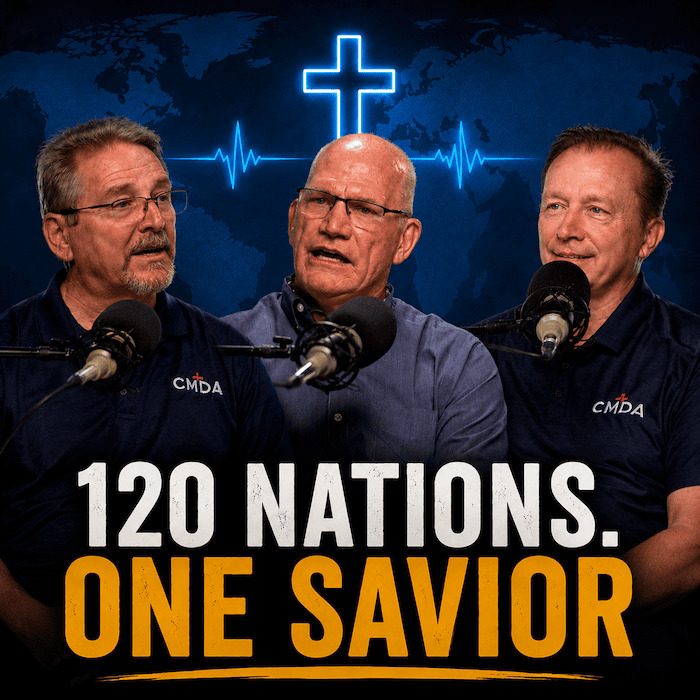
Well, next week, Dr. John Pierce and Reverend Bill Reichert join me to reflect on the 18th ICMDA World Congress that took place in South Korea.
More than 1,000 Christian healthcare professionals and students from over 100 nations gathered in South Korea around the theme Building God's Kingdom Amongst the Broken.
I do want to thank you for listening today to Faith Healthcare, where our promise to you as a listener, or better yet, a subscriber to this weekly podcast is this. We will do everything that we can to keep your faith and healthcare connected.
We'll see you next time, Lord willing.
[00:44:43] Speaker A: Thanks for listening to Faith and Health Care, the CMDA Matters Podcast. If you would like to suggest a future guest or share a comment with us, please email cmdamatterscmda.org and if you like the podcast, be sure to give us a five star rating and share it on your favorite social media platform.
This podcast has been a production of Christian Medical and Dental Associations.
The opinions expressed by guests on this podcast are not necessarily endorsed by Christian Medical and Dental Associations.
CMDA is a nonpartisan organization that does not endorse political parties or candidates for public office.
The views expressed on this podcast reflect judgments regarding principles and values held by CMDA and its members and are not intended to imply endorsement of any political party or candidate.