Episode Transcript
[00:00:08] Speaker A: You're listening to faith in healthcare, the cmda matters podcast. Here's your host, Dr. Mike chubb.
[00:00:20] Speaker B: Welcome, friends, to Faith in Healthcare. You know, it can be easy for our vision of what God is doing in and through healthcare professionals who love him to become limited to the places and the challenges that are directly in front of them. But every so often, God gives us a much wider view.
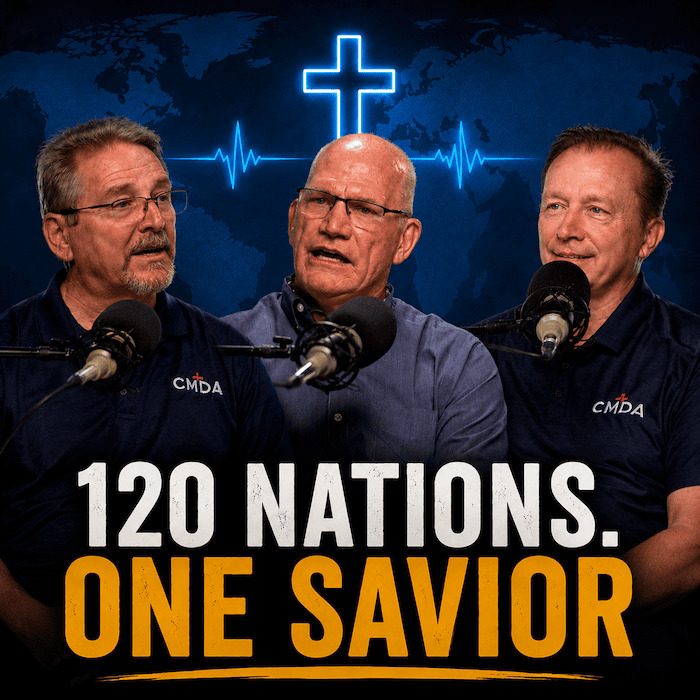
This summer, more than 1200 Christian healthcare professionals, as well as students from over 120 nations, came together on Jeju Island, South Korea, for the 18th ICMDA World Congress.
I was so grateful and privileged to attend alongside two of my friends and fellow CMDA leaders, Reverend Bill Reichardt and Dr. John Pierce. In this episode, Bill, John and I, we're gonna reflect on the people that we met and the moments that reminded us just how vast and beautifully diverse the body of Christ really is.
We're also gonna consider what this global gathering can teach us about serving faithfully within our own communities.
I hope this conversation today will enlarge your vision of what God is doing through Christ's followers in healthcare around the world and remind you, friends, that wherever God has placed you, you are not alone.
Well, today on Faith and Healthcare, I'm gonna welcome you to a unique program because me in the studio are a couple of friends, two vice presidents at cmda, Reverend Bill Reichert, who's vice President of Campus and Community Ministries and has been at CMDA about the same length of time I have, at least in the national ministry.
[00:02:11] Speaker C: That's right.
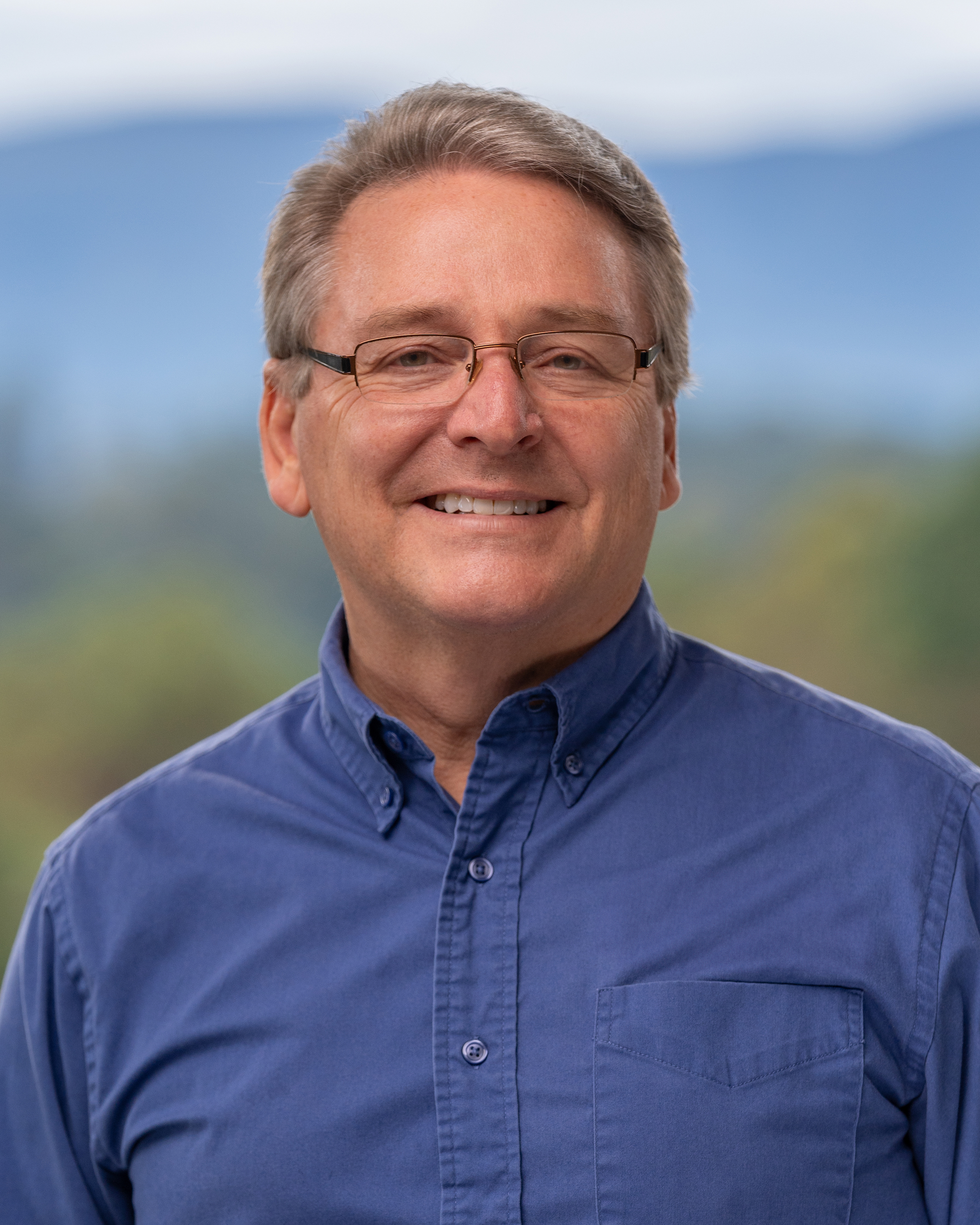
[00:02:12] Speaker B: And Dr. John Pierce, who's Vice President of Missions and Medical Education for over a year now.
[00:02:18] Speaker D: Hasn't it been right at a year?
[00:02:19] Speaker B: Okay, great. Well, welcome to the studio and we're going to invite you to listen in on a conversation as we look back at an incredible experience that we had together with about five or six other leaders from our national ministry in a recent World Congress of the International Christian Medical and Dental Association. So, Bill and John, thanks for joining me today.
[00:02:40] Speaker D: Thanks for having me, Mike. I think it's just fun to sit here and really review what we saw, but really to encourage others because there's so much to be there.
[00:02:48] Speaker B: Just a little bit about ICMDA for those of you listening that, like, what is this? CMDA US is one of about 6, 6 or 12, depending upon who you read, founders of an organization of national movements of Christians in healthcare, formed in 1963 with the help, actually of the former famous Surgeon General C. Everett Koop. He was part of that founding group.
And here we are 63 years later.
It's always easy for you to remember, it's my age, that the nations have been growing. And at the end of June, June 30 through July 5, over 120 nations gathered on a very unique island that frankly, I'd never heard of until this World Congress. Had you guys?
[00:03:34] Speaker D: I had not.
[00:03:35] Speaker B: I heard it referred to as the Hawaii of South Korea. And the air route between Seoul, South Korea and Jeju island is the most trafficked single route air route in the world.
Every 15 minutes, a flight leaves Seoul and goes to Jeju island. Because it's sort of the play place for South Koreans, I learned.
So before we jump into this 18th World Congress, every four years, the ICMDA group, headed up by Dr. Peter Saunders, its CEO, has a gathering of the nations. And those nations have been growing in number this year, 123 formal nations. Before we jump into, talking about the week, wonderful week we had together. Any extracurricular, extra event activities that you guys remember with fondness, or maybe not with fondness.
[00:04:26] Speaker C: Well, there was a invitation that was extended by.
By John.
Yes.
To go climb a volcano. And you know, it just sounded like. In concept and idea, it sounded like a great idea until we actually embarked on the travel.
We. We traveled. What was the name of the volcano, John?
[00:04:48] Speaker D: It is Mount Hallison.
[00:04:50] Speaker B: And it's in the center of the island. It is.
[00:04:52] Speaker D: And it's the highest point in South Korea.
[00:04:54] Speaker C: So, yeah, it was about, what, nine kilometers each way?
[00:04:57] Speaker D: It was. Yeah, 9.6. Or really six miles.
[00:05:01] Speaker C: Right? Yeah. So anyway, needless to say, we weren't fully prepared. We didn't have enough water. We started late. I think that got us a little too. So we did do it. Let's just say we did accomplish it. But a great discomfort to our legs.
[00:05:16] Speaker B: Some water rationing, if I remember.
[00:05:17] Speaker C: And some water rationing. Yeah.
[00:05:19] Speaker D: So it was a beautiful hike. It was listed as a moderate hike that Nicole, my wife and I thought was moderate, but I would not claim it was moderate. And I read a review afterwards. It said why I was not prepared for Mount Hallison. It brought back a lot of memories.
I think the funniest part for me, I mean, it's a beautiful volcano. It's. It's supposed to be inactive, but it has a little volcanic lake. But was how we did not bring enough water. I gave Bill and Julie Rose a little bit of my water and then we had to. We ended up splitting up because you have to hit a point that if you don't hit that point Then you can't go to the top.
And we did not think Bill would make it to the top. But at the end he did.
Enthusiastic. He comes in and thirsty, thirsty. And the first thing he said to me was water.
But I had drank his last little bit of water and we had none left.
[00:06:15] Speaker C: They were offering me like a little puddle at the bottom of a thing. And I thought they were joking until.
[00:06:20] Speaker B: But somehow you rolled back down the volcano and made it back.
[00:06:23] Speaker C: Yeah, you just. You had to. One step in front of the other.
[00:06:26] Speaker B: No helicopter rescues.
[00:06:27] Speaker C: No, no, no. I mean, listen, my thighs were burning or my calf muscles, I should say were burning for like three, four days. I was limping along the.
[00:06:36] Speaker D: It's supposedly 760 flights of stairs.
[00:06:39] Speaker C: Wow.
[00:06:40] Speaker D: The stairs itself, not the hike.
[00:06:41] Speaker B: All I got to say is thank you for not inviting me.
[00:06:45] Speaker C: Well, so, you know, we had a great time of a lot of information and networking and the conference was great. But this is something that, you know, albeit a difficult, challenging hike, was a bonding opportunity to get to know my fellow colleagues and to have some time together and to just kind of decompress. A little bit of a decompression, I guess, before the conference actually began that Tuesday. So it was a good time.
[00:07:07] Speaker D: I mean, it was one of those unforgettable bonding times we always remember.
[00:07:11] Speaker C: We'll have stories.
[00:07:13] Speaker B: Well, let's segue. You know, when my kids or family members, brothers, parents return from some special event or conference, my first question, they know I'm going to give. What was the top highlight or one or two highlights that you came away with from this World Congress? A week on Jeju Island. Bill, let's start with you.
[00:07:31] Speaker C: Well, it's relationships. I mean, having an opportunity to have meals with and to have conversations with fellow colleagues, those doing the work I'm doing, but in other international contexts as well as other students, because we brought about nine students from the US which was an incredible blessing. The last World Congress was in Tanzania. We had one student show and that was a happy accident. They just happened to be about a kilometer away and decided to stop in.
So to see nine students really take the ownership and get excited about this opportunity, that was exciting to have them along with. And of course, just seeing the. Just the mosaic of just like 130 countries represented over a thousand individuals from around the world. Just a wow. Just an incredible sight to see the nations coming together, worshiping and serving with a common mission and movement of seeing Christ being glorified within healthcare.
[00:08:33] Speaker B: And Bill, I want to thank you because you set up a WhatsApp group for us. Those are from the US attending. And I mean, to think I would never want to go back 30 years to have an experience like this without a WhatsApp group to experience the conference together. Pictures. Others were taking instructions, hints on how to navigate various challenges and travel. But John, how about you? What were your highlights?
[00:08:56] Speaker D: I'd say, Mike, probably the biggest highlight was the perspective that you get being around those 130 plus nations represented. You see how big God is. I mean, Bill mentioned Mosaic, but you see the diversity. You see so many different. There's cultures, there's languages. But I think the most remarkable thing is when those things are brought under the umbrella of Christ, there is a relationship. You know, there is a closeness, there is a uniqueness that is really unmatched. And to be able to see that beauty and how God works through individuals all with the same heart is remarkable.
[00:09:36] Speaker B: I think we were all sitting there for the very first worship that happened in the pre conference for the students. And let's just say I think young people around the world.
LOUD worship music it was pretty loud and it's good all through revelation. I mean, we hear the word loud, so I guess it's preparing us for eternity.
[00:09:54] Speaker D: It was very enthusiastic and in many ways I would say I preferred the student worship because it was unencumbered with thoughts. Even though they were both tremendous.
[00:10:05] Speaker B: Yeah, absolutely.
Well, what speaker or speakers really hit a bullseye on one or both of your hearts and minds during the week?
[00:10:15] Speaker C: Well, Petrar Fung, Dr. Fung and his speech or series of talks on Nehemiah which he gave at the student pre conference, was just compelling. I have to go back and review yet again to get some of the big takeaways. One of the cool things, though, one of our students, Caleb, actually had heard Dr. Fung speak at Urbana, and his talk at that conference was an incredible challenge to Caleb. And so he was just, he was just so excited to see him coming yet again to speak from an Urbana conference a couple years ago now all the way to South Korea.
This was a gentleman that had made a very, very specific impact in this student's life. And for it was just God's nice providence for him to have an opportunity to hear him again. So Patrick Fong did a fantastic job. I just really nailed with a history
[00:11:09] Speaker B: of being a missionary in Pakistan and coming from and having Pakistanis say, wait a second, you're a Christian and you're Chinese. Those two just do not go together.
A dissociation. So powerful testimonies of God sightings in his life and his wife's life, who was also a physician. Remember, John, how about you?
[00:11:30] Speaker D: I would also say that was probably my favorite lectures, and it really was incredibly engaging.
The other part that I'd say, Jeff Barrows did a great job at the end talking about the struggle ethically with all of the issues we deal with. But what really stuck with me, really, is afterwards the Korean leaders saying, golly, you know, we've heard all these wonderful speakers, but don't forget, you know, we in Korea are actually struggling with the church internally, and they were willing and open about it. Would you please pray for us?
And that, to me, was an incredibly touching moment just to hear that openness, that honesty, and that desire for prayer. It was great to see how, you know, we can have problems in our church, but we must come together and pray for each other.
[00:12:23] Speaker B: Yeah. And some of the largest churches in the world, of course, are in Seoul.
Bill, you had mentioned how you were touched, as was I, by a series of videos at the beginning of both
[00:12:34] Speaker C: the pre and conference, watching missionaries who are of a certain age now, but back in the day were coming to Korea after the war, going into very difficult and challenging circumstances, and yet having dedicated their lives to Korea, just watching the. Seeing the fruit, because the whole world Congress was done by our hosts in South Korea, and what an incredible job they did, and an incredible. Again, you can see, albeit the struggles, as John mentioned, the church has taken root. In fact, Korea has become ascending, not just a receiving country, but a sending country of missionaries all around the world. So really encouraging to hear the stories of these missionaries and just seeing their faithfulness and seeing the fruit that's born from it.
[00:13:21] Speaker A: You know what?
[00:13:22] Speaker B: Over the years serving in Kenya, my kids went to a boarding school, River Valley Academy, and had so many South Korean kids whose parents were missionaries from South Korea. And the bond between American and Korean missionaries. And then what we saw was just very profound from Dr. Joseph Kim, the main organizer of the conference, who himself as a boy, a young boy. He's an interventional radiologist, retired now, but remembers his parents telling the stories of American GIs who gave their lives. And one of his first slides was the number of casualties, American casualties in the Korean War, and how much gratitude there is, at least in his generation. I don't know how that goes over time, but that really touched my heart, the kinship between the Americans and South Koreans because of what we suffered together in that Korean War.
[00:14:15] Speaker D: The other thing that was remarkable to me is the explanation about how many missionaries have been there and not this is why you'd ever do something, but how many institutions are now named after particular missionaries? And so you just realize that the things that God has me doing now, Lord, take it, grow it, use it, and then you see it blossom down the road. So that was really meaningful.
[00:14:43] Speaker B: So what new relationships or friendships did both of you have that were especially endearing to you? And you're really looking forward to those. And John handed over to you the baton to the board of icm. Yeah, you're now going to be our representative. So I have a feeling that maybe some of those relationships are going to be meaningful.
[00:15:02] Speaker D: They will. I think the one for me, or there's a couple, but man from India who learned early on of some of Nicole and I's struggles in parenting. You know, how do we handle things with our kids?
One of our kids getting engaged, how do we handle that? And he immediately said to me, after hearing more of the story, john, can I pray for you?
And I'm like, that would be great. Well, pull Nicole here. Let's pray. So he prayed for us. And then I came across him two days later, and he looked more downcast. And I said, george, what's going on? And he said, my mentor just passed away.
And I then was able to hear how this mentor led him to Christ. You know, really 23 or. No, no, 43 years prior.
And he was so downcast because he could not be at the funeral. But then to be able to pray for him and thank the Lord for this mentor that meant so much to him and really changed his life because he was on a trajectory of depression and considering suicide. And all of a sudden now he's incredible leader.
[00:16:09] Speaker C: Wow.
[00:16:09] Speaker B: Wow, Bill.
[00:16:11] Speaker C: I mean, you got to meet some great students. We had discussion groups, small groups throughout the pre conference. And so that was great to spend time with new friends, students in Zimbabwe, Uganda, South Korea. But in terms of a professional colleague, it was Andrew Jackson. Yes. Not named after the president, Andrew Jackson from England, uk. And he does pretty much similar work that I do here, just in that context.
And it was great to not only get to hear how he goes about engaging students in his country's context, but just the camaraderie and just the friendship and it was just a pleasure to getting to know him. So that was a very special relationship.
[00:16:54] Speaker D: And I think he was one of the wittiest, quickest thinkers that I've been around, talking about rugby concussions, had protocols. He was entertaining.
[00:17:04] Speaker C: He was a laughing minute. I mean, I just I just enjoyed it.
[00:17:07] Speaker B: Student ministry, it just, it attracts interesting types, doesn't it? It does, doesn't it, Bill? Well, speaking of students and junior doctors, you know, one of the incredible blessings, a legacy that we've had in the US is, whether it's an offerings at the national convention or others who give, is to provide funds for a bursary for those who come from World bank, low and middle income countries to actually attend this conference. And this was a particularly expensive conference to attend. So did you guys run into many students or junior doctors who got help and maybe a story or two?
[00:17:44] Speaker C: Well, I don't know the story. I mean, they got help. I remember that. I remember they were very dependent on those funds.
I will say the stories that constantly I heard was just the challenge and difficulty of travel.
You know, some of these students, maybe others too, were having trouble getting visas. They were being rerouted. I mean, it was not only was there maybe a financial challenge, but just even the actual process of getting there. So the dedication, the tenacity, the resilience was pretty incredible. Hearing some of their stories as they were telling us, some of whom actually said this was their first time traveling out of their own country, which was amazing.
[00:18:24] Speaker B: And even with those challenges, this was, I think they said, announced the largest attended world Congress with over 1200 people registered.
John, who'd you run into?
[00:18:34] Speaker D: So my favorite, my wife and I had a chance to drive around. I had to return the rental car back to the airport. And so I was going back to the airport, which is about an hour drive, and then going to take the bus. So I came back out to the bus and I see these two people standing in line in front of the bus and they look a little, you know, haggard. You know, it was a long trip. And I said, you know, they looked African. And I'm like, are you guys going to the ICMDA conference? Conference? And they looked at me and they brightened up a little bit and they said, yes.
And I learned that they were from Eswatini and they're in the lone medical school in Eswatini and Sinfiwe and Abigail. And so I started talking to them and I said, well, can I help you? And they looked at me like, we need help.
Because I learned that was their first trip out of the country. Well, actually Sinfi Way had gone outside of Eswatini to South Africa, which it's bordered entirely.
[00:19:31] Speaker B: And how cool that you've been to Eswatini before.
[00:19:33] Speaker D: Yes. So that was fun. So all of a sudden I had a little bit of a relationship with them. And they, I learned that, you know, it's 5:30, they are so worried because first real trips outside, it is a longer trip. It was harder for them to, you know, navigate through the airport, exchange money, how you handle it.
And they said, well, we're going to be late for our check in and we're worried we're not going to be able to have a place to stay.
And I'm like, well, let me call Nicole, my wife, and I think she can help. And so within 15 minutes she came back. I got their registration, they're fine. And you could see, oh my goodness, their countenance just rose.
I had at this point in time one bottle of water left and a Coke, which I was able to give them. And they were so happy on the bus ride back.
They did not want to leave Nicole and I and they almost adopted us as parents during the rest of the week.
[00:20:27] Speaker A: Wow.
Before we continue with this week's episode, here's a special announcement for you.
[00:20:39] Speaker B: I want to encourage you to strengthen your mentoring relationships through CMDA's virtual mentoring with a Coach Approach in Tensit, which will be September 25th and the 26th. You'll learn practical coaching tools to help others grow with clarity as well as resilience. There's continuing education available with this course, so you can register by going to CMDA.org events.
Well, if you're in the Northeast, join Christian Healthcare Professionals at Sandy cove in Maryland October 23rd through the 25th for CMDA's Northeast Regional Retreat with our very own Dr. Brick Lance. Along with timely teaching, the weekend is going to offer a refreshing opportunity to worship and to connect with others who understand the challenges of living out their faith within healthcare. First time attendees can save an extra $25 with code first time SC.
So just visit CMDA.org events to learn more.
From students to seasoned professionals. You can discover how God is calling you to serve by attending remedy West October 10th at California Baptist University.
Whether through global missions or caring for those in need at home, or sharing the hope of Christ with your patients, be encouraged and be equipped. You can go to cmda.org cam that's C A H M to register today.
[00:22:26] Speaker A: Let's jump right back into this week's episode.
[00:22:32] Speaker B: Well, one of the interesting coincidences, if you will, when I was on the board and heard the dates, I'm like, oh bother, it's going to be over Independence Day, American Independence Day, July 4th for the Congress, our 250th national birthday.
But Bill, you decided to make the most of the opportunity and share on international night with the rest of the world about America's special birthday.
[00:22:58] Speaker C: Yeah, well, first of all, myself, our country and many countries had a chance to be kind of be on display, kind of show like their indigenous culture, song, dance, all kinds of things. And so for us, we felt like it was July 4th. No better opportunity than to talk about independence. Our 250th birthday. So we did a fun skit. John was in it. We tried to do a road trip where we were kind of bringing very stereotypical kind of representations of people around the country, our southern, our Midwest or northern New York, Boston person, and just kind of reflect about kind of how the country is this, again, rich tapestry of all different folks and the diversity, but also just how we've been brought together as a country these 250 years. I had a little bit of a special touch. I got a George Washington costume and I was on display as George Washington, having traveled in time to this new country, to the country that I wouldn't have recognized, of course, for better or worse. But it was fun. It was a fun opportunity to put that on display and just have fun together as a group. About 10 of us were in that skit and tried to represent America well and not cause an international incident. So otherwise.
[00:24:19] Speaker B: Yeah. And I think it was actually was an excuse for one of your regional directors to wear an American flag and to be out in red, white and blue. And I think the rest of the world understood that we were going to celebrate 250 years of independence. So it kind of gave us an excuse to be a little bit nationalistic in that setup.
[00:24:40] Speaker A: Fair enough.
[00:24:40] Speaker B: What was your take on celebrating America's you or Nicole?
[00:24:44] Speaker D: It is great to be with a Bill Reichert who can dress up like George Washington, lead through the skit, and you all feel comfortable doing the skit. So that was a joy.
And I think the best you're talking about the red, white and blue was Wes Earhart, who had this hat on, you know, blonde dyed hair.
And a picture with one of the board members from Australia is still my favorite picture. Cause I see this Aussie who's like, oh, my goodness, I'm with this crazy American guy. But it's a great picture still in my home.
[00:25:14] Speaker B: Well, he has. That board member has kids, adult kids and grandchildren in America. So he has a degree of fondness, even though he doesn't always show it for it. You know, in these settings. I sometimes wish that, you know, time, you could push pause on time. And spend more time the relationships. And an American pastor leader guru once said, and I think Bill, you've heard this before, do for one what you wish you could do for all.
A very special experience for me as one of the plenary speakers in the pre conference. Coming alongside Patrick Fung as the Bible teacher was an experience with a medical school graduate, Esther, who was our speaker, handler or host, if you will. We do the same thing at our own national convention. And Esther was so kind and good communicator.
But after the first session when she introduced herself, I could detect just a little bit of maybe some sadness. And so I said, esther, are you okay?
And she said, well, to be honest, and then she broke down and cried and I said, esther, what's going on? And she just said, well, here's my story. And she talked about coming from wonderful family, parents, one Korean family, mom or dad, and the other Indian, and a great Christian heritage, went on to medical school but was not able to match in any sort of advanced training. And so has felt like she's circling the airfield wondering what does God have for me? And she'd been in that situation for two or three years wondering what. And this was an opportunity to serve for the World Congress for the. Because she's has a Korean family.
And so we just stopped. I just stopped and I said, can I pray for you? And I prayed for her. And I just happened to bring one of my favorite books to hand to students, Tim Keller's the Freedom of Self Forgetfulness.
And I said, I didn't know who I was going to give these to, Esther, but here's a copy for you. Well, the next day I gave my talk, plenary talk. And she came running up to me after my plenary talk. Dr. Fung, Patrick Fung was there and she said, look what Dr. Fung gave me a book, not exactly the same title, but on the same topic about forgetting oneself, a book that Patrick Fung wrote. And she said, Dr. Chupp, God is speaking directly to me. How could I get two books from two different speakers on the same topic? He hasn't forgotten me and he wants me to trust him. And I would say that was one of the most poignant moments for me and memories was a young female doctor wondering what God has for her life. And there at the World Congress she realized God hasn't forgotten me at all.
[00:27:54] Speaker D: I think, Mike, that's one of the things about medical training is it can be incredibly isolating.
We can withdraw, you can think I'm alone.
No one else really understands and to me, that whole picture is really clear about why we need each other, about why you need to be around other believers for that encouragement, for the exhortation, for the accountability, for lifting us up when we're down, when we're feeling like no one else really understands because God is there. But I can forget that. Esther can forget that. And we must never. And I need you to remind me, or Esther to remind me as we go through this thing called medicine.
[00:28:35] Speaker B: I'll put in a shameless plug for faith and healthcare, because another highlight for me was having, you know, there aren't that many people, adult men in the world, who are shorter than me, but there are a few. And one of those came running up to me, this little man from Papua New guinea, and he had a bag of coffee beans in his hand, and he said, Dr. Chupp, I work in Papua New guinea in the highlands, and I'm a physician, and I listen to faith and healthcare every week. So here, a bag of coffee from Papua New Guinea. And I got a bursary to come to this coffee. So thank you to your American members and constituents who give so generously.
[00:29:15] Speaker D: So the Papua New guinea contingency all received the bursary.
[00:29:19] Speaker B: Oh, wow.
[00:29:19] Speaker D: I think. And I had great discussions with them because they just found. I think this is the same gentleman, but they just found out that they could go one week prior.
And so one of the individuals who was very, you know, nationalistic, looked great national dress, he would continue to dance, sing. And I looked at him, and his name was Francis. Francis, how are you doing? And he said, you know, I wouldn't say this very often, but I am so full of the Holy Spirit, I can't sit down. I gotta be moving. I can't sit down. And you could just see the joy. And everyone wanted to go talk to him.
Everyone just moved in his direction.
[00:29:58] Speaker B: Papua New guinea is not very far from Indonesia.
It's Oceania. And in four years, the World Congress is going to be back there on the island of Surubaya. And Mr. Hedwin Hadrianto, who has attended our national convention in St Charles and gave his testimony as one of the associate executive officers and will be our host.
So for both of you, what would you say to our listeners? Maybe why they would pencil this in on their calendar for 2030. Bill?
[00:30:27] Speaker C: Well, it increases the aperture of your vision. I'll say that one of the things that the students walked away with was, you know, they always get a bigger vision every time they. They maybe attend a regional conference outside of their Student chapter and then maybe they go to a national convention, it's even a little bigger. This just increased it 10x.
What I'm saying for students would be true for anybody who can go.
Bigger vision of what God is doing and how this movement is being used to glorify God and to increase his kingdom. It's just, you know, I knew about icmba, I'm an insider, I work with cmba, so I.
But I didn't know icmda. I didn't understand it until I could actually see it, taste it, experience it and understand the vision that is bigger than maybe somebody might have. And so I think this definitely is a.
It will change the way you see the world and how you see your profession moving through the world for the glory of God.
[00:31:26] Speaker B: Yeah, it's not all of our fault. I mean, we are geographically isolated in North America from the rest of the world and we're behind the rest of the world on the clock.
And so these sorts of experiences get us out off our big big island, they do. And see the rest of the world. John, what would you say?
[00:31:41] Speaker D: I would agree with Bill. You know, I thought I knew and understood icmda, but to be able to be there and experience, to see the nations gather, it really does increase your aperture, your vision.
You know, so many discussions about what is really going on in. For me, I, I can think of conversations about a guy from Nigeria, Rwanda as well as also in Indonesia. And you see other people that are really struggling compared to what we as Americans would describe as godly. I've had a difficult day or my hospital and the joy that which they are serving and the struggles, whether you're talking about financially, supplies, not many other physicians, overwork, burnout. But you see how they, how God supplies them with what they need at the time and is an incredible encouragement. And I think about, you know, some of the early, just short term missions.
I came back and I realized it made me a better physician.
It gave me perspective and joy and to be able to see people differently with dignity and honor and love that God gives.
And so that perspective, that vision was really important for me and will be a lasting memory.
[00:33:08] Speaker B: Yeah, that's a really good point, John. Every culture has strengths and weaknesses and our American culture definitely has our strengths and our weaknesses to rub shoulders with those from other cultures, physicians, dentists and others, and to help us strength, lift ourselves up a little bit by observing and following examples.
[00:33:28] Speaker D: Can I say one other thing? It was a really great interaction that we had as a North American gathering. So I had never met many of all the people from Canada.
So now there are four or five other relationships. One with an OB gyn, another who is looking at. He's Chinese, lives in Canada, but he wants to be involved in Mongolia.
So you see, there should be this exchange and these relationships that go on. And as you know, we've talked. Oh, my goodness, we have the Caribbean. That's so close. That is actually a bunch of nations that need to be reached. Here are opportunities. They're not far from us and we should be engaged. So it's just encouraged me as we look ahead. Okay, how do we really reach some of the Caribbean nations?
[00:34:19] Speaker B: I see a lot more emphasis coming out of CMDAUs, from MEI and Gho on the Caribbean. It's not that far away, really. No time zone changes and it's not that difficult to get to, is it?
[00:34:31] Speaker D: No. And, you know, there are Caribbean graduates that are working in the United States with connections back to medical schools, institutions.
And we should be. You know, we want those people involved. We want to be able to go back, create relationships, be able to really help within missions, but to be able to share Christ.
[00:34:52] Speaker B: I'm really glad you brought up our neighbors to the north, because in 2030 we'll be in Indonesia. But in 2029, even earlier, Niagara Falls, first week of June. In 2029, a regional gathering. This last year, Larry Worthern, their CEO, told me they had the largest gathering in a while. They had 300 at their national convention. So we could be seeing 1500, maybe even 2000 people gathering in Niagara Falls in 2029. It's not that far away.
[00:35:20] Speaker D: And I think that collection of Americans and Canadians together would be a little picture of the bigger icmda.
[00:35:28] Speaker B: Yeah. Yeah. So maybe we can definitely promote Surabaya at that meeting. Well, I want to close down our conversation by thinking about a scripture that I heard many from the lips of many different ethnicities and nationalities.
The mission of ICMDA is to start and strengthen movements of Christian healthcare professionals in every community, in every nation on the globe.
Now, that really challenges and convicts me, Bill. Especially because we don't have movements in every community in the United States. We have a ways to go. And certainly our current strategic plan, which we talk about a lot, is getting more of these movements in the various cities and communities.
But Revelation 7, 9 was a scripture that was quoted over and over again.
John says, after this, I looked, and there before me was a great multitude that no one could count from every nation. Tribe, language and people standing before the throne. And in front of the Lamb and wearing white robes and holding palm branches and saying, salvation belongs to our God who sits on the throne and to the Lamb.
And I just can't think of a gathering, whether healthcare or not, in which so many nations, they are praising and glorifying God the Father and the Lamb together. And any final comments about worship, praise or the future?
[00:36:50] Speaker C: Well, and you know that worship, that coming together was in humility and yieldedness and surrender. Because the theme of that conference was brokenness, wasn't it? Oh, yeah, we talked about it.
[00:37:02] Speaker B: Remind us what the theme was.
[00:37:04] Speaker C: Well, brokenness is the. Is the key word. You're going to ask me to spell
[00:37:07] Speaker D: out the entire word.
[00:37:07] Speaker B: Building God's kingdom. Building God's kingdom amongst the broken.
[00:37:11] Speaker C: Oh, good. Thank you. But brokenness was a theme that punctuated through the plenary talks and through other things. And yeah, just the idea of us needing to surrender and that brokenness isn't something that we have to discover. We are broken individuals, broken but restored yet still by our Savior and that we are becoming conformed and transformed by the renewing of our mind and our lives as we yield ourselves to Christ and by the work of the Holy Spirit. So it's something that God is doing in and through us. But it is something, though, that is essential in the mission. It doesn't come out of strength. Our own strength doesn't come out of our own power, our own grit. It comes out of our sense of need and surrender and brokenness.
[00:38:00] Speaker B: The great multitude, John in Revelation 7 that John wrote about is going to be much larger than 1200 people.
Any other thoughts about that gathering?
[00:38:10] Speaker D: It is incredible to worship with over 1200 people from all these various tribes, nations and tongues. I mean, I think about the international night to watch the East African or the South African with their dancing and singing and the joy that's there.
It's an incredible encouragement. And you do see all these different cultures, but there really is one heart.
And God desires us not to live in our country of expressive individualism, but as a community.
And you see other countries, icmda, functioning as a community, which we should bring back to our communities where we are thriving because of the relationships that God has given us.
[00:38:56] Speaker C: Can I just give a quick thanks? We talked about the bursary fund and certainly the generosity of our members here to help others around the world. I'd also like to thank those who gave to our trainees, students and residents here in the US to be able to go. We were able to offer nine $1,000 scholarships because of the generous support of so many individuals who give to our scholarship fund for students. And we just thought this was a very strategic investment and I believe it's going to prove to be that and yield a lot of fruit.
[00:39:25] Speaker B: Yeah Bill, thank you for bringing that up. I could name you right now several leaders who are in their 50s and 60s within CMDA us today.
Two who met each other and fell in love in Mexico at one of the previous World Congresses from the Northwest. I won't shout them out right now on the program, but thank you. Yeah, thanks for a generous members constituents who gave to these lives are changed. Many, many, many of the leaders across ICMDA volunteers and regions first got exposed through one of these World Congresses.
So do want to thank you for joining us today. If you'd like to learn more about ICMDA, you can go to the web and ICMDA.net to learn about ICMDA Every Thursday morning there is actually a webinar given by experts from around the globe on all kinds of topics, including some of our own CMDA experts on various bioethics spiritual topics. But you'll find there, I think you'll be amazed actually, if you go to icmda.net and see the kind of courses that are available for various cohorts up to seven languages. Absolutely amazing. So guys, thanks for joining me today and for helping me to relive a great, great week.
[00:40:37] Speaker D: It was a great week. Thanks Mike.
[00:40:49] Speaker B: What an encouraging glimpse of the global body of Jesus Christ.
When believers from so many nations worship together, the great multitude described in Revelation 7 no longer feels quite so distant. We begin to see how God is building his kingdom through people who speak different languages and serve in circumstances very different from our own. And yet we all share one Savior and one mission.
I keep returning to the story of precious Esther, the young medical graduate who wondered whether God had forgotten her, only to receive a timely reminder that God was present and still at work in her life.
We may not all attend a world Congress, but each of us needs Christian community that can remind us of that truth. When the road ahead is foggy or unclear, we also have the opportunity to offer that same encouragement to someone else.
This year's congress theme said it building God's Kingdom amongst the Broken.
This work does not depend, fortunately, on our own strength.
It begins with surrender and a willingness to trust God with our faithfulness and let him work every day through our weaknesses.
If this episode encouraged you, please share it with a fellow healthcare professional and subscribe wherever you listen.
Next week the Global thread continues. Dr. Julie Rose she joins me for a conversation with Dr. Andy Benke about his work through the CMDA Medical Education International Ministry in Moldova. We're going to hear how God has guided his career in medicine and ministry and why he believes using our gifts in service to Christ is always worth the sacrifice.
I do want to thank you for listening to Faith in Healthcare today, where our promise to you as a listener, or better yet, a regular subscriber to this podcast is we will do everything that we can to keep your faith and your health care connected.
We'll see you next time, Lord willing.
[00:43:18] Speaker A: Thanks for listening to Faith in Healthcare. The CMDA Matters Podcast if you would like to suggest a future guest or share a comment with us, please email cmdamatterscmda.org and if you like the podcast, be sure to give us a five star rating and share it on your favorite social media platform.
This podcast has been a production of Christian Medical and Dental Assistance Associations.
The opinions expressed by guests on this podcast are not necessarily endorsed by Christian Medical and Dental Associations.
CMDA is a nonpartisan organization that does not endorse political parties or candidates for public office.
The views expressed on this podcast reflect judgments regarding principles and values held by CMDA and its members and are not intended to imply endorsement of any political party or candidate.