Episode Transcript
[00:00:08] Speaker A: You're listening to faith in healthcare, the cmda matters podcast. Here's your host, Dr. Mike chubb.
[00:00:19] Speaker B: Thank you, Jamie. And welcome, friends, to Faith in Healthcare.
Medical missions can be easy to picture through a traditional lens. A healthcare professional traveling overseas to treat patients in a temporary or established clinic or hospital setting.
But what if one of the greatest contributions that you could make is teaching colleagues in another nation what you already know?
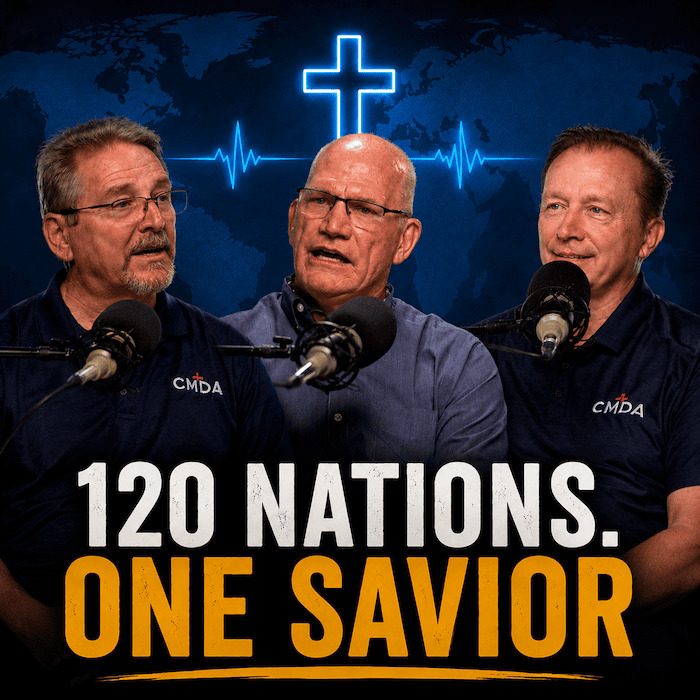
In this episode, Dr. Julie Rozay, director of CMDA's Medical Education International Ministry, joins me for a conversation with endocrinologist and longtime medical educator Dr. Andy Banke. An invitation to teach physicians in Moldova about insulin pump technology opened an unexpected door for him to serve.
Andy shares with us how God has used his experience to support local physicians and bring important medical technology within reach for those within Moldova. His story challenges us to think a little bit more broadly about what it means to serve by considering education with empowerment in Christ's healing name.
Your health care specialty may feel a little narrow for medical missions, but it could be exactly what another community on the other side of the planet needs right now. So let's dive in.
Well, today on faith and Healthcare, I'm delighted to have in our studio with me this week Dr. Julie Rozay. Spelled like Rosa, but it's a Rose A and she's married to Rose B, whose name is Pete.
[00:02:09] Speaker C: That is a great. That's a great joke.
[00:02:12] Speaker B: Julie and her husband are both family physicians in Hiawatha, Kansas. And you've been around the globe, haven't you?
[00:02:21] Speaker C: That is a delightful part about being the Mei director, and it's such a joy.
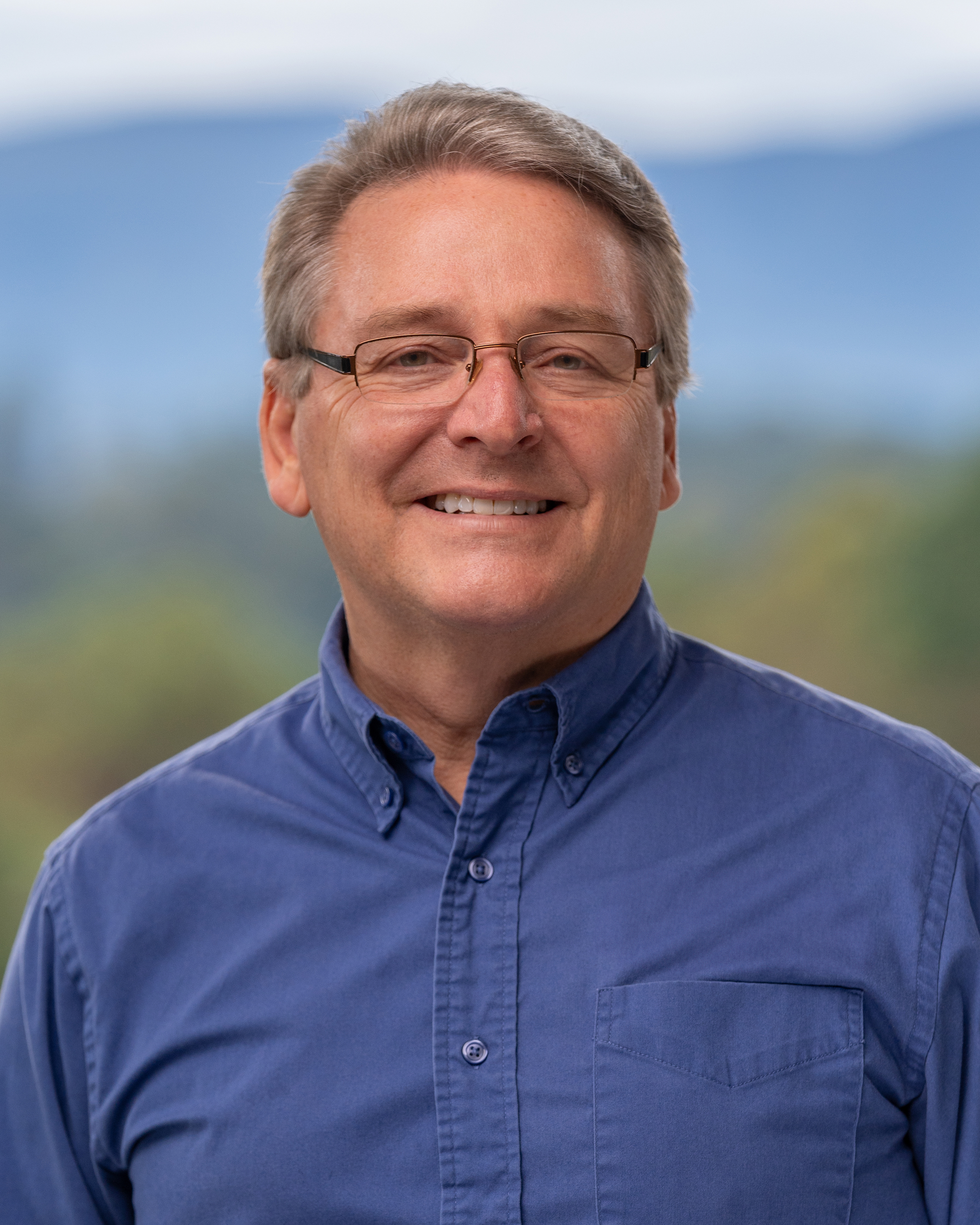
Another Joy is introducing Dr. Andy Behnke, who is a dear friend as well as an Mei team leader and an Mei chaplain. And he has just been such a blessing to me. As this position has gotten busier and busier, I have found Andy has stepped in in such beautiful ways to help, and it is an honor to have him on the show today.
[00:02:52] Speaker B: Welcome, Dr. Andy Banke.
[00:02:54] Speaker C: So let's just jump right in. So, Andy, after your long career in academics, specifically endocrinology, what drew you to teaching and serving in Moldova of all places? Why Moldova?
[00:03:07] Speaker D: Wow. It's a great question and just a real little bit of background about me. Actually, I was going to go into family medicine. I was going to practice in rural Virginia, but I realized that I just wasn't gifted for that. So I did a residency change and did internal medicine and ended up in endocrinology and loved it.
Just goes to show how God can direct you in different things. So anyway, I worked in Pennsylvania, Penn State for a while, did some teaching there, and then went to Liberty and taught there and then finally ended up being the section chief of endocrinology at Virginia Tech.
So I was a busy endocrinologist trying to live the best Christian life as a subspecialist when I got a call from a MEI team leader named Jim Smith.
Yeah, he was leading a team to Moldova and they wanted an endocrinologist to come and help them learn more about insulin pump devices.
So I didn't know much about the country, but I thought it was a great opportunity and just to share some knowledge that I had with a Christian focus. So I went there and didn't know about Moldova. Found out it was part of the Soviet Union and it was run by a communist government. In fact, there's still a breakaway region that is still communist and very pro Russian called Transnistria.
So this was a foreign land. Interesting. My mother actually emigrated from Poland and she was aware of the Soviet Union structure. So it was kind of a coming home for me. It was interesting.
[00:04:33] Speaker B: Dr. Behncke, at this stage of your career and help us, you're still practicing teaching here stateside, academically?
[00:04:41] Speaker D: Yes, I'm semi retired. I retired from Virginia Tech University, but I'm also working part time now for Liberty University.
[00:04:49] Speaker B: So in terms of what God is, what you feel he's called you to do, and at this stage of your life, whether it's here, overseas, I mean, what keeps you energized as a physician? I don't know if it's your last quartile or your last third of your career, but what keeps you passionate and getting up every day full of joy?
[00:05:09] Speaker D: Well, the nice thing about being kind of semi retired is I have a lot more time to do the things that I really want to do.
So that's a benefit. I still teach at Liberty. I'm involved in research projects and I really love these things because it's fun. It's fun in doing those things. And if you have a godly gift and you're doing things that God's called you, it's kind of not like work.
Yeah. What keeps me going is I've really seen a lot of growth in Moldova's ministry and healthcare and that motivates me. I'm trying to get some academic research things done in Moldova as they don't really have a lot of publications. And I think there's some really cool things that they're doing that really that the low middle income Countries need to have published, so we've done some studies. I want to present that at the International Diabetes meeting.
And I want to go boldly with a spirit of courage that God will open these doors wide.
The people there will see the love of God and they'll know where are Christians by our love. So that keeps me motivated. And it's great. I think a famous author, Paul Turnier, said you need three things to retire. Well, you need adequate finances, of course, you need someone to grow old with, and you need a purpose. You need a reason to get out of bed in the morning. So this is kind of my reason to get out of bed in the morning.
[00:06:28] Speaker C: That's wonderful, because one of our questions was about the ways that you see God at work in Moldova, particularly amongst the healthcare professionals. And I would love to hear more about that. And I know you also have a project in the Middle east, specifically.
[00:06:44] Speaker D: There's a lot of good things going on with Moldova. There is a. When the Soviet Union broke up, a group of doctors got together and formed a clinic called the Emmanuel Clinic. And it was Christian doctors that wanted to have a new face of health care, a Christian health care. And if you're familiar at all with the Soviet system, it was very transactional, very cold.
Come, what's your problem? Take this medicine. Go. Next. You know, and they wanted to really share the love of God. And they started taking care of people with compassion and trying to get them seen with very low cost or nothing. And it just grew and blossomed. So we started looking at their diabetes population and realized they didn't have cgm.
So we started giving them cgm. We got a grant, we got a project going for that, and it was. It was. It was really cool.
[00:07:41] Speaker C: And continuous glucose monitoring, right?
[00:07:44] Speaker B: Oh, okay.
[00:07:44] Speaker D: Continuous glucose monitoring, yeah.
[00:07:46] Speaker B: Thank you for that help.
[00:07:47] Speaker D: Word got around that there's a guy in town that's doing the cgm, and we were told not to go to their breakaway province, this Transnistra, that we don't recognize it. If you get in trouble there, we're probably not going to be able to get you out. Don't go.
But they heard what we're doing and their medical school said, we want this guy to come.
So we got special permission from the US Embassy and had an envoy go over and we got to go to this totally strict, Marxist, Stalinist breakaway republic and talk. And of course, we talked about medicine and diabetes and just really had an overwhelming response of, hey, thank you for coming to see me. So doors can be open wide if you Just let yourself be vulnerable to what God's doing and he will make a way. It's just so cool. Thanks for the question. It was wonderful.
[00:08:46] Speaker C: So how did the Fulbright scholarship work into all of this with Moldova?
[00:08:51] Speaker B: That's impressive.
[00:08:52] Speaker D: Yeah, well, you know, God, you know, when I first came on an Mei trip, God opened the doors and I just became great friends with the chief there.
And we spent a couple weeks. And then I returned a year after another Mei trip and Jim Smith said, you know, you should do a Fulbright here.
I don't know, I'm not smart enough. And that's just for real smart people. No, no, no, no.
So I applied and I got a grant. So I spent a whole semester, brought my family over and we taught at the medical school and we developed an English based curriculum and it was a great experience. Our whole family had the opportunity to live in what was then still a communist country and experience the obstacles and challenges that that creates. And what we were really impressed with, not only just how much good stuff we have in the United States, but the great faith of the Christians who were there in the former Soviet Union and their real hunger for scripture and the truth that's in the gospel. It was palpable and it was so great to encourage those believers there.
[00:09:57] Speaker B: Now, Julie and Andy, I'm just curious. I mean, I've heard about the Fulbright most of my career, but I did not realize that it could be applied creatively throughout someone's career. So any one of our listeners might be able to check this out. Would you recommend that for them, Andy?
[00:10:13] Speaker D: Absolutely. There's the Fulbright scholars, usually for students, but also as a medicine professor, you can apply and it's fully funded and, and they pay your way and they give you a stipend and you can take your family over and they give you extra money to have your child go to international school.
And you can do it in a whole block or you can do it in like six week segments called a flex grant. Now it's very competitive if you want to go to UK or Germany, but if you want to go to like Moldova or Eswatini, usually it's not that competitive.
[00:10:49] Speaker B: Well, I've done a lot of globetrotting, but I must say I know absolutely goose egg about Moldova. So would you help me and our listeners to understand the people, the culture, the religious heritage and maybe a story that would capture classic Moldovan?
[00:11:06] Speaker D: Yeah, well, Moldova has its roots in really part of Romania, so. And it's very steep in the Orthodox Church, very agricultural, a lot of produce A lot of vineyards and very hardworking, in hospital.
Now, as we know, this part of Romania was taken over by the Soviet Union and had been occupied by the Soviet Union. It was the Moldova Socialist Socialist Republic for about 50 years until they gained independence in 1993.
So you have a real blending of traditional Christianity and hard work and communism.
So it's interesting. I'll tell you two real quick stories.
One of a man named Alexei, who was a farmer during Soviet times, but he was a strong believer. And so he would go to his house and go to the basement and turn off all the lights and invite everybody to come into his house and get on his knees and pray for the United States.
[00:12:10] Speaker B: Wow.
[00:12:11] Speaker D: Pray for the American Christians. Now, I'll tell you, I grew up during the Cold War. I was not praying for the Communists, but, yeah, they were.
So that's the kind of, you know, faith they had. The other cool story is you remember this chief that I talked about?
She was. Her husband was the director of health, and she was communist, atheist, you know, and she.
I would take out a Bible and read it during downtime, and toward the end of the time, she says, what's that. What's that little book you're reading there? You keep bringing it out.
And I said, well, as the Bible was given to me by a seminary Prof.
And I. I just felt the Lord saying, give it to her. And in the Asian tradition, if you give someone a gift, they have to accept it. It's.
[00:12:57] Speaker B: It's.
[00:12:57] Speaker D: You have to. So I gave her my Bible, and she gave me a bottle of wine. And it was the next time I came to see her, she said, can you come to my office?
Okay. So she comes to her office, closes and locks the door, draws the shades, unlocks a cabinet, and there is that Bible, and it's just worn through, and it's under Jesus.
Thank you so much, because I'm Christian now.
[00:13:25] Speaker C: Oh, wow.
[00:13:26] Speaker D: But I can't have a Bible because if I have a Bible, I will be thrown out of the party and my husband will lose his job.
So thank you so much for this. It's such a precious gift. So.
[00:13:38] Speaker C: Wow.
[00:13:39] Speaker D: That's just a cool story.
[00:13:40] Speaker B: Yeah.
[00:13:40] Speaker D: How God worked.
[00:13:41] Speaker B: Well, Andy and Julie, I mean, in all the various countries where we're sending teams through Mei, there's no success without great partners.
And certainly you meet folks just like this woman.
But in terms of formal partners who are working with you and without giving away any confidential information, what kind of partners? Who are you working with in Moldova? That's really Helping you to be successful.
[00:14:08] Speaker D: Yeah, probably. The major partner we have is the Emanuel Clinic.
They have grown now to be the essential Christian clinic in the country.
There's essentially no government, hospice care or home health. So the government turns to the Emanuel Clinic to do all their home health and hospice care.
There's another partner, Mike Knoller, who works and does a great job. He's a PMR doctor, family doctor, does a lot, and he has helped that rehab physical medical team do great, great things.
They do outreaches to the Ukrainian refugees and satellite clinics in other part of the country.
So that is our biggest partner. The other thing I think that we need to do, and it's worked out great in this country, not all countries is we've really had great relationships with a medical school. I know it's a secular medical school, but they see the value of medical education and we give our services for free, which is like, oh, golly, golly. So the rector and the vice rector have a great relationship with us and then they get to see the Emanuel Clinic and they say, you know, I've heard about you guys, you give great care. I'm going to start sending some of my people over there and maybe I can spend some time there helping you out. So the partners are mostly the Christian based Emanuel Clinic, which is just a model, but also the university as well.
[00:15:35] Speaker C: Well, it really helps that you know Romanian too, which is a big piece of this. Why was that important for you to learn to speak the language?
[00:15:42] Speaker B: It's amazing.
[00:15:43] Speaker D: Yeah, Julie, you know, it's easy to use like Google Translate, you know, and it's definitely. You need to do that when you first get to a country. And I still do it myself.
But when people see that you take the time to learn their language and understand them, it can just open up great doors of communication.
You can just imagine how the people at Pentecost felt when they heard the gospel being preached in their own language.
Like, this is you. This is. I'm getting to know you, not just superficially, but I really want to communicate in a language you understand.
So that is great. Now it is somewhat different in Moldova because even though initially it was a Romanian province and Romanian is the official language, there's a significant Russian population that continues to only speak Russian, basically.
So you have to learn a little Russian as well. So that makes it harder. My Romanian is much better than my Russian. But I think in any country you go to, if you just spend a little time getting to know some of the phrases, that people just open their doors to you and they feel that closeness. So I would encourage people, I know it's hard, but I encourage people to try to learn the language a little bit when they go to a country.
[00:17:01] Speaker C: Absolutely. We talk about that a lot in pre trip preparation for Medical Education International.
That's just such a core foundation of being able to relate to people in their heart. Language just tears down so many of those cultural barriers.
[00:17:17] Speaker B: And for you, Julie, it really motivated you in your pursuit of Arabic.
[00:17:20] Speaker C: Yes, yes. Well, Arabic is a beautiful language anyways, I think. And so it was a joy to learn that and connect in the Middle East. You're right. You're right.
So Andy, how has teaching in Moldova changed the way that you think about medical education here in the US?
[00:17:38] Speaker D: Well, like I said, I've taught in several schools here and one thing we've realized is the best medical education in the world is in the United States of America. And I'm not saying that to brag or whatever, but it is. And I think sometimes people don't realize how great their education is.
You don't have to be a section chief or have written a book or a chapter to really be a good, well rounded educator. Especially when you go overseas and see some of the medical education, it's there.
We had a family doc from West Virginia who didn't think he could do anything well, but he worked in the ER for many years and he came over and gave a talk on stroke management in the er and there was like hundreds of students and doctors saying, this guy, yeah, this is great.
So the education we have here is great. And I think it's Hippocratic as well as a Christian duty to share what we have.
The other thing I would think that really is changing or I would see is the way the students perceive medical education. We had a student come with us on a trip before and he had a chance to realize that the other students in the other countries are just as bright and they know Harrison's and see cells probably more than they do. But they don't have hardly anything to go on yet.
They do a really good job with very little things. So getting that understanding of medical education here being so much of a pristine thing. Many of these places don't even have a cadaver. They don't even have a video. It's just pictures, just, hey, I actually saw a cadaver once. It's like, wow, that's great. Those are things that are really helpful for getting to understand the international medical community and how we have a valuable asset. We have a gift. You've been given a gift to have a medical education in the United States.
Share that with others that would really benefit from that.
[00:19:51] Speaker A: Before we continue with this week's episode, here's a special announcement for you.
[00:20:00] Speaker B: You know you can continue growing professionally and spiritually through our CMDA Learning Center.
You'll explore courses from CMDA events, our Faith Prescription series, and other continuing education opportunities from any of your devices.
Our CMDA members can earn CE credits at absolutely no cost, so visit CMDA.org learningcentertoday to get started.
And if you'd like to become a CMDA member, you can visit CMDA.org join and you'll discover there how you can begin your journey as either an annual or a lifetime member. Today,
[00:20:46] Speaker A: Let's jump right back into this week's episode.
[00:20:52] Speaker B: Andy, you mentioned earlier one of our patron saints of Mei, who's Dr. Jim Smith. And I like hanging out with Jim because he makes me feel super young. You know, sometimes I feel old and then I look at Jim, who's 90 plus and still going. And a big encouragement to all of us at cmb, especially to Mei. But he's it seems like he's passed the Moldova baton to you. And I'm excited to see another generation that you're bringing up. But you recently were in Moldova with Astera and a team, so tell us what happened on that recent trip.
[00:21:24] Speaker D: Yeah, that's just a God thing. So we have a great clinic and the medical director is actually a pharmacist and they really were looking for pharmacology expertise.
And we found a PharmD, very well trained, who actually was born and raised in Romania.
So she spoke perfect Romanian and she got there and just clicked with the culture, with the dialect and the language. And once she was there, she not only was able to help the clinic, but the school of pharmacy got to see her and they were building a PharmD program. They never had one. And they have a US PharmD come who spoke Romanian and culturally, knew exactly how to dress, who to make sure you talk to. It's the chief, all those rules of culture.
She was just great. And they said, can you please come back and talk at our international pharmacy conference?
So she did. And they were invited. They invited us to a spiritual retreat and she spoke there. And there's a growing amount of female leadership in Moldova. It used to be not that way, but as we're becoming more progressive, more European, it is. And actually the current president is a woman, Mia Sendou. So to see a woman in leadership who's a strong Christian, was just infective. Especially the young ladies, the female students. They were just like, talk to me some more about what you do and how you got there and how you can share your faith. And she was up to 2 o' clock in the morning singing praises with them in Romanian.
It was wonderful. So probably the best thing about her was sharing that, yes, you can be a woman of faith and be a leader in medical school or something. That was just a God thing.
[00:23:27] Speaker B: Powerful.
[00:23:29] Speaker D: Yeah.
[00:23:30] Speaker C: So have there been others that you have brought to Moldova that have discovered particular skill sets while they have been there?
[00:23:37] Speaker D: Yeah, it's interesting. We just had a pulmonologist from Seattle and his wife, Nolan Trisha Johnson.
And he came over and he was doing work in Shad, and there was probably things to change there, but one of the cardiologists said, hey, you know, we don't really have PFT is here. So I was like, oh, no problem. We'll get a pf. We'll get a spirometer. And he got a spirometer and one that you could use. Like, didn't have a lot of equipment. And so they also said, hey, you know, you're. You're born in sleep, studies, sleep apnea. We don't really have a sleep lab. So he met with one of the other doctors there, a Moldovan doctor who had a sleep lab, and like, yeah, you know, we can do this.
So we're going to go back in October and start building a sleep lab and trying to find some way to get some CPAP machines there. So that's just how God opens the doors for specialists in medicine. I think that's the one thing that Mei really opens. You know, sometimes you think, if you're going to do a mission project, it's going to be like a Gho trip where you're going to go and see 50 patients in a rural clinic. And sometimes people like myself are like, you know, I just.
God's not giving me those gifts. You know, God's given me different gifts, and they're not exchangeable. But, you know, if you're a pulmonologist, a cardiologist, a pediatric infectious disease person, there is a place for you to come and thrive and share what God's given you to. People that are needed make a huge difference in the medical community in places that are really not blessed with finance. But I will say probably the most, another significant benefit is the way your heart has changed on these trips.
[00:25:19] Speaker B: Yeah, big time.
So Dr. Behnke, Julie and I Intentionally put the next question later on so our listeners could hear your story, hear you talk about the preeminence of the gospel and spiritual ministry and God changing hearts and lives.
Because I want to ask you, you come from an interesting background which you call old order Catholic, and I'm fascinated as to what you're going to us about. What does that mean?
And so how does that impact as you work with other Christian healthcare professionals, as you work with those in other nations, how does that impact how you view medicine, family and faith?
[00:25:57] Speaker D: Yeah, well, it's a long story, but I'll make it short on the time. So basically I was brought up Lutheran and followed that church tradition. And when I started studying, especially when I went to Liberty and got my master's in theology and I looked at all the things and Julie focuses on the what are the things that hold us dear?
What are the things that unite us in our Christian faith?
And I realized that they're pretty much all based on what the early apostles in the church came to agree on.
And the men and women who lived in the first couple centuries battled questions of who Christ was and they developed the doctrine of the Trinity and they were the ones that were able to codify and canonize the Bible and set up propriety of worship and baptism and communion. And we really all trace our beliefs to them.
So when you look at the early writings of Augustine or the Council of Nicaea, yeah, these people got it.
And the Romans came along and did their thing and the Orthodox did their thing and Luther did his thing. And they all had good reasons to do it because there is heresies in the church and geopolitical reasons and such. But if you look at these essentials of faith, they were still back there in the early Church fathers. So several hundred years ago, a group of Catholic believers decided they wanted to retain the early teachings of the Father but not agree to some of the things Roman Catholic Church had adopted, such as the papacy, such as some of the restrictions of the priesthood and some of the prayers. And this group is called the Independent Old Catholic Church. And that's the member that I'm a member of and a priest and actually I'm pastor of missions.
And although our denomination is not within the full law of the Roman Catholic Church, they accept our sacraments as valid.
[00:27:48] Speaker B: Interesting.
[00:27:48] Speaker D: And our masses and our sacraments are truly valid. We are pro life.
[00:27:52] Speaker B: Yeah.
[00:27:52] Speaker D: We allow our priests to marry.
We believe there's a true presence in the Eucharist and all who have sincere faith in Christ are welcome now in Moldova, how this affects Moldova. They have a very deep Orthodox theology and there's somewhat of a little bit of a suspicion of the Baptist or the Pentecostal churches that have a presence there.
So I think having an understanding of the history of the church bring us together and reduce the suspicion. For example, when I go there, I go to their churches, I go to the Orthodox Church and I worship with them.
And they have all these icons and all these saints and I don't know who they are, but I look at the front and I see that one on the cross and I say, I know him, let's talk about him. And that opens the door.
[00:28:46] Speaker B: Yeah. Well, in my own faith walk just in the last year, Carl Truman has had a great deal of influence on my life and on cmda. He was our Bible teacher this year at the national convention, has written a book, Crisis of Confidence and about a return and a review of the ancient Apostles Creed and confessions, various creeds and confessions. It's opened up so many windows of understanding. So I really appreciate hearing for the first time about old order Catholics.
[00:29:13] Speaker C: It's beautiful. Thank you for that story, Andy. That's really an important story.
So I'm going to pivot just a little bit. Okay, Andy, as we look at what the Father is doing in healthcare missions around the world, what is the charge that you want to give to your colleagues in the U.S.
well, I think
[00:29:33] Speaker D: I will give a charge and I think some of it's already happening. So I think the first thing that we need to do is we need to have a better global focus on health.
And I think many US medical schools are doing Liberty is doing this, they're having an emphasis on global health. And several other schools are having a global health tract.
We had a student from South Carolina come and work with us in An Mei trip as part of his global health tract. So I think it's good, but I think we need to do more of not just focusing on the United States, but also being a global physician, being a global citizen.
The other thing that I've noticed, and I think it's just a sign of the time somebody's heard it's good or bad, but it is, is for a medical school student these days and you want to do a residency, especially internal medicine residency, you really have to have two or three papers already done before you match.
The focus on academics is just because the test is pass fail now. So it's there. So one thing I'm excited about, let's open up that research to the international community.
It's one thing to do a research study in Dallas with well off Caucasians, but how about doing this another study with MSI population that is really interesting and there's really good data there.
So I think people need to see there's an opportunity to expand to these countries that don't have academic awareness.
But finally, what I'm passionate about is I think we really as Christians need to have an emphasis on sharing essential technology worldwide.
So I think continuous glucose monitors are great, but I'm dismayed that the companies that sell them are not interested in international sales or price adjustments and are just not letting these things get into the hands of the people that need them. We've worked with several countries. I've already started two projects to get CGM continuous focus monitoring to clinics support them and I'm trying to get another one and I really want to get a grant to get 50 countries started just like Dr. Johnson did. If you can get a couple thousand dollars together and get a spirometer, wow, that's just huge. You don't have to have a CT scan, just get a CGM device, just get a spirometer, just get an EKG or an ultrasound.
And I think that's something that is a really great opportunity for stewardship that we have these devices and we have the technology and we have the funds in some ways to allow these great devices to get into the international community.
[00:32:22] Speaker B: Yeah. And Julie, you of course know that we've been working with Cuban teams.
[00:32:26] Speaker C: That's right.
[00:32:27] Speaker B: Bedside ultrasound.
[00:32:28] Speaker C: That's right.
[00:32:29] Speaker B: It's not that expensive. And I think in some medical schools I've heard that year one one of their stethoscope around their neck and a bedside ultrasound machine in their white coat pocket. It's like so ubiquitous and probably the
[00:32:44] Speaker C: most requested team of all. In fact, I just met with a gal from Zimbabwe yesterday at a missions hospital, Karenda Missions, about sending a pocus team, a point of care ultrasound team that makes I think the fifth pocus team request this year. So Turkey and Egypt and Zimbabwe now and then so many other places. An entire team built in Cuba for November. Praise God. That is what we're looking for to come and teach with Mei. It is a tremendous opportunity for so many subspecialists, for researchers, for students, for so many folks.
Nursing, allied health. Absolutely. Just so many opportunities for folks who don't necessarily see ways to go on a traditional medical missions trip.
[00:33:41] Speaker B: And I think, Julie, that it was not that long ago you told me even there was a request for transplantation experts, transplantation surgeons and specialists.
[00:33:51] Speaker C: In fact, we were looking at all sorts of organ transplantation, so cornea transplants and I think that we were able to take care of that need. But you know, we set up or are in the process of setting up a burn center for Romania. And so it's just tremendous the opportunities that come our way that are very unique. And so there is really nobody that is outside of being able to teach their international colleagues their gifting and receive.
[00:34:24] Speaker B: I think I heard that coming from Dr. Benke and receive a ton in the process. When is your next trip and what's the focus going to be as you head back to Moldova?
[00:34:34] Speaker D: Well, we have a trip scheduled for October 13th through 23rd and this we have been invited to speak at the Emanuel Clinic's annual CME event.
So myself I'll be speaking about CGM, Dr. Johnson was speaking about sleep apnea and Estera Opraz will be speaking about pharma, pharmacology administration there. Then we're also going to hopefully go to the university and they have their annual CME event.
So that'll be a worldwide community. Romania, some Ukraine refugees, Poland and all the local area.
And then hopefully we're going to set up our sleep lab at that time too. In addition, Dr. Knoller is going to be having a team working with some of the home health. We're really excited. We get invited every year to that and hopefully we usually go to Moldova in terms of an academic trip twice a year, generally in the spring and fall.
So if anyone is interested in coming to Moldova, please let Julie know.
We are pretty much full for the fall, but the April meeting is not scheduled yet, but will be. Julie likes to get schedules a lot in advance and if you have a skill and you're willing to come and do that, please come.
Emuldov is such a pretty country. Just the way people dress, the food, the lifestyle, it's much more relaxed than the United States. Julie's been there and she can attest how great it is. Huh, Julie?
[00:36:10] Speaker C: Warm and welcoming. They're beautiful people. I love the culture.
[00:36:15] Speaker B: So our listeners, where do they go? What's next? I mean, we'll have in the show notes some links, some helpful information about Moldova and other places. But what's next? Where do they go on the way?
[00:36:26] Speaker C: So if you would like to find out more about mei, I would direct you to the CMDA website and you can land on the MEI webpage. We are actually working to completely redo that and so you'll probably see the old one right now, but the new one will be present about a month from now. So I'm very excited. But that's a great way. You can always email us@mei mda.org so very easy. And I'd be happy to zoom with you and share all of the opportunities. We love to match your giftings with the requests that are made by the countries. So it is not so much us telling anybody what they need to learn or need. We listen to the felt needs and respond to that. And in that way, you know, come in in humility that's so important for us.
[00:37:21] Speaker B: Yeah. Thank you, Julie, Dr. Behnke and Dr. Rosay, thank you both of you for giving such vivid demos exemplars of keeping your faith and your healthcare connected throughout a career, academic career. And so thanks for joining us today on faith and healthcare.
[00:37:39] Speaker C: It was an honor. An honor. Thank you.
[00:37:42] Speaker D: Can I say one more thing?
[00:37:43] Speaker B: Fire.
Yes.
[00:37:44] Speaker D: Okay. Well, I just, I think, you know, An Mei triple the beauty of it is it allows you to come and teach.
And the trips are relatively short, so they're reasonable to do. You don't have a big time requirement.
But the most important thing is the sacrifice you make.
I think many specialists here are regarded in the United States. They're very organized and efficient and there's expectations of you going to a trip and having set lectures and set meetings and set agendas.
And usually that doesn't happen.
It could be the first couple days. All you do is just battle jet lag. And the meeting you had with the professor you're supposed to have didn't work out.
And you might think, what am I doing here?
But then someone finds out you're in town and asks you to speak at a national conference that just happened to be happening that week and they want you to speak on a topic at 3 o' clock the next afternoon. So you get something together and you give a presentation in front of 100 students that, that stand up. When you come and wanna talk to you, there's a line afterwards and you meet people and have coughing. You start talking about your faith and your life has changed. I know this is the experience of so many people that go on An Mei trip.
Sacrifice for Christ is always valuable. Thank you.
[00:39:01] Speaker C: That's a wonderful story because that just also happened, that almost exact story. Yes. Dr. Daniel Wong, he's an ENT surgeon. Yes. To Moldova. And it was a national ENT conference. Stood up on stage with one of his heroes. It was beautiful.
[00:39:17] Speaker B: Wow. Praise God. Praise God. Well, God bless you. As you're putting together that fall team Dr. Behnke and look for more God sightings there in Moldova. And thank you Dr. Rosay, for the many people that you're connecting around the globe. It is an honor to the glory of God.
[00:39:34] Speaker C: Praise God.
[00:39:47] Speaker B: My thanks to Andy and Julie for joining me today.
Andy's challenge near the end captures the heart of this episode. Whatever talent that God has given you, use it for Him.
Andy's own career did not follow the path that he expected, and I'm sure that's true for a lot of you listening today.
And neither did Andy's work in Moldova. But each time, Andy was willing to offer what he had and God opened another door through mei. The knowledge that you use every day, friends, can help meet a real need that's been identified by healthcare professionals and institutions around the globe.
Wherever God has placed you, do not underestimate what he can do with what he put in your hands.
To learn more about teaching with MEI, visit cmda.org mei or you can just email mei.org and if this episode encouraged you today, friends, please share it with a fellow healthcare professional or maybe your own doctor and subscribe wherever you listen.
Next week I'm joined by Dr. Shea Moore and Dr. Tony Kim to hear about how they stepped into leadership and are supporting Colorado Springs CMDA chapter after four decades of faithful leadership from Dr. Arne and Lois Onfield, they share why Christian healthcare professionals need one another now more than ever before.
How that fellowship can strengthen us to serve our communities and live out our faith in the healthcare workspace with courage.
I do want to thank you for listening today to Faith and Healthcare, where our promise to you as a listener, or better yet, a subscriber to this podcast, our promise is we will do everything that we can to keep your faith and your health care connected.
We'll see you next time, Lord willing.
[00:41:59] Speaker A: Thanks for listening to Faith in Healthcare the CMDA Matters Podcast.
If you would like to suggest a future guest or share a comment with us, please email cmdamatterscmda.org and if you like the podcast, be sure to give us a a five star rating and share it on your favorite social media platform.
This podcast has been a production of Christian medical and dental associations.
The opinions expressed by guests on this podcast are not necessarily endorsed by Christian medical and dental associations.
CMDA is a nonpartisan organization that does not endorse political parties or candidates for public office.
The views expressed on the this podcast reflect judgments regarding principles and values held by CMDA and its members and are not intended to imply endorsement of any political party or candidate.