[00:00:08] Speaker A: You're listening to faith in healthcare, the cmda matters podcast. Here's your host, Dr. Mike chubb.
[00:00:19] Speaker B: Welcome, friends, to Faith in Healthcare. In this episode, Dr. Brick Lance joins me as co host for a conversation unlike any we've had before.
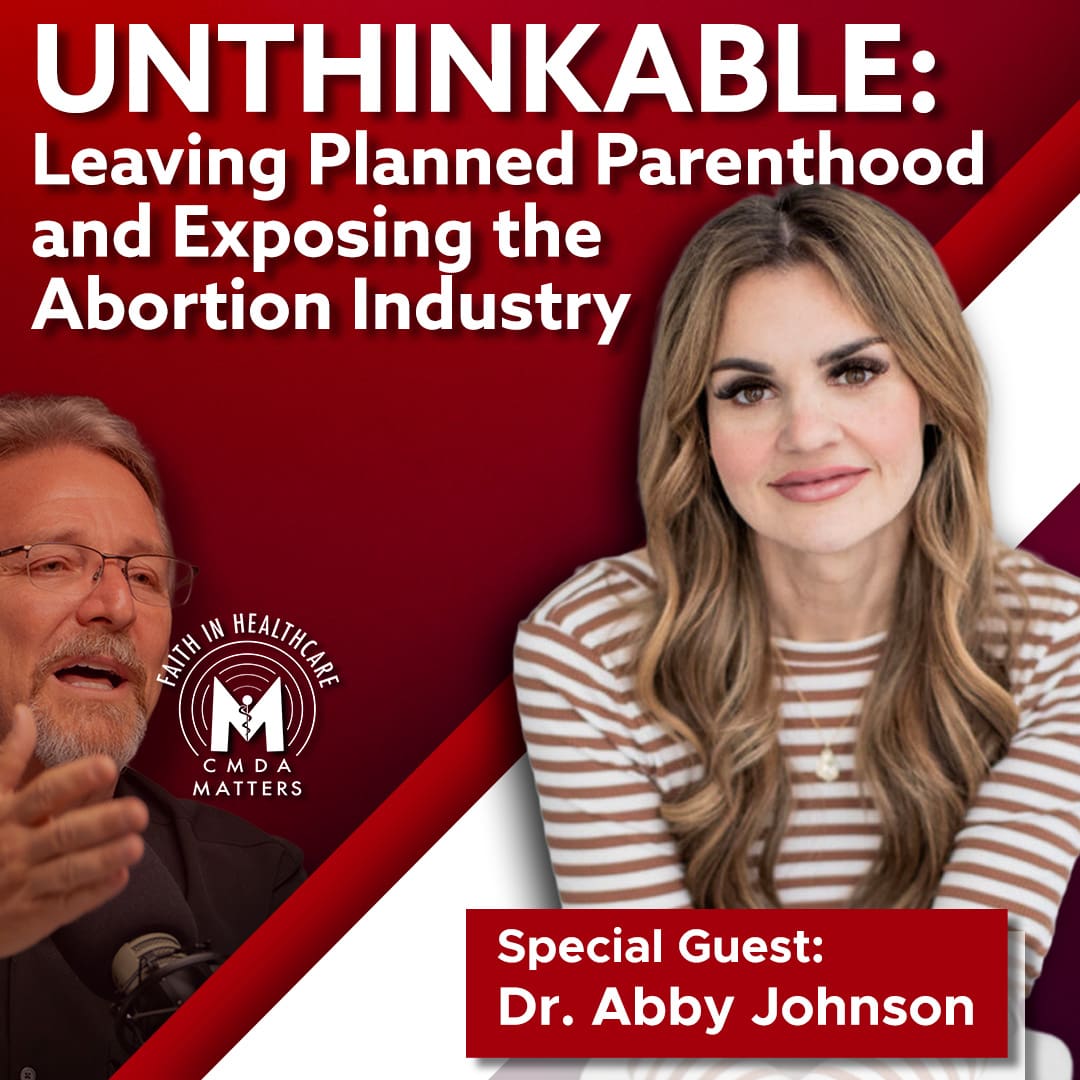
We are joined by Dr. Abby Johnson. She's a former Planned Parenthood clinic director whose life was forever changed the day that she witnessed a 13 week old baby fight for life on an ultrasound screen.
Abby is going to pull back the curtain on the inner workings of the abortion industry, its quotas, its secrecy, and the profound emotional and spiritual toll that it takes on the workers inside it. She also shares about her upcoming documentary which is called Unthinkable, and why she believes the new sidewalk for reaching women in crisis is happening actually on social media. It's a sobering but hope filled story of God's mercy and redemption. So let's get started.
Well, today on Faith and health Care, I am delighted because I have a unique situation that I've never had before in which I was actually the guest on someone many of you have heard of and maybe listened to her podcast on a regular basis. I was the guest of Dr. Abby Johnson. Politely rude or is it rudely polite? Abby, I'm trying to.
[00:01:53] Speaker C: Politely rude.
[00:01:54] Speaker B: Politely rude.
Dr. Johnson went to work for Planned Parenthood believing that she would be helping women. And after working her way up from a volunteer to a director of one of their facilities, and even winning Planned Parenthood's Employee of the Year award. Wow. You still have that, Abby?
[00:02:13] Speaker C: I do.
I still have the plaque. I still have the award.
[00:02:16] Speaker B: Abby had a surprising change of heart after witnessing a live, altered sound guided abortion procedure. And it became clear in that very moment that abortion didn't provide the freedom that she had promised to so many women in those counseling rooms. She realized abortion only caused harm, destruction and devastation. Upon that realization, Abby left her job in the abortion industry and has been sharing her experience ever since. And a book that tells about her life entitled Unplanned became a major motion picture that my wife and I went to see when it came out, I think back in 2019. She's gone on to write several books including the Walls are Talking and Fierce Mercy. And she's now been working on and very ready, close to releasing a feature length documentary called Unthinkable coming out in October. Abbey, is that right? Coming out in October or before then?
[00:03:10] Speaker C: No, I think it's going to be, I think we're going to release probably in December or January, probably, you know, maybe around like Respect Life Month, maybe in January. But yeah, we're very excited we're wrapping that up. And I think it's, I think it's going to be very eye opening even for people who have been a part of the pro life movement for a long time.
I think one of the, I think the voices that really haven't been heard, you know, kind of widespread, are voices from people who have worked inside these abortion facilities.
And we're, we're about to blow that door open with this documentary. And I think it's, I think it's going to be very shocking. I mean, there's things in there that I think people are going to say, I didn't know that kind of evil could even exist.
And it's going to be hard to watch for a lot of people.
Not because it's visually graphic, but even just hearing some of the testimonies of these workers and what they've experienced, what they've seen, it's going to be difficult for a lot of people to watch. But I think it's very necessary, I think it's necessary for us to understand what is taking place to these innocent children.
And I hope it really blows the door wide open.
Because the abortion industry thrives on secrecy and I think abortion continues to escalate because the true victim of abortion is the child in the womb and you don't see the child die. And so it makes it very difficult for people to really stand up and say, that baby deserves justice because you don't see the victim die.
So it makes it difficult for people to really stand up because you don't see it.
And so we want people to see, we want people to hear.
We want people to, to feel uncomfortable. We want people to walk away from this film feeling really a sense of horror, but also, you know, feeling a sense of urgency that we must do something. And there's no anonymity in the film.
So, you know, no woman is like sitting behind a black screen and, you know, these women are facing forward, you know, names, full names listed where they worked.
So very, very courageous, I think, to put all of this out there, especially admitting to some of the things that they have participated in themselves.
[00:06:17] Speaker B: Well, Abby, looking back on your journey from Unplanned, the book and then the movie, and then now, unthinkable. Go back to the beginning. What was your point of no return? I mentioned, you know, earlier, just a few minutes ago about what happened one day, but what was your point of no return when you said, I'm outta here, I'm never coming back to this place again.
[00:06:37] Speaker C: So, yeah, there were a few things that had been sort of building up with Planned Parenthood, you know, instituting abortion quotas, but then also, you know, doubling those abortion quotas. So, you know, you must sell abortions to, you know, this many, this many women. And, you know, how do you, how do you really, you know, up an abortion quota? I mean, what do you want me to, like, you know, drive around neighborhoods and, you know, start, know, start throwing out flyers? But the intention was we're going to go into low income, primarily minority neighborhoods and sell them this product because abortion is a product that Planned Parenthood is selling. And then, you know, we were building the largest abortion facility in the Western hemisphere, second largest to China, and we were going to be murdering babies through the six month of pregnancy. And that was sort of a. That was a, I guess where my morality, whatever kind of morality I had at that time is very subjective. I thought, you know, I never want to be a part of an abortion that kills babies that are viable, that could be, you know, viable outside of the womb. And so, you know, here we were, though, I'm having to look at this and say, okay, I have, you know, they're building me an office on the third floor of this huge abortion facility, and next door to my office, we're going to be, you know, killing these babies, babies that are potentially viable.
And so that was also concerning. But ultimately I ended up leaving. I mean, really, just the veil lifted, the scales fell from my eyes. I was asked to participate in a live ultrasound guided abortion procedure inside of Planned Parenthood. Ultrasounds are not typically used during the abortion. They were used before the abortion was performed to date the pregnancy to find out how far along the woman was in her pregnanc.
And then the ultrasound was rolled away. It was not used again.
And unless there was some sort of complication like a uterine perforation, which did happen, and the. The abortion is done in a blind sort of manner. The doctor just, you know, inserts the suction tube and the cannula and just sort of blindly pokes around and rolls the cannula around until he thinks he has enough blood and tissue in a glass jar.
That glass jar goes into a PO lab. The POC stands for products of Conception. And then, you know, there's a POC technician and her job is to reassemble the parts of the baby to ensure that there is, you know, head, torso, two arms, two legs. And if the baby is smaller than that, then you're trying to find the Chorionic villi. And then that's, you know, that's kind of it. That's the way abortion is done. I had never witnessed. I know I'd been there for eight years, and it's hard for people to believe this, but I had never seen an abortion done on an ultrasound screen because it is not. It is just not.
That is not standard practice inside of an abortion clinic.
Our goal was to have a woman on the table, off the table, abortion complete in five minutes.
And so, you know, you just didn't have time to introduce an ultrasound in the middle of the abortion. We're trying to get them on and off as quickly as possible.
And we had a visiting physician come in that day. He had his own practice in Austin.
And he said, you know, this is the way I do them at my own private practice. He said, I, you know, it's safer for the woman. I can actually see what I'm doing while I'm performing this surgery.
That made total sense to me. I just. I couldn't even think of another surgical procedure where the doctor can't see what he's doing as he's operating, you know, on this, on a person's body.
And I just want to be clear. I'm not a medical doctor, so I have my doctorate, but it is in counseling. So I'm a therapist, not a medical doctor. So I just, you know, I thought, okay, this makes sense to me. I asked my supervisor, you know, if this is safer for a woman, why isn't this sort of the gold star standard of care inside of Planned Parenthood? She told me it takes too much time. It adds, you know, three to five minutes per patient. And we just didn't have that sort of time.
But he did ask me to come and assist him during the abortion.
And so I did. I held the ultrasound in place on her belly.
And I'm not trained. I don't have my RDMs or anything like that. I was just kind of trained in house by Planned Parenthood. I should not have been performing procedures like that on women.
But if you're a warm body and you can do the job, they'll set you loose to perform invasive medical procedures on women in the abortion industry.
And so I was.
I was giving anesthesia. I was starting IVs, I was giving all kinds of injections, doing ultrasounds, all kinds of things that I should not have been doing.
And so I watched, and I saw the suction tube, the cannula go into the woman's womb. The suction wasn't yet turned on. And I watched it move closer and closer to the side of this baby. I could see the full profile of this 13 week old baby.
And when it got close enough to him, it looked like he felt what was taking place. And it appeared that he sort of was woken up and he jumped and began sort of moving away from the probe. The doctor was going further and further in, closer to the baby and it, it looked like he was trying to move away from that instrument.
And the doctor then asked the technician to turn on the suction machine.
And I just, I stood there in horror as I watched this tiny child be torn to pieces inside of his mother's womb.
And you know, I remember wanting to, you know, yell out like, you know, stop, what are you doing?
But I didn't. I just stood there just watching. I think I was in shock by what I was seeing.
And I remember just when it was over, I just dropped the ultrasound wand and I walked out of the room and I went to my office and closed the door and I just sat there for the rest of the day just sort of contemplating what I had just seen and you know, then trying to figure out, what am I going to do now?
Because it was, it was just such a shock. And I, you know, the movie portrayed it as, you know, I go into the bathroom and I have this meltdown and I'm crying and all of this and that, that would be a natural reaction to this, but that was really not what happened. Being a pro choice feminist had been my identity for eight years.
And I was suddenly faced with this reality that everything I had believed was a lie.
And I also then had to, I had to then come to a place and reconcile that, you know, not only had I been a part of this huge lie, this, this huge scam, I mean, how many times had I told women, your baby won't feel anything. It's not even a baby. Like, it's not, you know, you know, how many times have I lied to these women? Thousands and thousands of times. But then you kind of have this reckoning and I was like, I've done this to two of my own children.
You know, and then, and then you think, can I actually admit that, you know, if I walk away from this, I'm basically making an admission that I've, I've killed two of my children.
You know, that's a hard admission to make. That's a hard admission for a mother to make.
And yeah, I, I ended up staying there a week later after I, after I saw the abortion. I I actually thought I went back in. That happened on a Saturday. I went back in the next week, and I thought, I'm going to change Planned Parenthood. Like, I'm high enough up that I can affect. I can really affect change here at Planned Parenthood. And I'm. I'm going to move us away from abortion and just back to, you know, health care, doing what we do well.
And I just. Every time I kept looking around, I was like, this is who we are. We are abortion everywhere. It's just part of who we are. There was even a conversation that week. We were updating our birth control pamphlet.
And there was a conversation, had, sort of an argument had between, you know, all the higher ups. We were talking about, you know, whether we should add abortion to the birth control pamphlet.
And I just thought, there's no rolling this back.
We've come so far here with making abortion our product.
You know, it is Planned Parenthood's product.
It's our top selling product.
There's no way we can roll this back.
And I finally had had enough, because I thought, well, I'm gonna leave.
You know, I'm gonna leave once I have another job.
And I thought, there's no way I can leave, you know, until I have another job. My husband was a teacher. You know, he didn't make any money.
And I thought, there's no way I can leave until I have another job. I made a lot of money working at Planned Parenthood.
And one day I was, you know, we were doing. We weren't doing surgical abortions that. That day. We were only doing medical abortions, the pill abortions.
And I watched this woman, she was walking out to her car, and she had a brown paper bag.
And I knew inside of that paper bag it was chemical abortion pills.
And I just thought, man, I cannot escape this. This is everywhere. Even if I don't participate in it, even if I'm not counseling that woman, even if I'm not taking her money, even if I'm not administering that Mifeprex pill, even if I'm not putting the misoprostol in the bag and giving it to her, my check, that big paycheck I get every two weeks.
[00:18:52] Speaker B: You've been complicit.
[00:18:53] Speaker C: Yep, I'm complicit. It's. It's blood money.
[00:18:56] Speaker D: Yeah.
[00:18:56] Speaker C: You know, and I knew then I had to leave. And that was the day I turned in my resignation.
[00:19:02] Speaker B: Wow.
[00:19:02] Speaker D: So, Abby, you are speaking here to two surgeons, by the way. And there are standards of care.
There's protocols and particularly giving full informed consent to the patients and such. But you alluded to that the abortion industry is to make money. And in fact, you had stated earlier that the abortion industry thrives on secrecy and it seems like it also thrives on deception. Yeah, so my, my question is actually personal. Here's why it's personal. As a medical director for Pregnancy Center, Christian Pregnancy center in, in the state of Oregon, we get referrals every month from Planned Parenthood. One is they, they're not willing to do an ultrasound outside of an abortion, so they refer to us. But here's my question. God has gifted you as being a great communicator.
So what, what do we particularly as healthcare workers, what can you teach us when we are engaging those that either work at Planned Parenthood or involved in the abortion industry of some sort? And I will just tell my, my community, as far as healthcare professionals, they're enthusiastically support abortion within the community. They're complicit as well. So give us some talking points, some communication skills. How do we speak to those either in the industry or those that support the industry of abortion?
[00:20:14] Speaker C: Yeah, that's a great question.
You know, I live in Texas, so I have a, I have a pretty good base of pro life support here. So I can't even imagine how difficult it is in Oregon, in the Pacific Northwest.
But you know, I, I think that it's, it's growing in the medical community to, you know, support abortion to.
What's interesting though, I have to tell you is, you know, we help abortion clinic workers leave the industry.
And what's so interesting is that when these workers leave and they could be a registered nurse, they could be a nurse practitioner, you know, they could be a licensed worker and you know, they'll submit their resume to other doctors, you know, other healthcare entities, and these healthcare providers do not want to hire them.
And I think that's really telling, right? So it's like these, these doctors, they want abortion to be available to their patients, right? They want abortion to be out there and accessible. But they have to know that the abortion industry cuts corners.
You know, they participate in fraud, they don't keep clean clinics. Right? They know this and so they don't want to hire the workers.
[00:21:43] Speaker D: That's interesting.
[00:21:45] Speaker C: That come from these centers.
So, you know, I think when you, when you talk about standards of care, I think that's really one way to go about it. When you're talking to other medical professionals and you know, and you're talking about standards of care and you know, a Lot of these abortion facilities, they are, you know, many of them fail inspection reports.
These inspectors come in, they find them using unsterilized instrumentation.
They find them not reporting statutory rape, sex trafficking.
These are systemic problems within the abortion industry. This isn't an isolated incident.
These are things that are happening all throughout the country at abortion providers. And one of the things that I'll ask doctors and healthcare workers about is, would that be acceptable at a place where you worked if you had.
This is an example I give all the time.
We had 21 packs of surgical abortion equipment.
So we had 21 sterilized packs of dilators, tenaculum, so for clamp. So we had 21 wrapped, sterilized packs. Ready to go, Ready to go.
Now we might schedule.
We might perform 50 abortions that day.
Well, our large autoclave, it took about three hours to properly sterilize instrumentation, but all of our patients were scheduled within a two to three hour.
[00:23:34] Speaker D: Oh, man. Yeah.
[00:23:36] Speaker C: Time frame.
So what does that mean?
[00:23:39] Speaker D: You're skipping corners.
[00:23:40] Speaker C: Yeah. What does that mean? That means that our instruments were simply after they were used, once they were dipped in Metricide, washed off in hot water, put back into blue paper, and wrapped up as if they were sterilized.
[00:23:57] Speaker B: Wow.
[00:23:58] Speaker D: Wow.
[00:23:59] Speaker C: And so, you know, I will ask doctors and nurses and other healthcare workers, would that have been acceptable at your place of work? Would that have been acceptable at your practice?
[00:24:11] Speaker D: Mike, that would not have even been acceptable in Tenwick.
[00:24:13] Speaker B: Were you. No. Not even in rural Africa, would that be acceptable?
[00:24:17] Speaker C: Right, but this is happening all the time. I mean, we have abortionists who. I mean, Dr. Kermit Gosnell, perfect example.
Dr. Kermit Gosnell up in Philadelphia was. You know, he was only busted.
The state only came in to his facility because they thought he was running a pill mill, which he was.
But for decades, he had been delivering babies alive and snipping their spinal cords with household scissors.
That's how he was performing late term abortions.
When the state came in to his facility, there were cats wandering around the property, wandering around inside. There was feces, cat feces all over the facility.
There were gallon size, just gallons and gallons of aborted babies in the basement. He didn't even have a contract with a biohazard medical waste provider.
So they were just sitting there decomposing in the basement.
He was not properly sterilizing instrumentation. When the officers went into the lab, they found jars and jars of baby feet that he had cut off and put in, like, pickle jars.
So I asked people, would that be Acceptable. These are known.
These are. These are known actions that are documented, that we are aware of, that police, that officials have found, that have seen Dr. Kloepfer upon his death. They found over 2,000 aborted babies in his home that he had been storing and in the trunk of his car.
[00:26:18] Speaker D: That's gruesome.
[00:26:18] Speaker B: His own little daco. His own daco.
[00:26:21] Speaker C: But this is. This is happening all across the country.
This is happening in abortion facilities. This is a systemic problem.
Right now in our ministry, we are having a problem with abortion facility workers killing themselves before they contact us.
Because what they're seeing inside of these abortion facilities is so brutal, it is so gruesome, they can't even handle it anymore. They can't. They can't handle what they're dealing with.
Our suicidal ideation rate in our ministry with the women who contact us is 38%.
Our suicide attempt rate is 17%.
I've never heard a statistic like that in any other line of work.
I mean, it's crazy. It's insane. It's off the charts. Why?
Because abortion is not normal.
Working in an abortion clinic is not normal.
Almost every worker that comes to us has some sort of addiction.
They're addicted to drugs, alcohol.
We hear story after story of doctors and nurses who are working in the abortion industry right now who are performing abortions while intoxicated.
And so I asked these professionals, would that be acceptable in your clinic? And of course, the answers are no.
[00:28:06] Speaker B: Right?
[00:28:06] Speaker C: So I try to ask people, you know, who support abortion. I try to give them a very real, detailed account of what we know to be true and what is proven to be true.
You know, the types of conditions that are, that are inside of these abortion clinics. And then I just ask them, would you be okay working in a place like this? And if not, then why are you referring your patients to a place like this?
[00:28:42] Speaker A: Before we continue with this week's episode, here's a special announcement for you.
In November, we launched our year end giving campaign along with a $177,000 matching gift.
Thanks to your incredible generosity, we've already exceeded that match and are well on our way toward our $1.3 million goal as we enter the final weeks of the year. Thank you to everyone who has already given your support, truly equips and encourages Christian healthcare professionals to bring the hope and healing of Christ to the world.
If you haven't had the chance to give yet, would you prayerfully consider joining those who have?
Every gift makes a meaningful impact to give. Visit CMDA.org give or call our stewardship team at 888-230-2637.
Applications are now open for the CMDA Mentoring Academy, a year long journey designed to help Christian healthcare professionals grow spiritually, professionally and personally through one on one mentoring and blended learning.
The program runs April 2026 to April 2027, launching at the CMDA National Convention with about 44 hours of in person, virtual and self study components.
Eligible applicants include physicians, dentists and advanced practice providers who desire to grow as disciple makers.
The Application deadline is December 31, 2025.
Learn more and
[email protected] mentoring applicants.
Let's jump right back into this week's episode.
[00:30:41] Speaker B: Abby, you mentioned all of the suicide, suicidality and the suicide rate among those who are working and you began a ministry and then there were none. And you've helped over 700 of these workers come out of that industry. So I want to ask you, what role does faith play in that? And how are you, what does it look like when you help one of these workers come out of Planned Parenthood and the abortion industry?
[00:31:07] Speaker C: Yeah, I mean, I think faith has everything to do with it. You know, we, we talk about, you know, the abortion industry being driven by money and certainly that's, that's part of it. But at the end of the day, the abortion industry is really driven by demonic forces.
It's really driven by the desire for child sacrifice.
And, and we see that because, you know, I remember when the abortion pill, when the last administration allowed the abortion pill to open up and you know, now it's online everywhere. And, and I thought, huh, I wonder what Planned Parenthood is going to do with this information. Because this was financially devastating for them, right? Because before women were going to Planned Parenthood and they were paying 5, 6, $700 for RU46 and misoprostol, and now these women can get it online for $100.
And so I thought, okay, they're gonna have to act like this is a good thing, right, to stay in unison with their movement. But I thought, this is, this is bad. Like this is gonna tank their business.
I thought, what are they gonna do here? So of course, you know, Planned Parenthood comes out and they're like, oh, we just, oh, so proud of this administration. Yay, access to the abortion pill.
And I thought, well, of course, of course. Because at the end of the day, it's not really about the money.
It's about sacrificing as many children as possible.
And so when a woman goes into an abortion facility and she has an abortion. She may not even realize that at the core of what she's doing is sacrifice. She's sacrificing her child. She doesn't have to recognize that for the enemy to celebrate the sacrifice, but it is still a demonic sacrifice.
And so, you know, when these workers come to realize the evil that is taking place in these facilities, it's like there's fire in their feet. They have to leave immediately. We had one worker that contacted us that said, I know you're going to think I'm crazy for saying this, but when our doctor performs abortions, I have literally seen his face change into something that looks like a demon.
And I said, you're talking to the right person. I don't think you're crazy at all, because I do think this is a demonic practice.
You know, we've heard story after story of abortion clinics closing down.
You know, they go in, these pastors and priests will go into these abortion facilities to do, you know, a blessing, a prayer service, whatever. And we've heard story after story of doors. You know, when they put their hands up to do the blessing, these heavy metal doors flinging wide open, and the people there, they can feel a rush of wind go through the hallways.
It's like the enemy is leaving this building.
So we know. We know that this is evil. We know it goes much deeper than anything, like, temporally or tangible, like money. It's much deeper than that.
And so faith has everything to do with it.
And so when somebody calls us and says, you know, I want to leave, it's imperative for us that, you know, we talk to them about the spiritual ramifications of working in an abortion clinic, and we get their soul right with Jesus Christ.
That is imperative.
Now, sometimes we have to immediately get to sort of that hierarchy of needs, right? They're concerned about their single moms. They're concerned about, you know, how am I gonna be able to pay my rent? And so we definitely address those things as well. And that's a huge part of our program, is that, you know, transitional financial help. Because once somebody recognizes I'm participating in evil, we say to them, you flee from it, sister. Like, you don't cooperate with it anymore. You flee from it. And so we wanna help them be able to do that confidently without worrying about finances. And so that's a big part of our program.
But it is our.
For every single person that contacts us, for them to have reconciliation with Jesus Christ or for them to find that saving relationship with Christ for the first time. And I will tell you, most of the people that contact us do have some sort of foundational knowledge of Christ, but they have been separated from him. And so we want to bring that back together.
[00:36:23] Speaker D: So, Abby, I want to ask you about these vulnerable populations. And we've certainly talked about the babies. You've talked about the healthcare workers that involved in abortion and such. In fact, when Mike hired me, hired me as the vice president of advocacy and bioethics. And so I have what we call the a team or advocacy team. And we advocate for all kinds of vulnerable populations which ties into the abortion. But let me preface my, my question, and it's, and it's for you specifically.
And I look at the apostle Paul. He was actually participating in the killing of Christians before Christ in his fierce mercy, if I can use the title of your book, in his fierce mercy reached out to Paul and saved him. Paul had to take a break and study, and then his ministry started and he became an apostle. Now, I'm not equating you with an apostle at all, but you were deeply involved in this industry and God in his fierce mercy, brought you out in a very amazing way out of that industry.
So we know that the babies are vulnerable, but so is human trafficking. We have women that are trafficked. We have poverty affects poverty. This affects families, affects marriages. It affects men.
Men don't have to be men anymore with the abortion industry, it's affecting all of society. So give us some your idea of how this idea of just human dignity is just being taken away out of our culture with the abortion industry.
[00:37:45] Speaker C: I always tell people there is a human cost to abortion.
And I don't just mean the child in the womb. Of course there is a human cost with the child in the womb, obviously. Right.
But there is more than that.
So, you know, when we think about the woman who's having an abortion, there's a human cost there as well. Because, you know, as I said, you know, even if she doesn't recognize that what she is doing is a sacrifice to the enemy, it is that creates a mark on her soul, a stain on her soul.
And it makes it difficult for these women to process emotions sometimes.
Sometimes they don't even realize that they are experiencing grief from their abortion.
Sometimes it makes it difficult for them to connect with people in relationships. Sometimes it completely tears apart marriages. And, and they don't understand why.
So there is a human cost certainly with the woman, even if she recognizes it or not, there just is because of what abortion is. Right.
There's certainly a human cost with the Fathers lost. Fatherhood is a devastating reality for many men. That is a human cost.
There's a human cost even for the people who are working in this heinous industry now. I'm not painting them as victims at all. We are not victims. We made the choice to work there.
But there is a human cost there.
It's so abnormal to work in an industry where part of your job is piecing baby parts back together.
That does something to the human soul. It does something to your spirit.
It darkens the soul. It hardens the heart.
There's a human cost there.
And so I think it's important for us to recognize that. That abortion is.
It seeps into every part of our humanity.
And the answer to that, of course, is our Savior, Jesus Christ. That's the only answer. That's the only way that we really can heal from such a huge, devastating loss.
[00:40:18] Speaker B: Abby, you obviously believe in the power of media, and you've had. I think I learned when I was on your podcast that your podcast is about the same age as ours here. First CMDA matters and then faith in healthcare. You obviously believe in the power of having guests and having this conversation week after week after week. And now the movie Unthinkable. So moving forward, what role do you see? Ongoing efforts, yours and so many others. Lila Rose comes to mind. Just using media to convince maybe those who are in the middle, who are not such staunch to the death pro abortion. What role is it going to play? And how can Christ followers do some practical things in the social media to make an impact to save babies?
[00:41:05] Speaker C: Yeah, I think, you know, I've been talking about this, and we're about to. Our ministry is about to roll out something that I think will be very helpful.
But I've been saying that, you know, sidewalk ministry has always been very important. Right. Going to where the abortions are taking place.
And one of the things I've been thinking about is that as abortion facilities, as these large abortion affiliates, they begin to merge.
You know, when I went to work at Planned Parenthood, There were over 100 Planned Parenthood affiliates. Now there's, you know, something like less than 50.
They're merging, clinics are closing.
Our sidewalks are going away.
And now with the availability of medical abortion pills online, there's over 70 websites where women can access abortion pills and receive them straight to their door in two days.
You know, the sidewalks are kind of rolling up and they're going away. We have less and less ability to reach these women as they're walking into brick and mortar centers because Brick and mortar centers are disappearing.
And so I've kind of started to think, like, what, okay, what is the new sidewalk?
And I believe the new sidewalk is social media and particularly social media comment sections.
And the way that we behave in those comments sections is going to really matter in life and death decisions for women and the way that women who have had abortions are able to heal from their abortions.
So we're about to launch a new initiative that's going to essentially be sort of training for just, you know, regular pro lifers. Everybody's got social media these days.
And so, you know, how can you as a person, you know, a woman who's had an abortion, how can you use your testimony to reach out to that woman in the comments who says, you know, I just, I don't know, I think I'm thinking about having an abortion. Already have many children, you know, whatever, whatever the scenario may be, or as a man, you know, what is that woman hoping to hear from a man's perspective? You know, we want to help, give you the words to say. We've done so much training to help people be as effective as possible on those sidewalks in front of those brick and mortar centers.
And we've kind of left the, we've left social media sort of, you know, up in the wind.
And these women are reaching out for help. They are reaching out. And what I see most often are, you know, 18, 19, 20 year olds on social media saying, I just took the abortion pill and you know, I'm done with it. I, you know, my baby's gone, I flushed my baby down the toilet, whatever, but I'm so sad.
And I just, I don't know why I'm so sad. I can't stop crying.
And I literally will click on those comments and there's hundreds of women underneath in the comments saying, oh my gosh, I feel the same way.
Why can't I stop crying?
Like, guys, this is where we need to be.
[00:44:26] Speaker B: Amen.
[00:44:27] Speaker C: We need to be in that comment section reaching out, giving hope, giving love, sharing our own testimony, saying, hey, I've been there, please reach out to me. Here's my email, here's a phone number you can call, here's a ministry that can help you. Like, this is where we need to, and we need to understand how to effectively use our own testimonies to reach out to women. Right? That's what revelation says we'll overcome by the blood of the lamb. And our testimony, our testimonies are so important, but we don't really effectively know how to use them to be a witness to other people who are contemplating in that, in that, you know, valley of decision of life and death, or women who are really hurting or men who are really hurting. Like, how can we use our stories?
So we're going to be launching this initiative soon. And the cool thing about it is that we are going to have former abortion workers in real time. People are going to be able to like screenshot. I just saw this in a comment section. Can you help me respond?
And we're going to have, you know, real life, real former abortion workers who are also post abortive. We're going to have them answering and say, hey, here's what I would say. Here's my recommendation so people can get that real, that live help, quick help so they can respond in those comments sections. We're going to be training people on how to respond. It's not hard, but I think it is very valuable.
[00:46:02] Speaker D: So, Abby, you're obviously excited about this and it makes us at CMDA excited as well. So we're on the train with you going that direction. But, you know, our battles are going to continue. They're changing, but they're going to continue. And I think the battles will continue until Christ comes back. That's absolutely, that's my opinion. But personal question for you and I, I appreciate the excitement in your voice, but how do you, how do you personally keep the hope within you and how do you not grow weary?
[00:46:32] Speaker C: You know, I think rest is very important and I think this battle can make you weary.
And so I think spiritual rest is important. I think emotional rest is important.
I think physical rest is important.
And sometimes social rest is important.
You know, just being alone, turning your phone off. Yes. I'll be very honest. I spend a lot of time in my church in prayer, just, you know, sitting before the cross, just praying alone.
You know, I send my kids off to school and I go to church and I spend time in prayer.
We spend an entire week at a family camp every summer, an entire seven days with no cell phones, no service.
It's just an outdoor camp. And we just really plug into Christ and plug out of the rest of the world and really just trying to deep. We really just deepen our relationships with each other and deepen our relationships with Christ.
I think, you know, we, we really talk to one another. We do that well within our family. We have family dinners every night. My kids, I don't care what they're involved in, they better be back at home to sit around the table and have that Family time. So we ask them questions about their day and about their friends and what's going on.
You know, being able to plug into my family, being able to plug into my faith has been critical.
It really has been critical. And having a core team of people that I work with every day that share the same values and that understand the importance of rest. My favorite article that has ever. I want this on my tombstone.
My favorite article that's ever come out that had a quote for me in it. It was hilarious. It was actually from the Atlantic, which is not super positive toward us usually, but this woman, I think I just surprised the heck out of her. And so she wrote a lot about me in this particular article. And it was talking about, you know, the challenges of being, you know, a CEO of an organization and being a mother.
And, you know, can you sort of have it all?
And I was just very honest and I said, you know, really, you can't.
You can't as a woman, as a mother, sort of have it all. You know, you have to make choices.
And for me, I'm not going to give up the important vocation that God has given me as a mother for a job. Even though I have a very important job, even though I love what I do, I'm still going to prioritize my husband and my. And my children first.
And I said, you know, and it's very important for me as a leader of an organization to allow my staff to prioritize their family first. And I want all of my staff to know that their well being is far more important than anything we do in our ministry and that their families are far more important than anything we do in our ministries.
So we were kind of talking through that and I ended up saying, you know, I mean, if my staff needs to, you know, if they need to take a nap in the middle of the day because they've been up nursing their babies, take a nap, you know, so the woman says in the Atlantic article, and Abby Johnson even allows her employees to take naps in the middle of the day.
[00:50:24] Speaker D: There you go, Mike. So that's gonna be for cda.
[00:50:26] Speaker B: You gotta write that note down.
[00:50:27] Speaker C: And I was like, that is the best quote ever, right? If you need to take a nap, take a nap, right?
And so I think it's just important, just getting that, getting that rest and getting that rest in Christ. And that's kind of like a Sunday school answer.
But not just doing it at home. Like, go to the places where you can be quiet.
Go to the places where you can really listen to the Lord. I spend a lot of time, like, just out, like, hiking, just in nature, just admiring God's creation.
I always tell people I have a magical hair dryer because I feel like God talks me through my hair dryer.
But it is a quiet place. It's a place where my kids don't. You know, they're not always asking me for something.
It's a place where I'm just drying my hair, just me and my hair dryer. And I feel like God speaks to me there.
Just Be alone with the Lord and be comfortable in silence.
Be comfortable with setting boundaries with your phone, you know, with your computer. Check out when you need to check out.
And I really think that has given me the ability to continue to work in this space and hold babies as much as you can.
[00:51:49] Speaker D: Great.
[00:51:49] Speaker C: I love it.
[00:51:50] Speaker D: So, Abby, thank you for sharing your personal story. And by the way, you know, Jesus modeled that when he was here on Earth of being with his father alone. And he probably had more demand on his time than he said.
[00:52:00] Speaker B: Oh, yeah, of course he did.
[00:52:02] Speaker D: So here's kind of my last question, and that was your personal. My question is personal in that the people that I engage with, and it can be patients, it can be colleagues, it can be even other church members, but it's that speaking the truth with grace and compassion. And I've. I assume you've seen both sides of the equation where someone speaks with just too much truth and. No. And they become obnoxious.
[00:52:24] Speaker C: Yeah.
[00:52:24] Speaker D: Or they actually just speak with grace. And if you don't speak truth with the grace, then it's. It's allowing the sin to continue.
So give me some advice on how I balance speaking truth with grace.
[00:52:36] Speaker B: Great question.
[00:52:37] Speaker C: Great question.
So I think the best way to answer that, and I just actually experienced this recently.
I think we allow our personal experiences to really occupy space in our minds when we look at headlines or we read stories or, you know, whatever it may be.
And so I have a dear friend of mine who works at a pregnancy center, and she had an abortion many years ago.
And she did so because she felt ashamed that she had gotten pregnant, you know, outside of marriage, and she was worried about her parents, you know, finding out and all of this. And so she had an abortion just purely out of shame and fear.
And so there was a story that had come out, and she was really, you know, just like, oh, this girl did this because, you know, she was so scared and, you know, just had so much fear. And actually, we just. We don't actually know the details of the story. But she was looking at her own life experience and kind of looking at this story through her own lens, right?
And I'm looking at the story like, well, I've seen babies suffer and die.
And so I'm like, no, like, let's know. Let's think about the baby that suffered and died, right?
And I think there's a balance that has to be had there.
And I think it's a very careful balance that we have to have in the pro life movement and that we don't allow our own experiences to taint the truth.
I think that's when we can come across as like a clanging gong, right?
That we have to balance that perspective of truth and grace.
And I think we do that by really doing our best and asking for God's help in this.
To truly see the woman and her child as equal persons, equal in dignity, in worth, and in value.
There are people on both sides of the move, on both sides of these movements.
Some of them would say, well, a woman is more valuable, right? We need to see her perspective at all times.
And there are some people, particularly in the pro life movement, that would say, well, no, we need to always consider the baby and only consider the baby.
Well, both of those are wrong, right?
We need to be looking at this and saying, when we look at infinite dignity and worth and value of a human being, really, like, those two people are in a dead heat, right?
They are coming in equal. They're both coming in strong.
And that's how we have to really temper this lens and look at it. And sometimes we have to remind each other, right? My friend and I just got on the phone with each other and said, you know, we're not at odds. We know each other's hearts, but let's talk through this, right? And in the end, we were like, yep, yeah, we're both right.
[00:55:56] Speaker D: Right?
[00:55:57] Speaker C: We both have the same heart for moms and for babies. Let's just talk it through, right? And so I think.
I think that's it, though. I think that we, when we as a movement, when we look at the human person, that we see everyone with that equal dignity, that equal life, that we see everyone with that equal amount of personhood from the moment of conception until their death.
[00:56:24] Speaker D: Amen.
[00:56:25] Speaker B: Well, Dr. Abby Johnson, thank you for joining us today on faith and healthcare and in our show, notes today for our listeners who are listening across the globe. Abby, we all appreciate what you're doing, the warrior that you are, to take care of women and their babies, and thank you for the transparency telling us your full story. And those of you who haven't seen the movie, recommend that you see the movie Unplanned. And also, by the way, there is another unthinkable movie out. I actually got online and did a Google search and I saw an action flick, but so they'll have to search for unthinkable Dr. Abby Johnson documentary.
[00:57:02] Speaker C: They can go. Yeah, the website is unthinkabledoc. D O C like documentary unthinkabledoc.com.
[00:57:09] Speaker B: Okay, very good. And we'll have some other notes that point to your podcast and so forth. So thank you for graciously sharing your story as well as your ministry. And our listeners are prayer warriors too, and so praying for these rest rescue operations to bring workers out of the abortion industry. Any final comments? And maybe, Brick, would you pray for Dr. Abby Johnson and her ministry?
[00:57:33] Speaker D: It'd be my pleasure. Abbey, any comments?
[00:57:35] Speaker C: Oh, I just, you know, I encourage people to just keep. Keep going, stay in prayer, you know, stay faithful and stay in scripture. I think that's one of the most important things that I was brought up to do is, is stay in scripture. That is how the Lord is speaking to you each and every day is through his word.
[00:57:58] Speaker B: Amen.
[00:57:59] Speaker D: Amen. Let's pray. Dear Father, and I do want to thank you and praise you for who you are. And by your mercy, you snatched Abby out of that industry, that deceptive, if I can so call it, Father, the evil industry of taking lives of innocent and human beings, the vulnerable population. So thank you for bringing into a saving great Abby into a saving grace with you. I thank you that again, by your holy spirit, she has the desire to even know you better, to know you more, to know you more richly, more intimately, Father, so bless her ministry. I ask for blessing upon the entire staff that she works with that they do get their rest and that the rest will be in you. And give them guidance as they navigate the new battle that are on the forefront out there. Father, in your name we pray. Amen.
[00:58:50] Speaker B: Amen.
My sincere thanks to Abbey for joining Brick and me today and for her courage in telling her story with honesty and with grace.
Abbey reminds us that abortion carries a huge human cost far beyond what most people can actually see, not only in the womb, but in the lives of women, men, and the workers whose souls are deeply wounded by what they witness almost every day.
Only the mercy of Christ can redeem and restore that kind of brokenness. Friends, if you'd like to learn more about her ministry.
And then there were none or her upcoming documentary Unthinkable. You'll find links in today's show Notes as we reflect on Abby's story and the realities of abortion that she's brought into light, we cannot and must not turn our eyes away from what is happening.
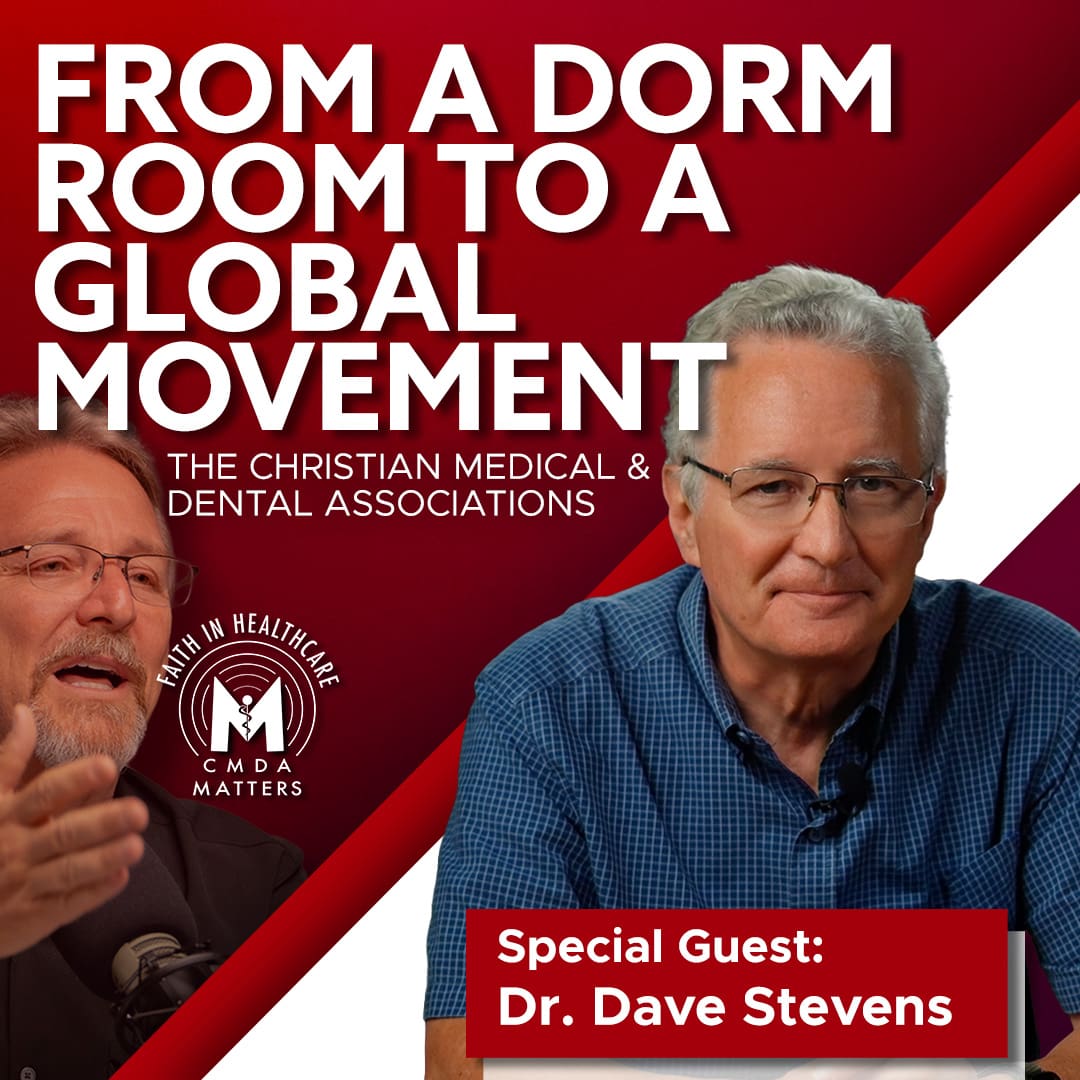
Well, next week actually on Christmas Day, we are going to journey through nearly a century of CMDA history As former CMDA CEO Dr. Dave Stevens shares how God grew a simple student prayer group in Chicago into a global Christ centered movement in healthcare. It is a story of faithfulness fitting for this Advent season. Thanks for joining us today. May you recognize this week that the Lord is with you and that he is for you friend to do his good work.
We'll see you next time, Lord willing, on Faith in Health care.
[01:00:42] Speaker A: Thanks for listening to Faith in Healthcare, the CMDA Matters Podcast. If you would like to suggest a future guest or share a comment with us, please email cmdamatterscmda.org and if you like the podcast, be sure to give us a a five star rating and share it on your favorite social media platform.
This podcast has been a production of Christian Medical and Dental Associations.
The opinions expressed by guests on this podcast are not necessarily endorsed by Christian Medical and Dental Associations.
CMDA is a nonpartisan organization that does not endorse political parties or candidates for public office.
The views expressed on this podcast reflect judgments regarding principles and values held by CMDA and its members and are not intended to imply endorsement of any political party or candidate.