[00:00:00] Speaker A: Foreign.
[00:00:21] Speaker B: Merry Christmas, friends, and welcome to this special holiday episode of Faith in Healthcare.
As we celebrate the birth of Christ, the moment that God stepped into history in the most unexpected way, it feels fitting to pause and remember the ways that he has stepped into our story as well.
Christmas reminds us that God often begins with the small and the ordinary and the overlooked. And then he writes a story far bigger than anyone could have ever imagined.
And that truth hit me fresh during this Advent season as I I attended meetings in early December in the United Arab Emirates associated with the international CMDA Organization.
There I met Christian medical professionals from across the Middle east who are serving faithfully in a place where their witness is deeply needed and where God is using Kingdom workers, including regional Arab Christian healthcare professionals, to demonstrate Christ's compassion and healing in remarkable ways. Friends Listening to their stories of courage and humility and hope in the Gospel in a setting where talking about Christ can actually be risky, reminded me that the same God who worked through the earliest CMDA students in the 1930s is still calling men and women to serve him around the world today.
And as CMDA approaches its 100th year, we wanted to take a moment to look back, and not simply at dates and milestones, but at the unmistakable faithfulness of God woven through this ministry.
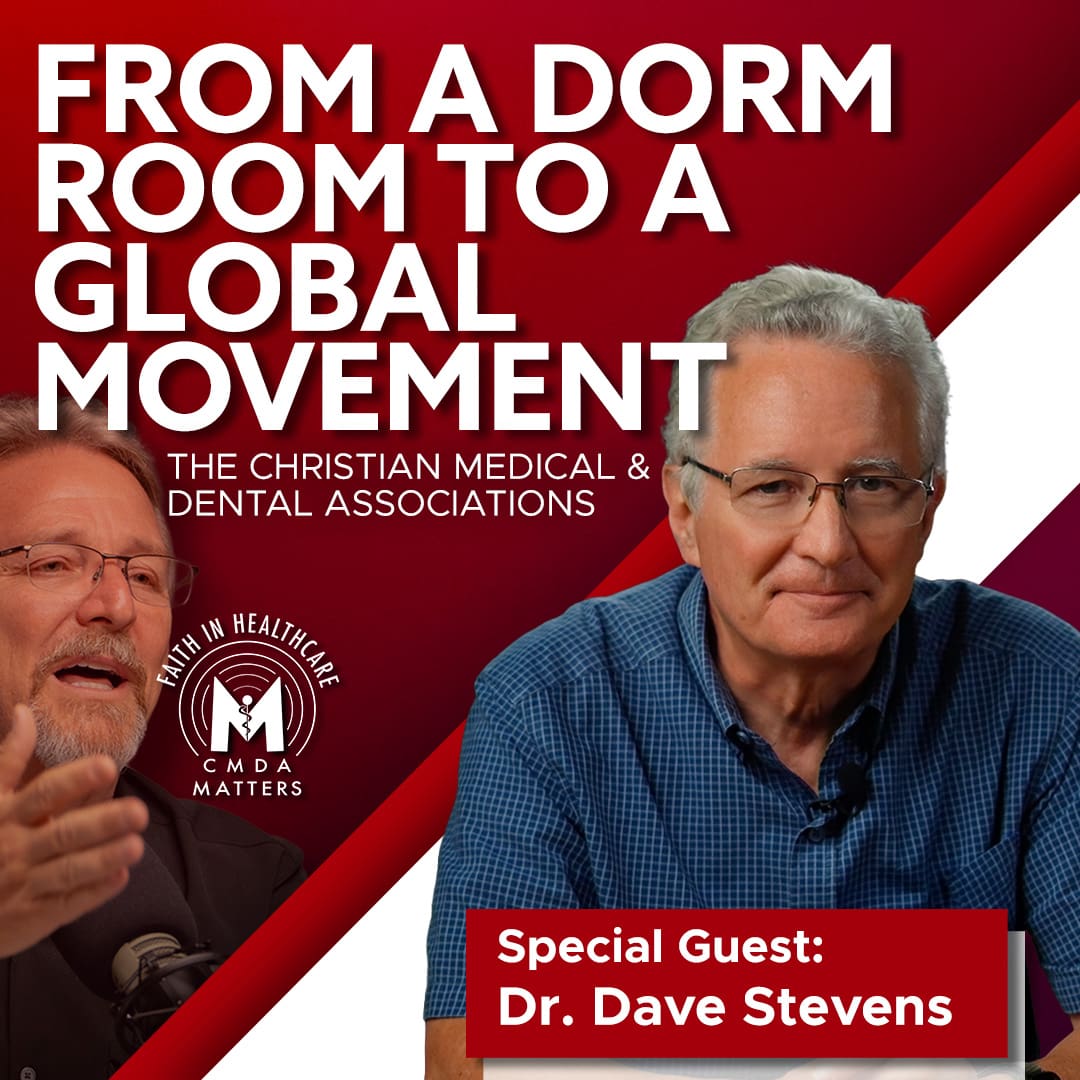
You're going to hear from our former CEO and my hero, Dr. Dave Stevens, as he traces CMDA's journey from a handful of medical students praying in a dorm room at Northwestern University in Chicago to global missions and domestic outreach, dental ministry, ethics and public policy, campus movements, and decades of surprises and challenges that only God could have orchestrated.
Some of our chapters have been humble, some have been difficult, some were miraculous.
But all of them point to a God who delights in using ordinary people like you and me to accomplish extraordinary things.
And so as you listen, I hope that you'll remember this isn't just CMDA's history.
It's a reminder that the same Christ we celebrate today is still at work in your life and in your calling and your place in healthcare. He's not done writing that story, so let's listen in.
[00:03:12] Speaker A: A lot of you are new and some of the old timers are not going to know some of this stuff. But really to give you a look at the history of cmda, not just when I was here, but and we'll do a lot in that area because that's the ones I know best. But going clear back to the beginning, looking at God's faithfulness to this organization, we stand on the shoulders of the of Giants from the past. And this organization God has blessed for many years. So we're going to take you through that and its beginnings.
And Starting with the 1930s, hundredth anniversary will be in 31 of this year. And it's interesting. It started in a medical school at Northwestern.
And a guy named George Peterson was in his room and room there, and he was a freshman. And on his bed he had a Bible and a book, Christian devotional book, Streams in the Desert. And a second year student came in and happened to see it and he said, I didn't know there was another Christian here in this medical school. And they began to talk and became friends and then started meeting for prayer and Bible study every Saturday afternoon. During their busy first and second years, there was no formal organization. But by three years later, there were 15 students meeting at Northwestern. And a formal organization was actually formed in 1934 and 35 school year.
And they call themselves the Christian Medical Society.
Very humble beginning.
And other students began to come and it began to grow. In fact, there's a story told about they were having a little time at lunch for fellowship in one of the anatomy labs, and one of the wives asked where her husband had put the milk that she had sent with him that morning.
And he said, oh, it's over in the refrigerator. And she went over and opened the refrigerator and there was a partially dissected dog in there.
And he hadn't told her it was the lower refrigerator where the milk and food was kept. So there was a scream.
And that's never been forgotten. We don't know her name, but that scream still echoes.
Peterson had met the second year student who came was Kenneth Geezer. And Kenneth Geezer was really considered the founder of the Christian Medical Society.
And we'll tell you more about him. It's interesting. He finished medical school, he was accepted for an internship back then. That was one one year after you graduated.
And he felt differently. He made a change at the last moment. He got an opportunity to go to China and he had a great heart for missions. And he went to China and spent six years there with L. Nelson Bell. That may not strike a chord with you, but L. Nelson Bell is the father of Ruth Belle Graham, Billy Graham's wife and kind of a legend in medical missions. And they were there for six years. The Japanese invaded, they began moving down, finally had to evacuate.
And Kenneth came back and did his ophthalmology residency. And that has gone through the generations. When I came on the board, his grandson, an ophthalmologist belonging to The Geyser Eye Clinic was on the board and. And they've had impact to this organization for many years.
1940s, things began to spread and began to spread to Philadelphia and out to Oregon, other places around the country. They started the first newspaper. It was called CMS News.
And the 4th Street Presbyterian Church there in Chicago let them use their memograph machine, and they made 20,000 copies a month. With a memograph machine, you think you're working hard. That was back when it was like this and they were sending them all over the country.
They actually got their first office and moved in with InterVarsity Christian Fellowship, who was interested in making CMS one of their departments. And those leading at that time said no, because we want to deal with graduates as well as students.
And they stayed an independent organization.
Many students went off and young doctors went off from their days in medical school into World War II, and some of them didn't come back. But CMS meetings were happening on ships and bases around the world during that difficult time of World War II.
Medical mission growth began to happen right after that. These men and women had seen the world and gotten a burden for it. And many doctors were going to the mission field. A huge surge of that, of new medical missions. And they formed what they called the League of Brother Physicians. It was missionary docs that were on the year back in that time, it was mainly men.
And then that became the Medical Missionary Fellowship and then other names. As time's gone on, groups were contacting them, saying they needed equipment. I needed an operating table. I need an anesthesia machine. We need supplies, we need medications. We're out here in the middle of nowhere. And CMDA began to get involved, and we'll talk more about that. They also, in the early 1940s, started focusing on medical missions like the Central Gospel Mission in Philadelphia and others across the country. So domestic medical missions actually began quite early in our history.
Initially, students couldn't do more. When they went, they were helping these clinics around where their medical schools were, and they were told that they couldn't prescribe unless they had a physician there with them. They had to act essentially with the level of nursing and helping people off the street and that type of thing. And one of those people. Anybody know who that person is? C. Everett Koop, who was the surgeon general. And C. Everett Koop was the first pediatric surgeon in Philadelphia Children's Hospital, legendary in medicine, but he was the doctor that came down to help the students as a young doctor fresh out of school, help them in their medical outreach. To the poor.
He became the Surgeon General 1982-1989. Do you know what the first thing he ever did?
He gave Gene the Gorgas Medal. That was his first official act the day he started Gorgia medal for the most outstanding finding in public health that year. And Gene had found the value of pre op antibiotics which became the standard around the world.
He's the only Surgeon General who became a household name. Why? Remember what happened in the 80s?
It was AIDS. And he was right. In the midst of that very controversial time in medicine. 1950s, other things begin to happen. The first general director, Ray Knighton. He was a teacher at a Nazarene college and working on his PhD in music in Chicago and ended up moving out of that and becoming the General director of Christian medical society for 15 years.
The first student director happened in 1955. The second was added in 1958.
The first national student conference. 1958, that's hard to believe. And the first family conference was in 1955. And that became a regular thing. It was at Deer Valley. You can see a picture of Deer Valley, a wonderful kind of dude ranch out in Colorado. In fact, my first experience when I was appointed as the CEO General Director back in those days.
CMDA is one of the board members, sponsored us and sent our whole family to Deer Valley. We had a wonderful week there the month before I began in August. See our family.
Many missionaries continued to approach and more and more was happening with equipment. And Ray Knighton started contacting companies to get medicines and supplies and equipment.
And that began to grow till it became a whole department in CMS called MAP Medical Assistance Program in 1954, when it actually started under that name.
And they were very successful. Stories told of somebody they didn't even know from a drug company called up and says, I just shipped you 16 tons of medical supplies. Drugs. And they're thinking, what in the. Where are we going to put them? They had an office on the third floor in a building and they didn't have an elevator. And the truck came up out front and they got some hand trucks and began hauling it up. And Ray Knighton said that he was so concerned the floor was going to fall through from all the weight that he only put it next to the walls and stacked it up around all the walls in their rooms.
1957, they moved to a larger headquarters because of the growth mainly of map. And then they had nine staff. Interesting time in 1958.
You probably recognize that preacher, though the slide's kind of small. That's Billy Graham.
And Billy Graham had a crusade in San Francisco at the Cow Palace. That's what it was called. It was Coliseum. And you know how long the crusade lasted for 58 days.
700,000 people attended it.
And it was unbelievable. They said they would have 18,000 people in the Coliseum and 2,000 automobiles parked outside and 5,000 people standing in the parking lot. Listen to Billy Graham. At the same time, the American Medical association was meeting in San Francisco and CMS sponsored a dinner, invited all the heads of the American Medical association, all the officers, prominent doctors, and it was pretty much done at the last minute to hear Billy Graham in person. And 400 physicians showed up and most of them very much leaders in the country.
God used that experience, they began in 1958 to connect CMS members to help fill in and help medical missionaries overseas that were overworked and it wasn't formally done but they linked them up so they could go and help out for a few weeks to a month. The first international convention on missionary medicine happened. CMDA did that at Wheaton and. And 750 people from 39 states and 25 foreign countries attended.
And I didn't know this type of impact and outreach back in those years. 1960s had another move to a two story office in Oak Ridge and a block and a half away. They had a whole warehouse for map.
1964, the first Latin American conference happened in Quito, Ecuador and with great attendance and missionaries coming from all around.
1967 House of Delegates was formed and that continues to today.
And then the first two regional staff. That idea of not just local staff but regional staff. It happened in 1969. 61 Ray Knighton, C. Evert Koop and Gus Hemmel went to spend almost a month in Africa. They visited 20 hospitals and six med schools seeing how CMS could help missionaries in their hospitals where they worked. That next year there was a big civil war in the Congo. I remember when that happened.
I was very young, but I remember it because two missionaries were killed, both of them physicians. One of the hospitals was evacuated and the CMS members said I'm going to stay, somebody's got to take care of these people. And the rebels came in and killed him.
1965 was a difficult year. Things have been going extremely well. A lot of expansion and there was conflict between Ray Knighton, the executive director and the field director who actually managed all that was going on in the country on campuses.
And his comment was only that we've lost our way. Have we lost our way? We're Getting so involved in medical missions.
And this turned into a pretty big conflict. And the board got involved and they couldn't get it resolved and finally decided they were going to spin MAP Medical Assistance Program off.
And it was very divisive.
Unfortunately for CMDA, 13 of CMS board members ended up on the MAP board.
And even the chair of the board went to map. And some of them were still working for both organizations. But I remember when I came to CMDA in 1994, they told me, there's something down in the lockbox.
You know, it's all about this and keep that private. And years later I looked at it, it didn't seem very divisive to me. But I mean, there was still open wounds.
In fact, the president at that time said only the grace of God that CMS survived. He said in 1967, in two years, just a lot of turmoil. But God blessed and things continued. MAP was successful and so was cmda. MAP exists today, it's down in Georgia and they do medicine supplies and things kind of similar to what they were doing then, but also other things. They had a scholarship program that paid my way to go to the mission field in medical school called the Reader's Digest MAP Scholarship to help students go overseas. So God used both organizations, but it was a very difficult time. 1967, they started the Missionary Health Program. When I went down to Dallas, one fourth of our building was taken up by an insurance company, Missionary Health Program. Because missionaries could not get insurance. Insurance companies thought they were too big of a risk. And so they started that in 1967 and had an insurance company.
By the time I got there, it was waning because they insurance organizations found out that missionary actually were healthier than doctors in the US And I guess walking up that hill every day to the hospital or whatever it was. Medical group missions. In 1968, Willie Hunter came on as co director. He was a missionary in the Dominican Republic. The first big outreach. And it was big.
They had 150 on the team. Where's Trish? Can you imagine managing that?
And they had 17,000 people greet them at the airport, including the president.
And they saw 49 different villages.
Those teams went out all over the place.
Their food all got stolen when they were going upcountry. And the water tower where they were all living and staying at night the water ran dry and they were rationing participants with only two cups of water a day.
I was sure it was pretty hot down there. So anyway, that was a kind of a trial in the beginning. And Then other countries were added, Honduras and other places like that. 1970s, 1969 I should say.
First ethics statement was put out by cmda. Actually Christianity Today and some other groups approached us. We need a statement on birth control. And you remember back in the 60s how that became an issue as birth control pills came out. And they had a symposium with Christianity today with 30 scholars in medicine, psychiatry, law, sociology, theology. All came together for a long weekend and came up with the declaration on birth control and the Christians. So that started a lot earlier than I realized. 1970s, there was a new executive director, Dr. Haddon Robinson. Haddon was considered in his time the best preacher in the United States. I heard a number of people say that he wrote 16 books.
He was actually the Southwest Regional Director for CMDA when he was quite young.
He was teaching practical theology at Dallas Theological Seminary and main teacher on the radio Bible Class, which was a national radio, Christian radio program.
And a tremendous guy. And things really flourished in the 70s a lot because of his impact with the constituency and the things he did and speaking and the rest. 1972, Tyndale gave CMDA CMS 17,200 Tyndale Bibles.
And they distributed them all for doctors to give to patients, put in their offices, do whatever they wanted with Servant of Christ Award was established in 1972. MGM grew more and more countries. Liberia and Haiti and Honduras. And they. The. They did a trip to Liberia, had 150 healthcare personnel on that one and chartered a TWA plane and took them all there in the President Mettimer. So a lot of things went on back in the day that you wouldn't think of. 1973, the Commission, the first commission was formed and that was to supervise medical group missions. This mission outreach and later the CME for Medical Missionaries began in 1960.
That was started by David Stewart. David Stewart was a psychiatrist, been a missionary in Africa. He was our physician that worked with our CMDA group at Louisville when I was in medical school. And he had this vision to help missionaries get continuing education, stay up to date. And they begin to do that. The first one was in Liberia and 40 doctors, missionary doctors came and it was hard to get to. So the next year they moved to Kenya.
And that had been on an every other year basis ever since 1978.
Haddon Robinson lived near the airport and lived in.
He was near the airport, but he was in Dallas. And then there was discussion about moving. We need a new place. We need it where it's not so expensive as Chicago.
And they moved the offices To Dallas. And you can see that picture. That was the office where I started at cmda. They actually built it, cost a half a million dollars.
And the same year that they moved it down there because it'd be closer to Haddon.
The exec, Haddon Robinson, announced that he was going to be president of Denver Conservative Baptist Seminary and he moved.
So the new executive director lived in Chicago, though the offices were in Texas. So things. Yeah, it was. And that's Don Wester there who, who became that executive director. That's when he was 91. In 2022, 1981, the debt for the building was paid off, but they had a lot of financial issues, you can read about it.
And they had to lay off personnel. And it took a year or two to get things straightened out. And then in the 80s there were multiple leadership, three or four executive directors for illness and other circumstances. Until Halubaker was made executive director. He'd been a regional director and that was 1987 and he served to 1993.
Hal's a great guy. MGM had continued to grow and they helped start a hospital in the Dominican Republic called Santa Ana. CMDA was very involved in that. They started an ophthalmology residence. They supplied short term ophthalmologists to start a residency program down there.
And all sorts of things we are doing.
Here's me at my first CMDA conference in Kenya in 1983 and that's Dr. Storey and the three doctors at the hospital.
And that same year they decided they were going to start doing one on alternate years for missionaries, medical missionaries in the Asian area.
And it was going to be done at Golden Sands in Thailand and I'm sorry, Malaysia. And there I went and spoke there in 1987. I'm sitting there in the front row. I found this picture. I don't even remember I had it.
And what I remember, it was hot, there was no air conditioning and we were right on the beach and we were all in bunk beds. It wasn't very pleasant in the heat, but it was a great conference. I was speaking on community health and that type of thing. And that continues. It's now in Thailand and the highlands and in a much nicer place.
1988, the marriage and Family Commission began, the Domestic Mission Commission, Commission on International Medical Education Affairs.
What became koamea and the name was changed later on. But new commissions were being formed. Groups of student, I mean of members coming together to do something they saw needed to be done as volunteers. And this whole commission structure was growing very quickly, Quickly the Poor in the US we had members that were already doing that. Art Jones, Lawndale, Chicago. The Luke Society in Mississippi. And we'll talk more about domestic missions in a few minutes. And Koameh became what? Medical Education International. That was how it began.
Name change in 1988 from the Christian Medical Society to the Christian Medical and Dental Society because we had dental members and also because the next president coming up was a dentist.
And Dr. David Tapazian, who had been a missionary in South America and became the president to chair of the board. Women in pedicine began in 1993.
Med sin was actually. You all have heard of Med Sin. That's helping doctors to pay. Pay off their debt. They're going to the mission field. That started in 1990. Inside of CMDA, we essentially partnered. They had a board. They were under our board for two years and then we spun them off after we kind of gestated to them. And they have had a tremendous impact. A huge organization. But they Again, within the CMDA, 1994, three guys showed up.
And that's interesting how God worked. And we'll get into a few more things here.
I've told you before, I never imagined I'd come to CMDA and always be in missions. But God made it very clear that this is where he wanted me. And John Embody was the communication director at cmda. And John and I met in my office once a week for prayer if we were in the country.
And when I told John I was going, he turned to me and said, remember me, David, when you come into your kingdom.
And I hired him before I started.
It was crazy, but I did. I knew the capacity had. He had not only his communication capabilities, communication director, but he had a background in public policy.
Gene was in Rwanda in the midst of that huge genocide going on over there. And within three or four months, I thought, I need to get Gene down here. Not that we had the money for someone else, but looking at what needed to be done, I thought that was the case and contacted Gene. He said, I'm not going to make a decision until I'm done.
And the day he got home, I called him.
And that was in December. And he began January 1st and moved to Bristol while we were still down in Dallas. Because then this was cooking and that was the move.
And that was just a God thing.
That's what I want to really say. God did all this and we just got to be part of it. But King moved to the building, to their building in 1994. In January, I came up here in August to speak somewhere and was out at the Bristol Airport. First time I'd ever flown into Tri Cities Airport and John was with me. He was going to move his family down to Dallas. They hadn't moved down there yet and I said I'm going to go over and see if I can find I heard the Gregory's Joe and John Gregory, the two guys pictured there, had bought a pharmaceutical company. They had helped us with medicines and different things and I'd taken Joe with me to Kenya and Tanzania. We'd be good friends. I thought I'm going to go by and say hi and so went over to the building, knocked on the door. They were on the first floor, had probably 15, 20 staff showed me around the building. I thought wow, look at all this room. Just making a comment and said who knows what God's going to do with you. We just put a desk in the hallway down at cmda. But you got CMS back then, cmds, you've got room to grow. Just an idle comment and John 10 minutes later down his office said, why don't you just move up here, I'll give you a floor.
I figure God will bless you and it'll come through to us.
I don't know if we had anything to do with it, but it was the fastest company in the history of the United States to being listed, starting startup, being listed on the S&P 500, the 500 most biggest countries in the company. God did bless them. They blessed a lot of people, not just us.
[00:29:28] Speaker C: Mark your calendar for the 2026 CMDA National Convention, April 23 through 26 in Loveland, Colorado, a time to renew your spirit, recharge your faith and connect with fellow believers in health care.
We're thrilled to welcome John Stonestreet, President of the Colson center and co host of breakpoint Radio, a nationally recognized voice on faith, culture, theology and Christian worldview.
Convenient lodging is available at the Embassy Suites by the Hilton Loveland Conference center and Spring Hill Suites by Marriott with special CMDA room rates reserved for attendees.
Learn more or register for either
[email protected] events applications are now open for the CMDA Mentoring Academy, a year long journey designed to help Christian healthcare professionals grow spiritually, professionally and personally through one on one mentoring and blended learning.
The program runs April 2026 to April 2027, launching at the CMDA National Convention with about 44 hours of in person, virtual and self study components.
Eligible applicants include physicians, dentists and advanced practice providers who desire to grow as disciple makers.
The Application deadline is December 31, 2025.
Learn more and
[email protected] Mentoring applicants during this wonderful season, we at CMDA have so much to be grateful for.
Over the past 94 years, CMDA has remained faithful to the Gospel of Christ and our mission to educate, encourage and equip Christian healthcare professionals to glorify God.
We are incredibly blessed to have spirit filled leaders among our trustees, state representatives, local council members and hundreds of dedicated volunteers across the country.
Thank you to everyone who has already given a gift to help us meet our $1.3 million giving goal by December 31st.
And if you have yet to make your donation that will help advance the work of CMDA, please visit CMDA.org give or call a member of the stewardship team at 888-230-2637.
Thank you for your generosity and support of CMDA at this year end giving season.
[00:32:11] Speaker A: And so it's just a story of how God was doing things we never imagined. I didn't come to CMDA thinking I'm gonna move the company the first year, but God gave that opportunity. And I thought about it after he made that comment on the way home and I thought, that's crazy.
The board's gonna think I'm nuts. So we had a board meeting a few weeks later in September. I didn't say anything to them and they had invited us to come up because of our medical group missions work and, and see how we could help us with medications.
And Don Kinky, my CEO, had to go. I was out speaking and I said, don, wait a minute. Before you leave, I need to tell you something. I don't think it's going to come up and don't you bring it up, but here's what he said and I just want to give you a heads up. And I was speaking up in the Midwest and got a call from Don that night and I said, well, how's it going? He said that's great. We're over here trying to figure out which floor is going to work.
And it was just like, what?
And I took it to the next. I called actually executive committee of the board in October. This happened the end of September.
And they must have thought I was crazy.
We were going to move where with a startup pharmaceutical company. Are you nuts? But they listened, they prayed, they had a lot of questions.
You know, what happens if they go bankrupt? Or they're trying to get to our members to sell their medications? What? You know, what are they going to charge us? Just all sorts of things. What are Members going to think that we're working with a pharmaceutical company. All good questions. Gene came over from Samaritan's purse. He was back in the US and came up here with the president. And we met with John and they answered all those questions, said, we'll give you a 20 year lease, we'll charge you $1,200 a month. That'll include all your utilities, all your cleaning, everything.
And we won't increase it for 20 years.
And if we sell the company, it'll be binding on who we sell it to. Any other questions?
Wow.
And we had a three day board meeting down in Florida, prayed and discussed it every day and they voted to do it. Probably the biggest, most important thing God did to set us on a new track of anything that could happen because we had funds to do new things.
We had lots of room, 24,000 square feet compared to 6,000 in Texas. And God just began to bless in ways we could never even imagine.
We encouraged our staff to move. We offered to send them up here to see the area. Most of them were women who had husbands at work. Nobody moved long term. Our CEO came up for about two years and went back and forth and we had the money for expansion. We got to choose our own staff.
We had more central place for membership. It's a lot easier to get into Dallas.
Plenty of room to go. Low cost of living. Largest donor was in the building.
Many times John would say, well, Dave, what's going on? See him in the elevator. I remember when we started the saline solution, he asked me about it and, and I said, well, we can, we may just do it as a curriculum, but we talked about maybe doing a big video series and hiring actors and all this stuff that cost $200,000.
Went upstairs and there was a check on my desk for $100,000 later in the afternoon.
God just did things that we couldn't believe during that time.
That same year was one of the hardest years and I'm not going to get into this much, but medical group missions told me very soon after I started that I really had no control over them.
And we went through a huge mess for the whole year.
And I went down and met with Mr. Hunter and just a lot of angst and things that I inherited from stuff that had gone on.
And after I finished talking to him in the Dominican Republic, I said, I'm going to go back and recommend to the board we spin you off and release you.
I didn't see any way to fix the problem. The board didn't decide to do that. And then unfortunately they blamed me that the board didn't do that. And so they tried to get me fired. They wrote board members all sorts of stuff and that was fine. I didn't feel. I mean, if God wanted me somewhere else, I was ready to go. But we had a joint board meeting with their quote board and that didn't get anywhere. And then they secretly incorporated and starting to ask tell all their participants to write CMD and ask for a refund from their teams and send it to the new organization.
And we ended up having to force them into mediation and arbitration, which we won. And then we just gave them everything, which is what we wanted to do initially.
And they went off by themselves. And that was great. And we started over, which was fine.
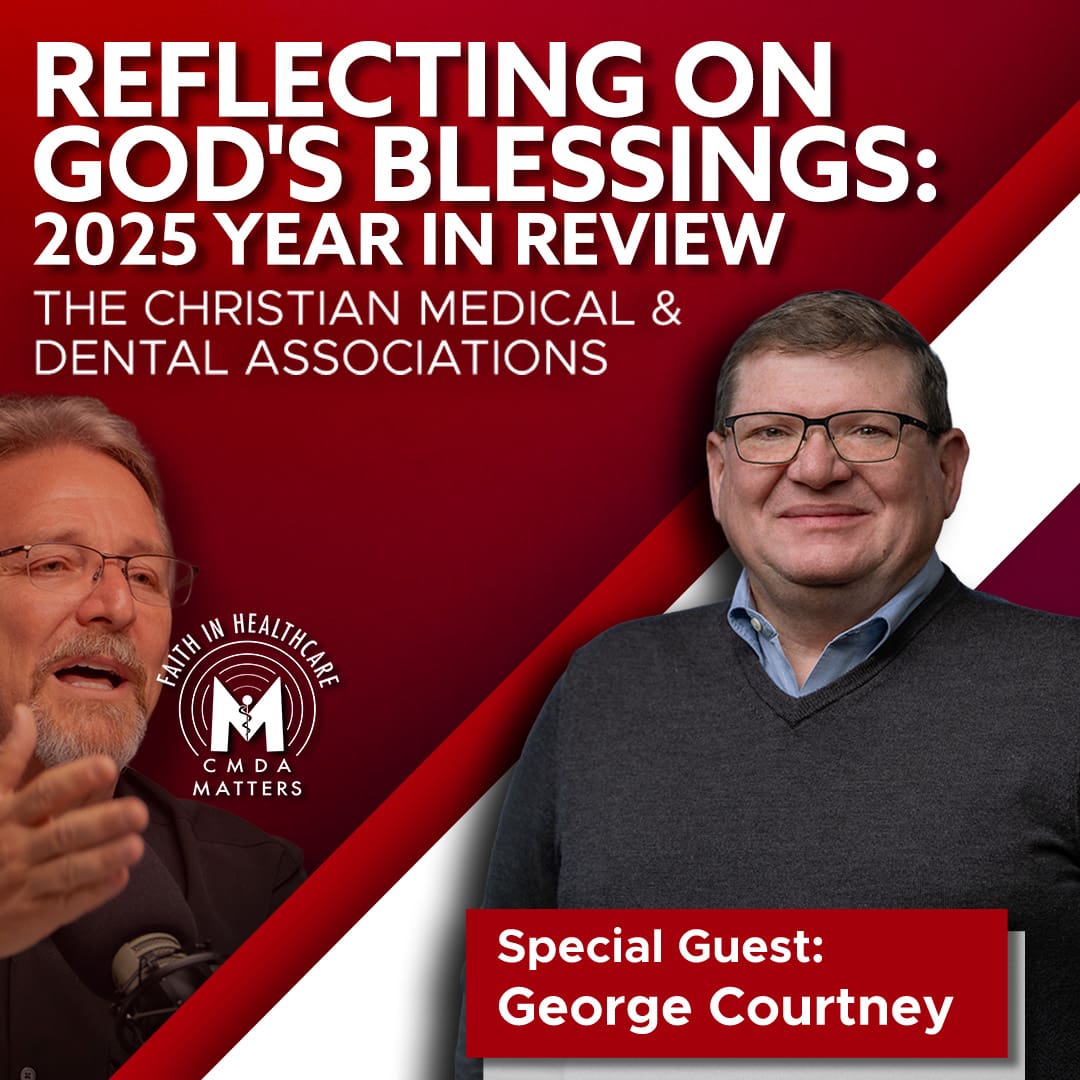
God was getting some things taken care of probably that need to be taken care of that year that I didn't even realize as we started there was a lot of things happening. We never had an advancement department. We started that. George Courtney was the first person. We actually sent him off for training because that wasn't his background. He was the principal of a school, Christian school here before he joined us. Our health care. I couldn't find a sign to say what we did. But we started the placement service and Rose and others began serving there. And that happened in the early 90s.
Governance was a big thing. Got with the board, wonderful people, but realized we really needed to learn how a board should work. And so we brought in outside teachers to teach them. And we brought our first board policy manual together. You've got to have a good foundation, a solid foundation to build an effective organization. And that starts with the board. And they were eager for it and we jumped in. And by 2001 we thought we needed strategic plan and we actually got a grant for $100,000 from the McClellan foundation and hired some really great people that did half their work with Christian organizations. Half was secular and multiple meetings in Atlanta and went through the first strategic planning process. What you do to today started there. And that really helped us grow faster and quicker. Everybody knew what their job was. Global Health Outreach took off for a while. We were working with other organizations and just sending people over to them, partnering with teams. And then we started Global Health Outreach. We hired somebody and didn't work out. Went home cardiovascular surgeon and he went off to do something else. And we're trying to think what to do. And God just decided he was going to do something again.
And we're in Zambia. I'm leading a team with prison for prison Fellowship CMDA members. And Sam Lynn was on my.
On the board. And I called him up because I didn't have a dentist and say, sam, would you go with us? And he did.
And I was so impressed. I got back, I asked him and prayed about it and asked him if he would leave his practice and come be the director of Global Health Outreach.
And you need to understand, Sam was chief of staff at the hospital. He and his wife had started outreaches, all kinds of outreaches to the poor, from food to counseling to all sorts of stuff.
Family had lived there where he was in that town for years.
And he just packed up and came, and it was a huge issue.
And then Ron Brown had been working with students at Asbury for World Gospel Mission. I known Ron since we were kids, and his family were friends of my family. And I heard he was becoming available and perhaps going back to the mission field. And I called him up and asked him to consider it. So you had his knowledge of working in Spanish, his Spanish capabilities in speaking it, as well as culturally, and Sam, his wonderful organization and all those things, and God just put it together in a way we never imagined. And it grew like crazy. This book, which is available in the library, is actually the history of the first 70 years of CMDA and the last chapter on the late 90s. The author, Bob Schindler, titled it like a rocket ship on its way up.
And a lot began to happen after that move. And we've said some of those things. The next big thing was the building. Within five years, we outgrew our space, 24,000 square feet. I've told you that story before, how God provided this land for a very reasonable price, very cheap price, actually, and then provided the money. We brought in some experts to tell us about raising funds. We never had a capital campaign.
And they came back and told us they thought if we worked really hard, we could raise a million dollars.
And we said, well, we were thinking of 10 million.
I don't think I'd try that. No, you better not do that. And we prayed about it and said, okay, we're going to go for 10 million. So 7 million for this building and all the stuff that goes with it and land and 3 million for new things in our ministry.
And we got an anchor gift for $3 million. And then we started going to people, and we raised another $4 million. And then it all stopped.
Nothing much was happening.
And our consultant, wonderful Christian man, former pastor, who had told us only raised $1 million, he. We sat down with him. He said, you Know what we need to do? We need to set up a phone solicitation program, right?
The doctors love getting called on the phone, people asking them for money and they knew how to structure it. And they got all the. They hired some people that was like your great aunt and your great uncle and wonderful people.
And we raised $3 million in three months.
And within it was three year pledges. And in three years this place was paid for and the $10 million, 3 million going to other things.
And as we've told you before, this building, after it was built, received all four awards from the Southeastern Building association or whatever it's called. Never happened in their history because of the value, how much it was built. Such a low cost, the quality, the way they had managed it, how fast they had finished was just unbelievable. And God uses things like that because three of the four people that took those awards gave up and gave a testimony at that meeting of God's goodness. We moved into ethics and public policy.
John, anybody brought in? The first two weeks I was at CMDA brought in something in the newspaper and we sent out our first news release.
Associated Press showed up and we were in the Washington Times and Washington Post and the Los Angeles paper, in the New York paper and all over the country. And I went and reported that at the next board meeting. And I remember we had a very interesting conversation because what, what are, you know, our members going to think? And some people may be for abortion and some are not. And you know, all this discussion was going on and I finally turned to the board and I said, listen, you either stand for something or you stand for nothing.
If we lose a member because therefore abortion and we're speaking out against it, we'll gain three because we're speaking out and against it.
And they, after some discussion and prayer, agreed and gave us permission to go ahead. And as you know, CMDA went into all sorts of issues. Stem cell research and transhumanism and abortion and physician assisted suicide and genetic engineering. And the list just, just went on and on.
I guesstimate that I've personally done over a thousand interviews and we have done a lot more through all our members, state campaigns, debates, publications, testimony before Congress, state legislators, stuff. We just never imagined that God was going to give us that kind of influence. But God opened the door and we've trained over 200 doctors to, to speak out on ethical issues, doing television, radio and training them downstairs.
So God has just multiplied that. These are just some pictures from the National Press association and I am with Sieverett Koop at some news conference and just in front of the Supreme Court after they were hearing a case. And never had so many microphones in my face that I did that day. But God and other people. Gene was doing stuff, other people doing stuff. It was more than one person could do.
And God really made a difference. Got to meet President Bush in his office.
When I spoke out on stem cell and invited me to the White House. And that's our Senate Majority Leader, Dr. Bill Frist. Wonderful Christian. Went to Tenwick a couple times. He helped us on some projects. So God just opened doors, media and you know, all these things. All these things got started.
Christian Doctor's Digest, that's just got a different name now. But God brought that to mind because I went out and heard out to focus on the family. And James Dobson, people came up and cried and fell in his arms. And you saved my marriage and you helped my kids. And I thought, wow, what a relationship. Early on in my career there it's cmda. And I said, we need to have some way to communicate. Not radio. And that's how we did. What you now do is podcast back and then it was cassette tapes.
Start small and God use it. But radio interviews and all the rest of it. TV publishing.
And we actually had a situation with Zondervan. We published a whole series of books with them.
Alternative Medicine, the Christian Hat Book, Jesus, Maryland. My kind of biography and all kinds of stuff. And we published our own books. And things went all over the place with books. Practice by the Book, Handbook of Medicine. We even actually did a medical book for missionaries. Here's a handbook on doing medicine in developing countries. And a couple of our members wrote that. And it's a scientific book, all kinds of resources. And these are things that are familiar to you that began in those years, including Side by Side.
Just God did that. I realized we really needed something to help marriages. We already had a marriage commission, but especially the female spouses. Because I know the strain it put on everybody when you're in residency and that type of thing.
And I was up speaking at the Mayo Clinic and somebody told me they had this thing called Side by Side. And I just prompted me and I called up the lady in charge and said, let's go to lunch.
And after that discussion, we said, we can take this thing all over the world that you're doing at Mayo. Let's partner. And that's how Side by Side began. It's just God doing things. New awards, Missionary of the Year and other things. Center for Advancing Healthcare. Mission is A new name now, but just a burden I had to do more in medical mission. Susan Carter came, so you know Susan, and just did a fantastic job of the scholarships and conferences and source books and all sorts of things.
Campus and community ministries.
I mentioned to you before that I started community based health care in Africa. When I came I thought the way we need to make our campuses ministries much more effective is to get local groups of doctors to take responsibility, to fund it, direct it and own it. And then they're hiring staff that we approve to raise.
That's called community based ministries now. And that what took off with our ministry at the local level. I know when I was at University of Louisville, I remember going to CMDA twice. Both times when they had outside speakers and otherwise not much was going on back in those days. So this community based approach started in San Antonio, spread across the country and then finally we're just going to finish this up.
Whole dental thing. And we had always wanted to do something in dentistry. And bottom line, I wasn't a dentist, Gene wasn't a dentist, and we didn't speak dentistry.
And God brought Pete Dawson to us and Whit Wilkerson and some of the most unbelievable contacts that just started with the phone call, just God did it, called me on the phone, Whit Wilkerson. Denison said, are you the OCMDs? And I said, yeah. He said, well, I was involved in medical school and I just lost track of you guys. But we're trying to do something with dental students. And long story short, he said, I work with the most famous dentist in the world. I thought I didn't know there was one.
And I called up some of the dentists here in town. They said, you know Pete Dawson? Well, I hadn't met him yet, but he's coming to my house in a month or two.
You're kidding. Can I drop by?
Pete trained over 70,000 postgraduate dentists and had Dawson Academies not only in the US but Japan and England and Europe and Asia and all, you know, he was the most famous dentist in the world. And all of a sudden he's on board helping with finances, letting us use his name as we went on campuses.
Dentistry ministry just exploded. We hired a full time, first full time staff. And you know, what's going on now? It's just been unbelievable. The bottom line, the faithfulness of God.
I'm nothing special.
You're nothing special.
God just did things.
I've learned when you show up, believe and have faith to take risk and jump into what God is trying to do, looking for those opportunities, recruiting the right people, bathing it all in prayer, working hard.
God does unbelievable things, and you're part of it.
God's got you here for a purpose. He brought you here. Some of you have been here a long time. You've seen a lot of this. Some of you are new and thinking, what have I gotten myself into?
But these godly men and women that came before and poured out their lives, will we stand on their shoulders, those giants, and we get to see what God wants to do now?
He's not done yet.
Let's pray.
Heavenly Father, we thank youk for what yout've done.
Nobody could have written this story, only you.
You've used this organization in so many lives, not only in this country, but around the world and still doing it today.
It's not like we're talking about what has happened, Lord. We're just looking forward to what you're going to do today and next week and this year and in the next decade.
Thank you for the leadership at this organization.
Thank you for what you've been doing and continuing the growth and impact of this organization. We just commit ourselves to serve you and thank you for the privilege of being on your front lines in your son's name.
Amen.
One more thing.
The recording is over, but I have something else I want to show you. Work hard, play hard.
That was my motto when it came.
So this is. You guys have parties, but I haven't heard any like this. This is our Western party. We all dressed up in Western clothes. They even gave Gene and I horses. You see them there?
And yeah, we had it out in the parking lot. This is our 50s party.
I was Johnny Cash and Bert was Elvis.
And it was crazy. And we had some of the staff on roller skates serving milkshakes and hamburgers. And you can see Ron there with his little corner hat on and Dave, Malcolm.
Have fun.
This is our quartet, Gene and I and Bert and Ron. And they actually got a picture up there and put our heads on it like we were some famous group.
And yeah, you got to play hard.
This is when we.
A Halloween party and everybody dressed up. That's out in the parking lot. You can see, as best you can see, this crazy stuff. There's a lot of pictures around here somewhere. I don't know where, but this is the worst thing we did and the funniest thing we ever did.
One of the staff was having a baby.
So we set her right down here in the middle and had a play of her delivering her baby.
It got pretty bad before it was over.
And you can see we're holding the doll up there. And Amory Dugan, who headed up communications, she was an actress and did acting. So she was the patient and Ron was there and we had the whole business. So I want you to not just work hard. I hope you'll play hard as well. God bless.
Thank you, Dave.
[00:54:00] Speaker B: What a remarkable reminder of God's faithfulness that Dave has given us. From a Bible and a devotional book on a freshman's bed at Northwestern University, to missionaries braving war zones, to a pharmaceutical startup offering a 20 year lease, to capital campaign miracles, only God could have written a history like this at CMDA and friends, he's still writing it.
On this Christmas Day, as we remember our Savior who came quietly into Bethlehem, we're reminded that God continues to work through humble beginnings, through unexpected turns, and the faithful obedience of his people.
So whether you've been connected to CMDA for days, decades, or just discovered us this year, you, friends, are part of the ongoing story the Lord is telling through this ministry.
Our prayer for you today, friends, is simple. That Christ's peace would fill your home. That his presence would strengthen your calling. And his hope would guide you into the year 2026. Ahead, from all of us at Faith in Healthcare and from cmda, Merry Christmas and Lord willing, we'll see you next time as we enter the New Year.
God bless you.