[00:00:08] Speaker A: You're listening to faith in healthcare, the cmda matters podcast. Here's your host, Dr. Mike chubb.
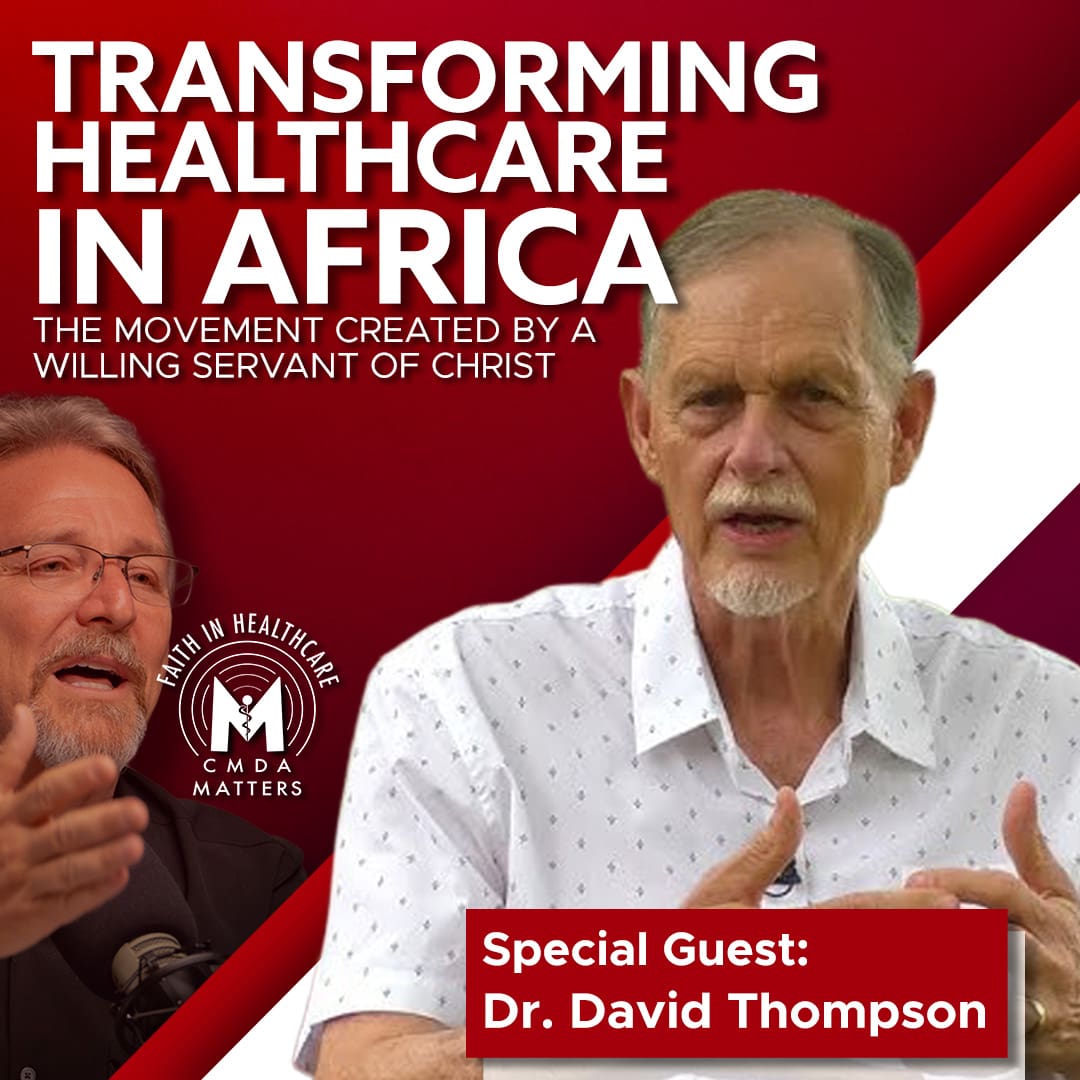
[00:00:20] Speaker B: Welcome, friends, to Faith in Healthcare. In this episode, we step into the remarkable story of Dr. David Thompson, a surgeon whose path has taken him from war torn Cambodia to the jungles of Gabon and into the heart of one of the most impactful medical mission movements of our time.
Dave's life reads like a testimony of God's grace in seemingly impossible circumstances. And the vision that God gave him has now transformed surgical care all across Sub Saharan Africa.
I think that you'll be deeply encouraged, friends, by his story. So let's begin.
[00:01:09] Speaker B: Well, today on Faith in Healthcare, I have an incredible hero of mine, Dr. David Thompson. His life's work has shaped medical missions, especially in surgery, and empowered generations of African healthcare leaders.
Dave, I think your life reads something like out of an adventure novel. And in fact, you've put it down in writing, which we're going to talk about here in a few minutes and includes remote jungles and rainforests, spiritual warfare, surgical miracles, and entire communities in Africa transformed by the gospel.
So before we get to your new book, which is the Curse of Bungalow Falls, I'd like you to take us back to the beginning and what moment convinced you that God was calling you to give your life much like your parents did.
Two medical missions and improving health care in Africa.
[00:02:01] Speaker C: When I was 14 years old and we were in Cambodia, my parents were missionaries in Cambodia.
We were traveling on the road, one of the a narrow paved road, and we came suddenly on the scene of a terrible accident, an accident between a truck and a bus. They'd come around a corner full speed. It was a one lane road, practically speaking, and they collided head on.
And so there were a lot of people on both sides of the road with bloody noses, a few with broken arms. But as we slowed down and stopped, there was a man, a group that was over by a tree on the right side of the road and there was a man that was on the ground covered. He had a lot of blood, spitting it up. And my dad said. So he stopped the car and he said, david, bring the thermos. We're going to go see if we can help in some way.
My dad wasn't a medical person, but, you know, he wanted to help. And so we went over there and here's this guy.
It was the driver of the truck and no seat belts in those days. And he'd been thrown against the steering wheel and his chest was just crushed. I mean, he was badly deformed he's gasping for air and spitting up blood. And there were about, you know, 10 people standing there. Nobody knew what to do, and they were watching him die.
So my father knelt next to him and he said, pour some water in the thermos. And so I poured some water, and he offered this man a cup of water. And the guy, he took a sip, but he couldn't swallow. He was just gasping for air and he spit it out.
And so my father was very fluent in Cambodian, and he started to share with him the gospel. And he just asked him, are you ready to meet God? And this man just shook his head and he said, I'm a Buddhist, and don't tell me about your God. Just help me if you can. And it was hard for him to even say that. He just sort of gasp that out.
I was just, you know, my eyes were this big. I couldn't believe what I was seeing. And. And so we couldn't do anything for him. Basically, my. My father just put his hand on his shoulder and he prayed briefly, you know, and. And the man was just said, just, you know, help me, please just help me.
Well, we didn't know what to do. And he died, but not immediately. But so the rest of that trip, another. We had a few more hours of driving. I just couldn't put that all together. And the thing that just shocked me was I knew where that man went.
I knew that he had refused the only thing that could have given him life eternal. And so I just was so shocked. That really became for me, my call to medical missions. I wanted to help people who were sick and dying and give them the gospel and save their lives at the same time. I wanted them to live long enough to hear the gospel. And so that is where, from that day forward, that's what I wanted to become.
[00:04:55] Speaker B: And your parents instilled in you. I think your mom's. One of her theme verses was Proverbs 3, 5, 6. Trust in the Lord with all your heart and lean not in your understanding. They built faith in a young David Thompson, such that when you made it to university and had no money and you were on your own, God took care of in really incredible ways, which you describe in your new book. And then you heard, of course, at age 18, that they had lost their lives in a very tragic way there in Vietnam, didn't they?
[00:05:25] Speaker C: Yes. They were trying to reach a tribe that was in eastern Cambodia, but because of the war and Ho Chi Minh had sent all of his army down into that region of the tribe, all Americans had to leave the country. And after Nixon bombed the North Vietnamese army in Cambodia without permission. And so my parents went then over to Banh M Tur, across the border into Vietnam, where they were that same tribe. There were villages of that tribe. And then they were caught in the tet offensive of 1968, and they were killed.
[00:06:01] Speaker B: And your wife Becky's also had. She had a tragic loss, didn't she?
[00:06:06] Speaker C: Yes. Her father was a director of a hospital for lepers in the jungles in that same area.
And they had a missionary doctor there and a medical team with nurses, and he was the director of the hospital.
And Viet Cong came one night. They had shown no, no hostility at all to, to missionaries and to the leprosy hospital, because otherwise people just died in the jungle of leprosy or eaten by tigers.
And they came in and they took him as a hostage, the doctor, and a.
Another missionary who was there for agriculture, teaching them how to grow cash crops.
[00:06:47] Speaker B: And I understand he's. He was never found after he was. After he was kidnapped, Is that right?
[00:06:52] Speaker C: He was never found. The. The US army immediately sent out helicopters and special forces to try and track them down. He was never found and nobody knows what happened to him.
[00:07:03] Speaker B: Well, Dr. Thompson, I've heard your story and Becky's on a number of occasions. Always just, I come away from that. Amazing that two young people whose parents were killed at the hands of those who didn't know Christ would still feel the burden and the passion to advance God's kingdom, both of you, through medicine. So let's fast forward.
God calls you to West Africa, to a country that most Americans, most of us, don't know much about, which is Gabon, where French speaking, and you've now been serving there for a number of years. Can you share with us just briefly about the challenges and rewards of being the only surgeon for a couple of hundred thousand people in South Gabon? And how did your faith sustain you and Becky during those times?
[00:07:46] Speaker C: Well, we started with a dispensary, and God really helped us as we struggled with just very little equipment at the beginning. And people, of course, there were no medical facilities for hundreds, hundreds of miles and in every direction. And so, you know, you do what you can.
And Becky started and the other missionary nurses started a nursing school. And that was a huge help because there was a lot of nursing needs and it was just a lot of nights operating. I mean, for a while I was working maybe 120 hours a week, and I knew I couldn't sustain that. I was neglecting my Family.
[00:08:29] Speaker C: We would try to take a vacation and I'd come back and people had died because I wasn't there. And so then I thought, well, I shouldn't travel. I should just be here for people.
And so I was basically just overworking and burning myself out.
It was God who intervened at that point. I was begging God to send another surgeon to help me. That was my solution because of.
[00:08:51] Speaker B: I've had a chance now to read your new book that's coming out in January. The Curse of Bungalow Falls. What a legacy that you inherited. Now granted there wasn't a hospital or medical work going on, but for decades there had been this missionary station that, you know, David shares so many similarities with the hospital where I serve at Tenwick, where there was a waterfall in the hydroelectric plant and a curse of the ground there where a female circumcision camp had taken place and girls died from tetanus. And so the Kipsuge says this is cursed. And then, oh, you westerners want to buy the property, we'll sell it to you for a good price.
But what did it feel like coming onto that hallowed ground.
[00:09:33] Speaker B: As the first medical missionaries there at Bungalow?
[00:09:36] Speaker C: Well, I have to confess that when I saw the station, I was impressed by the buildings. But you had to cross a major river to get to the hospital, to get over to the station and the village that had grown up there. And there was a ferry, there was a hand pulled ferry and you drove your car onto this raft and went across. And I just thought, my goodness, missionaries have been here all these years and this is the best they could do.
And you know, it wasn't until I'd been there for a few years, I realized they had just done an incredible thing.
Incredible what God had done through these early missionaries.
[00:10:11] Speaker B: Well, at some point in time in your career, and you alluded to it just a few minutes ago, that this wasn't sustainable. At what point in time did you fast forward 20, 30 years and say, I'll finish and it doesn't look like anyone's going to come replace me. This will all just come to a screeching halt. So how did God put into your heart and your mind a vision that you need to start training Gabonese and other Africans to come alongside so that this is sustainable?
[00:10:38] Speaker C: Well, a lot of things happened during those years and one of them was that I had been working so hard I didn't have time for God. I mean, you know, I'd go to church and we'd pray and give thanks at the table. And when I went to bed at night. If I could stay awake five minutes, we'd have a little prayer time. And I read my Bible when I could.
But one day I flipped on the. I was making a trip to Schweitzer Hospital with an injured patient and I couldn't fix him.
And on the radio, the South African pastor was talking and I never had picked up an English station on my radio. I don't know why I flipped. It had to be the Lord.
And he just said, so if you're not spending time with God each day, starting your day or ending your day, how can you serve him?
And it just went right to my heart. I thought, here I am, you know, working so hard and I don't have time for God.
And so he made this radio, this pastor said, just start, get up 10 minutes earlier and start reading your Bible and talking to God. And I thought, I can do that. I would get up at 5:30 and I'd run for half an hour or maybe it was 6:30. And so I got up at 10 minutes early and five minutes for Bible reading, five minutes for prayer. Well, that, that was so short I could hardly get started. And it was time to go.
And so then I thought, well, maybe I'll get up a little earlier. So then it went 15 minutes earlier and then 30 and then 40 and finally I just became a habit. I couldn't give up.
I was with the Lord. I could start to hear him speak to me.
And so I was of course complaining to the Lord about my work schedule and the fact that we needed another surgeon. And I prayed for years for another surgeon and God didn't send one.
And I couldn't figure out why he wasn't answering. And one day as I was praying very clearly, the Lord said to me, you train them.
I thought, there is no way that I could start training surgeons. I'm already working as hard as I could.
But that was the beginning.
[00:12:41] Speaker B: I've had other guests on this program before. And so for you listeners, this is going to be. This is a recurrent theme. So maybe, you know, repetition is going to penetrate the dullest of minds here. But doctor, I was thinking James Tour, who was on the program a couple, three months ago, just one of the most incredible innovators. Spirit led. But it all came down to his time with the Lord every single morning. That was where God's spirit caused him to think of things that he needed to see. And big surprise, Jesus told us that the spirit he would send would tell us what's yet to come. Would guide us along the way that we should go. So thank you for affirming that in your own life. And so what did you do first? I mean, what were the first couple of steps that required you to launch? What we're going to talk about here in a minute has just been an incredible, incredible success with the Pan African College of Christian Surgeons.
[00:13:30] Speaker C: As I talked to the Lord, he gave me some ideas about how it could work. First of all, why not use the same textbooks that I used when I was trained as a surgeon? Why not use the same strategy? And so then we heard about Becky and I heard for the first time about the CMDA meetings at Brackenhurst in Kenya every two years to allow medical missionaries to keep their medical licenses up to date and to meet our requirements for cme. And so we decided to go. And that's where I met other missionary surgeons who were dying like I was. I mean they were trying to do too much with. And actually even there were some hospitals that had closed because the surgeon had retired.
And so I shared that vision that God was giving to me. They immediately, the group there immediately responded. And there was a CMDA representative there too. He was very positive, encouraged us to start thinking about starting an organization to train and disciple African doctors to become surgeons like ourselves.
[00:14:45] Speaker A: Before we continue with this week's episode, here's a special announcement for you.
[00:14:53] Speaker A: During this wonderful season, we at CMDA have so much to be grateful for.
Over the past 94 years, CMDA has remained faithful to the Gospel of Christ and our mission to educate, encourage and equip Christian healthcare professionals to glorify God.
We are incredibly blessed to have spirit filled leaders among our trustees, state representatives, local council members and hundreds of dedicated volunteers across the country.
Thank you to everyone who has already given a gift to help us meet our $1.3 million giving goal by December 31st.
And if you have yet to make your donation that will help advance the work of CMDA, please visit CMDA.org give or call a member of the stewardship team at 888-230-2637.
Thank you for your generosity and support of CMDA at this year end giving season.
[00:15:57] Speaker A: If you're looking for a winter reset in the middle of a demanding season, we'd love to invite you to the West Coast Winter Conference in Cannon Beach, Oregon, January 15th through 18th, 2026.
Come join your medical and dental colleagues for four days of refreshment and renewal, including worship, biblical teaching, meaningful conversations and the beauty of one of the most iconic coastlines in the country.
You'll enjoy eight teaching sessions and extra sessions for those who can come in a day early.
It's the perfect place to step away and be renewed in community with others who share your calling in healthcare.
Learn more and
[email protected] events.
[00:16:46] Speaker A: The Marriage Enrichment Weekend, held in beautiful St. Augustine Beach, Florida, January 16th through 18th, 2026, offers a comfortable get away from it all setting. Designed specifically for female healthcare professionals and their spouses, this retreat creates intentional space to step away from the pressures of schedules, training, financial strain, and the daily weight of caring for others, which will allow you to invest in caring for each other.
It's a warm and restful environment where couples can reconnect, communicate deeply, and renew their appreciation for the gift of their marriage.
If your relationship could use a weekend of encouragement and renewal, we'd love for you to join us.
Learn more and
[email protected] events.
[00:17:41] Speaker A: Let's jump right back into this week's episode.
[00:17:46] Speaker B: Well, Dave, I wasn't at that first time you made your plea and explained the vision in 96, but I was there two years later the second time around. And I will say, you were so diligent in preaching this message over and over again, and some of us, like those of us at Temec, were slow to come around and it wasn't until 2008. But you were so persistent and diligent and we did have a chance to meet some of your early residents who came to work with us for a couple months. But I want you as the founder, to think what were some of the key moments that really helped PACs to expand and to thrive and to blow past that initial, that initial goal of 100 surgeons by 2020 and then now I think it's 250 plus.
[00:18:31] Speaker C: Yeah, well, I think that the CMDA had a big part in that because they were immediately supportive and very positive that this could be done and they would help us.
[00:18:44] Speaker C: Give us advice and so forth. And so we first of all formed a group together of surgeons and we called it the Pan African Academy of Christian Surgeons. First we called it a college, but then we ran into trouble with the Colleges of Surgery in Africa and so we changed it to Academy, which was a better name anyway. But what really was amazing that some of these surgeons who were there who hadn't joined our group, they were willing to send some of their doctors, Christian doctors, to bungalow to start our training. And so we, we started with what we had and it went from there. The one first guy was from Angola, the second was From Madagascar. And then after that, they just kept coming.
And then as other hospitals, Christian hospitals that had surgeons, they indicated they would. They were willing to start, too. I would go and visit those hospitals. It was a bit wild and it was a bit crude, maybe at the beginning, but, you know, those. Those residents, they. They grew in their faith. They learned how to pray for their patients, they learned how to study. And. And they. I met, you know, I would have them pass a yearly exam. It was the toughest exam. I.
After five years, we had the first two graduates, and others were applying, and I got my life back. By the end of just four years, I had four residents. They were able to take on call at night, in the middle of the night, and I was getting sleep. I could go on vacations with my family. My whole life changed. And God was just blessing in wonderful ways.
[00:20:27] Speaker B: What you're describing just makes me think of Kevin Costner's field of dreams. If you build it, they will come for you. It was the program of dreams. If you started, some of us pushed back and said, but you need accreditation. You need all this and this. And you said, dave, let's just start it. Let's just start it and see what God does again. Your faith had such an incredible impact, and I remember those early residents so well. And I'm sure you stay in contact with so many of the grads that you had a hand in training.
Correct me if I'm wrong, but so many across Africa have become hospital directors, medical directors, chiefs of surgery, and I believe all of them remain in Africa, do they not?
[00:21:05] Speaker C: That's right. And several of them have. Are involved in northeast Congo building hospitals with nonprofit help through different organizations. And it's just incredible. And they're doing the same thing. I mean, they are teaching young doctors and discipling them and leading people, their patients, to faith in Christ. It's just a wonderful thing that's happening.
[00:21:31] Speaker B: It's not just general surgery. Tell us about the scope of the various programs.
[00:21:35] Speaker C: Yeah, in the early days, we did everything. And you know about that. I mean, general surgeon was the skin and its contents. But then there were other specialties that got interested. Orthopedics was the first, and that was pretty. That was really key because we were. We were doing, you know, 1920s orthopedics ourselves, until orthopedic surgeons started getting involved, and then it was pediatric surgery again for children. And more and more specialties then applied. And PACs really had developed a great leadership team that God provided, I would have to say, to administer all of this CMDA was initially our administrative leaders and then we got so big that CMDA suggested that we have our own organization, nonprofit, which is PACs. And that has worked well. And we, we still are close partners, I would have to say.
[00:22:34] Speaker B: Yeah, I joke with people that how many 25 year olds are still living at home?
You have a 25 year old organization, you are ready to be out on your own.
So just truly amazing and the scope and the influence and the reach across now. How many nations in Sub Saharan and Northern Africa?
[00:22:56] Speaker C: 25 countries now?
Well.
[00:23:00] Speaker C: We have graduates in 25 countries. We have training programs, I think in 12 or 13.
And we have 25 training programs too.
It is really quite amazing and tremendous faculty for all of these specialties. But I need to go back. And one of the things that really shocked me was one day and I was the only surgeon when there was a.
A nine year old boy who had been run over by a tractor across his abdomen. He had tractor thing on his stomach, you could see the treadmark. And his grandfather brought him in the back of the. On a trailer pulled by the tractor 25 miles over dirt roads to our hospital.
And when I saw him, his abdomen was distended. He was still conscious somehow. And I knew that he had his torn liver. Took him to the operating room and I didn't have a nurse, anesthetist, I was also having to do general anesthesia. And then I have a nurse, you know, sort of make sure the IVs didn't get pulled out or whatever. And so it was just an excruciating decision.
We had to get him asleep. So I was getting ready to intubate him and he had a cardiac arrest. His abdomen was just full, full of blood, distended.
And you know, if we had had time to put him to sleep and I could have been made a small incision and saved that blood and we would retransfuse it. We had a whole system we had set up. That boy perhaps would have survived, but he died there in the table. And I just broke down and wept.
And that's when I said to God.
[00:24:42] Speaker C: You'Ve got to help me, Lord.
Well, you know, today one of our programs is anesthesia and it's making a huge difference.
[00:24:52] Speaker B: Yeah, well, I had a chance to meet briefly. I know that you have probably 10 times more of these cameos with people interested in a future, especially in surgery, but medical missions in General and the PAC's influence and impact is just everywhere. And Dave, I met yesterday for about a half an Hour with a gentleman from Kenya whose dad immigrated when he was 13. And now he's gone through surgical, he's in his third year of general surgery residency and is just feeling God calling him back to serve in Kenya because of that heritage and that legacy and God's got ahold of him. So just amazing that the Diaspora is looking back and know about PACs and want to serve with PACs. It's just the reach.
It's exceeding abundantly, isn't it? As Paul told the Philippians, exceeding abundantly above all that David Thompson could have ever asked or imagined, didn't he?
[00:25:46] Speaker C: Yes. And you know, the reason that I have written books in this last one especially is really because, you know, the whole purpose of my book is, is Psalm 51:15 1. Not to us, O Lord, not to us. But to your name goes all the glory for your unfailing love and faithfulness. We need to tell the stories. We need to tell the stories of God because then he gets the glory. Yeah.
[00:26:16] Speaker B: So you wrote the book and it clearly chronicles much more than your life. And to read about your own father and the miracle it was that God got ahold of him when he was beaten on a regular basis by his own father and was out on his own and what God did in his life and his wife's life and for you, just over and over again, I was just touched because I didn't know all those details in your story. The book isn't out yet. When is it coming out?
[00:26:43] Speaker C: The publisher said round Christmas.
[00:26:45] Speaker B: Oh, it'll make a great Christmas gift. What advice as you're out there, as you're out traveling about and you speak in lots of places, we've asked you to speak a number of times at CMDA for our mission conferences. You've spoken at the great big Louisville GMHC conference as well. But if you sit down one on one with a young person, a man or a woman who's considering life, whether cross cultural or inner city domestic reach to the poor, what advice do you give them right now in pursuing that call?
[00:27:12] Speaker C: Well, if you want an adventurous life and you want to be close to God, then I would say step out in faith. I mean, as we, as we trust God and, and take on the things that he calls us to do. And I think it's important to verify our call and, and counsel with others if God is calling us. But if God is calling us, he's got a plan that is just unbelievable that we, we will never to imagine all that he's going to do through Us. And it's not that we're so great. It's that he's so great, and he can be trusted to use us in ways we just can't imagine.
[00:27:54] Speaker B: Yeah. Until our last breath. And a number of our people who listen are probably in their 50s, 60s, 70s. And so when you hung it up and had your farewell party at Bungalow, God wasn't done with you and Becky yet, was he? So what was the next phase in your ministry?
[00:28:12] Speaker C: Well, it was to start a PACS program in Egypt. And the Anglican bishop there was very godly man. He had heard about PACs, and so he wrote me an email and said, would you come in and see if our hospital would qualify for a PACS program? And the organization said, sure, go ahead and do that.
So I flew up there with Becky, and we saw this hospital, far more advanced than our hospital in Gabon in a city of, you know, 400,000 people.
And basically, we said, if you're. If you're willing to provide housing and you're willing to go along with us in an agreement, we'll pray that God will send missionaries and surgeon to lead the program. And the bishop turned to me and said, well, I think you'd be the best person.
I said, oh, no, no, no, no, I'm too old. He says, no, in our country, gray hair is much more influential than being a young person or a young surgeon. He said, you're the person to do it. Well, I didn't agree with him, and neither did my wife.
But, you know, God has his way. We got back to Gabon in our hospital, and we had a wonderful guy, surgeon, working with us, Keira Thielander, who is now the executive vice president of pacs. And so while we were there, God just said, I want you to go.
And it took my wife a little longer, but I waited a month. And then one day, she said, God spoke to me, too. And so we went to Egypt and started to learn Arabic. And we were there for five years and got the program started. And Becky got a nursing school program started, too.
[00:29:50] Speaker B: You know, whether it was Jim Elliot and the Fab Five in the 1950s or how God chose you as his special instrument, in a number of ways, a life of sacrifice is so powerful. It is just a very powerful testimony, and it inspires young and old to listen. Frankly, after I was reading a few chapters of your book this morning, I was asking God, hey, what am I not doing? What am I not doing right now that you want me to be doing? Because Dave and Becky's lives, they Just inspire me. So the book's coming out at Christmas, and I want to encourage our listeners. It's at Trinity Alps Media, is the publisher there in California. Dave, as we finish up, what has been your life's verse?
Did you adapt your mom's Proverbs 3, 5, 6, or what Scripture has been a central theme in your life?
[00:30:40] Speaker C: It would be Proverbs 3, 5, 6. Trust in the Lord with all your heart, in all your ways, acknowledge him, and he will direct your paths. And that's what happened in my life and led me through all kinds of impossible challenges.
[00:30:53] Speaker B: Well, praise God. And we'll. With eager excitement, I think we're going to have a special.
Your publisher has agreed for us to give out a few free books as an offer when this podcast is released. So thank you to Trinity Alps Media for that generosity. And Dave, I can't wait till the next missions conference when I'll have a chance to hear you share your testimony. And maybe I'll get my own personal autographed copy of the Curse of Bungalow Falls from David Thompson himself.
[00:31:22] Speaker C: I would be happy to do that.
[00:31:24] Speaker B: God bless you, Dave, and greet your wonderful soulmate Becky, who's been at your side all these decades.
[00:31:31] Speaker C: God bless you and all that you're doing, too.
[00:31:42] Speaker B: You know, as I think back over my conversation with Dave, I'm reminded again of the power of simple, steady obedience.
Dave and his wife Becky have lived out Proverbs 3, 5, 6 in some of the hardest places on earth, trusting the Lord Jesus to direct their paths. And the Lord has done far more than they could ever have imagined.
The story of PAX and its graduates is a testimony to God's faithfulness and to what he can do through those who are willing to say yes.
And Dave's new book captures so many of these moments in even greater depth. For those who want to read more of his journey as you head into the week, I pray that you'll ask the Lord where he's inviting you to trust him more deeply.
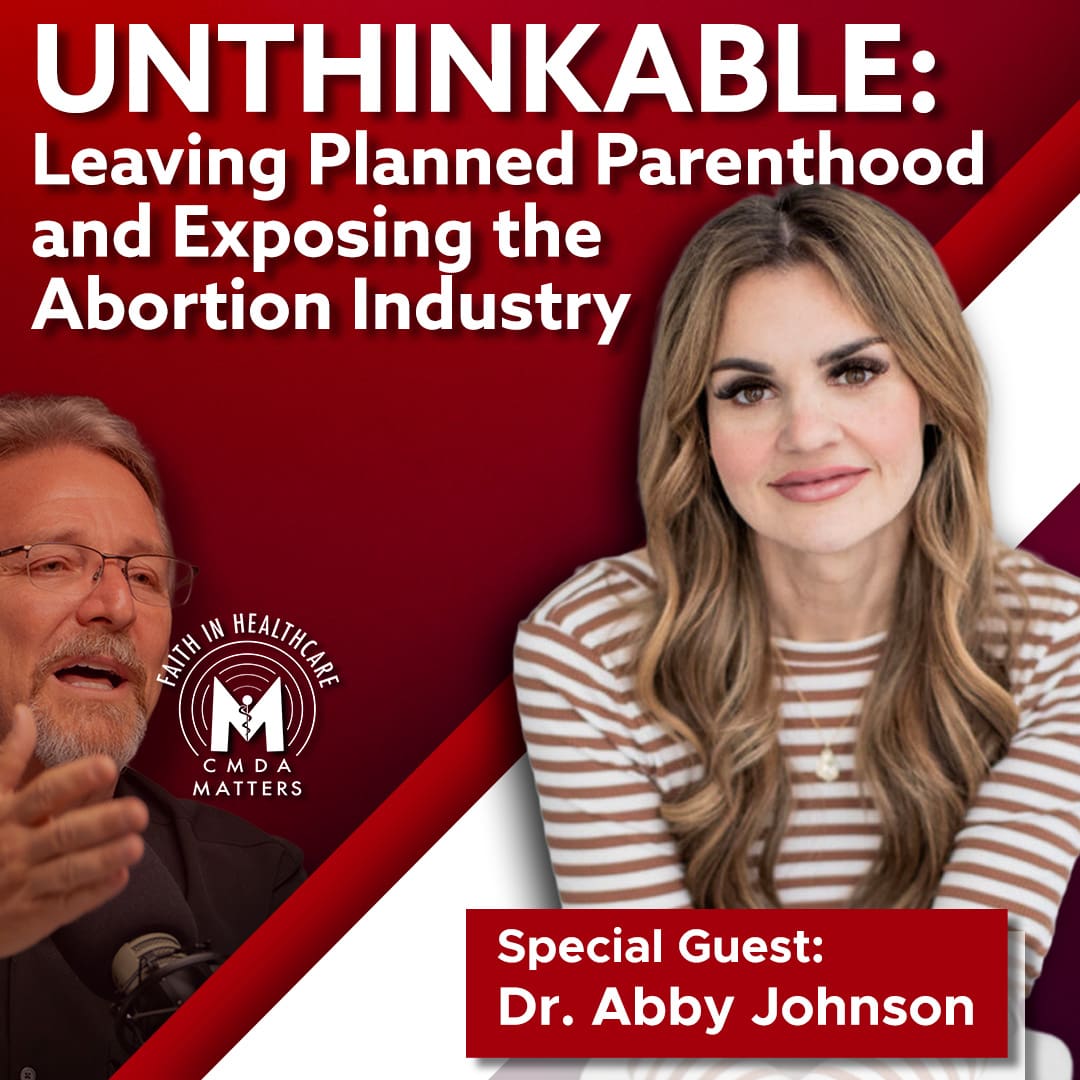
Well, next week, Dr. Bricklantz and I sit down with Dr. Abby Johnson for a sobering conversation about the realities of the abortion industry, one that every Christian in healthcare, I think, needs to hear right now. Abby takes us inside her years at Planned Parenthood, the moment that actually shattered her assumptions about abortion and how God is now using her to rescue workers and bring healing and hope to women who have been deeply wounded.
I have to admit, it's raw, but courageous and unflinchingly honest.
I want to thank you for joining us today. May you recognize this week that our Lord is with you, friends, and that he is for you to do his good work.
We'll see you next time, Lord willing, on Faith in Health care.
[00:33:30] Speaker A: Thanks for listening to Faith in Healthcare, the CMDA Matters Podcast. If you would like to suggest a future guest or share a comment with us us, please email cmdamattersmda.org and if you like the podcast, be sure to give us a five star rating and share it on your favorite social media platform.
This podcast has been a production of Christian Medical and Dental Associations.
The opinions expressed by guests on this podcast are not necessarily endorsed by Christian Medical and Dental Associations.
CMDA is a non partisan organization that does not endorse political parties or candidates for public office.
The views expressed on this podcast reflect judgments regarding principles and values held by CMDA and its members and are not intended to imply endorsement of any political party or candidate.