[00:00:08] Speaker A: You're listening to faith in healthcare, the cmda matters podcast. Here's your host, Dr. Mike chubb.
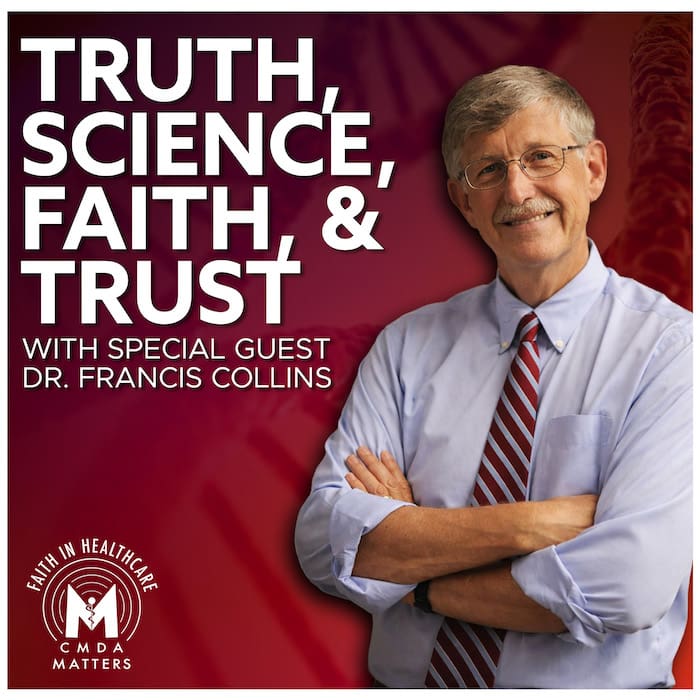
[00:00:19] Speaker B: Welcome, friends, to Faith in Healthcare. You know, before we begin today's conversation, I want to acknowledge something openly and respectfully. Our guest today is Dr. Francis Collins, who's a physician scientist whose work has had an enormous influence on modern medicine and public health.
For some in our CMDA community, his name alone, well, it just may raise some strong reactions.
[00:00:46] Speaker C: And that reaction matters. We hold deep convictions about bioethics, conscience and the protection of human life, convictions we share and take seriously. There are areas where Dr. Collins views past decisions and public positions differ from those held by CMDA and many of its members. And you may know some of those very specific issues, and that's understandable.
[00:01:11] Speaker B: That's right, Brick. And at Faith and Healthcare, inviting someone into conversation, it doesn't necessarily mean agreement or endorsement in any way. But we do believe that faithful engagement requires listening carefully, especially to those whose ideas have shaped the world in which we're practicing medicine today, like Dr. Francis Collins.
[00:01:35] Speaker C: As healthcare professionals, we do this all the time. We listen carefully, we evaluate the evidence, we ask hard questions, and we weigh truth with wisdom. Dialogue is so important.
That same posture matters when we engage ideas, institutions and leaders who influence health care at a national and global level, even if they espouse some ideas with which we disagree.
[00:01:59] Speaker B: FRANCIS Collins career It spans genetics and public service and leadership at the highest levels of American science.
He's also been open about his Christian faith and the way it has shaped his life and vocation. And even as he has held views that some believers, including cmda, its CEO, me, and many of its members, would challenge or reject.
Much of our discussion today centers around Dr. Collins recent book, the Road to Wisdom, where he reflects on four foundations that he believes are essential for clear truth, science, faith, trust. While we do not agree with every conclusion that he draws, the questions that he raises about trust as well as division and humility and how Christians engage a fractured culture are ones that we think are worth wrestling with.
[00:02:59] Speaker C: And that's exactly why this conversation matters. If we want to bring truth and grace into health care, we need to understand how influential voices think. Not to endorse every conclusion because we're going to disagree with some of their conclusions, but to engage thoughtfully, listen carefully, and respond wisely.
And our hope is not that the listeners will walk away persuaded on every point, but that we model what it looks like to engage difficult ideas without fear while holding fast to biblical truth, and then search out those biblical Truths in detail.
[00:03:34] Speaker B: We're going to approach this conversation as followers of Christ who are committed to truth and conscience and who love our neighbor. So let's listen in.
Well, it is my privilege Today to introduce Dr. Francis Collins. He's a physician scientist whose name I think probably rings and is recognized by those of you who are listening.
His career has uniquely bridged rigorous biomedical research, public service, and personal Christian faith.
As former director of the National Institutes of Health under three US presidents, Dr. Collins led one of the most influential scientific institutions in the world, while also speaking openly about his journey from atheism to belief in Jesus Christ.
Dr. Collins, I believe your life and career invite our faith and healthcare audience to a very thoughtful engagement at the intersection of science and conscience and calling in healthcare. So thanks for joining us today on faith in healthcare, Mike.
[00:04:44] Speaker D: I'm honored to be your guest and looking forward to this conversation. Cause I think there's a lot we can talk about at this intersection between faith and science and medicine. And CMDA is obviously right in the middle of all that. So I think we're gonna have an interesting time here.
[00:04:59] Speaker B: Oh, I think we will too, especially because we invited Dr. Brick Lance along to be a CO because he's been involved in a lot of research, especially touching on orthopedic science. So welcome also, Dr. Bricklantz.
[00:05:12] Speaker C: Thank you, Mike. I am really looking forward to this conversation.
[00:05:14] Speaker B: Well, Dr. Collins, it's been less than a year since you retired from your federal government research role at the NIH after 32 years there and after such a distinguished career serving three different presidents. As I mentioned earlier, as the NIH director, what are you seeing this chapter of your life looking like right now?
[00:05:33] Speaker D: Well, glad to try to answer that. And I think my wife would say I have failed retirement. So let me explain what that means.
First of all, I should say that my departure from NIH was not entirely voluntary. I was made terminally unwelcome by the current administration and encouraged to move on quickly in a fashion that actually was somewhat painful. But that is the reality of what happens when you're in public service. It doesn't always turn out the way you want it to. So, yeah, after 32 years, I found myself in a different spot, trying to understand, okay, what is it that I can do at my age of 75 to try to continue to contribute to doing things that will help people who are suffering? And I've been so fortunate, Mike and Brick, that have had all these opportunities as an internal medicine doc who got interested in genetics, to be asked to lead the Human Genome Project, and then after that, to lead the NIH for 12 years, which is the longest time anybody has ever served in that role.
Just an amazing set of experiences, and I sort of felt like I'm not quite done.
So what am I doing? One thing I'm working on more intensively now than I could have when I was a government servant is a foundation called Biologos, which I started 15 years ago as a means of trying to bring people together who are both really serious about their Christian faith and also really interested in science, and who are looking for ways in which these worldviews actually can inform each other as opposed to being in conflict. And that's very much my experience as somebody who's lived a life as a scientist, but Also since age 27, as a follower of Jesus, that these are actually different ways of seeing truth that God has given us the chance to see. And they do have a lot of harmony possibilities there. So I can now be more involved in BioLogos. When I was NIH director, I was prohibited from having any activities outside of that government job.
Now I've stepped back in as a senior fellow, and I'm excited to see where that organization can go at a time where I think we particularly need those conversations, given the distrust that many Christians have felt all along, and maybe especially now about science, maybe we'll talk about that. So I'm doing more in that space, and I'm happy to do so. But I'm also engaged in some scientific efforts involved in a small company that is seeking a way to find a new solution for Alzheimer's disease by activating the immune system to go and clean up those amyloid and tau deposits that are characteristic of the disease. So it's a totally different approach than what has currently been pursued. It's high risk, of course, but, oh, my gosh, do we need some answers there?
[00:08:19] Speaker B: Widespread impact needed for sure.
[00:08:21] Speaker D: Yeah. Prayerfully hoping that this might be a good step forward. I'm also still working on the rarest form of premature aging called progeria, where these are kids who age at about 7 times the normal rate and die at age 13 or 14 of heart attacks or strokes, folks. And for which we developed a drug therapy based on my lab work at nih, but are now working on a gene editing approach to actually go for these kids and young adults and fix that one letter out of the genetic code that's misspelled using one of these gene editing strategies, which is truly exciting to contemplate, but also risky.
So I'm serving as a senior advisor to the Progeri Research foundation and to push that forward. And we aim to treat the first patient by the end of 2026 with this kind of in vivo gene ED, which is truly out on the leading edge of what's possible. Yeah, I'm working on an effort to try to build research capacity in Africa.
Mike, you've spent a lot of time there. You know the potential there, but also the gaps that are currently there. I believe if we could build a network of centers of excellence in research particularly focused on genomics. Africa is after all the, the original home of humanity. And we could create economic growth, we could assist the health of the continent, we could provide job opportunities for a lot of young people who are looking for that. So there's a whole plan in place about such a network seeking to get the sufficient funding and it's getting some momentum. So I'm engaged in that as well.
[00:09:53] Speaker B: Wow. Busy time.
[00:09:54] Speaker D: And then finally I'm really troubled and I know we're going to talk about this, about the way in which the American public has begun to lose confidence in science and in medicine and at the present time, where a lot of things are happening in terms of medical research that are really quite troubling to me in terms of cutting of funding and grants, universities being in a difficult place, young people being really quite worried about whether there's a path forward for them. How can I help in my own way? Americans understand that medical research is a really good thing and it's a good thing that the taxpayers have funded it and it has led to all these breakthroughs and we don't want to lose that momentum or just hand the whole thing over to China. So I'm trying to build a new nonprofit that will basically create a story bank of patient stories. People with cystic fibrosis who are now planning for retirement instead of an early funeral, people with stage 4 cancer who through some clinical trial are now looking at the data saying, I think I'm in remission.
Those stories and help people understand that doesn't just happen by good luck. And it isn't all just done by companies. It's this amazing ecosystem of academic university centers of the government, through nih, through biotech and pharma, through patient organizations. It has been the envy of the world. And we don't want to see that start to flag right at the time where the scientific opportunities have never been greater. So that's a big push. We call that we are living proof.
[00:11:25] Speaker C: Dr. Collins, that sounds fantastic. First of all, congratulations. You know, when we are in scientific discussions, your name comes up when we discuss the Human Genome Project. For that's what a lot of people know you. My question is in regards to technology, particularly in the field of genetics. On the realm of bioethics, when we discuss technology, there's this debate whether technology is basically neutral when it comes to ethics or morals or values. Whereas others believe that technology can have an ethical backing behind it, whether it is ethically good or ethically bad.
My question in the field of genetics, you've touched a little bit what you hope to accomplish even now in the future field of genetics regarding technology, but also, what should we avoid in this field of technology with genetics?
[00:12:17] Speaker D: No, it's a great question, Brick, and it's something that I worry about a bit because I'm not sure it gets the attention that it should. First of all, the positives. Having the opportunity to look at the complete DNA sequence of an individual or of a cancer that has just arisen in that individual has really transformed a lot of the way in which we approach problems in medicine. And that same ability to do DNA analysis also gives us a chance to look at the microbiome that affects our health and various pathogens. So it's hard to imagine for people who aren't doing work at this point, how did we ever do anything before we had the human genome and before we had the technology to do those assessments?
Certainly in the field of cancer, I think we've made remarkable progress in being able to go from one size fits all to a more precision oncology. I'm a prostate cancer survivor. I'm certainly hoping that I will not have a relapse. If I do, I'm glad that my cancer was sequenced and there were some potential targetable mutations there that if I need some kind of therapy, we'll have a better idea about what to choose. And that, I think, has become what should be almost the standard of care for anybody with cancer is to have that information.
Goodness. Things we can do in the newborn ICU with genomic sequencing to be able to make a diagnosis in a puzzling situation where you don't know what's going on. And 40% of the time now in that sit, a DNA sequence gives you the answer. And a lot of the times it gives you an intervention that you wouldn't have thought of that's going to save that baby's life.
So these are really good things. The things I'm worried about are really the use of this in ways that I think go beyond what God's intention was for us as fearfully and wonderfully made. And particularly that's in the area of embryo analysis or even embryo editing.
For instance, there are now companies, you can ride the subway in New York and see the ads who are trying to convince couples that if you really want to be responsible and you're planning to have a child, you should sign up for in vitro fertilization and you should have your embryos studied using something called a polygenic risk score in order to try to optimize the performance of that future child in areas like intelligence, something that is extremely complicated genetically. So this is scientifically bogus, but it's encouraging a lot of people to begin to think about their children as commodities.
This is way beyond, I think, what Christians would want to support as far as our appreciation of the gift of life.
Even more so, there are people suggesting that what happened in China five years ago, where that rogue scientist actually used gene editing to try to change the DNA of the DNA of a couple little girls, that that ought to start become more of the norm. That for me just does not carry the kind of ethical approval process that I could imagine coming across. But there seems to be more and more willingness to talk about that. So this is one reason why I want more Christians to be involved in science and not be afraid of it, because we need those voices at the table. The secular perspectives on things like embryo modifications are starting to seem much more permissible than I think probably most of us would want to see.
[00:15:43] Speaker B: Well, Dr. Collins, you've been motivated by that, trying to get Christians engaged in science. And you had shared with me maybe a week ago or so about your website and from biologos, an open letter to people of faith about science, that initiative going on at BioLogos. But you've written a number of books and the themes have been similar, but the most Recent one from 2024, I have here the Road to Wisdom on Truth, Science, Faith and Trust came out, I think, in 2024. And I've got lots of tabs here, lots of great little quotes and facts that I mark off, especially before an interview like this. But I was pleasantly surprised to hear about your relationship with the late Reverend Tim Keller and how your conversation with him was very important in your own thinking about writing this book, Road to Wisdom. Tell our listeners about that.
[00:16:35] Speaker D: The book is dedicated to Tim Keller, my most significant spiritual mentor over the last 10 or 15 years, when I had the good luck of being able to get engaged with him. And a whole lot of interesting Conversations, many of them about science and faith and such a wise, thoughtful, articulate, prayerful follower of Jesus and encourager of other followers he was.
I particularly ended up spending a lot of time with him in his last two or three years of life because he developed pancreatic cancer and as a doc was invited to help give him some advice from time to time. And he ultimately came to NIH for a very bold clinical trial on immunotherapy for his pancreatic cancer, which for a while appeared to be working miraculously only after many months went by to then result in a relapse and which took his life.
So I had a lot of time with Tim. He never wanted to talk about cancer, he wanted to talk about Jesus.
But he and I shared this concern about what's happening in the course of the last decade or so to our society and particularly to our Christian communities in terms of what seemed to be a slippage in a lot of the things that we traditionally have been known for, which is for instance, loving our neighbors, listening to each other, being people of truth, people of love and grace.
And as things got harsher and more contentious during COVID especially, Huey and I both began to wonder what's happened to us and how do we figure out a way to try to track back into a place that we're called to as followers of Jesus? Who's the way, the truth and the life.
So after I stepped down as NIH director, having seen some of the consequences of this divisiveness, including I think in many instances people who lost trust in science so much that they stepped away from the COVID vaccine which could have saved their lives. And a lot of people lost their lives lives as a result of this kind of dismissiveness of what evidence might have helped them.
And I felt I had to say something about that, but I didn't know what. So a lot of conversations with Tim and ultimately settling on the idea of trying to lay out the four areas where we seem to have lost some traditional anchors.
First of all, truth. Do we actually accept there is such a thing as objective truth? Or is it okay to say I don't like that fact so therefore I'm not going to believe it? That seemed to be happening more and more.
Science as a source of truth also falling into some distrust categories for a lot of people.
Can I maybe help explain? Yeah, science does make mistakes, scientists know that, but they are self correcting over time. If the answer is really important, it's going to get checked by somebody else and you'll Figure it out.
And then faith, our faith communities should be, at a time of. Of such divisiveness and animosity, the antidote to that. And yet in many instances, they've been overtaken by those same messages that cause people to be fearful and angry. Instead of really going back to the Sermon on the Mount in terms of all the beatitudes and the loving, not just your neighbors, but your enemies, how do we recover some of that?
And then fourth issue is really trust. How do we recover our ability to make wise decisions about who to trust, what institutions, institutions to trust and not be pulled into a conclusion of that sort based on the particular tribal alliance that we happen to be part of, which seems to have become so dominant recently.
So I didn't really want to write this book because I don't feel like I'm a particular expert. I never took a course in philosophy and I'm writing about truth. What is this?
And Tim basically says, you have to do it. He would not let up. He was relentless.
So if you like the book, it's credit to him. If you hated it, it's my fault because I didn't live up to what he thought I could do.
[00:20:39] Speaker B: Did he pass away before you published it, Dr. Collins?
[00:20:41] Speaker D: Yes, he did.
[00:20:43] Speaker C: Dr. Collins. I also enjoy listening to Tim Keller's sermons and I'm so glad his organization, the Gospel in Life, puts those out now daily, his sermons on the Gospel in Life. And they're very nourishing to my soul as well. Now, I do have a question on theology, and it's a two part question.
Of course, with your position, you cannot help but be in the public eye. Eye, and I would say an enormous public eye. So the first part of my question is personal.
And so do you think your theological views have been rightly understood in the public eye? Have you been misinterpreted by evangelicals and others? That's the first part, just your personal reflection on that. But the second part of the question is more general.
For Christians that are involved in research and scientific endeavors, how important is for them if they espouse a Christian faith, to have a sound or what I would call an orthodox view of theology?
[00:21:38] Speaker D: Great questions.
I've tried to be pretty public about my own Christian beliefs. I wrote this book called the language of God now 20 years ago, came out in 2006, outlining my own path from atheism to Christianity and explaining why that made total sense to me and how I put that together with what I know as a scientist about God's creation.
And I've been willing to talk about that in many public presentations.
So I, I think it's not necessarily that people have misinterpreted my position. It's pretty clear in most instances. What I have tried to say about that is they haven't agreed with it. And I get that you're entitled to disagree. I mean, people may feel that positions I've taken about such things that are very controversial, like stem cell research, are not consistent with their view of Christian ethics. And I get that because those are really tough issues to try to sort through, and I'm respectful of that. What's more troubling is when somebody, seemingly without doing the work of finding out exactly what the position is, cartoons it characterizes it.
And particularly if they then say something publicly or write me a truly hateful email attacking me. I can't tell you how many times I have been consigned to hell by people who really did not understand my perspective about a theological issue.
The harshest messages I get are always from Christians in that regard, which is a bit of a sad statement about at least some part of our Christian community.
And second question, in terms of how much should Christians really be anchored in their theology? Well, yeah, if you're going to say I'm a follower of Jesus, you ought to know what that means.
I read the Bible every morning. I'm just starting this year going through reading the whole Bible in a year following a particular way of doing this. It's in a website from the Gospel Coalition where you don't just start in Genesis and go all the way through to Revelation. You actually do some harmonizing of Old Testament and New Testament, because otherwise you don't get to the New Testament until October, which is the way I've done it in the past and get so hungry by that point.
This is a better synthesis. I want that anchor. I want to be reminded sometimes of positions I've taken that maybe aren't harmonious with what the Bible says.
And we should all strive for that maybe. Sometimes one can see particularly claims of evangelical perspectives not seeming to be all that consistent with what the real good news is all about. So, yeah, that's a responsibility I think we all should feel. I fall short, I'm sure, many times, but it is not something to take lightly.
[00:24:32] Speaker C: Thank you.
[00:24:32] Speaker B: Well, Dr. Collins, early on in your book Road to Wisdom, you state that one of your motivating factors was because of the divisiveness and the hyper politics of our day and impact upon science and discovery of truth, that you wrote the book to unwarp us and help recover what matters most. So what's on the short list for you for our listeners of what matters most?
[00:25:00] Speaker D: Yeah, it sounds a little presumptuous, doesn't it, that a book is going to unwarm anybody. But I feel like we are in a circumstance where some of these fundamental things that we've all agreed to are not necessarily agreed to anymore, such as the existence of objective truth.
So what matters most? I think we do need to recover our willingness to attach ourselves to facts as things that if they have been established, this is part of how our society flourishes, that we have this, what Jonathan wrote calls the constitution of knowledge of things that we have agreed to that allow us to go forward to make progress. And as those start to crack in people's views, then we really are in a difficult place as far as flourishing as a Christian community or as a society at large. So that is a really critical one and I guess, yeah, the other would be faith for Christians to re anchor ourselves into the amazing foundation we have been given about what we are called to do do and recognize that a lot of what's happening right now is not quite consistent with that.
Once a week I try to read Matthew 5, 6 and 7, which as you know, is the Sermon on the Mount.
I wish that all of us could try to re scope our approach to what's happening right now along those words of Jesus, because a lot of what's being advocated for there is not what we are seeing.
There's way too much now of fear of somebody is going to get after you, of anger at presumed harms that are being done, at the need to scapegoat people. It must be somebody's fault.
The sense that somehow we have to protect ourselves against the dissolution of our Christian traditions.
And that is really not what Jesus is talking about in that long and wonderful series of recommendations.
So yeah, if there's something really critical, it's getting back to that where we're all about people of love and people of grace, people who care about beauty and goodness and yes, care about family and freedom and care about justice, but not people who are feeling so embattled as we are right now, to the point where, as in the book, I mention a story that Tim Keller told me of a pastor who's trying to preach from the Sermon on the Mount and is being told by his congregation, oh, that might have been fine for Jesus time, but this is the war. We're under attack.
Doesn't fit anymore. Oh no, yes, it does more than ever, it does. And if you think we're in a war now, try living in the first century.
This is mild by comparison of what was happening in Jesus time.
[00:27:57] Speaker C: Yeah, the Sermon on the Mount may be the greatest sermon ever preached. You know, there's many folks in CMDA who've actually memorized it and taken it to heart because we can never stop studying it.
[00:28:09] Speaker A: Before we continue with this week's episode, here's a special announcement for you.
Saline Process Witness Training is coming to Fairfield, Connecticut 2-13-14, 2020.
It's designed for healthcare professionals and students who want to care for patients more holistically.
This 10 hour interactive course equips clinicians to thoughtfully and respectfully engage patients spiritual concerns in real clinical settings.
Research shows that most patients want their healthcare team members, including physicians, to acknowledge their spiritual needs needs, yet many clinicians feel uncertain about how to do that well.
Saline Process provides practical tools to help you respond with confidence, compassion and sensitivity, addressing both physical and spiritual care while honoring professional boundaries.
Learn more and
[email protected] events.
Mark your calendar for the 2026 CMDA National Convention, April 23 through 26 in Loveland, Colorado, a time to renew your spirit, recharge your faith and connect with fellow believers in healthcare.
We're thrilled to welcome John Stonestreet, President of the Colson center and co host of breakpoint Radio, a nationally recognized voice on faith, culture, theology and Christian worldview.
Convenient lodging is available at the Embassy Suites by the Hilton Loveland Conference center and Spring Hill Suites by Marriott, with special CMDA room rates reserved for attendees.
Learn more or register for either
[email protected] events let's jump right back into this week's episode.
[00:30:12] Speaker C: So Dr. Collins, I want to switch gears here a little bit and have you give us a historical analysis. So during your prestigious career as NIH director, it came to a close during this COVID pandemic. We had operation Warp Speed, bringing these MRNA vaccines to fruition and implemented very widely. So my question if you could use the retrospectoscope. I don't know if that's a word or not, but for the cdc, the nih, the hhs, so all these federal agencies, what did we do well and what did we not do well and what did we learn?
[00:30:47] Speaker D: Yeah, that's a question that we should be spending a lot of time on. And right now, because most people's views on that are so colored by political positions, it's hard to have a really balanced conversation.
I think what we did well and which may be seen historically as the most significant scientific achievement of humanity since we began keeping records in terms of saving lives, was the development of that vaccine in the space of 11 months, supported by Operation Warp Speed, which was a phenomenal effort put together by the Trump administration. And particularly credit to Alex Azar, the Secretary of Health and Human Services, who really had a lot to do with designing that, building on his experience, having been at Lilly, so he knows, knew how things got done, but all of us involved in that, and I certainly was right in the middle of it, worked 100 hour weeks during 2020 to.
To pull together every possible resource of talent and materials and scientific expertise to do something that had never been done before in less than about five years.
Even as we were watching throughout the year, the terrible tragedies of lives being taken by this virus as it spread across our country. Oftentimes thousands of people dying every day.
That meant bringing together industry and academia, FDA and NIH in a fashion that had been done before, but usually required a couple of years of legal wrangling in order to make it happen, and instead making it happen in days.
And a lot of what I was doing at that point was trying to pull those kinds of coalitions together and then designing trial structure so that the vaccines that were being developed using this MRNA technology could be tested in the most rigorous way using master protocols and randomized double blind trials of 30,000 or more people for each of those.
Looking back on that, I think the way in which this was designed was also truly groundbreaking.
And we didn't think it was going to work for the most part. Most vaccines fail. You felt like you had to do this. I prayed so hard every day in 2020 that God would bless this effort and we would end up with something that at least provided some benefit.
And when the answer came late In November of 2020, when the blinding was removed and you could see what had really happened, and it showed this 90 to 95% efficacy, preventing hospitalization and death. And for 30,000 people, not really anything that looked like a serious safety problem.
I was supposed to speak that night to the assembled group and I couldn't. I was so overwhelmed with gratitude and with tears of joy.
And I felt like, okay, we're going to be all right. We're going to somehow get this distributed quickly and all the terrible loss of life is going to start, start to come back under control.
And for a while, it felt that way.
But by the summer of 2021, as you all know, it was clear there was a lot of people who did not trust this vaccine. More than 50 million said, no, thank you. And despite all the evidence supporting it, and the estimates are by objective sources like Kaiser Family foundation, that some 234,000Americans died unnecessari as a result of the loss of trust in what otherwise was one of the most amazing vaccine achievements ever. What a terrible tragedy. And that was a significant motivator for my writing the book the Road to Wisdom, like, how could this have happened to us? So what we did right scientifically, I think the vaccine will stand. What we didn't do so well was to convey to the public what was going on in a way that it was understood that this was a work in progress.
I was one of those people shoved in front of cameras, oftentimes with very little notice, and being told, okay, you got 30 seconds. Tell the American public what they should do today to save their lives from this virus.
I wish every time I had said, no, I need a minute. And the first half of it is, I'm going to explain what we know and what we don't know, because we are learning about this day by day.
And so when I'm giving you a recommendation in, like, May of 2020 about what to do, I could be wrong because I may learn something in June that tells know we got to revise that. And none of us were saying that, I think, because you wanted to give people, you know, information they could act upon, and everybody's hungry for that. And so the temptation is to say, here's what I think you should do, and not put in the caveats about how this might have to be revised. And when it did have to be revised, like, okay, now you do have to wear masks, Whereas before we said you don't need to, or now we figured out this virus is evolving, so you're going to have to have a booster. It isn't all done. And by the way, as the virus is evolving, we're also figuring out that this vaccine doesn't necessarily keep you from getting infected. It keeps you from getting seriously ill and dying.
And so all of those misinformation things began to creep in. And I gotta say, I think the public communication failures contributed to the public loss of trust. But a huge factor was all the misinformation that was just flooding the system, Many of it from social media, that dirty dozen of commentators on social media, many of whom are making a lot of money on this, spreading information that was demonstrably false about the COVID situation and confusing people about what to trust and who to Believe and politics got engaged in a very unfortunate way. And some political figures, for whatever reason, spread information that was demonstrably false and have still not apologized for that either. So I am so sorry for the role that I occasionally played in not being as clear as I wish I had been about the uncertainty of was being done.
But I do hope anybody listening to this will believe me when I say all of us who are trying to do that communication really were doing so in a fashion that had the best hopes of helping people. There was no malevolence involved in the things that were happening. It was just trying to save lives. As you watched day after day, the terrible tragedies that were happening all around us.
[00:37:14] Speaker C: That's well said.
[00:37:15] Speaker B: And Dr. Collins, on your road to wisdom, you you write quite a bit about this organization I'd never heard of before called Braver Angels and your encounter with a gentleman named Adam Wilkinson in late 2023 and how you had a chance before this evening event to get to talk with him because he was your counterpart. I can't remember the name of the event, but what was the name of that event for Braver Angels?
[00:37:42] Speaker D: Braver Angels exist to try to bring people together on opposite sides of a contentious issue and actually set up a framework where you have to listen to each other instead of just shouting or planning your smart response.
And so I got to know Wilk, as he's called through that. And he's a trucker from Minnesota who had very different views about the public health response to Covid than I did. And the first time I met with him, I thought I'm never going to be able to get along with this guy. But I was required to listen. And it helped me a lot to understand how different the experience of this pandemic was in rural Minnesota as compared to where I was in the middle of Washington D.C. trying to imagine what to do do about the worst, most hard hit cities.
So he's now my good friend. I would be happy to spend time with him at any moment digging deeper about this. We're going to actually talk tonight on the phone. So yeah, the event, which was somewhat tongue in cheek, was called an elitist and a deplorable walk into a bar.
So I'm the elitist and he was the deplorable.
[00:38:48] Speaker B: Okay, thanks for clarifying that for us. Who is who.
[00:38:52] Speaker D: And we could laugh about it, but also have a really serious disagreement about it in front of 700 people. Trying to model how you can have conversations like this without getting angry or accusing the other person of being evil, really learning how to listen, listen to understand, listen so well that you can say back to that person, here's what I think I heard you say. And have them say, yes, that's what I said. It's like marriage counseling, except maybe for our whole country.
[00:39:22] Speaker C: That leads to my next question, and that's about trust. In fact, one of the focuses of CMDA this year of 2026 is rebuilding trust in healthcare and in healthcare professional and with healthcare professionals.
So you quote a study from the American Enterprise Institute in 2023 about this very issue, and you state that trust in science or in scientists, or hell, even healthcare professionals has dropped by 17 points over a four year spread span. So what was in the milieu at that time for this drop in trust? Because science and medicine in the past has been one of the most trusted professions, but that's been eroded to some degree. What is it, what is in that milieu that has created this mistrust?
[00:40:06] Speaker D: Well, some of it is the overall trajectory of society. On the topic of trust in every institution, Gallup does a yearly assessment of public trust in a long list of institutions. And if you see what's happened over the last 50 years, it has been a steady and significant downturn to the point where now there's only one institution that gets even more than 50% trust positives of all the things they ask about, and that's the military. Everything else is below that. And science and medicine have tracked along with that for many years, also slipping bit by bit as people became more suspicious of whether this is an elitist enterprise or whether people have various other conflicts of interest that's causing them not to be truthful. Most of those are not real circumstances.
So loss of trust can be earned if there's actually something an institution or an individual has done that deserves that kind of response, if they've basically not told the truth or been dishonest or failed to show appropriate humility.
But a lot of the loss of trust that's happening across the board is really more manufactured where it's just this general sense that anybody who's in authority is probably on the take in some way. And science has got caught up in that. When Covid came along, that background already of a significant level of distrust got tapped into in a big way.
And as I talked about earlier, some of that is the fault of people like me doing the public communication who didn't earn the trust maybe as much as we could have if we had been able to be much more clear about what we knew and what we didn't know. But some of it was also manufactured distrust by misinformation and disinformation by parties who were really promoting their own view, but masked it as if they were the true experts and tapped into the innate nature of humanity to try to find somebody that seems like they know what they're talking about.
And those folks never lacked in confidence, they just happened to lack in truth. And all that piled up together and here's where we are.
And it's led to all kinds of really troubling consequences. We just talked about operation warp speed and the MRNA vaccine that saved 3.1 million lives in the US and now because of public trust, which happens to be reflected in some of the government leadership, MRNA vaccines are now sort of off the table.
Half a billion dollars of MRNA research for the next pandemic was simply discontinued. Not because there is any science to say this is not a good thing, it's a great thing, it's our best hope for the next pandemic, but because of distrust, in this case reflected by a member of the cabinet. But this is not just an unfortunate misunderstanding. This is a threat to our future if we don't figure out how to get trust back where it belongs. And that's why there's a whole chapter of the road to wisdom about trust and what we might do to try to recover a better means of deciding where to place our trust and where not to.
[00:43:08] Speaker B: Dr. Collins, I've been waiting during this whole conversation for the next question I wanted to ask you. Let's bring it in house into the House of Medicine because frankly the public hears lots of voices, including voices that come from Bristol, Tennessee, from cmda, and within the House of Medicine we are aware of so many of our members and high placed institutions that frankly wouldn't admit to the institution that they're part of cmda. So over your career, in a place with great deal of influence and understanding into medical establishment societies and so forth, how have you seen the politicization as well as cancel culture, which I'm just going to say, as CEO of CMDA is from both sides of the aisle, I mean there's canceling happening out. We know members who have told me at big institutions, I can't bring up that topic even though I know it's controversial and cutting edge. I can't bring up that topic because I would risk my position.
So from your view, how inside the House of Medicine, what's the road forward and how we as voices that people respect, as Christ followers in Healthcare, especially the, the church. How can we make a difference within the house of medicine in rebuilding that trust?
[00:44:19] Speaker D: I think the good news is, although it's not as good as I wish, is that when you look to see who are the professions that people do still trust, physicians still look a whole lot better than almost any other profession. It's shrunk a bit over what it was. Scientists have shrunk a bit more.
So as physicians who have access to information, but especially as physicians who have Christian faith to guide them in terms of their moral principles, we are extremely importantly positioned here to try to figure out how to bring our fractured society back into a more healthy place where we could begin to flourish again. And I think that means we got to not hide our lights under a basket. You know, it's always challenging when you're a physician who is also a follower of Jesus, to put those two things together in a session where you're interacting with your colleagues.
When I was a young professor, I was worried about being considered as somehow intellectually less solid if I talked about my faith. I got over that eventually and I'm now happy to talk about it at any point. But it's not easy to do so in some circumstances. And yes, there is the cancel culture potential. When I was first nominated as the NIH director, there was a scathing op ed in the New York Times saying this is a terrible mistake. This is a guy who believes in the resurrection. That means he has no scientific abilities to be able to decide what experiments or what what is true and he should be immediately dismissed. Fortunately, that was not the majority view, but it was pretty hard to read that effort. And that is, I don't know, the cancel culture part. I think maybe. I'm always an optimist. I kind of feel like we've begun to realize as a society that that's really not good for anybody, that it has happened on both the left and the right and it has done basically serious harm both to the people who got canceled and to our ability have meaningful conversations about substantive issues. So maybe we're seeing a little trend there to begin to find our way back towards having those conversations. We got a long way to go, that's for sure. In terms of politics, I'm afraid that politics, for whatever reason, has become such a dominant force in how we align ourselves on any issue and we need to figure out how to spread ourselves out of that zone. The politicians are more polarized than the public. That's pretty clear. And the way in which our politic system runs Encourages that, that you're more likely to end up in a leadership role if you're not in the middle of the spectrum. So we the people are going to need to have the way of bringing us forward. I don't think the politicians or the media are going to get us past this difficult time of divisiveness.
[00:47:16] Speaker C: So Dr. Collins, in that field theme, I want you to give us some very personal advice for myself and our listeners are seeing patients on a daily basis practicing the best medicine that they know how to practice, trying to follow the research as well. In fact, you have a chapter towards the end of your book on hanging on to hope. Of course we as followers of Christ, we do have a hope that others don't have because we know the ending well, that is if we've read the Bible and studied the Bible.
[00:47:43] Speaker D: Yes.
[00:47:43] Speaker C: So give us some practical advice, advice of rebuilding that trust. You talked about your conversation with Adam Wilkinson, who you disagreed with. So what is it we need to do? Very practically on a day to day basis, just engaged in conversations, listening, approaching with humility these themes. Can you give us some really practical advice for the practicing physician?
[00:48:05] Speaker D: Absolutely, I can try. And it is very much the focus of that last chapter, I think getting past the sense that there are certain people that you just can't talk to and deciding, I'm going to talk with them anyway. So if you're a physician and you have a colleague who you know is on a different side of a political issue, it's probably because things are so tense now, attempting to just avoid the conversation or keeping everything superficial. But we're never going to get further if we don't do what Wilk and I did. Basically try to understand each other. So, you know, invite that person for a coffee and say, you know, you and I are both people who love our profession, we're trying to help people, but I know we're really different on this issue. Maybe it's immigration or maybe it's abortion or maybe it's vaccines.
And I know you to be somebody who is a follower of Jesus, but I don't understand your view on this and I really want to because I think you probably have things to tell me that I need to hear. So how about sharing with me how you arrived at that perspective and then maybe I'll share with you mine and let's actually listen to each other and see if we can find a way to understand this and even find some common ground. We're not doing that the way we might have in the past. And that's got to start with each of us one at a time and then maybe build that into a larger conversation with a group. But start simple. That's one thing. Really resist the temptation to stay only in your own bubble.
The other is to be more careful. I think, about how we decide what information to take on board and add to our own portfolio of knowledge. Because there is such a lot of noise out there and some of it, frankly, is not good for you. And especially on social media, there's all kinds of sources that are not going to provide information that's going to help you but might make you you angry. And those are the ones that spread the fastest. So build your filters more effectively. When somebody makes a claim that sounds outrageous, okay, who is that? What is their credibility? What is their track record of integrity and humility? And then before I start hitting that button to share this with somebody else, am I really sure this is true? Try to stop the way in which false information spreads virally so quickly by one person at a time. We can try to do that, that stand up for truth and recognize that that's not always going to be popular. And then most of all, if you're a Christian, go back to the Sermon on the Mount. Ask yourself, how am I doing in that space. There's another, less encouraging biblical passage though, I got to read to you in Proverbs chapter 6, verse 16:19, which is a real warning for us as believers about what's happening right now. Here it goes. There are six things the Lord hates, seven that are detestable to him. Haughty eyes, a lying tongue, hands that shed innocent blood, a heart that devises wicked schemes, feet that are quick to rush into evil, a false witness who pours out lies, and a person who stirs up conflict in the community.
Oh boy. I think all of us have occasionally fallen into that trap and some more than others. Those are pretty serious for Christians to reflect on. And are we now part of the love of and grace or We've been caught up in a much more political and often mean spirited approach that tends to demonize anybody who doesn't agree with us. That's not what God calls us to.
[00:51:33] Speaker C: Yeah, great advice.
[00:51:34] Speaker B: Wow. Powerful, powerful conclusion to the book. And we're running out of time. Definitely here. But at the very end of that chapter, you introduce a Road to Wisdom pledge.
As I read through, I thought there's a little bit of biblical foundation to this pledge, but just for our listeners benefit. Benefit. Just as a short executive summary, what's that pledge all about? Dr. Collins.
[00:51:57] Speaker D: Oh, thanks for asking. Yeah, I thought if somebody is really serious about trying to take action here, maybe it's good to have a moment of commitment. And that's what we often do with the pledge. So the pledge, which is just one page there near the end of that last chapter, is about the things we were just talking about, about reaching out to other people who don't agree with you and really listening and trying to understand them, about being better, about filtering the information that's coming towards you and not sharing things that might not be true. And most of all, and here, the last part of it is very much from the Sermon on the Mount, figuring out, again, how can everything you're doing be a person of love, loving your neighbor and loving your enemies, even when it doesn't feel good being that kind of representative. So, yeah, everything in that pledge can be seen as pretty much entirely biblical, and I hope people will look at it. If you're interested listening to this, if you go, it's posted on the Braver Angels website, which is also a fun place to look at. So if you go to braverangels.org and just look up Road to Wisdom pledge, you'll come to it and you can decide if you like it. You can even decide to sign it and put your name down or not, depending on how you feel about that. A lot of people have.
[00:53:08] Speaker B: Fantastic. Well, Dr. Francis Collins, thanks for joining us today. And it's just exciting to hear about some of the projects that you're working on and given the incredible success that God granted you with the Human Genome Project and just thinking about tackling Alzheimer's disease and other pretty significant things you're working on. We don't wish, but we pray from cmda you great success, you and the teams you're working with in accomplishing those goals. Any final words, Brick?
[00:53:35] Speaker C: No. That was very enjoyable. Thank you very much, Dr. Collins.
[00:53:39] Speaker D: Well, it's been my pleasure, Mike and Brick, to have this conversation. And thank you for everything you're doing through CMDA to give light and love and truth through the physicians that are part of your organization. We are called upon, I think, in special ways now to be those representatives of Jesus at a time where people need to hear those messages more than ever.
[00:54:02] Speaker B: Thank you. We receive that with appreciation. Thank you.
Our thanks to Dr. Francis Collins for joining us, joining us for a thoughtful and candid conversation.
As followers of Christ, we are called to be people of truth and conscience, even when conversations are difficult and especially when trust has been strained.
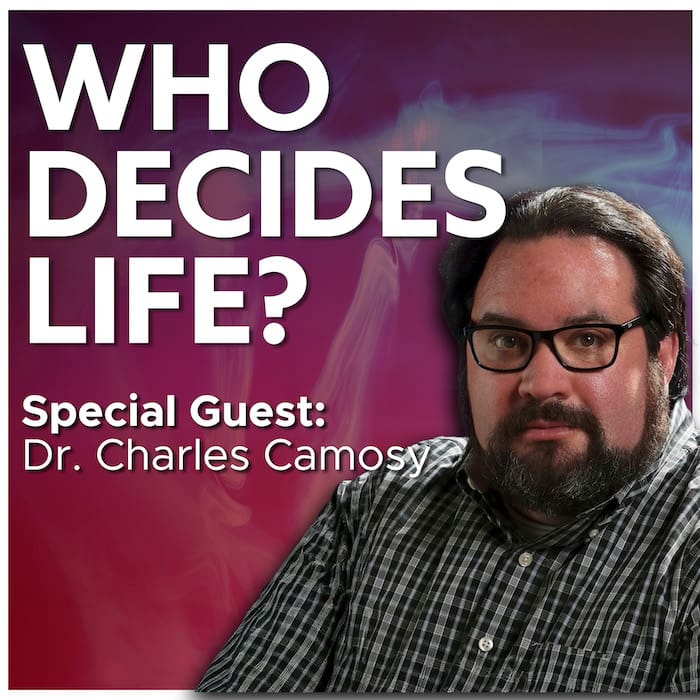
I hope that today's discussion encourages thoughtful reflection, careful discernment, and faithful presence in the places that God has called you to serve well. Next time on the podcast we'll be joined by Dr. Charles Camosi on bridging divides in bioethics and defending the vulnerable. Thanks for listening to Faith in Healthcare, where our mission is to bring the hope and healing of Jesus Christ to the world through committed Christ followers in healthcare. So we'll see you next time, Lord willing.
[00:55:12] Speaker A: Thanks for listening to Faith in Healthcare the CMDA Matters Podcast if you would like to suggest a future guest or share a comment with us, please email cmdamatterscmda.org and if you like the podcast, be sure to give us a five star rating and share it on your favorite social media platform.
This podcast has been a production of Christian Medical and Dental Assistance Associations.
The opinions expressed by guests on this podcast are not necessarily endorsed by Christian Medical and Dental Associations.
CMDA is a nonpartisan organization that does not endorse political parties or candidates for public office.
The views expressed on this podcast reflect judgments regarding principles and values held by CMDA and its members and are not intended to imply endorsement endorsement of any political party or candidate.