[00:00:08] Speaker A: You're listening to faith in healthcare, the cmda matters podcast. Here's your host, Dr. Mike chubb.
[00:00:20] Speaker B: Welcome friends to Faith in Healthcare. We want to take a moment to express our heartfelt gratitude to every one of you who gave and during our year end giving campaign.
Whether your gift was large or small, it is making a remarkable difference in advancing a Christian witness in healthcare. Today, our CMDA community came together in a most powerful way. Our stretch goal that I shared with you was $1.3 million. And thanks to the generosity of so many, we actually reached $1.202 million.
Praise God. Every dollar represents hope and compassion and a shared commitment to shining Christ's love through the work that we do together each and every day.
Thank you for partnering with your cmda. Because of you, lives are being touched, hearts are being encouraged, and faith continues to be expressed in all of the healing professions.
The important work of CMDA would absolutely not happen without generous donor support like we saw in November and December. December. We're deeply grateful that we get to partner with all of you on this mission to bring the hope and healing of Christ to the world.
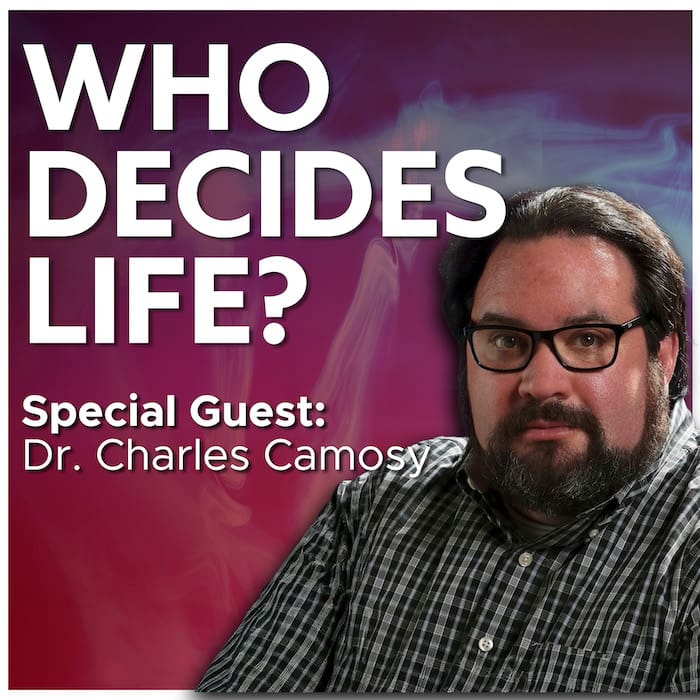
Well, in this episode today, I'm joined by my regular co host, Dr. Brick Lance, and our guest, Dr. Charles Camosi. Dr. Camosi is a professor of moral theology and bioethics at the Catholic University of America and the author of several books on these issues. We're going to talk today about what it looks like to live faithfully at the crossroads of faith and medicine, how to engage hard bioethical questions with moral courage, how to bridge divides and how to defend the most vulnerable at both the beginning and the end of life. We're also going to explore why language really matters and how a gospel shaped vision of human dignity helps us speak truth with love.
So let's dive in.
Well today on faith and healthcare. I've got a co host today that's on the program regularly, Dr. Brick Lance, our vice president of advocacy who loves conversations about bioethics. So since we have a bioethicist today, welcome Rick.
[00:02:51] Speaker C: Thank you, Mike. Yes, I do enjoy these conversations.
[00:02:54] Speaker B: Well, Dr. Charles Camosi is a professor and teaches moral theology and bioethics at the Catholic University of America. And our conversation today is going to focus on the crossroads of faith, medicine and moral courage.
And we want to focus especially on bridging divides in bioethics and defending the so Dr. Camosi, you got on our radar, My producer and I, because of a book that not too long ago you published entitled Living and Dying, A Catholic plan for resisting physician assisted killing. So thanks for taking time and joining us today on Faith and Healthcare.
[00:03:32] Speaker D: Well, thank you for having me on. I've looked at you from afar and watched what you've been doing for some years. And I was glad to be actually with you in conversation today, even though.
[00:03:40] Speaker B: I've read this book about end of life and fighting against what you call, you're the first person who's actually called it physician assisted killing. Dr. Lance, very appropriate term, appropriate term that we wish could be ubiquitous in this arena because that's what it is, physician assisted killing. But before we get there for our listeners to know, Dr. Lance lives in the state of death, if you will, Oregon, where we first started seeing this.
[00:04:06] Speaker C: I was there when it became legal, Mike. Yes, it was first place in the world. It became legal.
[00:04:10] Speaker B: Wow.
We have four pillars at cmda, four groups of vulnerable patients, people that we focus on from the advocacy team that Dr. Lance leads, Dr. Camosi, vulnerable at the beginning of life, vulnerable at the end of life, the gender confused, especially for children and adolescents. And then finally, healthcare professionals who want to practice conscientiously.
So let's start at the beginning of life. Abortion remains dead, deeply divisive in medicine and in our culture. And you've actually written about how much Americans actually agree in this abortion debate when elements of confusion are cleared away.
So is there common ground that Christians often overlook? And what are those confusing issues?
And what can all people actually agree upon? I can't wait to hear your answer.
[00:05:00] Speaker D: Yeah, it seems bananas to bring up something like this in such a polarized context. Right? Let me just first, before I answer your question, say, about how deeply I care about this particular set of issues, a focus on what I like to call prenatal justice is perhaps my most important animating value. I can remember from the time I first learned what abortion was in fourth grade back in the cornfields of Wisconsin where I grew up, St. John the Baptist Parish School.
Ever since then, I knew I had to do whatever I could to help fight for our prenatal brothers and sisters, though I wouldn't have put it that way then.
Oh, and just mentioned my first job after getting out of college was for Pro Life Wisconsin as well. So it was even an activist pro life anti abortion position that animated me very, very much.
So I don't have a milquetoast position. I don't have like a, yeah, let's just all agree to disagree type position or something. But I do think if we're going to do this, well, if we're going to fight for our, your first pillar there. Well, we have to work to be heard across differences and to find common ground. One of the big, you know, obstacles that is just straight up confusion and, and a sense that we don't even really know what we're talking about. I mean, in a real sense, we don't really even talk about abortion very much. I was just watching Lila Rose live action on a debate yesterday on YouTube and her interlocutor talked more about Donald Trump than about actually abortion. Right. They weren't even having a debate about abortion. They were talking about something else. I think a lot of people think about the abortion debate to the extent they even again debate abortion at all as a proxy for something else about Donald Trump, about the role of government, about whether you're on the side of women or not on the side of women or something like this.
I think one good place to start when it comes to this is just saying I don't really want to talk about anything else other than abortion. Right. That's what I want to talk with you about. I don't want to talk about secular politics. I don't want to talk about these other things. I want to talk about abortion. And when we do that, I think it's really important to focus on the pain of abortion. I don't know about your both of your experiences, but for me, the most challenging conversations I've had on these issues, again, really don't have that much to do about the arguments about abortion per se, like the philosophical and theological arguments. But the pain someone brings to this discussion, either their own abortion or an abortion they've been close to.
Again, in my experience, unless you can somehow address that, acknowledge it, get around that the arguments themselves don't work. Sorry about this long answer. I'll just finish with actually several points of common ground that once we can get past these other confusions and difficulties, we can get to so general. Late term abortion almost everyone thinks is bad, especially once people are educated about how often it happens and why it happens. Forced abortion or coerced abortion is bad, especially when it has bad health effects on the mother. We're seeing an explosion of these things, as you know, with the ubiquitous availability of the abortion pill and people including, unfortunately, doctors putting abortion pills in the, in the drinks of their hookups or girlfriends or to try to kill a baby that they don't want. And then finally, positive steps, both private and public, to help women and mothers choose life, focusing on their choice. I think we can do better than this. But if we can get past the confusion, these three things are available to us right now.
[00:08:25] Speaker C: Yeah, I could not agree more with that, Dr. Camosi. And that's why we need good sociologists, we need good bioethicists, we need good medical doctors, we need the churches, we need all kinds of voices in the public sphere to talk about, well, the benefits for the mother and for the family to have the child and raise the child.
And your first comment there was late term abortions. And I always get quoted, oh, that just doesn't happen. And that's just not true because it does happen in Oregon by the hundreds, if you will. So in your book you have this term intellectual solidarity.
So you use this concept of intellectual solidarity to resist polarization within our culture. So how can that practically help us health care professionals engage with patients, engage with colleagues and our community at large who hold these strong and differing views of abortion. And they are strong.
[00:09:24] Speaker D: Yeah. As somebody who until this year was teaching at a medical school and who regularly is involved in secular medical context, these conversations can be so difficult. And so your listeners, your members are facing unbelievable challenge in many cases. Challenges in many cases. Again, this is one person's experience, but in my experience, listening to them is primarily the most, is the primary thing to do right away, make them feel heard, acknowledge if they have good arguments. I know where I feel least comfortable in some of these debates. For instance, determining when a pregnancy actually threatens the life of the mother to a certain level is something I struggle with, frankly. So if they, if they want to press good points, I acknowledge they're good points and I need to think more about what they're saying, etc. Again, I think dealing with their pain and dealing with the pain of others surrounding these issues is important.
Also, we're talking about dealing with pain. We need to not just focus on the pain of those who are pro choice, but also the pain of those women who are deeply, deeply, who so deeply regret their abortions. Right. And that's a massive amount of, of pain as well. And if we're going to care about women and women's pain, that has to be part of the scenario too.
I think another way of engaging intellectual solidarity is connecting to issues that they care about that aren't abortion and use them as ways in to talking about abortion. So for instance, if somebody is a very different political point of view, say they are against the death penalty, maybe they don't want, say, healthcare providers to participate in the death penalty. I found that's an interesting way in to talk about Abortion, disability rights, obviously, with how many abortions take place because of disabilities is another way in. And I've even found you mentioned, well, I have a deep interest in thinking about animals in a Christian context, even talking about animal rights with people who care about that stuff. I've also said, well, hey, there are principles in all these issues that I just mentioned that if applied consistently, would make them think differently about abortion. And so that's sort of my M.O. when it comes to engaging with people who differ in intellectual solidarity, with those who think differently.
[00:11:32] Speaker B: So now that I'm understanding a little bit better the concept of intellectual solidarity, which is each of us, when meeting with people who disagree with us, recognizing good points that they have and acknowledging, you know, I can see that, I understand maybe even some emotive feeling pain with the other individual. What are some other go beyond abortion, the abortion issue. But what are some other concrete examples that you have seen in a polarized culture that this intellectual solidarity is helping to open the door, pave the way for more dialogue?
[00:12:07] Speaker D: It's interesting, you know, Oregon, the first state to legalize physician assisted killing, you would have think that was back in the 90s, early 90s, I think. Right.
[00:12:16] Speaker C: 1994 became legal, but really didn't come into practice till 1997.
[00:12:21] Speaker D: So mid-90s. Yeah, that's now 30 years.
And while we've had some losses when it comes to physician assisted killing this past year, there's still, interestingly lots of blue states. And there has been for some time deep blue states which continue to make it illegal. Massachusetts, Maryland, Pennsylvania, not as blue as those others, but lots of states that you not necessarily would expect to have them have rejected it. Minnesota, for instance, just rejected it this last year.
[00:12:55] Speaker C: Connecticut, yeah.
[00:12:55] Speaker D: Oh yeah, Connecticut. I forgot about Connecticut. It's like 11 years in a row now, if you were in Connecticut. And it's only until recently that states like just this past year, New York and Delaware, Illinois, have passed it. And so it's been 30 years that we've been able to fight off these attempts to pass it, even in deep blue states, I think, because intellectual solidarity, working with those who would otherwise disagree with us on other things has been really helpful. I think the disability rights movement has been at this, I know the disability rights movement has been at the center of doing this. So that's another, I think, important way which you can reach out to people again, who might not agree with us necessarily at first blush, but if we say, do you care about disabled populations? Do you care about their vulnerability? Do you care about violence being used and their lives precisely because we've decided their lives are not worth living. That's a big chunk of how to do it. I think I've had pro choice people back to abortion. Pro choice people reach out to me after reading beyond the abortion ward, saying, hey, I don't agree with you on prenatal justice, but I want to work with you on making unwanted abortion unthinkable. There was a professor at a, from a very secular school, sociology professor that reached out to me with those exact words. She said, I want to make unwanted abortion unthinkable and I want to work with you and trying to do it again. We don't agree at all on prenatal justice. I was hoping that our relationship might lead more in that direction. We'll see. I mean, hey, if we can work with people on helping make unwanted abortion a thing of the past, that would save an untold number of lives. Right. I could say more, but I'll finish with this one. I think excesses of in vitro fertilization are coming which are going to shock people into rethinking how we treat embryos and discard embryos. I just saw, I think it was three months ago, four months ago, proof of concept for something called in vitro gametogenesis.
[00:14:47] Speaker C: That's research we've done at my home state as well, Oregon Health Science University. Yes, but go on.
[00:14:52] Speaker D: Well, so you know all about it. I was shocked to learn about it. Apparently we can take now any somatic cell and turn it into a gamete, an ova or a sperm, which means we can create thousands and thousands of ova and sperm per cycle, which means we can create thousands and thousands of. Of embryos, recycle. And I think we will, and I think we'll use artificial intelligence to sort of sift through them and pick the two or three that we want and discard or freeze the rest, put them in a frozen prison. I think these things are going to shock the conscience of people. And if we can say, hey, if you, you have a principle, if we can put a principle to your shock, like, why is this bad?
Let's think about why it's bad and then say, okay, let's apply that principle to other areas of bioethics, at least in my experience, those things have legs that can push in directions that are unexpected and with the grace of God can really help people change minds and hearts.
[00:15:46] Speaker C: Yeah. So I do have a question about dialogue in general, but before that, I could not agree with you more in this idea of solidarity. It's also very important, we have found at cmda, particularly with this mass gender confusion, particularly in adolescents, that there are some intellectual ideas that most people will buy into. And we need to continue to espouse those ideas and then also bridging the gap with other organizations. So we work closely with praft, the Patient Rights Action Fund, which also focus on the disabled because the disabled are being taken advantage of. Clearly it's happening in Canada and I think it's going to happen more in the United States. So let me ask my question about dialogue. Now, as an orthopedic surgeon, I also have the privilege, I've heard said this many times on this podcast that I am the medical director of a pregnancy center. So again, women with unplanned pregnancies that come in there and there are shouting matches online, but there's also shouting matches that happen outside our clinic. We'll have protesters out there. We actually go buy them pizza and take it to them and try to be nice to them. But in a culture where this debate comes down to shouting matches, whether it's a live shouting match or online shouting match, what is the practical practice for us as Christians in healthcare? Again, that idea of resisting the polarization but fostering constructive dialogue. How do we foster that dialogue other than taking them some pizza?
[00:17:14] Speaker D: I think that's a great option, actually.
Well, first of all, it shows you actually care about them.
You're an image bearer, just like I am.
The Holy Spirit is in you and God loves them. And as a result of their God, God loving them, I have a responsibility to love them. Right. And in fact, Jesus our Lord makes it clear that we have to have a special kind of love for our enemies. Right. That's not, that's a non negotiable thing of the requirement of the gospel.
And so again, this overlaps with some of what we already talked about. But you know, letting people know that you love them, that you care about them, that you're listening to them, that they may have a good point, that they have a story, that they have likely a story that's full of pain regarding these issues.
Beyond that, though, I'll add, I think it's important to help people understand that abortion is not or should not be, especially from a Christian perspective, a partisan issue. Again, I think it's no accident that Lila Rose's debate partner talks so much about Donald Trump and less about abortion. Her base, as it were, or the people she's talking to are far more interested in engaging in some sort of political discussion. Of Donald Trump than they are about the actual ins and outs of abortion and about prenatal justice and about what actually helps women flourish.
So to the extent that we can dial down the partisanship, the sense that this is like somehow associated with a secular political party, the better. I say this as a former board member of Democrats for Life, and significantly, a former board member, I gave up on that sort of, you know, partisan approach. But I do think there's something really bad about the fact that Democrats are basically totally hostile territory for us because that's really meant that the GOP has been able to kind of take us for granted. We've seen that unfold in just a few weeks with Planned Parenthood funding destroying embryos via ivf. The question about whether Hyde would be part of the attempts to have some kind of health care subsidies. We need Democrats, we need independents, we need people of every stripe be able to listen to us and take us seriously. But to the extent we sort of associate this with the secular political party, we not only resist the idolatry that sometimes comes with putting going sort of all in with a secular political party, but we then make it more difficult for people to hear what you have to say who don't associate with those political parties or even not just not associate, but hate them, right? Can't even understand why they would engage with someone like that. In addition to that, I would say maybe it's also important to acknowledge multiple positions. What you mentioned with the shouting matches and the online stuff sort of presumes that us versus them fight to the death. Where, you know, I might get my identity in part from hating you, from.
From pushing you away from. From opposing you. But when you can acknowledge there are multiple positions, right? And say, hey, there are people that have this position on abortion. There are people that have that position on abortion. I sometimes tell my students when we're talking about bioethics, There are like 17 positions on abortion, right? There's not a pro choice or a pro life position, right? Once you can get that nuance, once you can get that sort of different sort of options, then it becomes more difficult to frame this as an us versus them fight to the death. Incidentally, that's another reason why it's important for it not to be a partisan issue, because that lends itself to it being an us versus them, right. Red versus blue, right versus left fight to the death. Our positions as Christians has nothing to do with secular political politics of the 21st century United States, right?
It goes all the way back to the ancient Middle east with the carpenter. Right, from the ancient Middle East. So anyway, I'll stop there. I just think it's so important.
[00:20:57] Speaker C: Yeah. Before Mike asks the next question, I'm just going to say I agree and CMD agrees. So just so you know, Dr. Kumasi, that CMDA is a nonpartisan organization and all our listeners will hold our disclaimer on that at the end of this audio tape.
[00:21:10] Speaker B: Yeah, that's right. Well you teach theology and bioethics and so I think you're an excellent guest to answer this question. And healthcare ethics, there are tensions and you mentioned nuance, whether it's rights, resources and human dignity. So so many of our listeners are doing patient care, clinicians in various disciplines and so help us help them to deal with those tensions in a way that is consistent with biblical teaching, in a way that honors God.
[00:21:44] Speaker D: I think I'm speaking not just to your listeners, but to all Christians, Catholics, Protestants, Orthodox. I think too often, and there's a big pressure, as I mentioned, as we all know, there's a big pressure, especially in secular medical circles, to try to conform, to say things, to pretend that you don't think things are true when you do think they're true, etc. I think we all need to kind of steal our spines here. And in light of what I just said, again, this is not a milquetoast, sort of like let's just find the, the median or whatever this. I want us to all, we all want to live the gospel as, as, as we are called to by Christ. And I think we need to do this even when it's deeply uncomfortable.
And so to the extent that we might feel we have to have a secular understanding of rights, a secular understanding of resource justice, a secular understanding of dignity, we ought not to do that. Everything ought to be through, as he said, a biblical vision, a gospel center vision, a Christ centered vision. And we should make no apologies for that. In a book I wrote called Losing our How Secularized Medicine Is Undermining Fundamental Human Equality. That was my central thesis, is because we punted so much on this biblical vision, we're losing the very basis, basis for human dignity, all which is a theological basis, right. Human beings being made in the image and likeness of God.
So I guess my answer is that I don't think you're getting away from the complexity, but you can get away from the incoherence. If we think of rights, we think of resources, we think of dignity in a secular key and try to make it fit when it really doesn't. So one Example, I just pick rights, a secular understanding of rights, especially in the United States, people tend to think of it as like, oh, this is an individual who sort of has a right to be left alone or to stand apart or to not be bothered. Right. Or something like this.
When in a Christian context, to the extent that right fit, rights fit at all with our vision, it's more, it's much more of a right to have a certain kind of care right to be treated in a positive way, to be given the kind of love and nourishment, to have a fulfilling, flourishing life according to the way God intends human beings to flourish. Right. Now, sometimes that does mean not being interfered with, like religious freedom or something like that. But I would say much more often it refers to the kinds of things that people need to flourish and to be again, the kinds of creatures God created us to be. So instead of thinking that, that's just one example, but instead of thinking of rights as in a kind of secular context, let's think of them unabashedly, courageously, in a gospel centered context.
[00:24:13] Speaker B: And Rick and I talk about this, his predecessor and I, Jeff Barrows, talked about it a lot, that the language here matters because the more we talk about rights, the more we're going to sou. Like secularists, like political people, we're trying to protect our rights as healthcare professionals to do something we think is important as opposed to the language of we need to contend for the freedom to care for people the way we professionally and ethically know they should be cared for. So trying to get away from that language of rights.
[00:24:41] Speaker C: Yeah, language does matter, Mike. Including this idea of reproductive rights which is now in our lexicon as well. Yeah, yeah.
[00:24:48] Speaker D: How many times have we heard just conversation stoppers with regard to things we'd love to have conversations about that just invoke rights. You know, it's my reproductive rights, it's my bodily rights, it's this right, it's that, it's that right. It's. And if we're just having a battle over which rights trump other rights, what we're really talking about is just who, who can wield power over another, rather than a sort of consistent moral and ideological vision.
[00:25:13] Speaker C: That's well said.
[00:25:16] Speaker A: Before we continue with this week's episode, here's a special announcement for you.
Saline process witness training is coming to Fairfield, Connecticut, February 13th through 14th, 2026.
It's designed for healthcare professionals and students who want to care for patients more holistically.
This 10 hour interactive course equips clinicians to thoughtfully and respectfully engage patients spiritual concerns in real clinical settings.
Research shows that most patients want their healthcare team members, including physicians, to acknowledge their spiritual needs, yet many clinicians feel uncertain about how to do that well.
Saline process provides practical tools to help you respond with confidence, compassion and sensitivity, addressing both physical and spiritual care while honoring professional boundaries.
Learn more and
[email protected] events and mark your calendar for the 2026 CMDA National Convention, April 23 through 26 in Loveland, Colorado, a time to renew your spirit, recharge your faith and connect with fellow believers in health care.
We're thrilled to welcome John Stonestreet, president of the Colson center and co host of breakpoint Radio, a nationally recognized voice on faith, culture, theology and Christian worldview.
Convenient lodging is available at the Embassy Suites by the Hilton Loveland Conference center and Spring Hill Suites by Marriott, with special CMDA room rates reserved for attendees.
Learn more or register for either
[email protected] events let's jump right back into this week's episode.
[00:27:15] Speaker B: Well, with finite resources and endless need, how do you recommend that Christians discern when to advocate for treatment or not and when to accept limits without sight of human dignity? And I'm thinking one of the questions that we've recently been given that we didn't cover in our other program was like a slow code, a slow code and saying, well, wait a second, the family didn't give us permission to do this, but it really makes this is futile. So let's just walk through this very slowly and the patient, their loved one's going to die. So how do you recommend we discern the level of treatment that we should be applied in these cases when autonomy and request for everything to be done. I lost my father about 18 months ago and lots of these discussions in the neurocritical care unit about how much is too much.
[00:28:07] Speaker D: This is a super, super important topic. And I lost my father this past July too, and there were questions we were asking. So many families ask and literally suffer through these questions.
And of course, the other side of the coin here is that we also live in a culture that is highly ableist. And this is back to the disability rights conversation, right? That says, well, I mean if you, if you're just not smart enough or you, you can't walk or we've decided some other reason why you don't matter the same as other kinds of people, we don't think we should spend money on you or resources on you. I'm writing a book on the return of infanticide And a post Christian culture. And this comes in time and time again. On the other hand, there are just cases of over treatment where you're fighting for every last minute of life and putting the patient, sometimes a very small child in the NICU into a terrible situation.
I don't think the reaction should be to slow or show code for the parents. That's deception. That's at the heart of what physicians and healthcare providers should not do.
But I think it does come back to this gospel centered vision. Again, choosing to live in a way, or choosing on behalf of another to live in a way that will result in less life, less life lived on this earth is perfectly fine, right? I mean, the example of Christ himself on the cross is a paradigmatic example, right? Of choosing to live a certain way where you foresee but don't intend. Importantly, Jesus of course, never aimed at his own death. It was never his point that he die. He foresaw it, right? Even prayed in the garden of Gethsemane that the cup would pass, etc. But he lived his way in such a life where he knew that this was almost certainly going to happen.
By the way, it's not only the case that we can think about this in a NICU or intensive care unit of other kinds, but maybe you're aware, I've only relatively recently become aware of the transhumanist goal to have radical life extension and upload their consciousness to the cloud or whatever it is that they talk about these days.
Resisting that I think is at the very heart of what it means to preserve human dignity. Our finitude and living in such a way where one does not participate in the transhumanist quest for radical life extension may result in us living less time on this earth, but again, that's perfectly okay, right? That's even good to live that way as long as what we're choosing to do is to live a certain way, foreseeing, but not intending this will result in less time on this earth, rather than again, aiming at our own death, participating in physician assisted killing, other kinds of killing. That's a fundamental distinction, it seems to me. But the basic point that we have finite life, we have finite resources, and we ought not to, you know, throw every resource. I mean, it's the very definition of idolatry. What's happening with the transhumanist is idolatry. And Christians should be very, very resistant to that kind of idolatry.
[00:30:58] Speaker C: Well, that brings up the idea of the term that you use is the quote, throwaway culture, end quote. And These ideas of not taking care of the vulnerable in our, in our society, it leads down a slippery slope. I will tell you, Oregon two years ago tried to incorporate into a bill infanticide up to six months and make that legal. So to think that this slope doesn't exist is just a fallacy. And it comes down to the way we think in our culture. Which brings me to page 18 in your book, and I'm just going to read it here. So you talk about the reasons why patients or individuals choose physician assisted suicide or I'm sorry, physician assisted killing, because that's what it is.
And you state this very well in other countries, other states have adopted the same. Well, they have proven the same statistics and over the years. And by the way, you don't have to put again assisted suicide on the death certificate, but we do collect the data. So the state does at least collect the data.
And pain or fear of pain never make the top five. They never do. So your top five, loss of autonomy. Number two, decreased ability to engage enjoyable activities. Number three, loss of dignity. Number four, loss of control of bodily functions. Number five, becoming a burden on others.
So in this throwaway culture that discards the vulnerable, which I think physician assisted killing does.
So how do you see the mindset showing up most clear in the way modern healthcare treat people in general, especially those that are dependent, those that are costly, the disabled. We talk about those coming towards the end of life. Just your thoughts on that and how that thought just permeates our culture in healthcare?
[00:32:44] Speaker D: Yeah, I think those five examples maybe with the exception of four, which does get to the kind of flourishing of the body itself, but four of the five examples are really about a kind of social construct of what a good life is. Right. Especially in the United States, like loss of autonomy. If there's one thing we know as good secular us Americans, is that I am responsible for myself and I should be autonomous and I gotta not depend on others and whatever or be it like the. And then number five, right. Is the corollary of that I don't want to be a burden on somebody else. But this is precisely the opposite of the gospel. Right? This is precisely the opposite of our understanding of human infinitude in reference to God in relationship with each other.
There's nothing autonomous about human life on this side of the eschaton at all. Right. We are totally dependent on God and we're deeply dependent on each other.
[00:33:35] Speaker C: And creation too.
[00:33:37] Speaker D: And creation. That's right. That's absolutely right. But we have a post Christian culture. It's actually a neo pagan culture. It goes all the way back. We're embracing re embracing a lot of what the pagan Greeks and Romans thought of what made life valuable before Christianity came on the scene.
Again, this is a significant part of this book I'm currently writing on infanticide, where they would simply, just literally discard newborn children if they were disabled, if they were women, girls that they would have to pay a huge dowry for and they couldn't afford.
There's all sorts of terrible examples of this from the ancient world. There's archeological work actually that showed a bunch of male infant skeletons in a pit that were just literally thrown away. They speculated that it had to have been a brothel because the reason they didn't throw the male skeletons away as they wanted to raise the girls as prostitutes within the brothel itself and keep it sort of going there.
But now with regard to infanticide, with regard to physician assisted killing, I would even argue when it comes to catastrophic brain injuries and other kinds of issues, we have a neopagan understanding of what makes life good. It's you gotta have a certain kind of autonomy. You have a certain kind of not dependence on others, a certain kind of brain power, a certain kind of ability to participate in the culture. Right. Enjoyable activities. That means you can participate in the culture. Kind of ableist understanding of if you're disabled to the point where you can't participate, then you don't have the same kind of lives. It's one reason why disability rights communities are so good and so activated on physician assisted killing is because they can see exactly what's going on here. They're saying basically we can, we don't want to say everyone can kill themselves via physician assisted killing, but if you have lives like those, we can kind of understand why you would want to do it. Right.
And that's how it ends up going again. Physical pain and suffering. We all have compassion for people in those situations. Again, sounds like you both have personal experience with this relatively recently. I sure do. That's not what's happening. Throwaway culture is about saying we have a kind of consumerist, ableist, what can you do with your life that fits into our secular culture understanding of who has value and who doesn't. And if you don't, we'll discard you, we'll throw you away.
[00:35:52] Speaker C: So let me just ask on that same question, would you say then it's the similar thought and idea at the end of life and beginning of life and beginning of life. I mean pgd pre implantation genetic diagnosis, if it doesn't fit what I want, the baby that I want, I'm going to discard it. Same type of idea.
[00:36:07] Speaker D: Yes, absolutely. Absolutely. That's actually the thing that's being sold right now with the implantation. Genetic diagnosis is we can find if this baby is likely going to have the disability you don't want. And we will literally throw them down the tubes as medical waste or put them in a frozen prison if you don't want them. Also, as you both know with abortion, this happens all the time, right? Oh, spina bifida down syndrome.
You're gonna have to answer 20 questions and be put through the wringer if you want to have this baby because we think you should really kill the baby. And the thing that I discovered in this book, and you may have both been onto this much earlier than I was, is we've now shifted to infanticide as a way of trying to think about their OA culture even after birth, because medical teams, OB GYNs, neonatologists will say, hey, if you don't want to have the abortion because the baby has spina bifida, we'll give them comfort care or palliative care after birth too, with the goal of making sure that they also get thrown away in that context.
So we are now in a neo pagan context where throwaway culture is at many different parts of our lives using the kind of understanding of what makes life valuable I.e. consumerist, ableist and not at all consistent with the gospel.
[00:37:22] Speaker C: Yeah, eugenics at both ends of life.
[00:37:24] Speaker B: So again, our focus today is you helping us to figure out with deeply polarized culture on many of these issues. And early on in your book you talk about reaching across the aisle to friends on the left, especially within the church in particular.
And I was just intrigued by your language. We cannot let second or right left divisions in the church keep us from meeting the moment.
I urge those who might identify more with the social justice centered left to work with your Catholic brothers and sisters who identify differently. Your impulse and capacity to understand how human dignity is threatened by structures and systems will be essential if our resistance to PAK is going to be successful.
So first question is how well have you seen that working because of your networks and connectivity, especially in Washington D.C. with those who social justice from the left in the arena of physician assisted killing, but also in this whole arena that we've been fighting. I told you about our other pillar, which is kids and adolescents who are gender confused and the idea of intellectual solidarity to try to within us. We keep talking about the house of Medicine being broken. We're trying to reach out to professionals, healthcare professionals, who are pushing some of these agendas, these activist agendas for kids to mutilate themselves.
That the systems, the American Academy of Pediatrics and the American Psychiatric association, the ama, these are all societies part of structures that are advancing harm to the vulnerable. So my question I want to learn from you. How well does that work in this intellectual solidarity to say please think with us, or as Jonathan Haidt's intuition, does it always get in the way and you can't bridge that divide?
[00:39:10] Speaker D: Yeah, I think with two examples, and they're fortunately not at the beginning of life.
They're both dealing with the end of life. One I already mentioned was the coalition of pro life healthcare professionals, disability rights activists and clergy and religious that's been a really important force against Compassion Choices, formerly the Hemlock Society at the end of life. And we wouldn't have been able to be as successful as we've been without a broad coalition that has nothing to do with right left, but everything to do with human dignity at the end of life. I think that's maybe one reason both of you could speak to this more than I could. Probably because you're both on the ground in these clinical contexts. But from what I understand, the most recent success with the American Medical association keeping very strong language against physician assisted killing also result was the result of a coalition of people across very different perspectives and political perspectives and theological perspectives. So the coalition building there, I love to point out that, hey, people that are for this or something to say, well, does it mean anything to you that the American Medical association just overwhelmingly kept this, the following language against physician assisted killing and saying it's incompatible with the vocation of healer being a vocation, having a vocation to heal.
So those are two successes, it seems to me. I do think it's more challenging at the beginning of life because that is so deeply connected to our politics into an ongoing sort of left versus right fight to the death. One of the things I've been trying to focus on is the coercion that often happens with abortion. Right. If pro choice people are generally pro choice and not pro abortion. And there are some out there, right? There are people who are pro abortion, no doubt about it, but there are people who are genuinely pro choice. And I think it would be really great and interesting to work together on. You know, we've had so many bad losses at the state level with regard to these ballot initiatives. What about a ballot initiative that would be able to sue abortion providers Create the ability to more easily sue abortion providers who don't get informed consent from their patients. Right. Who don't make sure that intimate partner violence is not driving this abortion, that it's not a relationship between a pimp and a prostitute. That's. Or it's somebody who's underage or involve a trafficking or something like that. What about, what about making it deeply financially painful for abortion providers? Especially if we're going to talk about now the attempt to traffic or broadly distribute sometimes illegally abortion pills. Right. That should also be a thing that would put companies at risk with regard to this. But the value itself is something that it resists polarization. Right. And it's a very Christian vision. We should not have women being forced to have abortions they don't want to have. And yet so many abortions are in fact abortions that women don't want to have anyway. That's not, we're not there yet, but I can at least see the little green shoots of something like that being something that we could, that could come down the road.
[00:42:07] Speaker C: So I have two questions. Let me ask them one at a time on this idea of value and human value, and I'm going to give my bias out here. One, we talk about secular health care ethics. I think that's an oxymoron because I think true ethics comes from the Christian faith and that's been historically true.
But this idea of dignity, should our. When we engage in these conversations about human dignity, how should we frame that or phrase that. Do we talk about imago dei? Is that too much of a scriptural term? Do we just talk about the dignity of every individual person? How do you frame this idea of the value of people in our conversations?
[00:42:45] Speaker D: For me, it actually would be context dependent. I would maybe talk about it one way if I knew the person. Even if they were pro choice or in favor of physician assisted killing or gender mutilation or something like this, I would, I would. If they were a Christian, I would. I would have no problem invoking imago dei, no problem invoking the history of how human dignity was turned on its head as again, Christianity came on the scene in the west.
And you know, the turning of priority that those who are the least among us actually bear the face of Christ in the most profound way, demand the most of us. Right. And the last shall be first. And if you're privileged, you're in trouble.
That sort of total flipping of the conventional wisdom on its head with regard to secular people. I tend to just ask questions if we're if we're able to have these conversations. And again, it's important to develop these kind of relationships of love and respect and mutual listening so you can actually be heard in them. But I tend to focus more on where they come from and if they have an understanding of human dignity that encompasses all the individuals they would like to be encompassed, especially the most disabled among us. A question I'd like to ask is, you know, even though I care deeply about animals, I think every human being matters more than even the most sophisticated animal. What is the basis for, you know, disabled human being who can't speak as well via American Sign Language as a gorilla? Is there a way of trying to say that. That individual matters more? What is behind that? Or, you know, every human being seems to have a wild discrepancy in our capacities. Right. If it's about actual capacities, human beings are not equal. So what is it actually that makes all human beings have equal dignity, equal justice under law, and sort of press them on that in a polite way and an engaging way, but nevertheless press them and then try to lead them the principle of human dignity that in fact undergirds, at least, you know, until recently, a Western understanding of human dignity, which is about. Which does come from imago dei.
So at least that's the kind of approach I'd like to take.
[00:44:46] Speaker C: I appreciate that. And you should rewind and replay that last one to two minutes that Dr. Kamasi just said. I completely agree that we need to have these conversations and listen and ask the questions that they need to answer about human worth and human value, human dignity.
So I appreciate that very much. My next question is a little more personal, and it's about your faith and how with your faith, you approach these issues. In other words, how much your faith plays a part in that. And let me add in to them, add a little twist to that question.
So physician assisted killing is now going to be legal. At least it's signed into law in New York. And Kathy Hochul, the governor, states that she is a practicing Catholic and she signed this bill out of compassion?
So tell me about your faith and compassion, because there's others. And same thing with Protestants. There's Protestants that will disagree.
But do you wrestle with that issue when people like Kathy Hochul says that? And how does your faith play a part in this idea of compassion?
[00:45:49] Speaker D: In Catholic circles, and I think there's, in certain Protestant circles, it exists as well, but maybe not as strongly in many Catholic circles.
There's a kind of weak cultural milquetoast Catholicism that People reflexively identify with, but it actually makes almost no practical difference in their lives.
And it even gets up to notch if they're, if they are a politician. Right. Because there's a skepticism in this largely Protestant founded country of Catholicism and say, wait, what is your loyalty? Is it to the Pope or something? Not to this country.
And so ever since John F. Kennedy, we have this ongoing discussion in the United States about Catholic in politics and say, to what extent should your understanding of the Gospel actually reflect the values you fight for in, in a political arena versus sort of just sort of letting others, you know, freedom, autonomy, letting people make up their minds, their negative rights, their right not to be interfered with, as opposed to a, you know, positive understanding of human dignity and rights.
So I think that's a lot of what's going on there, that this is yet another Catholic politician who doesn't allow her understanding, his understanding of the gospel to really be at the center of who they are.
Because obviously if you put a Christian understanding of dignity, a Christian understanding of nonviolence, a Christian understanding of care for the most vulnerable Christian understanding of who is benefiting, that's an underrated part of this. It's almost always, almost exclusively very privileged people who take advantage of physician assisted killing. It's the vulnerable populations that can sort of see it for what it is and don't participate in it. I happen to live in New Jersey. New Jersey has had Pak legal for some time now. I think the first black person used it last year. Is it just totally remarkable? Right? Like it's almost overwhelmingly privileged populations. But anyway, my faith is of a different kind. I, I used to be very much kind of Kathy Hochul type of Catholic. I, you know, I have an Irish mom and an Italian dad and we sort of grew up culturally Catholic on just those bases. Right.
But as over time I especially being in community with lots of very serious Catholics studying the gospels, studying Catholic theology, I just became convinced that this is absolutely the wrong way to think about what it means to be Catholic and what it means to be Christian. You have to have it, the gospel first, right? Gospel has to trump everything else that is our source of ultimate concern. And as I grew in the understanding of this, I became hyper concerned. To not be partisan, to not let political idolatry sort of pushed me in ways that made me make compromises for the gospel, whether it was on the actual positions themselves or including loving those who I was in serious disagreement with, maybe even my enemies. In this regard, my faith has done nothing but grow stronger as a result of this and my love of bioethics and of medical ethics and of the fight for human dignity and healthcare has also done nothing but grow stronger as a result of it. Because we can see there's like a gospel shaped hole in all of this discussion. Right. It's just so desperately needed to fit in here. And it also allows again, the ability to truly love people I'm in conversation with, even if we have very, very radical disagreements about all of these things.
[00:49:04] Speaker B: Really good stuff, brick. Thank you. Dr. Camosi, can you just sum up how our listeners who have a genuine, ardent faith in Christ and the gospel can be emboldened to talk about it on Monday morning when they walk into the hospital or into their office and make their faith in healthcare connected in a way that's gonna have impact. You said have a spine. I mean, that's a practical but hard thing to do. But any other final comments? Cause we've run out of time here today.
[00:49:36] Speaker D: Thank you. This has been a great conversation for me.
I do think the spine thing comes first, the fact that Christ said, remember that the word, the world hated you before it hated me first. That it's not going to all be sunshines and rainbows that we talked about a few good things that can come from this.
So this is where I think a big chunk of this depends on truly how much you love your colleagues. Right.
Do you love them enough to engage with them, to focus on building relationships with them, to listen to them, to find ways to speak the truth in love to them? I love this idea that Pope Benedict XVI had about thinking about truth and love together.
Anytime there's, there's a loss of one of those two things, we've lost the gospel, right? It's got to be both. If you have love without truth, it gets you run, go off the rails. And if you have truth without love, almost no one can hear what you're going to have to say. We got, we got to have them together.
And then I would just repeat some of the other things I would say here. Once you build those relationships of love, of listening, of charity, try not to have this be about secular politics. I, I can't emphasize that enough. I mean, probably they'll get many different sort of references to current political things, many of them associated with the Trump administration.
Try to find a way to present from those things and just focus on your foundational principles that the gospel gives you. Right and non violence care for the most vulnerable, the dignity of, of every single human being equal under, under God, reflecting the image and Likeness of God.
And then maybe even talk about the things where you have significant overlap. Right. We talked about some of those. Disability rights, nonviolence, concern for the ecological world, God's creation.
These things can signal a kind of common ground that you can then build out with and say, you know, how we share this view in common. I got to tell you, I was discussing this new thing the other day, in vitro gametogenesis, and I just don't know how anybody who's for the disabled could possibly, like, support something like this. And doesn't this. What does this say about our culture that we've built into discarding the disabled in such a foundational way?
So I would say be strong, have a spine, but be open to listening first. Creating relationships, creating a culture. Pope Francis calls it a culture of encounter, which is the antidote. Actually, it's a good place to end. Maybe it's the antidote to throwaway culture. Right? Where we simply think about people as having a certain kind of value. Are they valuable to us? Are they not valuable to us? We do a kind of calculation and decide to either welcome them or discard them on that basis. Christians are called to have a culture of encounter and hospitality with literally everyone, and maybe especially those like the tax collector, the centurion, the Athenians.
[00:52:15] Speaker B: All with the Athenians.
[00:52:17] Speaker D: Yeah, with the Athenians. Come on. Right.
We're called to be in dialogue, to be in encounter, in solidarity.
That doesn't mean idolatrously, sort of selling out to their values, but it does mean engaging them with Christian love, especially if it's difficult for us to do so. And. And I just urge your listeners to. And I don't do it perfectly. I'm not trying to set myself up on my high horse here. It's very difficult to do many times, but I think if we do that, we can really see that God's grace can be working through those encounters.
[00:52:48] Speaker C: Yeah, that's well said. Hey, Mike, this, as I knew, was gonna be very enjoyable, but do you wanna tell our listeners about some of the books that he's written?
[00:52:54] Speaker B: Oh, yeah, absolutely. Living and Dying well is the newest book that Dr. Camosi has published, but also Resisting Throwaway Culture, How a Consistent Life Ethic Can Unite a Fraction of People. Beyond the Abortion Wars, Too Expensive to Treat, Finitude, Tragedy, and the Neonatal icu. Bioethics for Nurses, which I think you were telling us earlier, may be the only book of its kind about bioethics for nurses. Peter Singer and Christian Ethics for Love of Animals and Losing Our Dignity.
[00:53:23] Speaker D: That one's losing our dignity how a secularized moral vision is making us lose our concept of fundamental human equality here.
[00:53:31] Speaker B: Yeah, thanks Brick, for reminding me.
[00:53:33] Speaker C: Yeah, good stuff.
[00:53:35] Speaker B: Well, God bless you and thank you. Hope we get to interact in person one of these fine days and I hope it's a smashing success at the Society for Christian Bioethicist next month.
[00:53:46] Speaker D: Thank you very much for having me on. It's a great conversation.
[00:53:59] Speaker B: Well, our thanks to Dr. Charles Camosi for joining us and for reminding us that resisting a throwaway culture, as he refers to, begins with how we see and care for one another through a culture of encounter grounded in human dignity and for us as Christians, shaped by the Gospel of Christ, Christ and truth spoken in love.
If you're a Christian healthcare professional that's navigating these difficult questions in a most polarized environment, we hope that this episode encouraged and it strengthened you, especially as you care for the vulnerable patients at the beginning and at the end of life.
You know, if this conversation was helpful, we want to invite you to share it with a colleague or a friend who might be struggling with some of these issues in patient care.
And be sure to subscribe so you don't miss what's ahead.
You can also follow the show on social media for updates as well as new resources.
And if you'd like to learn more about CMDA and how we're equipping Christian healthcare professionals to bring the hope and healing of Christ to the world, just visit CMDA.org today.
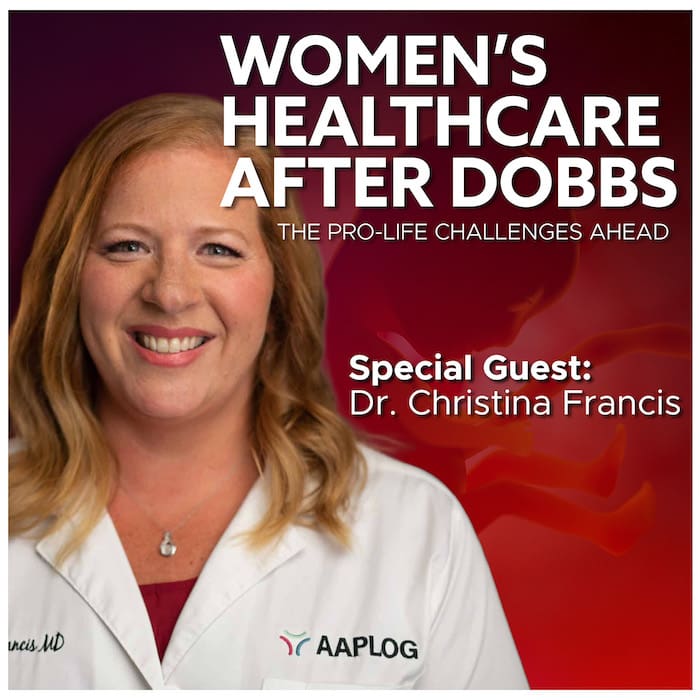
Next time on the podcast we'll be joined by Dr. Christina Francis. She's a good friend of mine who is CEO of the American association of Pro Life OBGYNs or APLOG for short. We're going to examine what's really happening in a post Dobbs World. From the growing dangers of abortion, drugs and conscience threats, especially in OBGYN check training, to wide clear medical language as well as courageous advocacy and life affirming care, they matter now, friends, more than ever.
Thank you for listening to Faith in Health Care, where our mission is to bring the hope and healing of Christ to the world through committed Christ followers in health care.
We will see you next time, Lord willing.
[00:56:08] Speaker A: Thanks for listening to Faith in Healthcare, the CMDA Matters Podcast. If you would like to suggest a future guest or share a comment with us, please email cmdamatterscmda.org and if you like the podcast, be sure to give us a five star rating and share it on your favorite social media platform.
This podcast has been a production of Christian medical and dental associations.
The opinions expressed by guests on this podcast are not necessarily endorsed by Christian Medical and Dental Associations.
CMDA is a nonpartisan organization that does not endorse political parties or candidates for public office.
The views expressed on this podcast reflect judgments regarding principles and values held by CMDA and its members and are not intended to to imply endorsement of any political party or candidate.