[00:00:08] Speaker A: You're listening to faith in healthcare, the cmda matters podcast. Here's your host, Dr. Mike chubb.
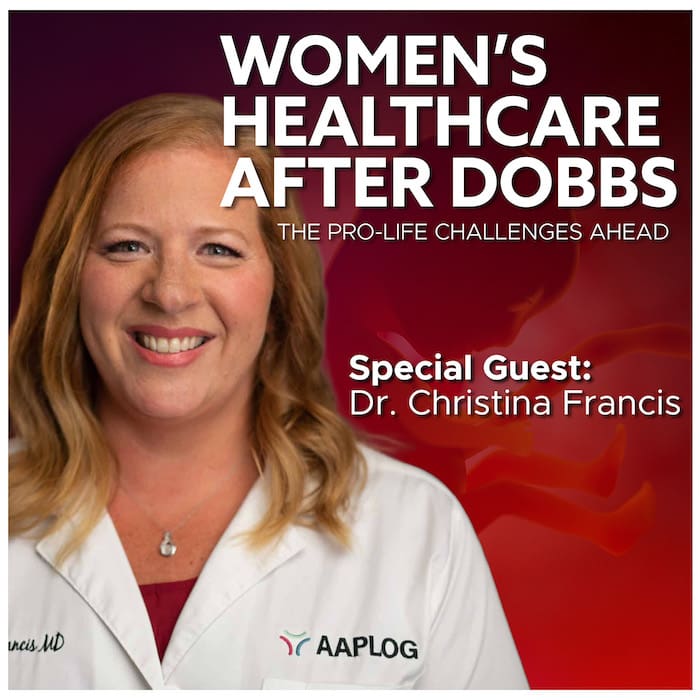
[00:00:19] Speaker B: Welcome, friends, to Faith in Healthcare. In this episode, Brick Lance and I are joined by Dr. Christina Francis. She's the CEO of the American association of Pro Life OBGYNS, which from here on out, where you're going to hear us refer to as Apolog. We're going to have a timely discussion on women's health care in a post Dobbs landscape.
We're going to take a closer look at the real world impact of abortion drugs, which are now crossing state lines, as well as conscience protections for obgyn residents and why precise medical language matters for patients today.
Dr. Francis also shares how APPLOG is supporting the next generation of life affirming clinicians. So let's dive in.
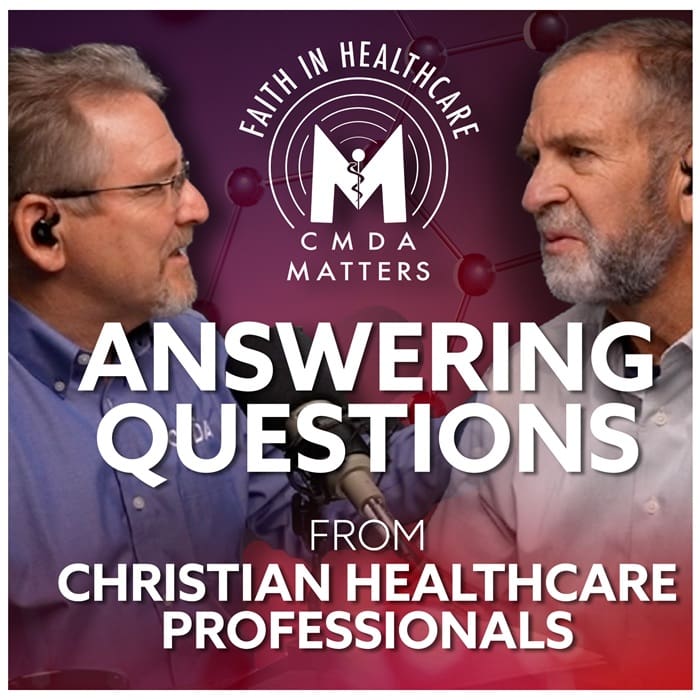
Well, today on Faith and Healthcare, we have an old friend, Dr. Christina Francis, the CEO of APPLOG, which is the American association of Pro Life OBGYNS. And with me in the studio is Dr. Brick Lance. Maybe you've been an aspiring OBGYN your whole career, but instead you've been fixing bones.
[00:01:37] Speaker C: Listen, I took OBGYN as my first rotation third year medical school because I knew I did not want to be an obgyn. But I love my OBGYN colleagues, particularly running our pregnancy center.
[00:01:49] Speaker B: Yeah, and they love you because I think you're one of a kind in that you are medical director of a pregnancy resource center. So, Dr. Christina Francis, it wasn't too long ago, maybe a month ago, that you were honored in New York City. Tell us briefly about the award that you were given.
[00:02:03] Speaker D: Yeah, thank you so much. Well, it's great to be here with you guys and on this podcast as a CMDA member as well for a long time. So it's really wonderful to be back with you. I was honored actually to represent all pro life physicians and receiving the Great Defender of Life Award from the Human Life foundation in New York City. They're the ones that put out the Human Life Review, which is an amazing journal that looks at bioethics and all kinds of issues related to life throughout our spectrum, from beginning of life to end of life. And they give out a Great Defender of Life Award every year. And I was really honored to be chosen to be there, like I said, to really represent all pro life physicians who are boldly defending the lives of our patients throughout the country.
[00:02:49] Speaker B: Well, it's hard to imagine another physician that's been in front of people more than you have. Steps to the Supreme Court. And on NBC Nightly News, all kinds of, of things that have happened in the last couple of three years.
So 2025 was a year in which the EPPC and Ryan Anderson and his team published a paper about the impact of Mifeprex.
And you and APLOG took a deep dive on that and took a look at that data in response to a lot of outcry about the impact, side effects, complications, mortality from Mifeprex.
You know, the government, HHS has been challenged to look at that drug. Could you update our listeners on where at the end of 2025 this stands in terms of our government's response, the FDA in particular?
[00:03:40] Speaker D: Yeah, absolutely. Well, I mean, to be quite honest, I think a lot of us, I'm sure including the two of you, are very frustrated with where we stand right now with our government on mifepristone. As you said, the EPPC paper that came out earlier this year showed very clearly what honestly those of us who are working in the hospital systems and seeing women in emergency rooms, what we're seeing in our practices, which is that nearly one in nine women experience severe complications after taking this drug for an abortion. And you know, the important thing this, this data has been criticized by some that it's insurance claims data, that it's not a randomized trial. But as, as Dr. Lance and I spoke about when this paper came out, there are many areas of medicine that we utilize insurance claims data to look and see what's happening in the real world when this drug is being given the way it's being given, which we know that the FDA under the previous administration recklessly removed that last in person visit that was required before a woman gets these drugs. So now it is the wild wild west in this country with this drug. And it means that it honestly doesn't matter at this point what pro life laws states pass because these drugs can flood over their borders from other states to women without women being accurately assessed for how far along in their pregnancy they are without having an ectopic pregnancy ruled out. And this is leading to major complications, even deaths. We've heard reports of deaths in the media of women and of course countless preborn children are losing their lives because of these drugs. And so CMDA and Applog and several other medical organizations sent a letter earlier this year to HHS and FDA urging them to look at this data to do a full review of the safety of the drug. And while they're doing that, to reinstate those original safeguards that were in place that would safeguard at least the health and safety of Women.
And, you know, we've heard recently that there's questions as to whether or not that review is even happening, despite, you know, significant outcry from many across the country, many physicians, even members of Congress. And so we really are hoping that the FDA will take seriously their job to protect the health and safety of the American people and to do a full safety review of this drug. But again, in the meantime, every day that they wait, obviously more preborn children die because of this drug and more women are harmed because of this drug.
[00:06:15] Speaker C: So, Christina, I'm going to follow up with that. As the vice president of advocacy at cmd, I have two questions regarding advocacy. And you alluded to the first one. And this is where the shield laws come into place, and that's mifepristone crossing state lines. And there's been some lawsuits even from what I would call conservative pro life states to non conservative pro abortion states.
So my question is, where do we stand on this regarding legalization or policy making of preventing mifepristone from crossing state lines? Because it happens regularly now.
[00:06:50] Speaker D: Yeah, absolutely. Well, you know, I practice in Indiana where we have a very strong pro life law, and yet I care for women routinely with complications of these drugs in our ER that they were able to get them online.
I'm glad you brought up the shield laws. These are really dangerous. And honestly, every physician, no matter where they stand on the issue of abortion, should be opposed to these laws. What these laws do is they protect abortionists and other states and states that are pro abortion, that don't have pro life laws from really any legal consequences from sending these drugs across state lines. One of the lawsuits that is going on over this is out of Louisiana. A mother actually ordered these drugs from a doctor in New York state state for her teenage daughter. Her teenage daughter was planning a gender reveal party for her baby. She wanted to have her baby, but her mother did not want her to. Her mom ordered these drugs from a New York doctor, forced them on her daughter, and her daughter actually ended up in the emergency room with severe complications related to these drugs. This New York doctor, because of New York shield laws, is being protected from any repercussions for sending these drugs to a patient she didn't know, had not assessed in a state where I don't even know if she was licensed. Maybe she was.
But these shield laws protect these doctors from any repercussions. This is protecting doctors from being held accountable for medical malpractice. And so these shield laws really are very dangerous for the girls. And the women that are really being duped into taking these drugs in many states.
So that's what's going on sort of on the pro abortion state side. One move that we did just see here towards the end of 2025 was the state of Texas passed a law that will impose civil penalties on manufacturers of drugs and those that dispense mifepristone into the state of Texas. I think it remains to be seen how well that will be able to be enforced. But that law is in place. It was signed into law in Texas, so that's kind of where we stand. But like I said, the fact that these drugs are available online without any kind of in person visit means that women in every state across the country are having abortions from these drugs right now, despite many states working very hard to pass pro life laws.
[00:09:04] Speaker C: Yeah, and I hope the U.S. supreme Court will make a ruling on some case at some time soon because this is a violation of the Comstock Law, which is over a century old. So it's clearly illegal, if you will. But listen, I just did the Snoopy dance last week with the 2nd Circuit Court of Appeals. They're ruling also in New York, and that is to allow the pregnancy centers and others to prescribe and give information on the abortion pill reversal. Anyway, that's a great victory. Any comments on that?
[00:09:34] Speaker D: That's a massive victory. I actually served as an expert for that case, so I'm very, I was very excited to hear that decision.
Yes, abortion poll reversal, which of course is a miraculous intervention that we can offer to women who regret their decision to have an abortion after taking mifepristone and give them a chance to save their baby, is being attacked across the country. So specifically in New York State, in Colorado and in California. So this was a huge win, especially in a state like New York, that the courts recognize that New York State cannot threaten those who are providing this lifesaving treatment. So very, very good ruling. And we're hoping that we will continue. We've seen some wins even in the Colorado case as well. So we're hoping that that will continue and that this treatment will become available to every woman who wants it across the country.
[00:10:22] Speaker B: So, Dr. Francis, another area in 2025 that has been of great concern for you, understandably has been requirements by the ACGME or ABOG other bodies forcing those in training in OBGYN for their certification eventually to have training in abortion. And update us on where that stands nationally or individual states. And good news and. Or bad news.
[00:10:52] Speaker D: Yeah, absolutely. Well, this is 100% and an important issue for all of us. And anyone listening to this podcast, I would think. And you know, CMDA did a survey, I believe it was back in 2018 or 2019, looking at conscience issues and, and the one specialty that students identified that they were avoiding because of the fear of having to violate their conscience or the the most frequent one was obgyn. And the reason for that is because actually back in 1996, ACGME put into place an abortion training requ for all GME programs, OB GYN programs, in order for them to be accredited. And the reason they did that, I just found this recently, actually confirmation of this in a jama article from 2003 that they stated in this JAMA article that it wasn't because of a concern over lack of training, it was because of a dwindling number of abortion providers. And there was actually a pro abortion advocacy group that came to ACGME and said, you need to institute an abortion training requirement so that we can increase the number of abortion providers. And so that's what they did in 1996. They made it opt out. Then, however, a few months later the Cote Snow Amendment was passed, which is a federal conscience protection. And I know CMDA and APPLOG both had a huge role to play in that getting passed. And when that was passed, the ACGME had to walk back that requirement because it violated coat standard snow. And so then they just had to say, okay, programs can't stand in the way of someone who wants abortion training. So essentially it was opt in. If somebody wants to do abortion training, a program has to find a way for them to do that, not stand in their way. That's the way it was when I did my training. There was really very minimal pressure in many programs on residents to do abortion training under that scheme.
However, Fast forward to 2018 and a Complex Family Planning Fellowship got approved for OB GYN. So this is now an approved subspecialty under OB GYN called Complex Family Planning. The only thing that this fellowship provides for that other fellowships did not already train in are second and third trimester abortion procedures.
And so once that was approved, as many people know, if you are an accredited residency program, you have to have representation of every formal subspecialty under OB gyn.
So now every OBGYN residency program has to have a representation of a Complex Family Planning Fellowship.
Once that happened, ACGME knew they could now enforce that opt out policy for abortion training, because now every program has to because of that subspecialty.
So since 2018, that opt out policy has been enforced, which then coerces residents who are at the beginning of their training to give in and do abortion training. Otherwise they have to say to their attendings, to other residents, oftentimes publicly, that they are not willing to participate in what's now considered standard training, even though the vast majority of OB GYNs don't do induced abortions. So this is leading to fewer people going into OB GYN because they're afraid they're going to have to violate their conscience during their training. And we all know, the three of us know, everyone listening knows residency is already hard enough. You don't need to add this additional piece onto it. And so APPLOG and CMDA as well have really been concerned about this for several years. It's been a bit difficult figuring out how we might be able to change this because ACGME is not open to that.
And so thankfully we've made some progress this year. We did get into the Labor H bill, which is part of the budgeting process of the government on the House side. Language that would require residency programs to be opt in only for abortion training, not opt out in order to receive their federal money. When the White House issued its 2026 budget priorities, this was one of three pro life priorities in the 2026 budget priorities was this Lang. Exactly. Which is very exciting. Doesn't mean it necessarily gets in there, but at least the White House is saying that it's a priority. And then just In November of 2025, bicameral bill was introduced so both in the House and the Senate by Senator Lankford and by Representative Greg Murphy, who is a physician from North Carolina. A bill that would put this into law. It's called the Conscience Protections for Medical Residents act. And it would require that any GME program that is training in OB GYN be opt in only for abortion training in order to receive their federal funding. This is massive. It would be a massive win for conscience rights for people across the country. And I think it's important to point out that this would not take away abortion training from anyone who wants it. It simply would say you cannot require it of people because of the coercive nature that that that imposes.
[00:15:40] Speaker B: And that would be only for residents, those in training. It would not be for practicing attendings. This is not a global conscience.
This is for trainees.
[00:15:51] Speaker D: Correct.
[00:15:52] Speaker C: That is good news. And Christina, we obviously want our listeners and those a PLOG members and CMD members praying about this conscience protection bill. I agree, it is absolutely massive. The other reason, Oregon is where I live, is one of eight states that allow abortion up to full term. And as you and I know, we don't want to get into details, but abortion is different depending on the trimester. But I will just tell you third trimesters are gruesome. And I will tell you it is not rare.
Oregon, it's in the hundreds. And anyway, I certainly pray that this bill will pass. I'm going to ask you about the use of language, what I would call linguistic theft. And that's occurred in our culture with the beginning of life.
I searched your website and Apolog does have a glossary of medical terms for life affirming medical professionals. I've been on your website many times and I actually just found this recently and I think it's just so well written. But my question for you, why is this important and how can we encourage more people to use the appropriate language and not use women's reproductive rights or women's reproductive health freedom, those topics that are really stolen linguistics?
[00:17:02] Speaker D: Well, you know, I think the pro abortion side has been very good at exactly what you said, linguistic theft and making things that are awful like third trimester abortions so sound like a right or sound like basic health care. And so one, I think that makes these conversations very difficult to have when we're not using accurate language because it's very hard to say, of course we don't stand against women's rights. We are for the rights, the right to life of all of our patients. But you know, that kind of language is often used to shut down conversation. But also particularly as physicians, and this is really where we were coming at it. As an organization, particularly as physicians, it is crucial that we use specific and very clear language with our patients so that they understand exactly what we're talking about. And really the impetus behind us putting out that glossary of medical terms, which I appreciate you highlighting it, Dr. Lance, because it is such an important document. I think for physicians. The reason that we put it out was because after the Dobbs decision that overturned Roe v. Wade, many people were erroneously saying that pro life laws would prevent us from treating things like miscarriage, an ectopic pregnancy. And part of the reason why they said that is because they were saying, well, abortion in medicine means, you know, that you say spontaneous or spontaneous abortion means miscarriage. So that's included under these abortion laws, which it absolutely isn't. The other reason is that as an ob gyn, I've experienced this with several patients, you know, the, the word abortion in, in medicine, yes, means the ending of a pregn for any reason prior to 20 weeks. And then there's a qualifier word before that. So whether that be spontaneous abortion or induced abortion or missed abortion, there's always that qualifier term.
However, the sort of equating all of these things or lumping them all under the term abortion is actually harmful for patients. So I've had patients who had a miscarriage who went home with their after visit summary and their medical diagnosis was on their after visit summary. And they get home and they look at it and it says spontaneous abortion. They have called me back in tears saying, that's not what I did, that's not what happened to me. I had a miscarriage. I mean, the mental health impact that that has on women, to equate those things is actually very significant. So I actually personally think we need to move away from that just in general in medicine and be very specific about what has happened. And that's part of why we put out this glossary of medical terms to say that an induced abortion whose sole intent, and this is not our definition, it's the CDC's definition of induced abortion whose sole intent is to produce a dead baby. That is very different than an intervention where we intervene because a baby has already spontaneously passed away in the case of miscarriage treatment, or in the case where a woman has a life threatening pregnancy complication and we intervene to do an early delivery, what we term a maternal fetal separation. So you need to separate mom and baby, but your intent in doing that is not to end the life of that baby. That's very different. We believe in specific language so that our patients are empowered with information, not confusing language that equates things that are not at all equal, that not only harm our sort of policy and advocacy discussions around this issue, but also harm our patients.
[00:20:25] Speaker B: Yeah, interesting, Christina, because you wish. Because those of us who are practicing medicine and surgery, these are such straightforward concepts. You wish that as we walk into a room and want to have a discussion, a debate, that we could say, let's not mess around with terms that we all understand what the terms mean. Let's talk about this. Apples with apples.
[00:20:48] Speaker A: Before we continue with this week's episode, here's a special announcement for you.
Saline Process Witness training is coming to Fairfield, Connecticut, February 13th through 14th, 2026.
It's designed for healthcare professionals and students who want to care for patients more holistically.
This 10 hour interactive course equips clinicians to thoughtfully and respectfully engage patients spiritual concerns in real clinical settings.
Research shows that most patients want their healthcare team members, including physicians, to acknowledge their spiritual needs, yet many clinicians feel uncertain about how to do that well.
Saline process provides practical tools to help you respond with confidence, compassion and sensitivity, addressing both physical and spiritual care while honoring professional boundaries.
Learn more and
[email protected] events and mark your calendar for the 2026 CMDA National Convention, April 23 through 26 in Loveland, Colorado, a time to renew your spirit, recharge your faith and connect with fellow believers in healthcare.
We're thrilled to welcome John Stonestreet, president of the Colson center and co host of Breakpoint Radio, a nationally recognized voice on faith, culture, theology and Christian worldview.
Convenient lodging is available at the Embassy Suites by the Hilton Loveland Conference center and Spring Hill Suites by Marriott, with special CMDA room rates reserved for attendees.
Learn more or register for either
[email protected] events let's jump right back into this week's episode.
[00:22:47] Speaker B: Talk to us a little bit about what the strategy is from applog for you as a CEO and your board in terms of getting more engagement with Gen Z's in the fight. And I know you've probably met a hundred more than I have, but I've met many, many, many avid pro life warriors, including a couple of daughters of mine who are ready to fight for the unborn. So talk to us about how we can do a better job reaching current students and exciting them, educating, encouraging and equipping them to fight for the unborn.
[00:23:16] Speaker D: Absolutely. Well, and before I get to that, I just want to point out you're a surgeon and you're a member of aflog. And so I just want to point out that even though OBGYN is in our name, we actually welcome physicians, medical professionals of all specialties because we say if you take care of women and you practice pro life medicine or you desire to practice pro life medicine, you have a place in applog.
So just wanted to point that out, but also, as you said, reaching out to students, the next generation of life affirming medicine, I think really is one of, if not the most important thing that we are focusing on right now as an organization.
And there's two reasons for that. As physicians, when you look back at the Hippocratic oath from about 2,500 years ago or so, a key part of that really was mentoring and teaching the next generation that was going to come behind us. And so that's such an important part of what we do as physicians, as medical professionals anyways. But our students and Our residents are so vulnerable on the issue of life. You know, they feel like they have to be quiet, be silent about their convictions, about what they know to be best for their patients.
And I think that the way that we empower them is sort of twofold. One, we have to show courage as practicing physicians to speak up and be bold about our convictions in how we take care of our patients so that they learn by example. But the other thing that we can do to really empower and encourage them is to equip them with the tools that they need to be able to practice life affirming medicine. And part of that is talking through the bioethics and how do we look at our patients, how do we care for our patients, all of that. But another big part of it is equipping them with the medical evidence that shows the harms of induced abortion for our patients and shows the scientific evidence of the humanity of our preborn patients. So that when they are in their lectures, when they are on ward rounds and someone says that induced abortion is what's best for this patient, they don't just have to say that their moral position is that it's wrong to intentionally kill an innocent human being, although I would argue that's a crucial part of their argument against it. But they also can say, you know what, I also don't want to do this because it's bad for my maternal patient. And here's why. Here's the evidence that shows that it increases her risk of preterm birth and future pregnancies. Here's the evidence that shows that it increases her at her risk of adverse mental health outcomes. So that's very empowering to students to be able to equip them with that information. And that's part of what we do at our conference. The other thing that I think is so encouraging to students, and I've heard many of them say this is when they come to our conference. They are surrounded by hundreds of pro life practicing physicians and other medical professionals. They see that they are not alone. We have had students who came to the conference who said, I think I'm the only student in my class who's pro life and I don't see any pro life residents or practicing physicians around me.
Coming here helps me to see that it is possible to practice pro life medicine and why it's so much better. So they get encouraged.
The other thing we often tell them is you probably aren't the only one. Actually, there are probably others who are just really scared to speak.
Our hope is to encourage them. That's why we have this scholarship available for students to be able to come so that they can network with one another. We've seen some really amazing relationships grow there, but also so that they can network with practicing physicians.
[00:26:49] Speaker C: Yeah. Thank you, Christine. Networking is so important, particularly for the individual practicing physician because they can feel all alone. So really appreciate that. I'm going to switch back to advocacy for just a second. We live in a post Dobbs world. So again, in the summer of 2022, that is three and a half years ago, Dobbs of course reversed the Roe v. Wade decision that was in Law of the land for 50 years.
So now we're on a state by state battle, if you will.
So are there any victories or events that have given you encouragement?
So that's the first part of the question. The second part is a question. What is your advice for the CMDA member, the aplog member of advocating, you know, within their own state? And I will just tell you right now in Oregon, our legislators collecting signatures to put on the November ballot of 2026 to make it a even though abortion's legal in Oregon up to full term, they want to make it a constitutional amendment. Our legislature does.
So that's another battle that we are going to fight in Oregon. But again, state by state, what's giving you encouragement and what can our members do?
[00:27:56] Speaker D: Well, you know, I think it's been a mixed bag, right, since the Dobbs decision. We've definitely have seen some devastating losses with other states enshrining abortion up until birth in their state constitution. But we have seen some amazing wins. So right now, nearly half of the states across the country have some sort of protections in place for preborn children and for women from the harms of induced abortion, many of which outlaw it completely with you know, some exceptions, of course, allow interventions when mom's life is in danger and some states allow in the cases of rape or incest. So I would say that just the fact that we have these protections in place in those states is a huge victory. That's certainly much better than what we had under Roe where no state could put those kind of protections in place.
So that's wonderful. In 2024 we saw the first defeats of these pro abortion ballot initiatives and CMDA was, was crucial in that aplog, played a role in that as well, mobilizing medical voices in states. So we defeated the ballot initiative in Florida, we defeated it in South Dakota. Nebraska saw a life affirming ballot initiative actually passed. So that was all very exciting. Those were the first big wins as far as state constitutional amendments go. So that was very exciting. I also think that we are making headway in helping the general public understand two things. One, understand that abortion is not needed in order to treat life threatening conditions in pregnancy in order to treat miscarriage and ectopic pregnancy. I do think we're seeing a shift in public understanding on that. So that's a huge win. I also there was a survey that just recently came out from Kaiser looking at the public's attitudes about mifepristone, the abortion drug. And from just like two years ago, the number of people that think that it's safe dropped by about 12%. To me, that says our messaging is working to help people understand the dangers of this drug.
How doctors can help the main reason these changes are happening is because medical voices are out there saying this is not healthcare. That is the chant. The rhetoric of the pro abortion side is abortion is health care, therefore it's needed. We need doctors to say and doctors know. Even doctors who are pro life know because the vast majority of them don't do abortions. If it truly was essential health care, they would be doing them correct. So we need medical voices to say this isn't health care. It's not good for our patients. And the way doctors can do that is to join an app log and CMDA's advocacy efforts that we're doing. But also just get informed about what is going on in your own state. State. Don't let your state constitution be amended to allow abortion. Even if that's already the law of the land in your state. Once it's in your state constitution that is very difficult to get back out. So don't let it get into your state constitution. Get connected to legislators in your state. I know they can do that through CMDA's advocacy arm. They can do it through App log action as well. RC4 arm, get connected to your legislators. They need to hear from physicians because I guarantee you they will hear from physicians on the pro abortion side. They show up to the state house every single time. So we need pro life physicians to be showing up at the state house to say this is not healthcare, it's not good for our patients.
[00:31:19] Speaker C: Yeah. So I think we are making slow progress in public opinion. And now my next question. I do not want to insult the bride of Christ because God is making the bride of Christ that is the church more beautiful day by day. But I do have a question regarding the church and again it goes with the last question about public opinion. So what can we do to educate the church and even educate the public further on this issue of sanctity of life, which is basically per God's design? Any thoughts on that?
[00:31:50] Speaker D: Absolutely. So if the church, you know, the church collective in the US would take a strong stand against abortion, we would see a drastic change in abortion policy in this country. And not just abortion policy, but we would see a drastic change in hearts and minds. I think as a member of the church, as a believer, I feel like I can say this. The church has done, specifically the Protestant church in this country has done a very poor job of educating their members on this issue and of standing against it. Again, I'm speaking in generalities, but in general, I think we have not done a good job.
A good friend of mine, Michael Spencer, who's a pro life missionary and who specifically is a pro life missionary to churches and to pastors, said this, and I think it's perfect. He said, when pastors don't talk about abortion from the pulpit, they say one of two things to their congregation.
Either abortion is no big deal and that's why we're not talking about it, or abortion is such a big deal that there's no hope for healing and forgiveness. And so that's why we're not talking about it either. One of those messages is extremely damaging to not only our culture, but to their congregants. Because I guarantee in every single church there are women and men who are post abortive or there are women who are contemplating abortion. And when we are not talking about it in the churches, not only are we not helping change the tide of our culture by moving it more towards a culture of life, but we are denying that healing and forgiveness of Christ's blood to those people who are suffering because they're suffering regardless of whether or not the church is talking about it. The way that we can bring them relief for their suffering is to talk about it and talk about it in a way that's real and compassionate. Yeah. And honest. So absolutely, the church needs to get involved. And I think one way, you know, since we're all medical folks here, one way churches can get involved is to ask physicians and other medical professionals from within their church to do talks about this.
The pastor should be talking about it too, but you know, the people in their congregation are going to have the same questions that the general public does. Well, isn't this necessary in order to receive good health care? I spoke at a conference, an ADF conference a couple of years ago, and afterwards had a pastor's wife come up to me in tears because she had had an ectopic pregnancy treated 15 years prior. And she said, you are the first person who has ever said to me that that was not an abortion.
I know that abortion is wrong, but I have lived for the last 15 years thinking that I had to have an abortion because I had an ectopic pregnancy. She had been denied. She had lived with that guilt and that sorrow and suffered for 15 years because no one had talked about abortion and what it is and what it isn't in their church. So I think it absolutely is imperative for us as believers to be talking about this within our churches.
[00:34:42] Speaker B: Oh, wow. Wow. You've hit on an issue that I know Dr. Lance is very passionate about, and some of that has rubbed off on me.
The other topic within the church that I think many pastors are surprised about, think maybe it's not a big deal would be fertility issues.
[00:34:56] Speaker C: Right.
[00:34:57] Speaker B: And how many people are struggling, women are struggling with couples struggling with fertility in their churches.
[00:35:02] Speaker C: And that's where we as medical professionals, we need to come alongside a church and partner with them for education, compassion, and what we call appropriate healthcare.
[00:35:11] Speaker B: Well, it wasn't that long ago, Christina, that you moved from the great state that we both share as our home base, Indiana, and are now spending a lot more time in our nation's Capital in Washington, D.C. so you can be closer to lawmakers, policymakers. So tell our listeners just a little bit about what that experience has taught you and maybe give us an example or two of how you've been able to enlighten maybe even those on the left side of the aisle. I don't know. Are there any open doors whatsoever on those who are on the left side of the aisle regarding a pro life position?
[00:35:47] Speaker D: Yeah. Well, so thankfully I'm still calling Indiana home because I feel like that's the real world. And I'm actually in the D.C. area right now and this is definitely a bubble, that's for sure. So good to still have my feet in the real world. But yes, as you said, I'm now kind of splitting my time between Indiana and here so that we could have more of a voice with federal policymakers. And so actually today I'm headed to the Hill to have several meetings about that opt in bill that, that we discussed earlier. So very excited to help inform policymakers about that and hopefully get some more support for that bill. You know what I have learned, and I think what we as an organization have learned is that how crucial medical voices are in this, again, These policymakers are hearing from people like the American College of Ob Gyns who are just so now radically pro abortion, not evidence based. If those are the only doctors that policymakers, most of whom are not medical at all, are hearing from, they're going to assume that's the consensus amongst the medical community. And that's where groups like CMDA and APLOG play such a crucial role because we serve as a second medical opinion for the courts and for policymakers to understand this is not the consensus and it's not consistent with how most of us are practicing medicine. So it's so important that they hear from us. And I remember the first time I went to do a Hill visit, I was petrified. I had no idea what I was doing. But thankfully, what I've learned is that we actually don't need any additional expertise to what we already have. They just need to hear our medical voices. They need to hear about how we practice.
They need to hear patient stories. You know, it's so powerful when I'm able to say this is a woman that I met with recently who maybe was post abortive and this was what she was experiencing, or this was a woman who contemplated abortion but chose life. You know, things like that. It's important for them to hear our stories from our practices. And it really does have an impact. You know, unfortunately we as applog, when we go to the Hill, we say we are happy to meet with anyone. We are a nonpartisan organization.
Unfortunately, mostly who will meet with us are Republicans and Democrats, oftentimes are not meeting with us, but we are very open to meeting with them. The one area where I do feel like we've been able to make a difference with those who are maybe on the other side of this issue is I've had the honor and I know several of our members have, of testifying in front of congressional hearings. And at that time we are able to get the voice of truth and the medical evidence about the harms of abortion. And in front of a wide variety of policymakers, it does mean that you are open to vicious attacks from those policymakers that oppose you. And that happens. But with good prep and training, you learn how to sort of just keep your cool in that environment and respond with accurate information and compassion and truth. And that's so, so important. And so again, I would just emphasize the importance of medical professionals being involved in these efforts.
They need to hear from us on a federal level and on a state level. And so, you know, I know that's something that people listening are maybe intrigued a little bit to get a little bit more involved in. They're welcome to reach out to either or both of our organizations. I know applog is planning to do more of these Hill visits sort of attached to the March for Life in January.
And so if anybody's coming to the march from either organization, even if you're not an App blog member but you're interested in doing this, reach out to us. And if you're going to be in town for the march, we'd love to do that. And maybe CMDA is planning on doing something as well.
[00:39:25] Speaker C: So, Christina, Mike has heard me say this many times before, but I think the greatest oxymoron in life today is, quote, just pray, end quote, just and prayer do not go together. Prayer is powerful and I'm encouraging our listeners, our members, to be praying for you as the leader, because you're going to be under attack, but to pray for APOG as well. So we want them to pray for your advocacy work. We want them to pray for the March for Life. We want them to pray for students to consider an OB residency and training career. What else can you encourage our listeners to pray? And what can we be praying for?
[00:40:03] Speaker D: I agree with you. Prayer is so crucial. It's a crucial part of what we do every day. And so I'm so thankful for the prayers of so many who I know support applog and support me personally in this role. I think my biggest thing that I would like prayer for, for all of us as an organization, is continued courage and that we would be wise and inspiring courage in practicing physicians in, you know, medical students and residents that, that they would just be willing to just take one small step. I'm not asking for all of them to be willing to, you know, have a megaphone and be standing on the corner or testifying in front of Congress, although there is a need for all of those things, but just courage to take one small step for life, for standing for life. And courage for our policymakers, too, as we talked about the FDA earlier and the move that they absolutely need to make on the abortion drug mifepristone. It's going to take courage. And specifically, we are hearing rumors that they want to punt that issue until after the 2026 midterms. That is a lack of courage. And so they need courage. They need courage to take the stand for what is right, for what is going to stand save lives. And so we do need to be praying for all of our policymakers and praying for those of us at applog@cmda who are talking to those policymakers that we would have courage to take the strong stance that's going to be needed to draw a line in the sand. I think to say this absolutely has to happen and we are not okay with waiting until after a political election to do what's right for our patients. And so that would be my biggest prayer request, I think would just be prayers for courage for all of us that are involved in this issue and for those that are sort of on the periphery that maybe just need to take one little baby step to doing something to defend life.
[00:41:55] Speaker B: Wow. Thank you for sharing that with such passion. As we close this interview, talk to us just a little bit about your Matthew Bulfin conference educational conference at the end of February in Seattle, Washington. And what's your theme this year and how can our listeners check it out and potentially register and attend?
[00:42:13] Speaker D: Yeah, absolutely. Well, we would love to have people attend. As you said, it's the last weekend in February, it's sunny Seattle.
But we are going to be a voice for life in a place that is a very dark place when it comes to life in Seattle, similar to bricks home state of Oregon. So I would encourage people to come. Our theme is forging a new path forward in medicine and that is a path towards life affirming care where every single one of our patients is valued and has worth. And so we are going to show the way to do that through a number of amazing talks. We've got Robbie George, Professor Robbie George is one of our keynote speakers. We've got talks on restorative reproductive medicine, talks on bioethics, talks on how to have conversations with people who disagree with you about abortion. And so it's a wide variety from bioethics and sort of culture policy updates to hard science of where is the science right now on things like abortion, pill reversal and harms of abortion for women. So if people are interested in coming to the conference, they can go to conference aaplog.org to register for the conference. Registration is still open. You can also help support students who want to come. Students can apply for the scholarship on that same website.
[00:43:30] Speaker B: Thank you, Christine. Any final words? Brick?
[00:43:32] Speaker C: Christine, this has been very enjoyable and we appreciate what you do and what your team because it's not just you, what APLOG does and what they do in standing for life. So thank you.
[00:43:41] Speaker D: Yeah, absolutely. Thanks so much for having me.
[00:43:43] Speaker B: And for our listeners, we applog, cmda, Catholic Medical Association, Coptic Medical Association, American College of Pediatricians continue to work together in an alliance the alliance for Hippocratic Medicine and your predecessor, good friend of ours, Donna Harrison, has been chairing that group and excited hoping that more organizations I think we have eight or nine associations organizations that have joined, including Canadian Friends. So for our listeners, if you know of other organizations that are pro life would be interested in joining the alliance like the alliance for Defending Freedom. But this is the alliance for Hippocratic Medicine. So God bless you Christina and all the work that you're doing there on the Hill. And then as you enjoy holidays and this new year 2026 occasionally back at home in Fort Wayne, Indiana.
[00:44:32] Speaker D: That's right, that's right. Thank you so much. You all have wonderful holidays as well and we look forward to hopefully a lot of people being together for the March for Life at the end of January.
[00:44:42] Speaker B: Amen. God bless.
[00:44:43] Speaker D: Thank you. You too.
[00:44:54] Speaker B: Thanks for joining us today for this important conversation with Dr. Christina Francis. If this episode encouraged you, we want to invite you to take one practical step, whether that's getting informed about what's happening in your state, or adding your voice to various advocacy efforts, committing to pray for courage and wisdom for clinicians and policymakers, or joining our community of Christian healthcare professionals at CMDA as we seek to live out our calling together.
You know, if you're looking for deeper practical guidance on many of these issues that we discussed today, CMDA has several excellent courses available in our online Learning center. And right now I just pulled up a few from the Learning center such as Understanding Chemical Abortion or Beginning of Life for one hour of Continuing Education credit. The Changing Landscape of Abortion is another course. There's a two hour course on mechanisms and medical risks of Medical Abortion and what does this mean for our practice. And then finally there's a one hour CE available on the Learning center entitled Protecting and Serving Women After Dobbs. You know, if you are a member of cmda, all of these courses are for free, both those who are that give you CE credit and not so if you're not a member. Today I want to encourage you to get
[email protected] join and become a member.
Dr. Francis today also invited you as listeners to APPLOG's annual conference which is taking place the last weekend of February in Seattle. I've been invited to go and give a breakout talk so I hope I get to see you.
You can find more details in our show Notes today about how to register for that conference.
Well, next time on the podcast I'll be joined by Dr. Brick Lance as we host our very first ever special Q and A episode addressing some tough questions that are facing Christian healthcare professionals today.
I want to thank you for listening to Faith in Healthcare where our mission is to bring the hope and healing of Jesus Christ to the world through committed Christ followers in healthcare Professionals.
We'll see you next time, Lord willing.
[00:47:26] Speaker A: Thanks for listening to Faith in Healthcare the CMDA Matters Podcast if you would like to suggest a future guest or share a comment with us, please email cmdamatterscmda.org and if you like the podcast, be sure to give us a five star rating and share it on your favorite social media platform.
This podcast has been a production of Christian Medical and Dental Associations.
The opinions expressed by guests on this podcast are not necessarily endorsed by Christian Medical and Dental Associations.
CMDA is a non partisan organization that does not endorse political parties or candidates for public office.
The views expressed on this podcast reflect judgments regarding principles and values held by CMDA and its members and are not intended to imply endorsement of any political party or candidate.