[00:00:08] Speaker A: You're listening to faith in healthcare, the cmda matters podcast. Here's your host, Dr. Mike chupp.
[00:00:19] Speaker B: Welcome, friends, to Faith in healthcare. I'm Dr. Mike Chupp and I'm glad you're with us.
Today's guest practices medicine in a place where openly following Jesus can carry serious personal and professional consequences.
He's watched it happen to fellow believers, and he made that choice himself.
Yet he talks with his patients about hope in Christ nearly every day.
Dr. Bill Griffin and I sat down with him to hear how he learned to have these conversations well, and what God is doing, even where sharing the gospel puts believers at great risk.
Here's our conversation.
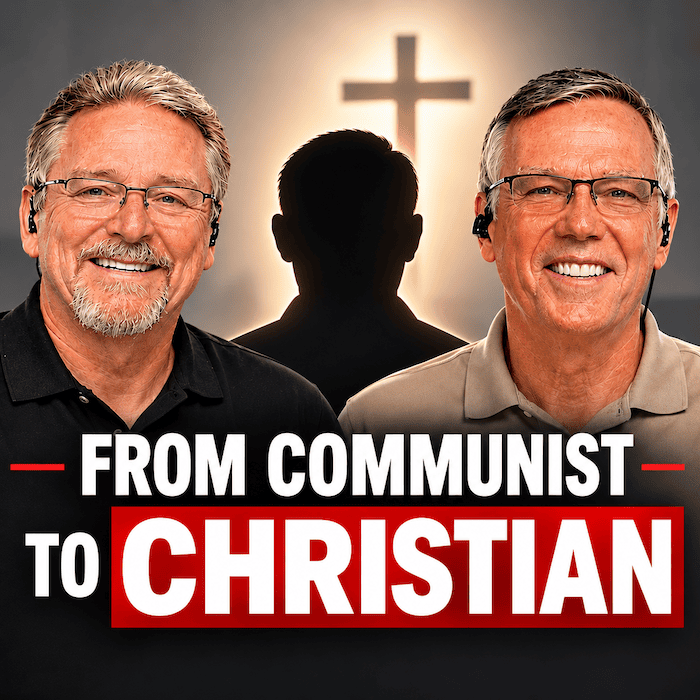
Well, today on Faith and Healthcare, we're gonna be using a pseudonym for our guest and we're gonna be addressing him as Dr. Christian or Chris. And that's because Dr. Christian was a young Asian Communist party captain at the age of seven before coming to Faith in Jesus Christ as a first generation believer. During medical school, as he trained to become a physician, Chris encountered the sobering reality of life's fragility and humanity's limitations, even amid modern medicine and expert care. So through these experiences, Dr. Christian discovered the lasting peace, joy and hope that our Lord Jesus offers to people who are facing fear and suffering and uncertainty.
So Dr. Christ was driven by gratitude of God's grace. And it's a privilege for us to have him share today that not only has he trusted Christ and followed him, but now he's very active as an ambassador, sharing Christ with patience and equipping believers to live as faithful witnesses for Christ and in their workplace, their communities and throughout the world. And my CO host today, Dr. Bill or Griff Griffin, has also done something similar for the last 30, 40 years as a community practicing dentist. And Griff, we got to hear Dr. Christian just a few months ago in CMDA Chapel. And we had the socks blessed off of us, didn't we?
[00:02:38] Speaker C: What a blessing that was. I'm looking forward to digging in a bit deeper today.
[00:02:41] Speaker B: Well, Dr. Christian, welcome today to Faith in Healthcare. And I want to get us started by comparing our lives. At age 7, I gave my life to Jesus Christ and I became an ambassador and evangelist for the Gospel of Jesus. But at age 7, you converted and became a captain and ambassador of a different kind. Tell our listeners about that.
[00:03:04] Speaker D: All right. Okay. So I grew up learning from school textbooks that God is an illusion, is superstition.
And we were taught that all kinds of religions was the opium of people. Especially Christianity is too used by the Western, the evil Westerners to weaken and control and colonize our nation. And I remember When I was 7, I asked my father, how can the textbook be so sure about that there is no God. And his answer was because Karl Marx and the Lenin said so.
That was not very convincing to me.
Nevertheless, when I, when taking exams, I still had to write that God was an illusion and that the same year I became a captain of the Young Pioneer, the Communist Youth Organization.
And looking back, I will say that, wow, you know, God's wisdom is higher and God's way is higher. Even though that I became, I commit to be a communist and I gave my life to communists, but God used that history to train me to give my life to, to something that I believe to. And after many years, after I become a Christian and then it's a familiar thing for me that I, I gave my life to Christ without any holding back to myself.
And I was trained to evangelize. So maybe that's why I feel so comfortable to evangelize. Previously it was communism, but now it's, you know, Jesus Christ to other people.
So I, I give glory to God that even though I didn't know and the only thing that I was educated was the communism, but however, God still used that for shaping my life. And fast Forward to age 14. I met the first Christian in my life. And I immediately began arguing with him about the existence of God. I was so arrogant and so ignorant and I said, if God exists, let me be sick for three days. I didn't ask for a lottery.
[00:05:18] Speaker B: And God heard that prayer, didn't he?
[00:05:21] Speaker D: We all know that God is faithful, so be careful of what you pray for.
And then I had a three days serious ill from nowhere. And after the three days I was completely healed and you know, and I was back to life. And after that my attitude changed. Instead of denying God's existence, I thought, yeah, maybe there is a powerful God, but I want him to stay away from me.
But God did not stay away. Over the next 10 years, miracle happened in my life and it completely blowed my mind as an atheist. And I know that it can't be anything but something much higher than human.
So God showed me not only that he's powerful, but that he's also good, loving and personally involved in my life.
To make it short, When I was 24 years old, I found myself lying in a CCU and I was so desperate. And that night I made a simple prayer and I said, God, if you heal me, I will spend my life telling people about your name and your Love and God answered that prayer.
So that was my story from 7 years old to now.
[00:06:44] Speaker C: That's beautiful. Well Chris, how has following Jesus changed the way you define success as a physician?
[00:06:53] Speaker D: Before I come to faith, I was driven by success and achievement. I still remember that I worked so hard until like 3am in the school and tried to be very excellent, try to be outstanding in my residency program. And eventually I was selected for a partnership program with one of the world top ranked university and received high praise from the faculty and leadership.
However, even during those years I realized that my greatest joy was not from recognition, awards or academic achievements.
The moment that really brought me joy, a lot of joy and the deepest fulfillment was seeing my patients recover, regain their strength and find hope again as they work through some of the most darkest season of their lives. And after I become a Christian, it just helped me to understand why.
Because as a Christian I understand that the most priority, the most important thing is not treating a disease, but a whole person well being in Christ.
So my perspective on medicine and life changed profoundly. And now what matters most to me is eternal well being of my patients as well as helping them, experiencing an abundant life here on earth, which Jesus promised, whoever who follows, follows the Lord will experience an abundant life.
So now I see that, you know, sometimes people ask me, so you are seeing so many patients who are so sick, so how do you take care of yourself and how do you remove all those burden? And I said, you know, I didn't see the bad part, the dark part of their life, but I see the, the light part, the bright part, because I see that they can be healed and they can have hope, they can have love, they can regain strength, they can get peace and they can get purpose in their lives. And what I'm doing is walking alongside with them for this one mile and bring them into this ultimate peace and hope and love and the strength and the purpose and faith and the reconciliation and forgiveness and how joyful it is. How joyful it is. Yeah. So that is my view after becoming a Christian, have changed.
[00:09:38] Speaker C: And certainly if you hope to have a strong positive effect on your patients spiritually, you need to be anchored in Christ as well.
Yet as healthcare professionals, we can sometimes be pulled away from the Lord perhaps by the achievement or recognition that we receive.
So how do you go about staying anchored in God's definition of faithfulness?
[00:10:00] Speaker D: To be honest, in my area, when you proclaim that you are Christian in your career and you don't have much promising future, to be honest, so that might not be A big challenge for me because once I decided to be a Christian and, and I already give up a lot of career opportunities. However, right now what I see is not what I gained from academic achievement or the, from the best universities or having my name on the number one, number two, like nature, science, you know, it is now not that I really enjoy my career in Christ. And every day I enjoy talking to my patients and giving them hope and telling them about where their hope is, where their healing is and they can live a different life.
So that's what I tell my patients every day. And that's a much bigger reward than a personal academic achievement or something.
[00:11:10] Speaker B: Dr. Christian, Dr. Griffin and I Griff in dentistry and me in general surgery. I mean we have seen so many examples of times when God opened a door for us to do spiritual ministry with our patients in one way or another, whether through it's a demonstration of prayer or faith flags and so forth. Of course we read in Revelation that Christ is the door opener. So it doesn't matter what the ministry or what the opportunity, if he's going to open the door, no one can shut it. But I do want to ask you in your journey and as a Christian physician with the background that you've had, could you give us, our listeners, just a couple of an example or two of how Christ opened an amazing door of opportunity for you with patience on this journey to understand the truth of the gospel of God's love and the possibility for eternal life.
[00:12:02] Speaker D: So a lot of Christians might not realize, I would say, you know, take it for granted that many things that we have in Christ, like the peace, the joy and hope and the trust, for example, trust is something really rare in Asia and many people find it difficult to trust others, especially after years being taught that religion is a form of mental opium.
Yet healthcare professionals are uniquely positioned to connect with people at moments when they feel vulnerable and they want to be respected, they want to be cared for. So in those moments, patients are so much more open.
They're eager to build up trusting relationship with their doctors or nurses.
So that is an open door for Christian healthcare workers.
And especially in the Asians culture, we usually don't express love even within families. For example, my parents, I remember after maybe 7 years old my parents never hugged me.
And in my memory that I remember when I hugged my dad was after I become a Christian and I learned that hug is powerful. So I want to reconcile with him and I want to hug him.
And that was when I was 31 years old. So can you Imagine that even for parents and children, they don't hug each other for like, you know, 24 years in my case. But for other families, they might be, you know, all their life, they don't. They never say that I love you. They never hug each other.
So as a Christian, we always say that, oh, you know, Jesus loves you, and we love you too.
And it's just something that they never experienced. And one of my patients told me that one time after I asked permission to pray for her, and she started to sobbing, and she said, it is the first time in my life that I hear anybody to pray for me.
And I feel loved.
So something that we take it for granted every day is something that in Asia, for millions and millions, maybe billions of people, that they have never experienced. Yeah. So that is my experience.
[00:14:35] Speaker C: And, Chris, as you're seeking to share the love of Christ with patients, how can compassion and professional excellence play unique roles in building credibility for the gospel?
[00:14:48] Speaker D: So actually, many of my patients would ask me, Dr. Chris, why do you care about me?
Because in their experience, doctors are kind of professional, but not personal.
So the doctors will see a patient in a few minutes, and they don't even look at the patients.
So just by looking at them, just by echoing a little bit of their suffering, like saying, oh, it must be so hard for you.
It will make a huge change and open a wide door in their hearts because they might have never been experienced that thing, not even their parents.
So I had a patient. The patient was in hospital for seven times, and she was put on ECT for many, many times because she was very depressed.
And the hospital told the family, saying that we can do nothing to your daughter.
Maybe it's time for you to give up her.
And then the family came to me by some other patient refereeing.
And the first time that I met a girl, she was looking at the ground and she was not looking at me at all.
For two minutes there was a silence.
And then the first word, she said, save your word. Nobody can help me.
So at the moment, I pray God to give me wisdom.
So the first thing that I had was the compassion. And I told her, oh, it must be so hard for you that you can't trust anybody because you might have shared your story over and over, but nobody had helped you. Nobody listened to you, and nobody see you, nobody hear you.
It must be so hard for you.
And then she felt heard, she felt seen, and she started to weep.
Very bad.
And in the later two hours, actually, she shared everything about her story from very young age to last week she was trying to suicide. She told me everything.
When the session was over, she was smiling, leaving the room actually.
So the parents was like, wow, what happened? Even though they didn't believe in God. But the mother told me that they were praying all the time because there was not one doctor ever engaged with her daughter for such a long time. So they know that something good must be happening.
So actually today the young lady is already an adult and she is studying overseas in a very good country with a very good university.
So praise the Lord.
So that's what I see, that how compassion and some, you know, like the character of Jesus can make a huge difference in a close country.
[00:18:21] Speaker A: Before we continue with this week's episode, here's a special announcement for you.
Join us for CMDA's 43rd Annual West Coast Winter Conference in beautiful Cannon Beach, Oregon.
Enjoy teaching for Christian healthcare professionals, worship and fellowship, plus a wonderful children's program and time to explore the Coast.
[email protected] events.
You asked for them. They're coming back. For the fourth year in a row, Shine from Liberty University will lead worship at the 2027 CMDA National Convention.
Their incredible harmonies and powerful gospel centered music have made them a favorite of the CMDA family and we're thrilled to welcome them back in 2027.
This year we'll gather at the table making room for worship, community, encouragement and connection.
And we can't imagine a better group to help us do it. Shine is back, so let's gather at the table.
Register at natcon.steamda.org.
Let's jump right back into this week's episode.
[00:19:49] Speaker B: Doctor Christian, we come from disciplines within healthcare and professions that put a premium on training and expertise before we do anything.
And I was just with nine young medical missionaries in training preparing to go to the field, most of them to sub Saharan Africa.
And I asked them this question. How many of you during medical school or residency had any training whatsoever, even a basic level of introduction to spiritual training or spiritual care?
Only three hands of the nine went up from these very seasoned trained professionals. And those three all had one thing in common. They had all attended a saline process witness training that has gone global that you are familiar with. And you and Dr. Griff have been very instrumental in bringing that product, which frankly started in the mid-90s here in the US under Walt Larimore and Bill Peale and has gone around the globe. So I want to ask you two things.
How did you first become introduced and familiar with saline process witness training and then second when you started in that training for the first time, what is it? Was there one thing about that training that you thought, this is going to be transformative? In the way that I interact with my patients,
[00:21:13] Speaker D: we all admit that there is a absence of the spiritual part in education, in medical education.
Nevertheless, it is Asia or the western countries, especially in Asia, because we are atheist and we don't believe that there is spiritual world.
So the first time that I learned about saving process was after spending years being more like 9% of saving instead of 0.9% saving. We all know that 0.9% saving is the right, the correct concentration that you want to give to your patient when it is needed. But 9% is too much.
As I mentioned before, that I was trained to be, eventually to be evangelical.
So when I first become a Christian, I was so passionate and so, you know, pushy and being so evangelical. And I still remember I tried to convince one of my patients that Jesus was a real historical person and he truly went to the cross and he truly rose from the dead. And we spent two hours debating the topic. I love Charlie Kirk's debate style, and it works very well in a college compass.
But my version was far less effective in a hospital setting. And actually my patient was so annoyed and he actually suffered insomnia that night.
So after I learned the saving process, I began to see things differently. And I realized that every patient is on a spiritual journey. And as a witness for Jesus, I need to be both sailing and process.
So being sailing means providing the right concentration, the healing concentration of 0.9%. And being process means understanding that they are in a spiritual journey and we need to give them administer the saline in a proper speed.
We know that if we give sailing too quick, actually it can harm the patient to cause heart failure. After I learned this, I will say that it is really a big relief both to me and my patients because they don't feel pressured and I don't feel pressured. I know that what I need to do is just to, at the right time, give them the right dose, give them what they need, and believing that, trusting that God will do the rest.
And one example is the lady that I mentioned before that I said, I prayed for her and she said, oh, it's the first time in my life that anybody pray for me.
And guess what?
After one year, she came to me and she said, doctor, you know what?
I went to a church and I have experienced so much love in the church that I feel accepted, I feel loved, and now I give my life to Christ.
And I was like, wow, praise the Lord.
I cultivate the soil.
I prepare her heart one year ago, but God keep working on her.
And then God used someone else to take her to a church.
And she experienced Jesus in the church.
So now she is a believer, she's a follower of Jesus. And I don't necessarily need to force her to make the prayer to follow Jesus.
The Lord will keep an eye on her and will take care of her during her life.
So that is a very beautiful thing that I learned from sailing.
[00:25:21] Speaker C: Well, Dr. Christian, what you're describing is something that I think most all of us have experienced, which is that it's rare the first time you hear about the gospel to immediately turn your life over. It's normally a number of incremental changes that occur. And I do think that's one of the most powerful aspects of the saline process, training to provide multiple tools that can be used to play a role in moving that person one step closer to Christ, leaving the results to God.
I do want to ask you, how do you see God at work today to advance the gospel in Asia?
[00:25:59] Speaker D: I believe that we have all observed increasing persecution in Asia, you know, in the past few years.
And we feel deep sorrow for our brothers and sisters in Christ who are suffering.
Yet as a Christian, we also understand the reality that may seem paradoxical.
Persecution is painful, but it can also be spiritually nutritious.
So Jesus told us that the world would hate his followers because it first hate him.
I think it's in John chapter 17.
So therefore persecution is not abnormal for Christians.
And throughout the history, sufferings has often strengthened the faith of believers and purified the church. And believe it or not, one thing that still encourages our Asian Christians is 100 years ago, there were hundreds of, if not thousands, of Christian missionaries from the Western world came to Asia and they were killed. And they didn't have much opportunity to share gospel in that country. However, their death is still sharing gospel today. 2026.
So God's wisdom, God's way is higher, even though we see a lot of persecution or pain or suffering.
However, those things make us Christians more united.
It reminds us of the cost and the value of our salvation and even making us to cherish Jesus more deeply.
And also it helped us to have a sense of urgency to share the gospel with those who are still living in darkness. Because the persecution is not only to Christians.
It can be to other people, like the Buddhist or Muslim or atheist. It can be to other people.
But when they are under persecution, where do they Find their peace or hope or joy.
And I had a patient, actually, when they asked me, he said, you know, doctor, I worry so much about my health.
Can you share to me that where do you find your peace, joy and hope?
And I think if I have your peace and joy and hope, my disease will be gone. And I asked him, I said, so where do you try to find? And he said, well, right now I'm reading a Buddhist Bible, trying to find that. And I asked him, without any pressure, without any judging, and I asked him, I said, okay, so tell me how about that? Did you find anything? And he said, no, I couldn't find. And then I said, okay, so here is a Bible that I read and I want to share with you. And you tell me if you can find the joy and peace and hope in my Bible. In the following few months, he actually went through Genesis to Judges and he make notes every day. And after a few months, he came back to me and he said, oh, this God must be real.
And then, you know, he became a Christian. So, yeah, God is doing amazing things through pain, through sufferings. We don't give glory to pain itself, but we give glory to the Lord who meets us, who have compassion to us during the sufferings, during the darkness. On the other hand, I realized that many Asian churches are now sending missionaries overseas, including the regions that even more restrict than their country.
So I feel that the Asian Christians have been trained to practice their faith in challenging environments, which helps them to become more resilient when serving in other closed or hostile countries.
So that is my observation.
[00:30:14] Speaker B: You know, Christian, when you shared in our CMDA chapel, you quoted that scripture, the people living in darkness, and you've talked about people coming out of darkness, have seen a great light on those living in the land of the shadow of death. A light has dawned and you went on. And you won't have time right now to share all of the details, but clearly what has brought you great joy in your life is that the light that shines through you has transformed your own family coming out of Asia. Do you want to just briefly talk to our listeners and share with them how God has used your testimony to shine light into a dark place that includes your family.
[00:30:51] Speaker D: When I first become a Christian, my parents was so angry.
So they were so annoyed. And my parents threatened me to deny me by denying me if I don't give up my faith. But thank God that I didn't give up Jesus.
And in the following years, God actually showed my parents the peace and joy and the hope and the light in my life, all the blessings in my light in my life, that my parents gradually see that God is faithful, God is good, God is powerful, and God is light.
And God gives me a lot of assurance among the uncertainties.
So after many years, my parents become Christians. So I'm the first generation and they're the second generation.
And one funny thing is you remember that my dad said, because Karl Marx and Lennon said that.
So a few years ago when he was struggling with Christianity, if it's the truth.
And he asked me a very profound question. He said, I used to trust karma and it turned out he's a liar. And I used to trust Lenin, and it turned out he's a liar.
And how can you persuading me that Jesus is the one that I can trust my life?
Yeah, it's a very good question.
And God answered him, you know, by himself. So after years, both of my parents get baptized and, you know, they believed in Jesus now. So praise the Lord.
[00:32:45] Speaker B: Yeah, amen. Amen.
And didn't you have an uncle who was a policeman in kind of the same category?
[00:32:54] Speaker D: Yeah, yeah, yeah.
So the funny thing is, when I first become a Christian, he was the one who told me that I will have no future.
I couldn't make a living and you know, in Asia. And I said, but, you know, God is bigger and God will give me a future.
And he was like, okay, I will try to, you know, to seek the Lord after I get retired because now my salary is. Is from the government.
And he really enjoys him. Amazing grace. And how amazing that God can touch a policeman's heart by him.
[00:33:38] Speaker C: Chris, as we seek to serve the Lord in healthcare, we have only a partial view of the Lord's plan to use our efforts for his purposes. But I know you're familiar with Ephesians, chapter 3, verse 20, which says that God is able to do far more abundantly than all we ask or think.
Can you share a moment when you realize that God was doing something far bigger than you had originally planned?
[00:34:02] Speaker D: Okay, so spiritually, we all know a story that Jesus was on the cross.
So from a human perspective, the day Jesus was crucified was the worst day in history.
It was the greatest injustice ever.
And human put the giver of life on the cross.
And the judge of all creation was unjustly judged by those who he created.
And the light of the world was rejected and crucified by those who lived in darkness.
So from humans, wisdom, or even Satan's, I don't know if it's wisdom or not.
So it is the best thing that they can do.
But from God's wisdom, the darkest day became the most glorious day.
Through Jesus giving life on the cross, we all get salvation. And for generation after generation, the forgiven sinners can sing that in the cross, in the cross forever my glory.
I'm not sure if I sing correctly.
We
[00:35:17] Speaker B: recognize the tune. Yes.
[00:35:18] Speaker D: Okay. Okay.
So what appears to be Satan's victory become the means of God's victory and our salvation.
And also personally, one big thing that I experienced was when I was taking the entrance examination when I was 18, I took the entrance exam for university and I did a very bad job, far away from what I should be doing, what I expect.
However, only because of that exact score that I got, I was able to enter one of the best medical school in Asia and it didn't make sense to me at all.
However, this was the first time that I realized that wow, it is nothing human can do.
It must be from above.
Even though I was not a believer yet, but at the time I can feel that the love and the help, the favor from God
[00:36:27] Speaker B: Christian. I think it's clear and Griff and I know more about your story than our listeners are going to know. It's clear that like the Apostle Paul, I see that you are God's chosen instrument for a purpose with influence over communist Asia and beyond.
So obviously we should be praying for your protection and your safety. That's a no brainer, if you will, of a prayer request. But how else could we pray for you and other Christians in healthcare who. Who haven't put their heads up too high because they will be hit over the head by government and society. But how else can we be praying for you and other Christians in healthcare who are doing ministry behind a communist curtain?
[00:37:13] Speaker D: Yeah, I really appreciate that you raised this and I appreciate the way the body of Christ praying for each other and supporting each other. The Bible says that those who are persecuted because of the name of Christ are blessed.
So I believe that we are blessed. Actually, I know a Christian sister who was asked to renounce her faith just one year before her retirement.
And rather than denying Jesus, she chose to forfeit her retirement benefit. It's a huge sacrifice, but she still has the joy and the peace.
And I know other believers who have lost very good job, very good career opportunities simply just because they are Christians and they won't give up their faith.
So I'm really, really encouraged and I feel blessed to see those faithful Christians and I would greatly appreciate more spiritual training opportunities and Biblical resources being made available to believers in that area, leaderships and biblical teaching, and even including saving process, it can help equipping them, strengthen their faith and help them to serve better.
Serve the Lord faithfully in a challenging environment.
[00:38:46] Speaker C: Chris, as we begin to wrap up our time together, I want to say first that I've greatly enjoyed working with you to communicate these principles to people across the US and perhaps around the world as well, that they might also be equipped to communicate the gospel to others.
And I'd like to ask you also, if Christian healthcare workers around the world could remember only one lesson from your journey, what would you hope for it to be?
[00:39:11] Speaker D: In my heart there is a Bible verse for if you keep silent at this time, relief and deliverance will raise from another place. And who knows whether you have come to the kingdom for such a time as this.
So I believe God has placed us in health care for such a time as this. We are given the privilege of walking alongside people in some of the most vulnerable moments of patients lives.
You know, we don't know their stories, they might be very strong, they might depending on something else. And the Bible says some trust in chariots and some in horses, but we trust in the name of the Lord our God, so people can trust in anything else. But when they are losing control, especially in a crisis, health crisis, they have to put down their trust on other things.
So we are in the place which is very unique.
We meet people when they are facing pain, uncertainty, loss, fear and the questions about meaning and hope and life. And we were there, we were able to provide them with care, with healing, with hope, with peace, with joy, with acceptance, with even bring them to reconciliation to their family or someone they cannot forgive or that they don't feel forgiven by other people that you know, we can at the moment we can be there to make them feel that they are forgiven.
And ultimately we have the opportunity to point them toward the one who offers eternal life.
So my encouragement to Christian health care workers is this. Do not underestimate the impact of calling.
Every patient encounter is an opportunity to demonstrate the love of Christ. And every act of compassion can reflect his character, his light.
And every faithful conversation may become part of a story that God is written writing in someone's life.
We may never know how many lives God will touch through our faithfulness, but eternity will reveal what obedience accomplished, what obedience has accomplished.
So yeah, serve with courage, serve with excellence, serve as compassion. And above all remember God has placed us where we are for a purpose. And God is at work all the time trusting him.
[00:41:56] Speaker B: Thank you Dr. Chris. My heart, and I'm sure Griff's too, is exploding with joy over this opportunity to co labor with you. And hey listener, if a former communist Asian doctor who shouldn't have gotten into medical school, but who's now influencing so many across our country to talk about sharing faith in the Gospel, your faith and healthcare connected. You've heard about it in this interview today, Griff, and I'm going to finish up with my favorite prayer just for you.
So we Griff and I and CMDA keep on praying, asking our God Chris to enable you to live a life worthy of his call. May he give you the power to accomplish all the good things that your faith prompts you to do. And then the name of our Lord Jesus will be honored because of the way you live, practice and teach. And you amazingly get to be honored along with Him. This is all made possible, Paul told the Thessalonians, because of the grace of our God and Lord Jesus Christ. And it's in his name. I pray for you Dr. Christian. Amen. Thank you.
[00:42:59] Speaker D: Amen. Thank you. Praise the Lord.
[00:43:11] Speaker B: I'm so grateful to Dr. Christian for sharing his story today and to Griff for joining this conversation.
One thought that I'm going to take with me is the freedom that comes from trusting God with someone else's journey.
We can listen carefully and pray with patience when they're open to it. We don't have to rush the conversation or see the outcome to know that God is at work in their lives.
Please join us in praying for Dr. Christian and for other believers in healthcare whose faith puts their livelihoods at risk.
Pray for their protection, friends, and that they'll have the training and biblical resources they need to keep following Christ right where God has placed them.
To learn more about CMDA's resources and community, just visit CMDA.org if this conversation encouraged you today, please consider sharing it with someone who just might need it now.
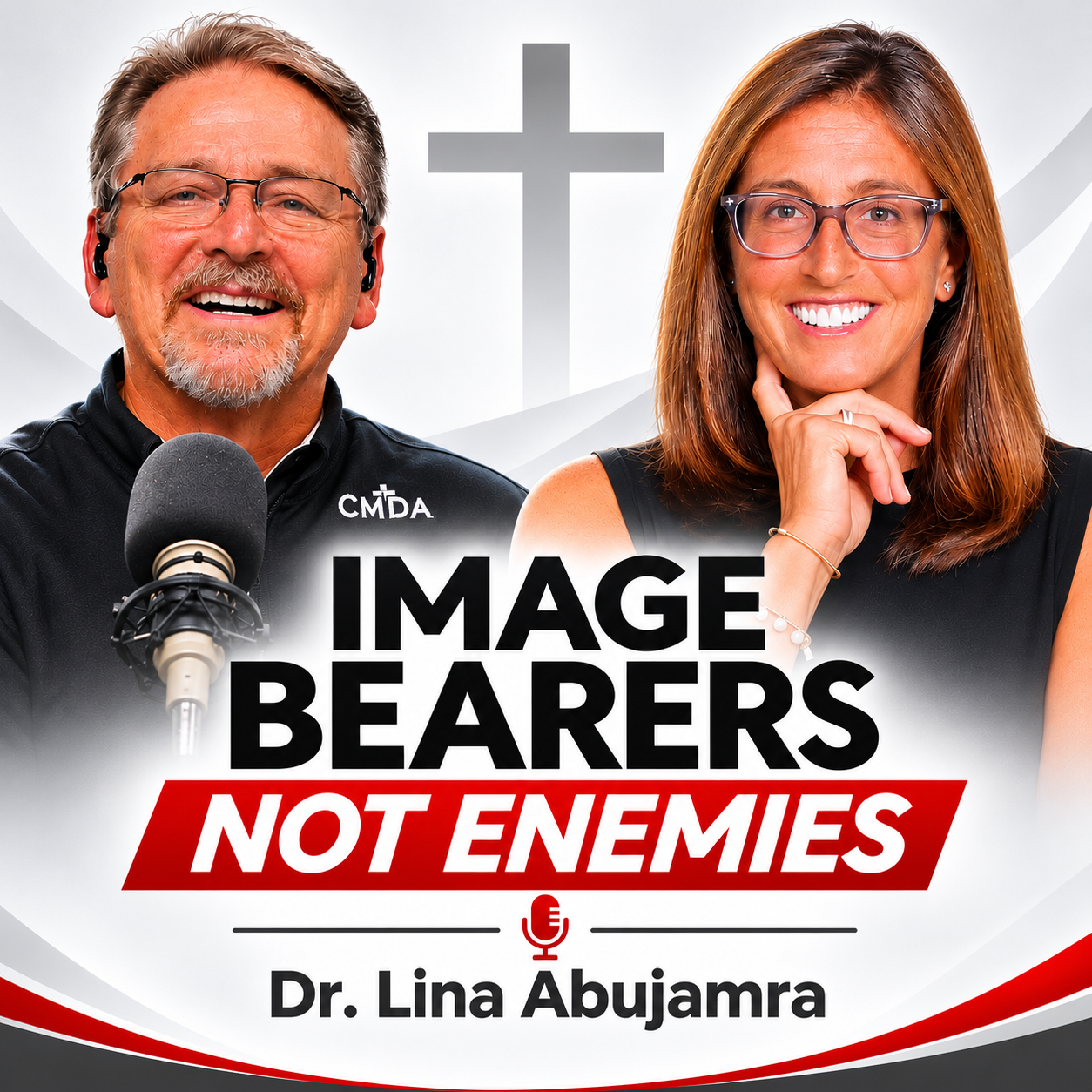
Next week, Dr. Lena Abu Jamra shares how her medical ministry in Lebanon reflects Christ's love amid conflict and challenges us to see God's image in every single patient.
I want to thank you for listening to Faith and Healthcare where our promise to you as a listener, or better yet, a subscriber to this podcast is we will do everything we can to keep your faith and health care connected.
We'll see you next time, Lord willing.
[00:44:47] Speaker A: Thanks for listening to Faith in Healthcare, the CMDA Matters podcast.
If you would like to suggest a future guest or share a comment with us, please email cmdamattersmda.org and if you like the podcast, be sure to give us a five star rating and share it on your favorite social media platform.
This podcast has been a production of Christian Medical and Dental Associations.
The opinions expressed by guests on this podcast are not necessarily endorsed by Christian Medical and Dental Associations.
CMDA is a nonpartisan organization that does not endorse political parties or candidates for public office.
The views expressed on this podcast reflect judgments regarding principles and values held by CMDA and its members and are not intended to imply endorsement of any political party or candidate.