[00:00:08] Speaker A: You're listening to faith in healthcare, the cmda matters podcast. Here's your host, Dr. Mike chubb.
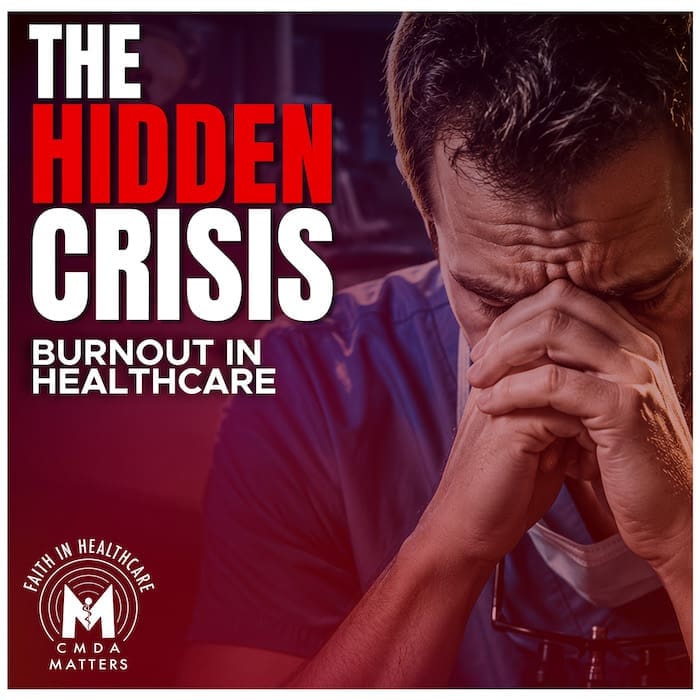
[00:00:19] Speaker B: Welcome, friends, to Faith in Healthcare. You know, many of us in healthcare know the feeling of the relentless drive to get it right every time.
To do the perfect procedure, make the perfect diagnosis, run the perfect practice.
Most of us came into this profession to help people, to serve God or to make a difference.
But somewhere along the way, friends, for too many clinicians, that drive quietly turns into something heavier.
Perfectionism, isolation, burnout, and sometimes something far more serious.
And the profession doesn't always make it easy, but for us to ask for help.
Well, in this episode, I'm joined by my co host, Dr. Bill Griffin, who's CMDA senior vice president.
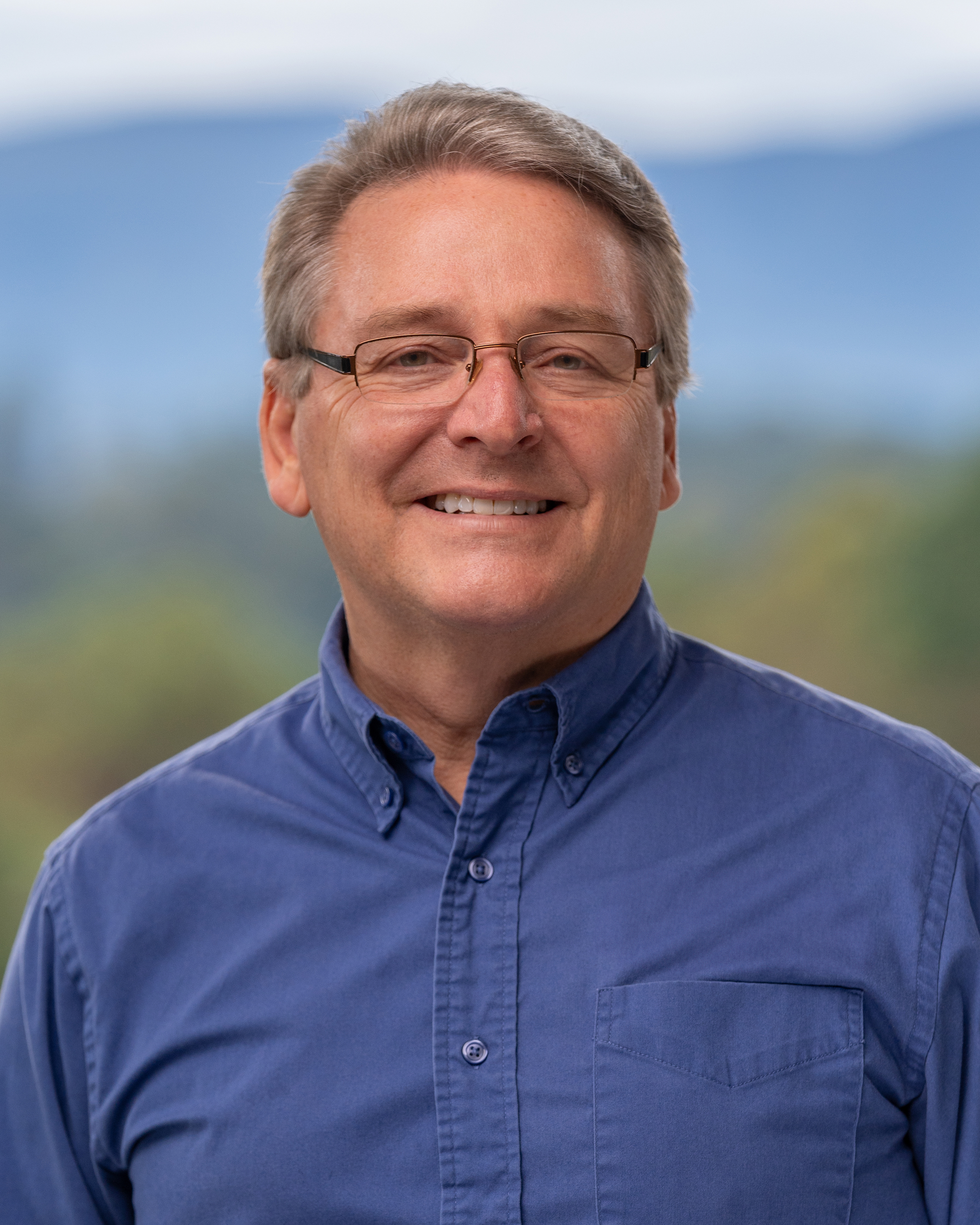
And our guest is a dentist, educator and nationally recognized Voice in healthcare, Dr. Bill Claytor. He serves as the Executive Director of the North Carolina Caring Dental Professionals. He lectures widely on perfectionism, burnout, and substance use. And he was recently honored in 2025 with the American Dental Association's Distinguished Service Award, which is the profession's highest honor. So let's dive in.
Well, today on CMDA Matters, I'm welcoming to the studio here in Bristol our senior Vice president. And that's Dr. Bill Griffin.
And thankfully today, Bill, you go by Griff because otherwise we would get confused.
[00:02:01] Speaker C: Today.
[00:02:01] Speaker D: Yes, I'm ready for GRIF.
[00:02:03] Speaker B: You're ready for GRIF. Because it's my privilege to welcome to the program Dr. John William or Bill Claytor Jr. One of United States Dentistry's most respected leaders, clinicians, and advocates for professional well being. Dr. Klater practiced general dentistry for more than three decades while dedicating his career to service as well as education and healing within the profession. He currently serves as the Executive Director of the North Carolina Caring Dental Professionals, supporting dentists through substance use, mental health and burnout challenges, while promoting compassionate recovery centered care. He's a nationally recognized speaker, author and advisor to the American Dental association, which, with your permission, Griff, we'll just say ADHD throughout the rest of this interview. His influence spans clinical science, ethics and wellness. In recognition of his lifelong service, he was recently awarded, toward the end of 2025, the American Dental Association Distinguished Service Award, one of the profession's highest honors.
So without any further ado, welcome Dr. Claytor, and we're gonna use Bill from here on out to Faith in Healthcare.
[00:03:21] Speaker C: Thank you, Mike. I appreciate it. Thank you, Griff. Nice to be here.
[00:03:24] Speaker B: Yeah, we're glad you joined us today. Now, the word calling, or the concept of calling, is Just so ubiquitous around here at CMDA and for Christians in healthcare, you don't have to say, oh, absolutely. But I just want to hear about whether God called you or how you felt led to become a dentist a few years ago.
[00:03:43] Speaker C: I know that one of the things my father used to always tell me, he said, you know, if you've been given a talent or a gift, don't waste it. Don't burn bridges. You know, be aware of what you know God's given you. And a couple things early on I noticed I love to learn, I love education. I learned, I love to give back. And I also like working with my hands. And I had two interests when I was growing up. One was violin. I'm still a violinist. My wife and I met through the symphony and. And the other is through gemstone cutting. And I do a lot of lapidary faceting and stuff like that. So if I had my way, I would have become a concert violinist. But since there's only three or four of those in the world, I thought maybe dentistry or something like that would be a better avenue. So that's how I got into this.
[00:04:33] Speaker D: Now, Bill, you graduated from the University of North Carolina Adams School of Dentistry, and then you follow that with a general practice residency program at the Medical University of South Carolina. Just for our non dental listeners in dentistry, it's not required that we do a residency program after dental school. Almost half of dentists do. But I'm not surprised that you decided to get that additional training before you went into practice. What were your early years in dentistry like?
[00:05:03] Speaker C: At times it was exciting.
It was, you know, I look forward to getting up in the mornings. It was, you know, a new adventure every day. It was very stress filled. You know, this striving to be perfect, that illusion of perfectionism as a. I call it the managing and spinning all the wheels, if you will, all the plates to keep everything going.
It was just written really, with a lot of stress. I enjoyed the technical side. I learned the business side.
[00:05:33] Speaker D: So things like that, I can identify with that. I remember when I was first in practice, I didn't sleep real well on Sunday nights, wondering what was going to happen Monday. And it took a while for at least most things to become routine in the area of dental practice.
[00:05:48] Speaker C: Yeah, I call that the Sunday afternoon syndrome. There's a whole definition of that I'll talk about later. But anyway. Yes.
[00:05:56] Speaker B: Well, Bill, when you got notified last year that you've been selected for the ADA's Distinguished Service Award, and it's the highest award that they give out every year. What was your initial response? Did you know you were being considered or was it kind of from out of the blue?
[00:06:12] Speaker C: It was kind of from out of the blue.
I remember it was about this time last year, I got a call from the president of the American Dental Association. He, he just said, you know, could you send me your resume? I'm working on a project. And, you know, I know the guy. And I thought, well, you know, this would be something. I don't know what it is. Maybe a committee or something he wanted me on. And, and then a few weeks later, I got the call and my first response was, are you sure you called the right person? You know, because I was just taken back by this award. Obviously I was very humbled and you know, terms like not worthy, things like that. But one of the things that I resonate, that resonated with me when he gave, when he called and told me I'd won the award was that I realized that this was man giving men awards that, you know, my security was not in that my security was. This is a gift God has allowed me to enjoy. Sure. It was more that, you know, someone wants to recognize another person. That's a human aspect. But the real, the real security, the real award is knowing him. And that's, that's, that's how I took it. I didn't take it like, oh, well, no one else has this. I'll walk around and put it on my car. It was nothing like that. You know, it was a very humbling time.
[00:07:28] Speaker B: Griff, you whispered to me that maybe the ADA is kind of checking out our roster of dentists because he's not. Bill's not the only person to receive an award from the ADA.
[00:07:38] Speaker D: It's true. In fact, even also in 2025, the ADA Humanitarian Award went to Dr. Bill Kane, another CMDA member.
And others have been so honored in a similar fashion over the years. Dr. Bill Sass received the Humanitarian Award the year before and Dr. T. Bob Davis has been awarded. I'm just really proud in a Christ centered way to see how the love of Christ has inspired people to do their very best and accomplish great things. Bill, how does your walk with Christ fuel your efforts to serve others?
[00:08:14] Speaker C: He gives me hope. He gives me a purpose.
You know, as the song says, I can face tomorrow. You know, because I know he lives. And I didn't. I always knew it up here, but not always in here. And I'm still, as we all are, working on that relationship. And it's quite a powerful Motivator, if you will. It encourages me. It lets me know I'm not alone because I can ask others for help if I have issues. So he. He is a. I like the term koinonia. It's sort of like a fellowship, you know, the Holy Spirit and the fellowship of. Of the relationship with God helps me in the high times and the low times. And that's sort of where I have to have that as my anchor. So. Yes.
[00:08:59] Speaker D: And while all healthcare professionals will face challenging circumstances at times, I have to say that I believe those of us in dentistry have a somewhat unique set of obstacles to overcome.
The fact that we are in very close proximity with our patients, the fact that fractions of a millimeter can make the difference between success and failure.
And you spent a large portion of your career digging into some of the pitfalls that dentists are particularly susceptible to. What have you learned over the years?
[00:09:32] Speaker C: Well, the two main things, and working with people in recovery that are dealing with mental health issues and substance issues and just dentists in general. It seems like we're a very isolated profession, a cottage industry sort of mentality, and also we don't want to ask for help. Now, I'm not saying that's exclusive to dentistry, certainly.
I'm reminded that in Today's world, in 2026, about 78% of physicians work in. They're either employed or work for a system, hospital system or clinic, where the opposite is basically true for dentistry. Still. I mean, there's different formats, but with that, a lot of times we can isolate in our office. We're protected by our staff, because if they see an issue going on, their response is either to act, to call, or to reach out to someone for help. But at the same time, they're worried about their job. So there's a fine balance between calling someone about my doctor who's maybe not doing well, versus I just want to remain quiet and deal with the elephant in the room. So isolation and the inability to.
Or the. I don't want to say inability, but we don't. We just don't ask for help. A lot of times, just as an aside, briefly, I will just say that a lot of times, by the time we see dentists and some physicians or mainly dentists in my situation, they have gone through the ringer, if you will. They've gone through a lot of stuff because they've been protected in this kind of closed, isolated system.
[00:11:04] Speaker B: You know, Bill, there's a difference between knowing that something's a problem but being motivated to do something. About it. And as I look at your CV, it was about 15 years ago that you decided to pursue chemical dependency counseling. There must be a story. Was there a story of a peer or in your office or just the data?
What motivated you to take time out 15 years ago to become a counselor for chemical dependency?
[00:11:30] Speaker C: So that was actually an interesting journey.
I've been associated with the North Carolina Caring Dental professionals for over 30 years in some capacities, volunteer, fundraiser, I've done some contract work for them, things like that. Over the years, I even became associate director and then eventually director. But back in 2012, we had an executive director, Ms. Barbara Bennett, who was our director.
And she encouraged me and at the same time, I think I kind of encouraged her that we needed to get a little bit more information about chemical dependency. She was a nurse or I think in practical care, bedside care, not so much with these mental sides. So we actually did a graduate course online.
It was about a 21 hour graduate course on chemical dependency.
We encouraged each other over that year, year and a half period of time. So she was very beneficial. But one of the things that we talk a lot about in our situations with people are what they call the biopsychosocial. And I always wanted to include the spir because spiritual is really the core, the crux of how this turns around. You know, we can talk about the bio, the chemistry, the biology of the brain. We can talk to about the psych, you know, the mental health issues, the medications. We can talk about the social, the interaction with people. But when we get to spiritual, that's kind of like, yeah, you do your own thing. Let's not talk about it. And so my goal was to incorporate grace and mercy through Christlike compassionate care. And that's what I try to do.
It's very easy at times. It's very difficult at times, as we both know, all of us know.
[00:13:13] Speaker B: Bill, what does that look like for you in North Carolina as well as. Because I understand nationally that you're doing counseling and helping professionals with substance abuse. So tell us just what specifically, what kind of activities you're involved in. And also, by the way, for our listeners, Dr. Klaytor is a prolific writer. Looking at your CV, all the articles you've written, there's a lot about marijuana there. So I want to know how often you're encountering marijuana use among those you're counseling.
[00:13:39] Speaker C: First of all, I'm not a counselor, but I did, I have the graduate courses for counseling. I'm not licensed counselor, so I just want to clear that up. I don't give therapy or anything, but one of the things that I do, I do a lot of education on opioid and cannabis mental health issues. I've been doing opioids for about 10 years now. Cannabis in the last four or five years and mental health at this point about the same period of time.
The thing that I see with cannabis, it is a growing concern.
It is an emerging problem not only for the patient that we treat, but also for the physician and dentists who are treating because we're seeing more and more use. It's estimated just in a recent report in February of this year that almost 38% of dentists have used cannabis. And on probably a more daily basis or several times a month, probably 30% of dental students are using it. It's becoming the go to medication drug to go to, to help with, you know, sleep, anxiety, stress reduction, academic pressures and things like that. We're seeing the same thing with physicians. The physician world has seen probably about 10% to 20% usage and so, and that, you know, they differentiate between dental student, medical student and professional, you know, physician and den seeing an increase in that. I'll try to stress with the opioids that this is and, and all, all this cannabis, mental health, whatever. It's, it's like all of us have a heart. I hope, I hope all of us have a heart. We have a body, soul and mind, but in that heart we all have a whole. And that whole can grow and, and can grow and expand, if you will, and decrease. And it's all, I think, a metric of, of the sin that we deal with in our lives. So we're all looking for something to fill that hol.
Oftentimes as human beings, I like to use the analogy, when we, when we're born and we come out of the womb, you know, we're grasping for somebody to touch us, to give us something, to help us. And we're in relation. But as we mature and get older, we do everything but try to form relationships. Oftentimes we isolate, we form social media accounts, we talk about people, we don't ask for help. And so we're doing everything to be independent from God instead of dependent on him. So in the beginning, we're dependent on other people, which God has put in our lives. And a lot of times we tend to isolate and not really associate with others. So my goal is to join, to draw that, you know, connect the dots between that discrepancy.
[00:16:21] Speaker B: You mentioned isolation, Bill. But what other factors are involved in this incredible increase in substance abuse that you describe.
[00:16:30] Speaker C: Oh, wow, there's a whole list. But I would just start with unmet expectations.
We all get hurt. We build resentments when we're not getting what we want. We feel that someone's going to take something from us or we've lost something. So we unmet expectations, we build resentments, whether they're justified or unjustified. We deal with mental health pain in unhealthy ways. The coping mechanisms are not through strategies of prayer, meditation, and therapy. Oftentimes it's through substances or activities. One of the big ones that played a big role in my early life and still does today is forgiveness. The. The gift that God has given us as people to forgive others. It's not about, you know, being right. It's not about getting my way. It's about that I have to forgive that person in order for me to remain in a state of health, health. And I can't remember who sang the song, but there's a song I always think about. I think we're looking for love in all the wrong places. Was that Kenny Rogers or somebody like that? I don't know. I don't know who it was. But we do everything we can to go away from God. When in reality, we say we're going to him, but we go away. And so I think so much of this is a lack of. It's a pain that we're. That is centered in our hearts, our souls. We understand it up here, what we need to do, but we can't do that meltdown to our heart to say, I need help. Please forgive me, Help me through this. And that's where the connection. That's the spiritual side of it.
[00:18:00] Speaker D: A key question, I think that comes next is, in your efforts to help those struggling with substance abuse, what have you found to be the key factors in achieving some level of success?
[00:18:13] Speaker C: The two big ones are patience and persistence. Oftentimes you have to realize, and I don't mean you, but I mean we have to realize that addiction is a relational thing.
It is something. Mental health is a relational thing or not having a relation.
We are always striving to find something to get us out of pain, to lessen the pain, to mitigate our pain.
And so when we talk to people that have had substance issues, we're talking about going for a medical evaluation, possibly a detox and some treatment and therapy. We're taking something away from them. We're taking their friend away from them. It was not their problem. It was their solution.
And so we have to replace it with something. And so during that time, you know, at the beginning, they're all excited, all excited about doing this. You know, they want a better life. And then when, when they start walking up that road, it's like, well, I don't want to do this. And so you have to just continually remind them that in order to do this. And so it's patience and persistence with the message. And I like to say compassionate.
I try to make them accountable, you know, by giving compassionate care. But make them accountable and show them some grace and mercy. And I think that's key because we all need that. We're not in a place of wellness when we're going through this. We might understand what they need is it's a little bit in some ways, and I don't mean to belittle this, but it's a little bit in some ways like a teenager, you know, telling them what they should or shouldn't do. You know the answer. You've seen it, you've lived it, you've done it. And now we're trying to help them get through that, that problem area that they're dealing with. And right at the beginning, like I say, they're excited about doing it, but then when it gets kind of rough, they want to back off. So you just have to be patient and persistent with them.
[00:20:04] Speaker D: Bill, what you say sounds so much like what I remember from one of the faith Prescriptions episodes, episode 13, led by Tim Allen. He says in that. Have you heard that episode?
[00:20:15] Speaker C: Yes.
[00:20:15] Speaker D: He says in there, he says if I take away people's beers and people's joints, he's not their hero, because that's what they've been leaning on. He you have to replace it with something. And he quotes a verse, I believe it's from Ephesians, where it says, and do not be drunk with wine, but be filled with the spirit. And he also mentions that statistics show that the biggest single factor in people overcoming substance abuse is some sort of a religious experience, which is secular lingo for either being born again or growing in one's faith. And so Christ enables us to do what we can't do without him.
[00:20:49] Speaker C: It's amazing. It's relational, isn't it?
[00:20:51] Speaker D: Now, another area that you have considered and helped colleagues with is in the area of perfectionism.
And I can think of when someone would announce, I'm a perfectionist.
It almost sounds like a boast more than a confession.
So in a sense, that's something up to a point for us to be proud of. But yet it can become pathologic. At what point does a healthcare professional's strong desire for excellence become pathologic or harmful?
[00:21:23] Speaker C: I think this is one of the big key issues in medicine. Medicine, dentistry, both. I mean, I have sat in my office with dentists who literally would slam their hand down on the desk saying my work must be perfect or I'll do it again.
And I don't even know how to respond to that because we know nothing is perfect.
I wish I had had this, I guess when I was in training, back in dental school and early in my practice. But one of the concepts, one of the things that really helped me get over some of this perfectionism, because I'm, I'm the eternal perfectionist. I mean, you know, I, I cut jewelry, I have, you know, all the detailed work and with facets and all that kind of stuff. But one of the things that helped me get over it was to understand the concepts of perfectionistic concerns versus perfectionistic strivings. And let me tell you the difference because I think, just briefly, I try to tell people when they, you know, are in a situation where they're constantly worried about pressures and stress and doing everything perfectly, as they say. I said, let's, let's look up, use a football analogy. I said, if you have the ball in the 10 yard line and for the rest of your life you could only go half the distance to the goal, you know the answer to that, you're never going to get there. Guess what? The same with perfection. There's no one that ever lived except for one person that I know that was perfect.
And so, you know, we get that, that talk out of the way. But perfectionistic concerns deal with ideas where physicians and dentists begin with unreasonable or unreachable goals. They look at mistakes as, they're bad people, they catastrophize about unsuccessful outcomes. They're not as, as expected outcomes. Maybe in clinical therapy, whatever their, you know, their results does not turn out exactly the way they would love for them to. So they get very discouraged. They won't ask for help, they shut down, they don't remain humble, they won't take constructive criticism. On the other hand, perfectionistic strivings deal with talking with other people. There's that relationship again about how do I set reasonable goals for my practice or my family life or, you know, my, my overall dental practice. Reasonable goals, reachable goals within time periods. How do I look at this as a learning experience?
Accepting imperfection is a huge issue with physicians and dentists. It's Easy to say, I'm not perfect. I'm going to seek excellence. But the real issue is accepting imperfection. And if I may just quickly, 20 seconds or so, briefly give you an analogy of gemstone cutting. I was cutting a gemstone where I had like 188 facets on this little tiny stone. It was a couple carats. And the point angles, the line angles all have to line up and come to a crisp, sharp point. Well, I was about halfway through the stone. It was like hundreds and hundreds of cuts into the stone. And one of the line angles didn't add up. They didn't quite match up. They were off just a little bit. So my first thought was, you know what to do, Bill. Start over. Go back to step one. I was on like step 300. Okay. Because you, you polished different grits. Anyway, it goes on and on. And I said, no, let's see what happens if I try to make the best of the situation I have. And I did. When I got through, I showed it to people. They didn't, they didn't see it. I didn't even see it. It was it, to my eye, very pleasant and pleasing to see. So the point is, we don't have to be perfect. We have to ask for help, remain humble, be teachable. Except that if you make a mistake, it's a learning experience and an opportunity for growth. That's what I always tell people. It's an opportunity for growth.
[00:24:55] Speaker D: That's very helpful. I don't know if you knew a dentist by the name of J. Howard Carr. He wrote a book called Keys to a Joyful Practice, and one of the chapters is Perfectional Disease, which I thought was very helpful.
[00:25:08] Speaker C: One of the first books I got my first year in practice really well.
[00:25:12] Speaker B: I do have a suggestion for a fellowship, Griff and Bill, that will take the perfectionism out of you and that's to spend six to 12 months fellowship in a mission hospital. Because there are so many things working against you.
Either you go home or it'll drive the perfectionism out of you.
[00:25:35] Speaker A: Before we continue with this week's episode, here's a special announcement for you.
If CMDA has encouraged you or helped shape who you are as a Christian healthcare professional, we want to invite you to consider becoming a lifetime member.
Lifetime membership is a way to make a lasting investment in this ministry.
You will be part of bringing along the next generation of believers in healthcare while helping bring the hope and healing of Christ to the world.
It's about staying connected to something that truly endures and gives back.
To learn more, visit CMDA.org Lifetime the CMDA Learning center is continuing to grow and it's an incredible resource for Christian healthcare professionals.
You'll find content from recent national conventions, the Faith Prescription series, continuing education opportunities, and a wide range of courses designed to support both your professional work and your spiritual growth.
And here's the best part. As a CMDA member, you can earn continuing education credits at no cost.
To start exploring the first full library, visit CMDA.org learn let's jump right back into this week's episode.
[00:27:01] Speaker B: Well, perfectionism and burnout, I mean, they are intimately associated, aren't they? And certainly burnout is something we've been talking about amongst each other. Lots of guests on the program here for the last seven years talking about the concept of burnout and how to beat it. Well, what are the common things outside of perfectionism that you're seeing associated with it? And then steps that you're recommending either in your talks that you give or in one on ones with professionals?
[00:27:31] Speaker C: Well, the two big ones are lack of structure within the organization, your dental practice or medical practice, and the lack of taking care of yourself. A lot of times we will throw ourselves, as I say out there, care for the public to they're not abusing us, but we allow that kind of treatment where we're not taking doing self care. You know, back before COVID four or five years before COVID burnout became a word, wellness, well being, resilience and all these things. And it's important that we address these things. Obviously it's, you know, do what your mom said growing up, you know, get enough sleep, eat right, exercise, eat yogurt, you know, all these kind of things. That's an important but you can do all those things and it's not going to do a thing for burnout unless you address the issues. And the issues around burnout that I see are organizational and system chaos, if you will, where there's no structure in place, our work hours, our schedules are out of touch, we don't have a good relationship with the staff. We're not asking them for feedback. Our compensation, whether it be financial or in appreciative language like thank you, I appreciate you, that's lacking. We oftentimes don't treat people fairly. We have offices where incivility kind of rules, where people are kind of always at each other's throats and then we have this cognitive dissonance where we're asked to do things or no, we shouldn't be doing it, but we do it or we ask others to do it so that organizational chaos, systems, whether it's needed to bring technology, more technology into your practice or hire more people or look at better ways of doing procedure, making the workflow a lot better is probably the number one issue. Poor understanding of businesses and going into debt. They're huge issues for physicians and dentists. Not developing leadership skills. Even looking at your own personality, what are you strong at? Do you have, you know, have a compassionate kind of concerning personality? Or are you more neurotic, more emotionally unstable, prone to depression? Are you that way? If so, work on that, get help. As we've already mentioned, being paralyzed by perfectionism can be a real thing where you just shut down because you won't try anything new because of fear of failure and failure to. Speaking of failure, we catastrophize issues sometimes where we think to the nth degree the worst is going to happen instead of turning it over in prayer and asking others, how did you deal with this? What can I do to be better? How to, you know, be vulnerable, as they say today. You know, talk about this and then also personal issues at home. I think we need to be able to have relationships outside the office, which is really where the health of our practice can really be stimulated, if you will. And I'll talk about that in just a few minutes.
[00:30:22] Speaker D: Now, speaking of private practice, you retired from private practice in 2019, but you still do a lot of speaking to physicians and dentists. And it seems like something that you really enjoy. What aspect of it is most enjoyable for you?
[00:30:37] Speaker C: The American Dental Association. Over the years, they've done surveys and polls and looked at dentists and what's behind our motivation. And they found, found that the majority of dentists, and I, I'm sure a lot of the physicians, not as much, but some of the physicians tend to process things through introversion. We, we are self. You know, we're self.
We like to think our way through things. We, we think we should know these things. I always, always joke about how you can always tell a dentist dealing with mental health issues. He hasn't called the, and I'm joking, of course, but he hasn't called the therapist. But he's gone to Barnes and Noble and he's sitting on the floor under the self help section reading about how to fix this, because we're fixers, you know, we don't, we don't really go out and ask for help.
But my goal is to see dentistry take a step forward and be not so much as looking at each other. As competitors, but look more of each other as colleagues. And for my physician friends, I always say, you know, physicians look at other physicians as colleagues and dentists look at other dentists as competitors. Well, maybe, and, and I know physicians are thrown into that system a lot of times with working in clinics and having to talk to other organizations within the hospital systems and clinic systems. But at the same time we have to glean from each other. And I, I like to, to really one of my big focuses today is on, on the community of dentistry. I think our community has a huge part of this answer, of how we can deal with burnout, stress, substance use. And I break it down into four parts. I think every dentist, every physician ought to have an accountability partner that someone of the same sex that you can talk to. I call them your 2:30 in the morning friends that you, that if you called that person at 2:30 in the morning, they would answer the phone and they would know that you would not be calling them unless you really needed to talk to someone, someone that's going to listen to you, not just be a yes person, give you real answers, call you on your stuff that you're not really being honest about and really be a reflection, like a mirror to you. And it's someone that's not in medicine, someone is not in dentistry. The second would be a mentor. I hope every physician, I hope every dentist has a mentor, someone they look up to. I can tell personal stories, which is another side of that. But mentors can give us reasons to thrive, to grow.
Every musician that's great has a teacher, every faculty member has someone they look up to. So we need someone that makes us climb a little bit higher.
And then our colleagues, we need to go to lunch, to dinner, have meetings with our competitors, so to speak, instead of our colleagues and talk about things. I used to do some of that with different dentists in our town. And when I would go, you know, I, I would think, what is this dentist thinking of? You know, why is he thinking I'm asking him out to lunch?
And a lot of times, you know, we didn't talk about dentistry. We talked about the family, what we're doing for vacation, what problems the kids were having, where they're going to school. Just things non dental. So it was a very relaxing time to get out of ourselves. And then the last one are the dental communities, you know, the dental societies in our state, the dental associations, study clubs, get out, meet, interact, you know, intertwine with others, get ideas and relate.
[00:33:57] Speaker B: Dr. Clay, you have hitched your Wagon, so to speak, for more than a couple decades with CMDA as a member. And by the time this interview is out, we will have announced and shared with folks at our national convention that's coming up here in April in Colorado that we have a new brand promise. So our new brand promise is your faith in healthcare connected.
I trust that you felt that way in your association with cmda, but what would you say to our listeners who are out there younger, whether dental students, medical students, others young in practice, why should they also consider hitching their wagon, so to speak, to this 95 year old membership association called CMDA?
[00:34:41] Speaker C: Well, for me, as you mentioned, it started early 2000s.
I had been in practice probably, I don't know, 10 or 15 years.
I wanted to start associating myself with an organization where I felt like I could talk to other people that had similar core values, if you will, or visions that were centered in Christ. And you've heard me use the term Christ centered compassionate care.
That's sort of the thing that I'm trying to really develop with my patients and have over the years. But one of the things that happened early on, I guess it was early 2010. I know, Griff, we were talking about this earlier.
I went to Williamsburg, Virginia and attended with my wife, Saline Solutions. And that was at the time called Saline Solution.
And one of the things that, you know, that was the beginning of my association, I found it to be very fulfilling, met people I had never met before. And Griffin, I were just recently speaking and I think you said you were at that meeting.
[00:35:42] Speaker D: Yes, I was.
[00:35:43] Speaker C: But we didn't meet each other there. We didn't know each other.
The other thing that kind of got going with me with CMDA was I was looking for two courses. One was on who could I associate with with burnout discussions and also coaching discussions.
And not surprisingly, there was a. And I apologize for not remembering his name, but he was at, I believe the University of Wisconsin. He was a physician that used to do some burnout lectures for cmda. And I attended several of his online CE courses on CMDA and with what I was doing in the Caring Dental Professionals, it really gave me the ability to, I could, you know what he was saying? It resonated with me. And I was, he was giving me answers and he had panels and stuff that would talk about the same topic. So I felt like I could talk and learn and glean from that. And then during COVID as we all remember, we were kind of shut down.
And I always wanted to be better at what I was doing as far as a director.
And so someone suggested that I look into coaching. Well, you know, there's a lot of coaching that you could do. But I wanted to find something that was more Christ centered. And I did take, I think one or two series of coaching clinics or lectures.
[00:37:01] Speaker B: The 501 class.
[00:37:03] Speaker C: Yes, yes. And Dr.
Was it Ann, Steve Sartori
[00:37:11] Speaker B: and Ken Jones are the big three who got us started.
[00:37:13] Speaker C: Yeah, those are the three and those are the one I attended. And it was, it was really a breath of fresh air. You know, from sitting in your house to walking out with a mask, you know, just, you know, going outside, you come back and do a podcast. It was, it was kind of interesting. But I mean a lecture, but CE course. But those are the three areas that got me sort of into cmda. And to me, me it's been invaluable because you can find a lot of answers to all these problems in a lot of different areas. And I thought, you know, why, why would I go out away from what my beliefs are and what Christ has given me to go look for something in the world? So it's been a blessing and I'm just so glad that that area was fulfilled. I remember just last thing I remember calling CMDA and said, I said, is there anyone there that teaches a course on burnout?
And it was like on what I said, burnout said, yes, yes. And that's how I got hooked up. So it was a phone call that got me in.
[00:38:07] Speaker D: Well, I love your comments about coaching. I've been working closely with the coaches at cmda. I've taken that intro course myself and have found it extremely helpful. I'm glad that was good for you as well.
[00:38:18] Speaker B: So Griff, you just got off the boat, so to speak. You were in Grand Rapids, Michigan teaching the Saline Solutions saline process there and got lots of different courses that are ahead. And Bill, you did that as well in the past. So talk to us a little bit about practical ways that you found having at the same time that Griff was introduced.
You've using that in your private practice in dentistry. And what I appreciate about you dentists and how you use it is you're really about efficiency and you want to move through your day and move your patients through the office because you got a long list but making space for spiritual interventions. Give us just a couple examples about how you use that training.
[00:39:03] Speaker C: Well, following, you know, the saline solution course and, and others, I, I really realized that I was either going to live what I believe or just believe it in My head. And so one of the things I did probably for the last 25 years of my practice was every morning, you know, we dentists have huddles in the morning. A lot of us, you know, these 10 minutes to go over the schedule and to talk about, you know, what this patient needs this today or what to expect here, what we're going to do there. But one of the things I did before every meeting was to ask, get my staff together and ask for prayer requests, and we'd pray every morning before work. That led to having, as you all know, we have a very hurting world out there, and patients will share with you as you're very familiar with their issues a lot of times. And so I would ask them if I could pray for them at that time, and other times they would pray for me. And it was pretty exciting to do that. That led to a lot of different things where people came into my practice. Actually, one guy that was in my practice, I'll never forget this, he was a physician in another town close to where I live. And the way he found me was his son was a radiologist down in Texas and was a member of cmda.
And he said he and his wife, his. His dad, the man I'm talking to, he. After he talked to his son, he said, I'm looking for a Christian dentist. Who do I go to? And he said, go to CMDA's website, find the list, or whatever. And so he found me there, and he found me that I was in this, the town I live in, about 45 minutes away or 30 minutes away. So he started coming to me. So we. But crisis brought multiple people into my practice. It led me to going on six mission trips to Ukraine.
About half, a little bit over half those I did actual dental work. Others I did submission work. And I most recently went during the war, during July of 2022, after the war started. This war has started and did some work there. But it's opened up the fact that we have a hurting world and people want.
They want to talk about this. You know, we act like it's something that's. If you talk about it, it's going to destroy a relationship. People are hurting and just being an ear or voice for them, praying for them, that's been so critical.
[00:41:24] Speaker D: Well, Bill, what you're describing overlaps heavily with what I saw in Grand Rapids last weekend. Just this morning, I was going over the evaluation forms, and two things were mentioned repeatedly.
One is the specific tools that attendees receive. Things like faith flags, faith stories, taking a spiritual History, praying with patients, tools that can be implemented within the context of a busy practice without getting you 45 minutes behind schedule. And in that way, you can figure out where patients are and how you can intervene with them in a very patient centered way that's compatible with efficiency as well. And the second thing is just the delight at being with others of like mind who are also trying to affect their patient's spiritual well being. It's like the Elijah syndrome. Am I the only one? You go to one of these saline process events and you know you're not the only one. The other thing that comes to mind from listening to your response there is the prior topic of burnout. I have to believe that at least a significant contributing cause to burnout is if a healthcare professional is only treating physical problems, because no matter how good we are at that, guess what we eventually lose. In other words, that patient's earthly life comes to an end. But if we're recognizing how addressing physical needs can affect eternity, that tends to rev you up. That makes you want to go to work in the morning. And I think that's secondarily a tremendous defense against burnout.
[00:43:04] Speaker C: Yeah.
And to that point, it's like, like, it's like we spend as physicians and dentists, we spend like 99%, I always use the 99, 1 rule, whatever that is. But 99% of our time we spend on, you know, didactic technique, educational business, but we spend very little time on our own well being. And we've all heard the analogy about the, you know, put the oxygen mask on yourself first before you help others. It's so true because we do a great job. Dentists and physicians, I think we all do a great job taking care, for the most part, of taking care of our patients. We're very concerned in trying to be there for them, but we'll do it at our own expense. And that's not being selfish. That's being, you know, mentally sound and healthy. You have to be able to give back to. You have to be well to give back. And unfortunately, we see that kind of go off the rail, so to speak, with substances and mental health issues. And that's where that void comes in. We're looking for something and that's where that relationship can really help us to grow.
[00:44:08] Speaker B: Dr. Kleider, as we wrap up this conversation, I'm aware that you have been asked to be a plenary speaker in Dallas, Texas. Dr. Griff puts together with some great help from his team, the Great Commission Dental Conference. And so you're going to be speaking. What is going to be your focus?
[00:44:27] Speaker C: I'm going to kind of bring in the, I used the term earlier, this is a kind of a psychology term, I guess, biopsychosocial, spiritual side of it and talk about why the spiritual side is key to the other three. I mean, the other three are more academic, if you will. But the, the real answers are going to be found in, in relationship and also dealing with how we deal with these imperfections and the stress that we deal with. No one's going to be immune from it just because they're a Christian. I mean, in fact, we may have more issues. And, and, and if I, if I may just briefly, I wanted to share this one of my, my go to's, if you will, one of my favorite little scriptures that I always remind myself. And this is in the book of Romans 5 where Paul was talking and he says, this is in verse three, he says, and not only that, but we also glory in tribulations, knowing that tribulation produces perseverance, perseverance, character, and character, hope. And that's what I'm trying to give people, hope. Now, hope does not disappoint because the love of God has been poured out in our hearts by the Holy Spirit who was given to us. And that's the key thing. We have the Holy Spirit. We're not alone. I mean, we're not alone spiritually. We're not alone in this world. But answers are found in relationships. And the dental communities are great. The medical communities are great breeding ground or a ground to really harvest that.
[00:45:54] Speaker B: Any final comments that you'd like to make to our listeners and to our CMDA members and ministry partners?
[00:45:59] Speaker C: There was a. One last thing I would like to say. I want to read a.
I guess it's a, it's, it's a statement, but it's also a prayer. I know who wrote this. I'm not sure how I met, I don't think I ever met the guy who wrote this. But it was a prayer I had hanging outside of my office. I never had it in my office because when I would go back to my office after seeing a patient where things maybe were kind of rough, I needed to see that as I walked in the door. Not once I got in the office, but it reminded me to, you know, to stay even killed. And this is a prayer that I had probably hanging up in my office for 25 years outside my office.
And it says this, it says we owe our existence and prosperity to the grace of our Lord and Savior Jesus. Christ.
It is our vision to provide quality and caring dental treatment to each of our patients, one patient at a time. And this is the part that I always had to read twice. When we succeed, the thanks and praise belong to Christ. I mean, you know, it's like the football player scores a touchdown, you know, points up in the sky. But did he do that when he. When he missed the tackle that caused him to lose the game? You know? No, he didn't do that, but we should. And the last part says, when we stumble, we renew our efforts and place our trust in his care. We sincerely appreciate the confidence our patients have in us. And that's the thing, dentistry and medicine, it's not a right, it's an opportunity. It's a privilege to practice. And we have standards that we should live up to that have been given to us by, you know, Christ. And it's just. It's just a. It's a wonderful opportunity. It's a great profession, healthcare.
I know it's gotten a lot of bad raps and there's a lot of issues going on today, but again, it's not going to change until we start having these discussions and trying to see from other people and how this is, you know, going to come to a better place. And that's where we're all striving for.
[00:47:51] Speaker B: Well, Dr. Bill Claytor, it's obvious to me, I'm sure it is to Griff, that God has given you honor. And there's a scripture in the Old Testament, he who honors me, I will honor. And this conversation is also reminding me what Paul told the Corinthians that about the body of Christ. And if one part suffers, every part suffers with it. If one part is honored, every part rejoices with it. We rejoice with you today as an honored, recognized, distinguished member of the CDA. And we're glad the ADA recognized what you've done over the last 20 years. So God bless you and enlarge your territory. And I'll be looking forward to. To hear from Griff about the impact your talk has in Dallas in a few months. Griff, any final comments?
[00:48:35] Speaker D: This has just been wonderful. I really appreciate the time and I look forward to seeing you in Dallas.
[00:48:39] Speaker C: Thank you so much, Griff and Mike, I look forward to seeing y', all, too.
[00:48:52] Speaker B: You know, outside his office door, for 25 years, Dr. Bill Claytor kept a prayer posted as a daily reminder to him that when we succeed, the praise belongs to Christ.
And when we stumble, we renew our efforts and place our trust in him.
What he's teaching us is that the pressures we face in health care that strive to be a perfect practitioner, the isolation, are not just professional problems, they are spiritual ones. And the answers are found in relationship with God, with an accountability partner, with a mentor, and with a community of believers who share your calling.
One of the simplest things that Bill described today is what I'd call a holy huddle.
Every morning before seeing patients, he gathered his his staff, shared prayer requests with them, and they prayed together.
It took just a few minutes, but it set the tone for everything that followed that day.
If you're looking for one thing to take away from this conversation, friends, that might just be it.
If this conversation encouraged you today, please share it with a colleague and subscribe so that you don't miss future episodes of Faith in Healthcare and to connect with a community of believers in healthcare living out their faith and calling every day. Just Visit
[email protected] I want to thank you for listening to Faith in Healthcare Today where our promise to you as a listener or better yet, a subscriber to our podcast, whether you're a healthcare professional or a patient who loves Jesus Christ, is this.
We will do everything that we can to keep your faith and healthcare connected, friends. We'll see you next time, Lord willing.
[00:50:57] Speaker A: Thanks for listening to Faith in Healthcare. The CMDA Matters Podcast if you would like to suggest a future guest or share a comment with us, please email cmdamatters mda.org and if you like the podcast, be sure to give us a five star rating and share it on your favorite social media platform.
This podcast has been a production of Christian Medical and Dental Associations.
The opinions expressed by guests on this podcast are not necessarily endorsed by Christian Medical and Dental Associations.
CMDA is a non partisan organization that does not endorse political parties or candidates for public office.
The views expressed on this podcast reflect judgments regarding principles and values held by CMDA and its members and are not intended to imply endorsement of any political party or candidate.