[00:00:08] Speaker A: You're listening to faith in healthcare, the cmda matters podcast. Here's your host, Dr. Mike chubb.
[00:00:20] Speaker B: Welcome, friends, to Faith in Healthcare. Today's episode is part of a two part conversation on in vitro fertilization, or IVF, and assisted reproductive technologies, a topic that touches real people, real marriages, and in some cases, real heartbreak.
Infertility, as you know, is deeply painful and many couples carry that grief together.
At the same time, the technologies that are designed to help have raised serious ethical questions.
Today we're going to explore why being pro baby cannot mean by any means necessary.
This is a guiding principle with its foundation in the imago DEI that's often overlooked in the IVF process and why issues like embryo loss or freezing or genetic screening and regulation matter for Christian healthcare professionals.
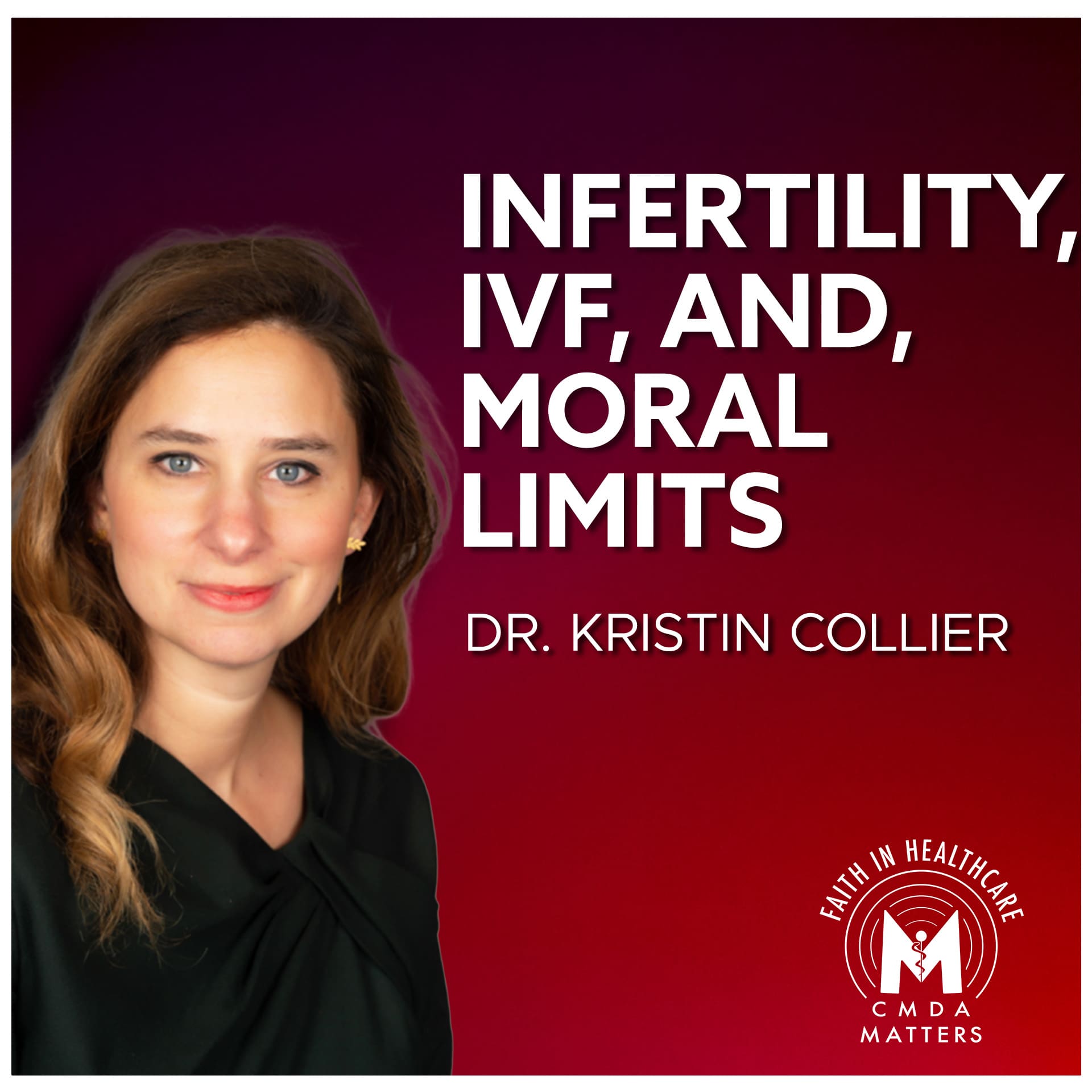
I'm joined today by my regular co host, Dr. Brick Lance, and our guest, Dr. Kristen Collier. She is Associate professor of Internal Medicine at the University of Michigan. Her work centers on human dignity, especially at the margins of life.
She'll also be speaking at CMDA's national convention in Colorado this coming April.
She's one of, frankly, many incredible speakers, so we hope you'll join us there. But for now, let's dive in.
Well, today on the Faith and Healthcare, I have invited my good friend Dr. Brick Lance to join me because not only is an orthopaedic surgeon who runs a crisis pregnancy center, but he's also a bioethicist. So welcome VP of Advocacy and Bioethics.
[00:02:14] Speaker C: I am so delighted that you are adding more bioethical topics to these podcasts. So I love it.
[00:02:20] Speaker B: Well, sometimes I have to fight to have them not be all bioethical topics sometimes. But today on Faith in Healthcare, we have a wonderful guest that our CMDA constituents were introduced to just about years ago in Cincinnati. I don't know, Dr. Collier, if you would call it your coming out party, but I think it was kind of the first time you got in front of a group of healthcare professionals and told your testimony. So I'm going to give you a chance to talk about here momentarily. But Dr. Kristen Collier is an associate professor of Internal Medicine at the University of Michigan in Ann Arbor. And she loves Ann Arbor, obviously, because all kinds of training happened before she became faculty, their medical school residency and chief residency at U of M. So she's, I guess, a wolver.
Her academic interests center on human dignity and the ways this concept grounds moral obligations at the margins of Life. So welcome Dr. Kristin Collier to Faith in Healthcare.
[00:03:16] Speaker D: Thanks. I'm really excited to be here with you Bo thanks for the invitation to be back on the show.
[00:03:19] Speaker B: Well, I did a fun little experiment today. I told Dr. Lance that I'm always experimenting with AI to do fun new things. And as CEO of CMBA, I'm now asking ChatGPT if Dr. So and so is publicly a Christian. And I've applied that to a number of people, like a number of future guests. You would be proud of what ChatGPT came up with for you, very clearly. And the bottom characteristic was associated with cmda. So that makes me very, very happy.
[00:03:47] Speaker D: Very cool. Very cool.
[00:03:49] Speaker B: Well, a couple of years ago you had to have a bodyguard because of threats against you for your ethical stance that you took about the time the Dobbs Supreme Court decision came out and the great white coat walkout.
In retrospect, I'm so glad it happened because I don't know that we would have met had that great white coat walkout happened when you were welcoming new medical students. And so a lot of water under the bridge since then. So how about relationships with students, faculty and public currently there in Ann Arbor? And how's your faith grown since that took place?
[00:04:21] Speaker D: Yeah, it was back in 2022 and it seems like many lifetimes ago, to be honest. I'm thankful that things have calmed down so that I can get back to work taking care of my patients and supporting our learners in our program on medicine, religion and spirituality. And also just doing the work that needs to be done to defend the vocation of medicine against being, I think, raptured in with the business of death. But I have to say the thing that still grieves me the most are still, I would say, fractured relationships at my place. You know, as you mentioned in my intro, I've been at the University of Michigan in some capacity as a student trainee faculty member since 1993, so 30 years. So I have a lot of wonderful relationships there.
But it's sad to say that many of those dear relationships were fractured after the white coat ceremony because of my stance on abortion.
And, you know, it's disappointing because you would hope that relationships that have been, you know, cultivated over years could withstand a difference of opinion. But I get how emotional this topic is and how it speaks to a lot of topics many people feel very deeply about. So it's not totally unsurprising, but it is disappointing. So my prayer is that with time and through God's grace, these relationships here at this place with people I care deeply about can be healed.
[00:05:37] Speaker C: Thanks, Kristen. We'll be praying about that, by the way, in Fact, I would just ask our audience to pray for Kristen.
[00:05:42] Speaker D: Thank you.
[00:05:42] Speaker C: So greatly appreciate that in that regards.
So, Kristen, we are going to talk about bioethics today. You are a multifaceted woman, by the way, because you can speak on all kinds of subjects with excellence and expertise, which I find fascinating myself. But we are going to go really narrow here. We are going to go down to assisted reproductive technologies and particularly ivf, which is under that umbrella, my nurse practitioner pregnancy center. I have an opportunity to speak in a variety of churches in Oregon. And it seems like the number one subject that comes up when we're talking about ethical issues is infertility, and it's painful for women. And you can give me a quote, but I usually quote, you know, 10% of your women in this church probably have infertility or at least suffered infertility. And it's, it's a difficult situation for the women. Of course, there's many biblical examples that we all know of infertility. So my question is in regards to the church.
So what can we do as physicians and or healthcare professionals within the church? How can we help the church be the church to help those with the pain of infertility? And that's the first question to help them with that pain. And second is how can we help the church teach on the moral implications of technology and technology, particularly in this case, ivf?
[00:06:56] Speaker D: Great question. I do want to acknowledge that this topic is a very challenging topic to speak about because it affects so many people's lives. And infertility is really hard. And you mentioned that infertility is painful for women. But I'll also point out it's painful for men, it's painful for grandparents, it's painful for families. And so I do want to recognize that infertility is a very challenging subject when you think about the role of the church. I think here of Matthew 9:12, where Jesus says, you know, those who are well are in no need of a physician. Those who are sick, we are all in need of the great physician, Jesus Christ. And the church should be the place where the wounded come to seek healing through Jesus Christ and to seek support.
And we can do that in an embodied way at the church and bring these pains that we have, whatever they have, infertility included, and put them at the foot of the cross and be supported by those who know him and love him and who have walked this journey. And as you said, it's, this is not some zebra, you know. Yeah. The WHO says about one in six U.S. americans will face infertility at some point in their life, many of those folks will come to a physician and ask for advice about how they should proceed.
And I think about, you know, I'm. I'm in no position to. To talk about what the church should or should not be teaching, obviously, but I do know that people are going to get their information somewhere. And I think about CS Lewis saying, you know, a man doesn't call a line crooked until he has some idea of what a straight line is like. The church should be the place in which we totally understand what is the straight line. And we're going to be able to have that by good preaching, good teaching and support.
And I do think that oftentimes these matters of infertility or other matters, oftentimes, especially around human sexuality, again, I can only speak from my own experience, but maybe don't seem as engaged in the church as other topics because there's maybe some stigma, some shame, misunderstanding about them.
But again, people want to understand how to make sense of the spiritual and existential distress that they have when they feel like their body's not working the way that they God intended. They want to be able to understand what might be listed or elicit in the eyes of the church with how they decide to go forward. These are matters in which conscience are invoked. And I think about St. John Paul II, who said, we have a duty to make sure our conscience is rightly informed and the church can help do that.
So I do think the church is a place where the wounded should be able to come, where they feel supported by their brothers and sisters who have walked this walk. Place where we can put our distress at the foot of the cross and also be a place.
It is a hospital, but also be a place of teaching. I think Jesus, of course, is the Savior, but also he's this identity as a teacher. We should be able to teach and learn about matters of morality and ethics and emerging technologies that are affecting so many of our brothers and sisters.
So, yes, to all your questions. These are things I think that the church should engage deeply and rightly.
[00:09:47] Speaker C: Yeah.
[00:09:47] Speaker B: Thanks, Chris. In my past life, as I was at a mission hospital in Kenya for a number of years as medical director, one of my staff was one of those one in six struggling, and she took time off to go to Nairobi and to be consulted for ivf. I guess in my mind, my assumption, this is a really good thing. I mean, I want her to get pregnant and have a child along with her husband who was on our staff. And so my assumption, this is a really good thing I'm pro life. I wanted to have a baby, but since coming to cmd, I've realized it's not that straightforward. So what assumptions about parenthood and medical technology might folks like me in my previous life consider just taking a deeper dive and being a little more thoughtful?
[00:10:33] Speaker D: Yeah, no. And I also want to speak to how deeply desired babies are. Men and women and families. We deeply desire to have biological children.
I think the hard pill to swallow with this topic in particular, as I think the truth is that not everything that's deeply desired should be rightly pursued.
I also used to think that, my goodness, if we are Christian people, that we are pro baby. And yes, we are pro baby, but that does not mean that we are pro baby by any means necessary.
Actually, I've been thinking more about this idea of being pro baby and this idea of natalism. I've come to even switch my language from being pro baby to pro family, which has different implications of how we think about this.
I really received, I would say, most of my education on this topic, actually, by Katie Faust. We were talking about Katie before we logged on today and she would say that infertility is hard, not being able to have a biological child is hard, or more children is hard, but someone has to do hard things.
And when the burden of infertility isn't shouldered on adults and they pass that burden onto somebody else through use of technology, then the burden will be borne by somebody. And in ivf, unfortunately, the facts are is that these babies that are created through the mechanism of IVF end up pain with their life.
So the assumptions that I had before was that yep, we are pro baby and let's just get there however we can. And now I understand that the processes by which we get there also need to be examined. And many of your listeners may not know that there are so many embryos created through IVF in each cycle. These embryos, we know from science, are new members of the human family, but only about, and the data is unclear here, but only probably about 2 to 7% of those embryos end up being born into a live birth. And the other like 93% or so of those human beings are lost. They're discarded, they're killed, they're abandoned. And with that massive loss of life that probably rivals the loss of life that happens in abortion, that should give those of us that consider ourselves to be pro life considerable pause. The other thing I would say about IVF that I didn't realize before, but I think now, thinking about it from an anthropological or socio cultural view as well, is that the process of ivf, when we switch this idea of children as gifts from God and they are begotten in the marital embrace to products that we make, it changes our ideas of what humans are, what they are for, and changes our whole, I think human anthropology. So there's the risk of shaping our anthropology through these techniques or this technology that you spoke about. I think the last issue, and we can dive into some of these in more detail that I have concern over, especially as a physician, is that the way I think, especially I've seen my patients in certain healthcare systems be addressed who have infertility, is that the answer to your infertility is ivf? IVF becomes like the framework through which all infertility is seen and managed. And we know that infertility is a symptom of some other issue with male factor, female factor infertility. But instead of giving resources to be able to understand what those are and maybe give some additional resources to restorative reproductive medicine, for example, it's infertility.
And there are many reasons for that. But when we think about medicine being captured by the forces of the market in particular and how much money is in what's called big fertility, it really doesn't seem to be able to then have enough bandwidth to be able to think about restored reproductive medicine and other root causes and actually also think about a way to approach infertility that doesn't include the massive loss of life that we know happens with all of these discarded, lost and destroyed embryos that happens in ivf.
[00:14:28] Speaker C: Well, Kristen, that's going to lead me to two questions and interesting combination, church and politics. But let's do the church first. We talked about the women with infertility that exist within the church and how the church can demonstrate compassion and come alongside and be the body of Christ. But there's also a number of women within the church that have had abortion and many people don't know it. In fact, I met a woman who had had an abortion decades ago and her husband didn't know it.
And there is forgiveness. There's forgiveness in Christ.
[00:14:56] Speaker D: Absolutely.
[00:14:56] Speaker C: And you know our pregnancy center as well as I know local churches that have a post abortive counseling center. And it's, and it's marvelous because they do need healing and they have to go through that process.
So here's my question though.
How is abortion related what I would call unregulated ivf? What are some similarities there? And personally I'm thinking about autonomy and just Personal preference.
How are they comparing that?
[00:15:23] Speaker D: Sure. I mean, a couple ways, I think. Abortion. And thank you for reminding our audience about the forgiveness that can come through the blood of Jesus Christ, because there's so much pain and trauma, I think, in these spaces.
Specifically the two that we're talking about in this question, abortion and ivf. You know, I think abortion and IVF have parallels that are very interesting to me that, again, I have only recently become aware of as well, because of the kind teaching of others, which is what we're supposed to do in the church. You know, I mentioned one already that probably the numbers of embryos that are lost each year in ivf, because again, most of them are not implanted and most of them never come to live birth. Probably those numbers in some ways are comparable to the lives that are lost in abortion each year, which is tragic. I think the other thing about abortion, ivf, that is very similar is the idea of, like, again, this idea that Katie talks about around this idea of adult autonomy and sort of preference and desire. So Katie will say that abortion and IVF are similar because abortion forces human beings out of existence because of the will and desire of adults, and IVF forces children into existence also for the will and desire of adults. But both of them lead to massive loss of life, which is very interesting to think about.
I think the problems we get into bioethically with these, and maybe why there isn't more alarm at the loss of life or at these processes such as IVF and abortion, is that the targets in abortion, ivf, the target population, the one that's being manipulated or discarded or chosen based on adult desire and will, where these vulnerable members of Homo sapiens are not seen as such, you know, they're seen as a clump of cells or they're seen as genetic material. So I think the culture has catechized, you know, people to understand that there's really not a member of Homo sapiens there, that's not really a prenatal child, that's just a clump of cells. So then who would have trouble, right, with discarding or abandoning a couple of cells? Like, who would have trouble with eliminating, like, nobody, right?
But we know from science that a new member of Homo sapiens begins at fertilization. So there's a new member of the human family there, a very vulnerable one, that. One that we should have a special protection, right, for, especially within medicine. So I think our misshapen anthropology comes to a parallel here with abortion and ivf. The way that massive loss of life is Very similar.
And I think that this idea, again, of children suffering for the needs of adults, and again, some of these needs and desires are good ones, but again, the process through which these needs are operationalized with this massive loss of life are a tragedy and again, should give those of us who consider ourselves to be pro life some considerable pause. And yes, autonomy and radical autonomy, a really expressive individualism through radical autonomy definitely is at the heart of both these procedures as well. But I think, again, a lot of people come into this idea of ivf, I think with the right intention. They want to grow their family, they want to have a baby. But the means through which we get there are ethically very questionable the way that things are done right now.
[00:18:41] Speaker C: So that leads to public policy. And as we know, this past year, the executive branch of our federal government has espoused IVF as a means to create more children. But they did not stipulate any type of boundaries or regulations with that. And just this morning, virtually I gave testimony in South Dakota about their IVF bill and it did come out of committee, which is great. So it will go to the floor for a vote. And it may be the first state that actually puts very specific regulations on ivf, very specific boundaries. So any comment? I would assume the answer is yes, we need some boundaries and some regulations for this big fertility industry, in particular ivf. Your thoughts on that? What should be included?
[00:19:27] Speaker D: Yes, I think whenever there is a lot of money involved in an industry, whether that be big pharma, big fertility, what I think is this emerging business of big death. Also, unfortunately, people, you know, just the fallen nature of ourselves, right, we have a tendency to sort of look the other way. And I, and I, and I do think that, you know, IVF is really the wild, wild west of, you know, reproductive technologies. It's been around actually a long time. But I think this rate of acceleration of the cowboys of ivf, to use a gendered term, with some of these adjacent technologies around designer babies and AI screening embryos and all of these things, it's happening faster than we can safely regulate. And therefore, IVF is this lightly regulated industry. And my goodness, when human beings are involved, this shouldn't be something that's slightly regulated. I just am laughing because today I had to do this, this submission to our institutional review board for this very, like, low stakes, no risk type of research project that I'm working on doesn't have even a millionth of the risk that IVF has. And I feel like this project I'm doing is more regulated Than this industry where millions of human beings and their lives are being affected, literally affected.
My answer to your question is yes, there should be regulations. Like, I'm not a regulator, I'm not a policymaker, but human life is involved. We should have some protections for consumers. I hate even using this language, but that's the language of IVF about production, the consumers to protect these potential parents right around what's happening. Because there's been mix ups and all of that, but especially protections for the very vulnerable members of Homo sapiens who are the targets and the products of this conception. So maybe to put some bones around it, you know, I've heard about this topic, you know, about, you know, is there something called pro life ivf? And I think for people who think that's possible, it seems to me like a unicorn. But technically, could you regulate it? Where there was a couple who are using their own gametes, right, Their own egg and sperm, they're not going to create more embryos than can be implanted, right? They are going to make sure they try to bring all these embryos to live birth. We don't freeze, right, human beings. We shouldn't freeze these babies. It's really challenging. When I've talked to Katie about this, like, does this even exist? You know, Katie said she has met in her travels across the world, like maybe five couples who've been able to do this. And she said they had one thing in common. They all were incredibly wealthy because it's so expensive to do each cycle. They actually had to like, because they have the wherewithal to do so. They had to like resist the physicians by saying, are you really sure you only want to do like, you know, are you sure? And they're like, yes, because we could, they could afford to do it repeatedly. But even with that, my concern is ethically is it doesn't get around the issue of what it means actually to start making our children outside the marital embrace like that is. It's. That also to me, terrifies me actually about what this could do to our anthropology and then all of these adjacent IVF services that then we did deemed to be healthcare, such as surrogacy and delight in your babies and all that doesn't address that. But specifically around the IVF container, maybe those are some ways that we could start to regulate it in order to protect the parties involved. But in my mind, I know I think of it as a unicorn, but you know, I think we have to start somewhere. We have to start with some regulation given what's at stake here.
[00:23:05] Speaker A: Before we continue with this week's episode, here's a special announcement for you.
If today's conversation is prompting deeper questions for you, we want to remind you that many of our past national convention plenary sessions are available in the CMDA Learning center, including a number of sessions that offer continuing education credit.
These talks cover a wide range of topics at the intersection of faith and healthcare, and they're a great way to continue growing both professionally and spiritually.
You can explore the full Library and find CE opportunities by visiting the Learning center at CMDA.org Learn and mark your calendar for the 2026 CMDA National Convention, 4-23-26 in Loveland, Colorado, a time to renew your spirit, recharge your faith, and connect with fellow believers in healthcare.
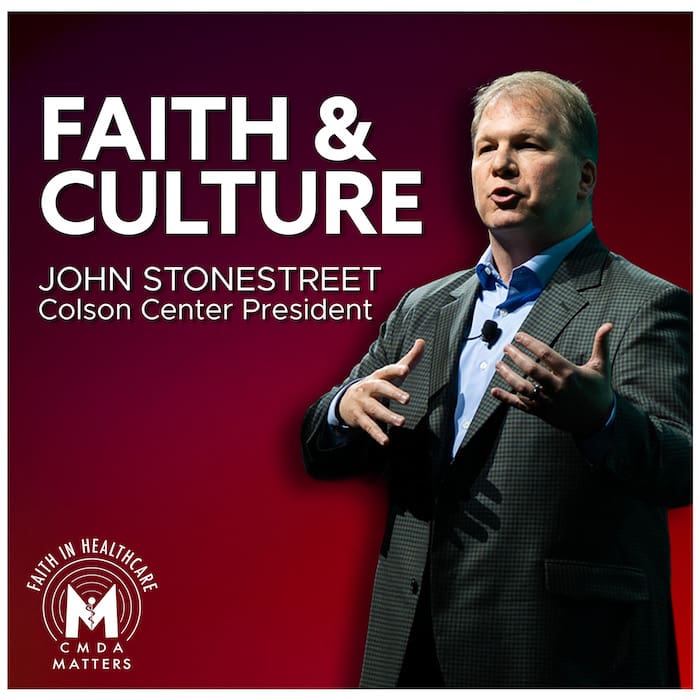
We're thrilled to welcome John Stonestreet, president of the Colson center and co host of breakpoint Radio, a nationally recognized voice on faith, culture, theology and Christian worldview.
Convenient lodging is available at Spring Hill Suites by Marriott, with special CMDA room rates reserved for attendees.
Learn
[email protected] events let's jump right back into this week's episode.
[00:24:38] Speaker B: Well, about 14 months ago, Rick, you and I were at a meeting and were participated in a discussion in the development of actually a position statement on in vitro fertilization that we've shared with you, Kristen. I will say that the most charged, emotional, difficult part of that discussion, in developing that position statement, because our board reviews everything coming out of our wonderful ethics committee, was the discussion about freezing embryos, freezing embryonic humans. And so you've just mentioned that that is so problematic. So is it fair to say that you say ethically this really should not be done?
[00:25:17] Speaker D: Yeah, I mean, I agree. I do not think that we should be freezing human beings.
And again, I think some folks maybe again, it is a privilege, right, that the three of us have had opportunities to think through these things deeply.
I think, you know, there are a lot of people who do care deeply about human dignity and they want to be good stewards of life.
And just, you know, a lot of people haven't had opportunities to think through these things deeply. After I have had an opportunity to think through this. I do not think that freezing human beings is ethically appropriate.
I think one of the things, again, is that we're not just freezing genetic material, we are placing human beings into cryopreservation. And sometimes this indefinite animation, it is a failure of care. I think one of the things, as an ethicist that bothers me about freezing, it violates human Temporality, human beings are embodied.
We are situated in time, and we are oriented towards growth.
That has stopped when you are all of a sudden frozen as an embryo and placed in this inventory for who knows long? And there's no benefit to the embryo. Right. We know with this, then, the thawing process that, again, the data is not super clear that many of these embryos don't even make it out of the freezing process. And that process had no benefit for them. Again, they were put into suspension, again, for the desires of adults. So in my. In my concern, again, thinking about the pastoral concern we have for our fellow human beings, it sort of has this idea of freezing. Like, you're. You're. You're putting dominion where, like, stewardship is granted, and actually, you are where stewardship should be. And also, I think that you're radically isolating this new member of Homo sapiens in cryopreservation, totally detached from the human family. It just, again, seems to me like. Like. Like an affront to human dignity.
And I think, you know, the last thing I'll say about that, I think the first time I actually heard about this topic was several years ago from Charles Camosi, who I know you had on the show a couple. A couple weeks ago.
And Charlie said, you know, which is probably true. Right. Again, the numbers aren't clear, but there are probably in the US right now, probably 1 million embryos that are frozen. And Charlie was like, kristen, these are human beings who were in bondage.
They're captured here. And I was like, what are you talking about?
But the more that I thought about, and my own anthropology has been corrected to understand these are actually members of Homo sapiens that deserve protection.
Like, how can we. How can we say that's okay? You know, it really. It really, I think, is something that we need to understand as being an affront against human dignity and really something that is incompatible with, you know, a pastoral stewardship of human life that we should have for these vulnerable members of Homo sapiens.
[00:28:12] Speaker B: I just want to ask Brick and Kristin. It is a different matter. Would you not agree, though, when it's a rescue operation?
[00:28:18] Speaker C: It is. And of course, we just celebrate when one of those frozen embryos does get implanted and there's a live birth of a baby. And we're gonna love that baby. Yeah, we're gonna absolutely love that baby.
[00:28:28] Speaker D: Yeah. No, thank you for clarifying that. I also wanna be clear. You know, when we meet, we all have people in our lives that we know and love who were conceived through IVF and Our response is like, we're so happy. Like, we love you. We're so happy you're here. But what we're also is embedded in that sentiment, right, is our grief that we Wish the other 93% of embryos also could have made it.
So, of course we're happy for the people that were here. Of course we love them.
But what we're trying to do is also say, my goodness, is there a way that these other members of Homo sapiens who have been created in this process, could they have made it? Or could we think about more humane ways of not creating more embryos than we can care for in this moment?
Yeah. Thank you for clarifying that.
[00:29:12] Speaker C: And just last year, I find it fascinating that live birth and the child is now over a year old, I believe, was frozen for 30 years.
[00:29:20] Speaker B: Older than Mom.
[00:29:21] Speaker C: Yeah, older than mom, actually, which is crazy. So, Kristin, I know you love history, and I know you love philosophy, so here's my question. All right, so let's go to Aquinas moral framework, if you will. And his framework comes from Aristotelian natural law, ethics, and then he combines Christian theology with that. And he talks about absolute truth, and he talks about means and ends.
So how does all this, the natural law, objective truth, how does that all apply to this scenario with assisted reproductive technology?
[00:29:57] Speaker D: Yes. No, thanks for that question. So I'm in no position to say what Thomas Aquinas would say, obviously, about ivf, but we can take his framework and try to apply it and sort of see where we land. So, you know, I can sort of hear Thomas Aquinas in my mind reminding us, like, that the moral evaluation of an act requires more than just identifying this good end. You know, we've identified a good end. Like, you know, human beings are ends in themselves. They're, like, wonderful. We're so happy about our brothers and sisters who are with us that were conceived through ivf. But Aquinas would say it's not just the good ends that matter. We have to think about the choice, worthiness of the act and the means that by which we get there.
So in Summa Theological Questions one and two, he explains that there are, like, three ways that we should evaluate whether an act is morally permissible. So his central claim, right, is that the act sort of depends on three things when we evaluate it for sure, like the object of what is being done, the end or the intention of the act, and the circumstances by which we get there.
And again, if we think about the hard truths of ivf, again, like the End or the goal is a good one, but the object and the circumstances of what is being done through IVF gives us pause. The considerable loss of life, the fact that most embryos that are created never make it, the intentional, oftentimes destroying or abandonment of life. And so the good ends of a child are, like, frustrated, right, by the means by which we get there. And these. These choices also, I would say, from, like, our virtue ethics framework, these choices also shape us. You know, there's a moral imagination that is cultivated in society by technique or technologies or choices and what we approve as choices that are worthy to be taken because of law or because of policy or because of, you know, other forces that shapes what we think might be okay. But I would say again, if we're thinking about Christian religion and principles given to us in scripture, but also natural law, the idea that we would create all this extra life for most of it to be discarded and. Or frozen is a violation of both of those sort of philosophies. So I think Aquinas would say that we should have some pause, even though the end is good, that the choices that got us there are morally questionable. And so therefore, his three laws of how we think about things, two of them would be violated here.
[00:32:29] Speaker B: Both Brick and I have had a chance, and maybe you also, to interact and hear from Carl Truman, who's been talking a lot more about disenchantment as well as desecration, and historically, the mystery and the wonder of having a baby. Just the idea of a gift from God versus a process that we now understand a whole lot more in modern medicine and. And how a baby comes about.
So talk to us about this worldview you just were talking about, a worldview that changes our perspective and that the end doesn't justify the means, but that end, instead of being a gift from God, a worldview now that is pushing IVF and a baby as part of a manufactured, selected, or purchased entity.
[00:33:18] Speaker D: Right? No, I really appreciate Carl Truman's work and other scholars who are really giving, I think, really good names to this anthropological crisis that we find ourselves in, right? Where Christians, right? We, you know, we know the truth, that all human beings, from fertilization to natural death, right, bear the image of God. We all are bear the imago dei. We are loved and willed into creation by him. But there are these false anthropologies, I think, that have infected medicine that Carl talks about.
And one of them, I think, is really relevant here, which is, you know, not man is imago day, but man is commodity.
And what I would say is that, you know, the imago DEI should never be bought or sold. Like the imago DEI is not up for sale and we start selling ourselves or part of ourselves in the market. That is an affront against human dignity. But if you see man as commodity, then of course you would think things like selling body parts or selling gamets are, is completely licit.
So I would, I would just, I think it's an affront to sort of, you know, sell any parts or whole members of Homo sapiens. And this comes up in IVF because oftentimes people can purchase or trade sperm or egg to be able to have IVF be successful. We know that there are IVF adjacent techniques or procedures like surrogacy where again, women are sort of, again, you know, selling or renting their wombs to be participating in this. And we know that mostly it's black and brown women and disadvantaged women who oftentimes get bought and sold in the marketplace. So I think when we start trading or seeing people as commodities in the market, it's a very low view of human persons.
I also think, particularly with ivf, it's concerning, you know, I think we've always thought, and which is still true, that children are a gift from God. There is no right to a child. Children are gifts. They are begotten and they're not made. But what happens in ivf, right, is the children then become made.
And what happens there is then this idea of which I know, I saw in your statement, which I was very happy to see there.
We have, you know, we have the Christian teaching that the unitive and procreative meanings of sex should not be deliberately separated.
When you separate those things and then children are something to be put into the marketplace. It shapes our idea of who they are and then it shapes us ideal of their products in the marketplace over time. Then why wouldn't we like optimize them? Right. Or why wouldn't we select for the best children? Because like, you do that with products and you've probably seen ads for Orchid, which is the designer baby company and will show your embryo reports like six of them. And then you will swipe based on which babies you know, seem best to you.
So it's going to change, I think our idea not only of who our children are or what is, what a. What a successful outcome of child technique. Right. Looks like, but our just relationship to human beings in general.
So I do think it's. It sort of shapes our idea, this idea that existence is conditional and it's contingent on meeting certain standards of technique, viability. Right. Sort of traits instead of this gift that is given by the Lord. And I think that's why most of us, when I try to use language intentionally, I have an interest in narrative medicine and language of medicine. I really try to use the term when I'm talking about this. Right. Procreation versus reproduction. One is procreation and one is reproduction like products. And actually those words mean different things and they shape a different moral imaginary of what children are for and what children are and our responsibility towards them.
[00:36:57] Speaker C: Yeah. So Kristen, you mentioned in there about PGD or pre implantation genetic diagnosis. So I'd like to touch on that topic a little bit. And of course that can even be the married couple with their own. But it also can be, as you mentioned, these fertility clinics where you can buy your eggs and buy your sperm which leads to all kinds of exploitation.
And we know through history, countries that have done sex selection through abortion and that's been a disaster as far as the demographics within that country.
But we again, going back to what we stated earlier, there is no regulation of this. So couples can actually do sex flesh in the United States right now. So I don't know if people know that or not, but this is a form of eugenics, is it not? And I guess my question is how did we get there with this idea that we need the best and who's to define the best, whether it be the gender or sex or blue eyes or the donated egg is a straight A student from Harvard that plays tennis or whatever it is. It infiltrates our culture just like going back to Nazi Germany. There's other historical examples, this idea of somebody's better than somebody else. What is a student of the United States?
[00:38:13] Speaker D: Yeah, I'm sort of stuck on your question embedded within that of like how did we get here?
I really appreciated in the CMDA statement this comment that you made about the humility that's required when we're in spaces like this. I think that we, we got here, I mean it's like the age old problem when we decided to like think that we're God, that we can like decide, you know, these things for ourselves and that we know better. Right than God. Right. And we're going to like make these decisions and like play with these things that, my goodness, you know, it makes me really nervous. Right. So to put it in a mild term of what, what's going to happen when we allow our fallen selves to play God and decide like who lives and who dies, you know, And I know that eugenics is a heavy word, but I do think it's rightly appropriated to this situation.
You know, agency is this attempt to shape future generations by encouraging the reproduction of people who have desirable traits and preventing the coming to be a reproduction of those with undesired traits. And that can happen through many ways, right? Not just medicine, but law and social pressures and social norms, which are all shaped by the things we've talked about today.
So. Right. So anytime that we use technology to make choices, to decide, like who lives and dies based on traits that we find desirable, that's eugenics. So I would say this is eugenics by the letter of the law here.
And I agree with you. I think, as Mike said in the opening, my academic interests have been around the way that medicine roots human dignity and how that idea roots our obligations to people at the margins of life. And that's my academic interest, because we already have a problem in medicine about how people at medicine root human dignity.
We've lost a way to root fundamental human dignity partly because we've lost the idea of the imago day, in part because we've lost a Judeo Christian narrative within medicine.
There are other reasons. So because we've lost a way to root fundamental human equality, we already sort of confer dignity onto people who are not even prenatal, but postnatal, right, to people that have certain traits like self awareness, agency, rationality that not all of us have in the same amount and are frankly accidental. So we already have tears of human dignity. And so this sort of fits into this way that we've been operating for some time now. And what happens, of course, is that it's the folks who are the privileged elite who are, like, deciding which traits are desirable, often based on traits that privilege certain traits of the intellect or the mind.
And it deprivileges people. Our brothers and sisters who not only are in utero, but who have disability, deprivileges people and marginalizes people with late stage dementia who are oftentimes now excluded from our moral sphere of concern.
It happens not only with our prenatal children in these situations, but in other people whose dignity we don't see fully. Because our dignity is inconvenient to us, they become part of what Pope Francis calls throwaway culture and they are discarded like trash.
This is again the second symptom of a problem that's been in the works for a long time, going back, all the way back to the garden. We decide, right, we know better than God, and we're going to. We're going to decide for ourselves.
Yeah.
It's very upsetting to me just as I think as a mother of four boys and having sort of seen what being a parent means and the fragility of human life in my role as a physician, we have to have extreme humility and try to understand the wisdom needed to both navigate the crisis of infertility and the falling fertility and also at the same time understand how to steward life and the folks who are suffering in a way that's whole. Because right now I think, yeah, there's some very slippery ground that we're on specifically when it comes to eugenics.
[00:42:22] Speaker C: So let's talk a little bit. Not that you're a legal expert by any means, Kristin, but you know, I just heard in the news about a couple that had their embryo frozen for five years and had their quote in air quotes, their embryo implanted. And of course, when they gave birth, it was obviously genetically, not theirs, completely different skin color. And there is a lawsuit pending. And now that couple actually wants every child born from this fertility center in the last five years to be genetically tested to figure out which one is there. So it's a legal mess.
So it really is. I mean, are we going to get in more trouble?
[00:43:00] Speaker D: We are always very prone to get in more trouble as human beings in this fallen world. So, I mean, there are so many questions that come up, I think in this big business of IVF and, you know, who's going to be paying the price? It's going to be, it's going to be the children. I think one of the problems which, you know, is interesting to think about, I mean, so as you probably know when, because I know you testify in this, in this space, is that the embryos, these frozen embryos are considered to be property, right. In a lot of these states. And so they have no right to life. And they are like oftentimes there's very little legal guidance, right. About resolving disputes, right. When there's divorce or about ownership or someone is wanting to pay the storage fees, et cetera. And so I think it's this idea of, you know, I can think of another time in history where adults in this country were thought of as property. And thank goodness we have come around. But here, right. We are now calling human beings property, which is its own issue and comes up because they're considered property. What happens when, with the ownership, right. When there's some kind of dispute? There was a piece in First Things I was reading, it was from last year and it Was called like, who owns the embryos? And I felt like saying the Lord. The Lord owns the embryos. Right, but in state law, right, if there's a divorce or there's some kind of dispute, it sort of is sort of unclear. I think the other thing that comes out that is a problem is, you know, who's liable for these errors. You know, as you probably know, actually, AI is actually being used in the process of ivf, where AI systems sort of can analyze these images, actually using these time lapse videos of the embryos to help predict which ones have the best chance of implanting and developing.
What if AI makes an error about that? Like who's liable? Is it like the company? Is it like the people who are paying for the service?
But the ethical issues, as someone who cares about ethics, I care about law too. But the ethics really to me is the most fascinating.
There was a story of a 51 year old man who lived with his elderly parents and he wanted to have children.
And so he hired a surrogate. And the surrogate became pregnant with three babies from genetic material. It was not related to either the man or the surrogate.
And he hadn't hoped that all three embryos actually would have been viable. And so he asked the surrogate actually to abort one of the embryos for financial reasons. The surrogate said no, and she offered to raise the third baby herself.
But she gave birth to all three babies and the man said, no, thank you, I will take all three of them. And he took all three of those babies home and the surrogate never saw them again.
And I'll remind you again that neither the man nor the surrogate were biologically related to these children. Yet the man was legally allowed to leave the hospital with his property, no background check required, and they were his right by law. But like, how and why are they his right?
So that to me is interesting because again, to bring up Katie, because I think her work here is so foundational to my understanding of this work to give credit to her.
Children have a right to their biological mother and father.
And in ivf you could have several parents, right? You could have the biological father with a sperm donor, biological mother with the egg donor, the surrogate mother who carried them, right? And then the social parents who could be a throuple, it could be no, nobody knows, right? And so we know from Katie's research that children grow up and they want to know whose they are and they have attachment issues that come up when they don't even understand, like how. And they had no say in this. They had no say in, like, the situation in which they were born. And again, the children are the ones who suffer here.
So I think those are the issues to me that become most concerning are like ownership, the property, language, again, how that shapes our mind of human beings, these ethical issues around, you know, sort of like rights to a child. And I know there's a lot of debate about whether people have a right to a child and then like liability, especially now with AI becoming involved, screening embryos for, for sort of desirable traits and errors like you talked about.
[00:47:10] Speaker C: Yeah. And this is just, to me, it seems like it's common sense. You actually don't even bring in religion or faith. This is, this is just common sense. And I was just actually shocked, shocked this morning that those that were against the bill, they have complete cognitive dissonance on these issues.
Anyway, it was actually fascinating.
[00:47:28] Speaker B: Well, earlier today I was talking with our accountant about sunk costs and investment. Major investment you can't get out because you've invested so much. We've been talking about ethics that are sunk, I think, in a quagmire. Well, as we wrap up this conversation, I want to turn to something that I'm very excited about because, Kristen, you were the, the very first yes. I got to say yes to come speak at this year's national convention almost two years ago. It's amazing how time flies.
So would you give our listeners. I mean, Carl Truman's gonna be there. He's gonna have just published his new book, the Desecration of Man. I'm excited about that. John Stonestreet. Just a great lineup, but would you give us a little more of a soundbite, but maybe not as much as a movie trailer.
[00:48:12] Speaker D: Sure.
[00:48:13] Speaker B: When Medicine Encounters Conscience, Upholding integrity amid moral conflict. And that ChatGPT search said that you are the national voice on conscience and medical ethics.
[00:48:24] Speaker C: How about that?
[00:48:24] Speaker D: No, it did not. Yes, that's a hallucination. Right? That's when you say chatgpt hallucination.
[00:48:30] Speaker C: Don't we all trust AI?
[00:48:32] Speaker D: That's definitely a hallucination.
Again, just to give credit where credit's due, everything I've learned on physician conscience I learned from Xavier Simmons. So shout out to Xavier and his book. That helped me understand this issue totally because I really didn't know much about it before engaging with him and with his book.
So my quick sort of high level comment on the talk is that when we think about medicine, medicine for sure is a technical vocation, but even more so than that, it's a moral One. And so to think about the role of physician conscience, I think is a really important topic. And I'll talk about what conscience is, but for the listeners who might not be able to come to the conference, that your conscience is like this commitment to acting in accord with what knows to be right and good. And so there's this knowing of what the good is, but there's also this action. And we should all want physicians to have an intact conscience if we want the vocation of medicine to remain intact. Again, this isn't something that just religious people have. So I'll be talking about that and I'll be sort of having Paul Ramsey, who many maybe listeners know was an ethicist. And I'll have Paul in my mind. So Paul had this quote that I'll be focusing the talk around. He said something like, to have a serious conscience means to say in raising urgent ethical concerns that there may be some things that men should never do.
The good things that men do can be made complete only by the things he refuses to do.
So, yeah, so we will be talking about the idea that there are two moral agents coming into a covenant of encounter in medicine. You need to be able to preserve conscience of individual physicians because that makes up the collective conscience and wisdom of the vocation to be rightly guided.
And the threats of physician conscience are real, but we have to be able to recognize what they are and stand firm against them in order to have the sacred vocation in medicine remain intact.
[00:50:25] Speaker C: Wow.
[00:50:26] Speaker B: So, listeners, you don't want to miss this. So you can go to natcon.cmda.org today and sign up when this interview comes out. Still going to be a couple months and there's plenty of space for people to come and hear Kristen along with the others there.
[00:50:40] Speaker C: Yeah, I'm excited for this national convention, Mike. It's going to be awesome.
[00:50:44] Speaker B: And they can get Carl's promise. Carl's actually our Bible teacher. He's not coming as a bioethicist. He's going to be our Bible teacher. So, Kristen, thank you for fitting time in this afternoon to have this chat with us. And this is for listeners. This is part one, actually, of two consecutive talks on in vitro fertilization. The next talk is going to be with our new vice president of missions and Medical Education, OB GYN Dr. John Pierce, and a friend of his who is a practicing reproductive endocrinologist who also follows Christ and is following some of the principles we've been talking about. So I can't remember what those odds were that you were mentioning of people following good ethical practice of getting pregnant.
But we're going to talk to him and that'll be next week. So thanks Kristin. God bless you.
[00:51:31] Speaker D: Thanks brothers. Good to see you both.
[00:51:41] Speaker B: I want to thank Dr. Collier for joining us today and for helping us think critically and compassionately about a topic that so many families experience up close and personal.
Friends, if you're walking through infertility right now, we want you to hear this clearly. You are not alone.
And if you're a healthcare professional trying to help, our prayer is that this conversation equips you to offer both tender care as well as truthful guidance.
Guidance that is rooted in the dignity of every human life.
As I said, this episode is part one of two parts Next week we're going to continue the conversation with Dr. John Pierce, CMDA's Vice President of Missions and Medical Education and an OBGYN Faculty member at Liberty University.
And we'll be joined by Dr. Ward McClellan, who's a practicing reproductive endocrinologist who follows Jesus Christ ardently.
We'll discuss what ethical practice can look like in the real world clinical setting and how believers can navigate these complex questions with both wisdom and courage.
Friends, if this episode was helpful to you today, please share it with a colleague or someone who is in healthcare. Be sure to subscribe to our YouTube channel and follow the podcast on your favorite platform so that you don't miss upcoming conversations.
You can learn more about CMDA and how we're equipping Christian healthcare professionals by just going to CMDA.org which is our main webpage.
I want to thank you for listening to Faith in Healthcare today where our mission is to bring the hope and healing of Jesus Christ to the world through committed Christ followers in healthcare. We'll see you next time, friends, Lord willing.
[00:53:44] Speaker A: Thanks for listening to Faith in Healthcare, the CMDA Matters Podcast. If you would like to suggest a future guest or share a comment with us, please email cmdamatterscmda.org and if you like the podcast, be sure to give us a five star rating and share it on your favorite social media platform.
This podcast has been a production of creative medical and dental associations.
The opinions expressed by guests on this podcast are not necessarily endorsed by Christian medical and dental associations.
CMDA is a nonpartisan organization that does not endorse political parties or candidates for public office.
The views expressed on this podcast reflect judgments regarding principles and values held by CMDA and its members and are not intended to imply endorsement of any political party or candidate.