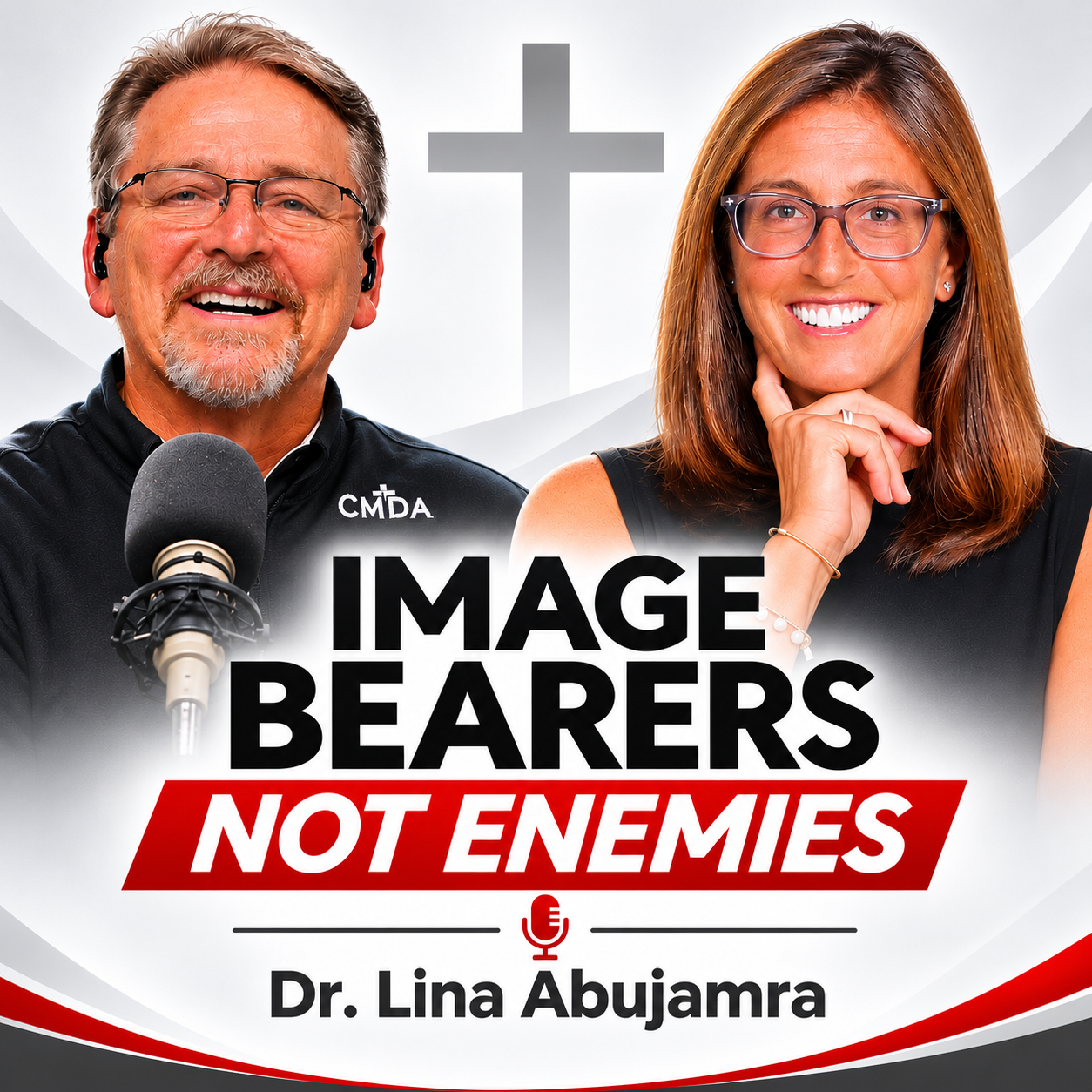
[00:00:00] Speaker A: This episode of Faith in Healthcare has been approved for AMA PRA Category 1 credit for all CMDA members. Stay tuned until the end of the podcast to find out how to get your CE certificate for this material.
[00:00:20] Speaker B: You're listening to faith in healthcare, the cmda matters podcast. Here's your host, doug. Dr. Mike chupp.
[00:00:31] Speaker C: Welcome, friends, to Faith in healthcare. I'm Dr. Mike Chupp and I'm so glad you're with us today as we celebrate Thanksgiving. I'm grateful for the colleagues as well as the mentors who help us connect our faith with the work of caring for others.
Advances in medicine continue to expand what we can offer to our patients. And alongside those advances, healthcare professionals face an ongoing responsibility to care for the person experiencing illness, including their suffering and spiritual concerns.
In this episode, I'm joined by oncologist and former CMDA president Dr. Al Weir, whom I affectionately call sometimes the Godfather of cmda. We're going to explore together how Christian faith informs that responsibility in our clinical practices.
Drawing on decades of patient care, Al reflects on developments in cancer treatment, the importance of the clinician patient relationship, and caring for people facing life limiting illness.
We're also going to discuss how mentorship and a community of Christian colleagues can help healthcare professionals develop and sustain a practice that is shaped by by faith and compassion. Here's our conversation.
Well, Dr. Al Weir, you offer a remarkable opportunity to tell two interconnected stories.
The extraordinary advances in cancer care during your career, as well as the enduring impact of CMDA on a physician who has faithfully connected his faith and healthcare for many decades now. Today, we're structuring the interview in two roughly equal segments with a final question that's going to naturally reinforce CMDA's mission and invites you as listeners to invest in our future. The emphasis is on your personal stories, spiritual convictions, and the lives that have been transformed through CMDA through a long career.
So, Al, you've practiced oncology through some of the most extraordinary decades of progress in modern medicine as we know it. And when you look back to the beginning of your career, what advances in cancer care have surprised or even encouraged you the most? And what gives you the greatest hope right now in late 2026?
[00:03:12] Speaker D: Wow. I mean, the science of cancer is one of the most beautiful reasons to be an oncologist. Now, it has changed dramatically because I've been doing this for a very long time and still am very active in it.
When I started cancer care, there were really three ways to treat patients. One was surgery, one was radiation therapy, and the other was Cytotoxic chemotherapy.
Over the many years, things have developed, Particularly the change in the understanding of our DNA and the genome.
The genome project, led by Francis collins, who himself knew that we were created by God, has transformed the way that we do cancer care.
What's come out of that is two major approaches to therapy that we never had before. One is called targeted therapy.
We know that cancer cells primarily become cancer cells by changing from normal tissue into cells that, where we cannot control their growth, and that's caused by mutations in specific genes.
Now, with the discovery of the genome and mapping of those genes that cause cancer, Great scientists have learned to target those genes and turn them off when they produce cancer. And so many, many of our cancers now are cancers that we can control by targeting the genes that turn on the cancer.
The other great finding and change in our cancer therapy Is the understanding of our immune system.
Our immune system. God has created us in such a way that it's a beautiful balance where the immune system understands that it should not attack our own body, but should attack foreign things that could harm us. And this balance is just incredibly beautiful and rarely is messed up by autoimmune diseases. Well, what happens with cancer is cancers learn how to manipulate the immune system to pretend that they are normal cells.
People have discovered, great scientists have discovered, though, that if we can block the cancer's ability to mask themselves, Then the immune system can become much more active and destroy cancer cells. So these two approaches to therapy, Immune therapy and targeted therapy, have produced major changes in the way that we care for cancer. It goes way beyond that now. We're starting to mix immune therapy with targeted therapy, what we call bispecifics, where we actually have an immune molecule that goes to a specific targeted antigen and carries with a specific drug or specific radiation protocol, so that our treatments are very focused on, on the cancer itself and causing less harm to the body. So these things continue to develop. And with artificial intelligence, the rate of change is going to be phenomenal as we are able to target better and provide immune therapy to areas that we never could before.
[00:06:20] Speaker C: Well, my second question maybe would be to unpack some of those things you've talked about. Immunotherapy and precision medicine, AI targeted therapies. So tell our listeners what you're experiencing right now there in memphis in oncology. Which innovations do you believe Are genuinely transforming patient outcomes, and what developments on the horizon, maybe, for even specific cancers have got you the most excited as you're maybe coming up toward the finish line in your oncology Career.
[00:06:49] Speaker D: Well, let me tell you CMDA story.
There's this wonderful scientist who I will not name, who is a faithful CMDA member who at another institution has developed a drug that everyone has heard about, this new pancreatic cancer drug, one that targets a mutation in pancreatic cancer that never has before been targeted such that people like Senator Ben Sasse, who had very advanced pancreatic cancer, has had dramatic control of his cancer over the past year.
That in itself has been phenomenal. There's new drugs for small cell lung cancer where we know an antigen in the cancer that's not present in other cells and it's connected to immune modulators such that we have targeted immune therapy to small cell lung cancer with control rates that we have never seen before. And so the mixing of all of these, as well as the ability to fine tune these drugs such that the side effects of the drugs, which can be very significant, are being diminished day by day.
It's a beautiful future for patients who have cancer, even though the cancer itself is horrible.
[00:08:11] Speaker C: So would you say maybe, Al, that you're just a little bit jealous of some of your junior colleagues who are joining your practice now who are going to see that, I mean, go even further and more amazing results from cancer care for your patients?
[00:08:25] Speaker D: Well, the problem with my junior partners is that in 10 years they won't need doctors to treat cancer. So I'm not worrying.
[00:08:33] Speaker C: Well, as cancer care does become more sophisticated, and you've kind of now just made a comment that helps me set up this next question. All these molecular diagnostics and artificial intelligence and highly personalized treatment, and I'm using air quotes there because using these biologically customized treatments, Al. Doesn't necessarily equal personalized care.
So how do we, our CMDA constituents and those who are advancing God's kingdom at large, how do we ensure that the human relationship between physician and patient doesn't get lost in all this fancy modern science?
[00:09:14] Speaker D: Well, you're, you're absolutely right. The personalization of care is really being threatened.
There is clearly, as we train the, the young fellows in oncology and medicine in general, there's a loss of the need, the felt need for physical examination. And so the touch that Jesus used so much to relate to his patients is, is diminishing. There's. There's a loss of a need for ongoing conversations that can develop relationships.
Because technology has provided so much in the way of guidelines, and the history itself is not as critical in making diagnosis.
Medicine is becoming a business model profession in which doctors are required to look more towards productivity.
And therefore there's less time with the patients. And there's a change overall from our medicine as a mission to medicine as a job. And with that, the patient comes in and has to fit the job description of the, of the physician. The physicians tend to take on that understanding this is a job, and patients are within my defined job and not outside of my defined job. And so. And then there's the opposite of that, the corollary. Patients are becoming so educated through artificial intelligence that they, they look at their doctor as a technician to provide the tasks that they've already decided how needs to be achieved. And so all of these are great threats for personalization.
I think the solution is that we need a way, in many ways, to continue to remind our physicians, dentists, other healthcare professionals.
We need to remind them why we are here.
If we forget that, it's all gone. We are chosen by God for a mission. This is not a job that we do, even though it's a great job.
We're chosen by God for a mission. We are God's message in this world. For love, eternal life.
We've got to keep understanding that this is all about mission and not me. If we can continue to do that, then I think that with resources that CMDA can provide and other organization can provide, we can learn how to keep the personalization of the relationship in medicine. But it first comes from understanding that this is far more than a job. It's a mission given to us by God that he created for us, actually, before we were born.
[00:11:56] Speaker C: Wow.
I was at a conference this weekend, Al, and had a chance to hear from one of my mentees years ago in ophthalmology. And he had a chance to tell the crowd some great stories and show them some great videos. And I've always said there are a couple of specialties that I'm sort of a little bit jealous for. I'm so glad that God called me into general surgery, but I have to say that the eye surgeons and the heart surgeons, you know, cause the blind to see and those with broken hearts to get fixed. I'm just a little jealous of the spiritual connectedness there. But few specialties confront the realities of suffering, death and eternity as directly as your specialty of oncology. And given who you are and who I know who you are, Alan, so glad that God called you into that specialty.
So any one of our listeners or viewers who've read one of your whispers devotionals, I've got one here from last week that you did at sea and Talking about one of your future junior colleagues who interviewed there in Memphis.
They know that you have your faith shape the way that you care for patients who are facing a life threatening diagnosis, particularly when medical treatment can no longer offer a cure.
So tell us how this came to be. How has faith over time shaped Dr. Al Weir and the way that you see and interact with patients even later today?
[00:13:19] Speaker D: So, I mean, you're absolutely right that when patients come to us, the understanding of mortality hits them right in the face.
And so I think the first thing that we as physicians or caregivers or friends or actual people who are suffering from diseases that will shorten our life is that we just, we need to understand the truth of life and death.
We need to understand that death is real, but we need to also understand that life is immortal. We need to be authentic in that, and we need to have that deep understanding in our body that what the scripture says about death and life everlasting is true. Death is real, death is suffering.
Patients may struggle deeply in their last years of life, physically, emotionally, they do as well because it's a time of loss, it's a time of grief.
It is difficult for those who are losing people they love.
It's frightening and painful. And we need not to get too giddy about heaven and forget the fact that these people are really suffering. So that's. The truth of dying needs to be known. But we also need to understand the truth of immortality. I mean, C.S. lewis said, I've never met a mortal man. You know, there is life after death. I had this wonderful partner who used to be in private, when I was in private practice, who shared the story with one of my colleagues who told it to me recently. And he shared it with a patient. The patient came to him and said, well, the patient was a Christian. And the patient said, well, what's it going to be like when I die?
And my colleagues share with him, well, one moment you're going to be here with us, the next moment you're going to blink and wake up, and those you love are going to be with you and there will be Jesus. And that's the truth of Amen. Life after death, those are both true. The suffering of death and the truth of immortality.
And part of my job is to help the patients see both truths, help them through the difficulty of one, and point them to the joy of the other.
How do we do that? We do that with love.
You can't do it without love. And that means active love, touching love, relational love, authenticity, you know, intentionality we learned that through experience, obviously. We learned that through beautiful lessons that came from saline solution that I think is now saline process, where we learn how to tell, raise faith flags, tell faith stories. And that's probably where most of my witness to patients who are near the end of life comes from.
Always guided by the Holy Spirit. Always guided by and realizing that if we are intentional, authentic, praying and loving our patients, that whatever little bit we do along the way, God will use. Let me just share one beautiful story I read accidentally this weekend. I'm reading a biography of John Lennox, who's a premier mathematician from Oxford, who's also a evangelist. And he tells a story about a doctor, Jewish family, who's a Jewish doctor in South Africa.
And during his work days, he noticed one particular nurse who was always happy and filled with joy. And he asked her once, he asked her, why are you so joyful all the time? She said one word to him, Jesus. That was it. That was it that stuck in him and changed him. And he began to get it. He got his own Bible, he got his own New Testament, began to explore the Bible.
He came to know Christ, ostracized by his family, moved to Israel and set up a Christian practice there. The point is that it was the Holy Spirit. It was one word in the Holy Spirit. So if we're authentic, if we're intentional, if we love, if we understand the truth of suffering, the truth of immortality, and ask the Holy Spirit to be with us, and God will use us in the ways that we need to be used in those situations.
[00:17:30] Speaker C: Well, my next question, Al, it's not a matter of whether or not you have a story. It's a matter of which one you want to pick.
But can you share a recent memorable experience with a patient or a family when your Christian faith profoundly influenced how you approach their care and likely in ways that went beyond anything that you learned or saw demonstrated anywhere at any point in time in your medical training.
[00:17:57] Speaker D: Let me do too brief. One patient, one doctor. Okay.
There was this patient who came to me with advanced hepatocellular carcinoma, liver cancer.
And in the spiritual history, I asked him about how he stood with God and how his faith was. He said, well, I used to be faithful. I used to love God, I used to go to church, but I've lost all of that. And, and I don't remember the exact words I said. But basically I encouraged him, came back to find the Lord again and that he. That this was a good time in his life to really connect again and find the Lord. And then probably a month later, he was a truck driver. And I got a phone call and he was on the road and all he said was, I found him.
I found him just beautiful again, the work of the Holy Spirit. And then the other thing that really strikes me is in time, I had with a doctor who turned out to be a patient.
This doctor had had a broken life due to drug abuse and had lost much of the respect and the financial benefits of being a physician because of his drug abuse. He'd overcome that, but still was pretty much broken. And he developed esophageal cancer.
And the beautiful thing about this doctor is when he came to that point and I was his doctor and I didn't help him much, I was able to spend time with him that went way beyond the medical practice. There were times I would go and sit with him in his garage in the afternoon, and he would sit and listen to his favorite song, Seven Spanish angels. I don't know if you know that they've come to bring the sinner home. A beautiful song, Willie Nelson.
And there were times with it that I would go to the park and he kneel before the cross in the park. And he just wanted to be with Jesus. Just wanted to be with Jesus.
The night of his death, they called me. I couldn't get there right away, but he hung on till I could get there and hold his hand and pray with him when he died.
Just the ability to be with someone who was so deeply seeking Jesus after a broken life infected me with that same desire to be with Jesus. And it was beautiful for me. Wow.
[00:20:19] Speaker C: Thank you for sharing those stories. Hallelujah. For our listeners who aren't aware, Dr. Weir and his wife Becky got an early start of their careers by serving in Africa as missionaries.
And then it was clear to you, Al, that that's not where God had you long term. And I just got to say, you came up through the ranks long ahead of me as a Christ follower in healthcare. And in your era, it was as if, you know, if you really want to serve Jesus, well, you gotta be a medical missionary and Africa would be the top destination.
And yet I got to say that I'm so glad that you discerned God wanted you here in the US because the impact that you've had on so many lives, and you're a humble guy, you're not going to want to take any credit for that at all. And I appreciate so much about you, Al, but you've been involved with CMDA now in measure because you made that call you and Becky, that he wanted you here in the States and in Memphis. And now the area ministry in Memphis, of course is massive. I'm going to be there later this week sharing with all of you and I can't wait. But much of your professional life is involved in and around CMDA or cmds and you served as VP of Campus Ministries and twice as National President, including when I was selected to take Dave Stevens place and succeed him. So take us back to the beginning. How did you first become involved with cmda and what did this community of Christian healthcare professionals provide that in the beginning you weren't finding elsewhere? I know your dad was your hero, a Christ follower, so maybe without CMDA you would have known what to do. But take us back to the beginning.
[00:21:58] Speaker D: Well, like you said, for some reason, you know, I sort of loved Jesus all my life and wanted to be on mission for him. And just the tremendous blessing in my life when God called Becky and me to, to international lifelong missions in Africa. We thought, beautiful time, loved it. I'd go back there any day if God called me. But after two years in Nigeria, due to health reasons, we had to come home. And I was like a, I was like a man who lost my mission because I didn't, you know, I had been there, I was on full mission for God and it was fantastic. And now I was home and I was just a doctor, you know, and six years I tried to get back to Africa and then one day after a long run, I was totally exhausted, God came to me and said, hey Al, I've got a mission for you if you want it.
I said, wow, great. What is it? He says, I want you to learn how to be a Christian doctor and I want you to be one.
And I just said, wow, what an adventure. When you think about what that means.
I really, you know, my father is an example. But, but what does it mean to really live Christ through your family, through your practice, through mission, through giving, through the poor?
Where does Christ fit into all that? And so at the same time, Mike McLaughlin said, hey, why don't you start leading your student group in Memphis? And started that. And then on and on and on and you know, years with cmd. But CMDA just was the road that God lead me down to fulfill that mission that he gave me, learn how to be a Christian doctor and be one. And I'm still on it and a long way to go.
But as I think about cmda, there are a number of ways CMDA was involved. Number one, it provided the Pathway, the pathway for missional living.
You know, how do you do that? Well, you know, it was Bill Johnson, past president CMDA who touched me on the shoulder at a CMD national convention to say I hear you want to get involved in volunteer missions. I need somebody in Albania and for 33 years I've been going with CMDA buddies to Albania on an educational evangelism work for the Lord has been beautiful. James Smith who probably in his 80s now, still doing international.
[00:24:25] Speaker C: He's actually 9, he's 90 al. I think
[00:24:29] Speaker D: he may still be doing that but he took me to Kenya for a medical CMDA meeting. I remember us applied for USAID mission and obtained it for in Azerbaijan because there was a CMDA group that I was able to go and spend time with in that crazy country of Azerbaijan and Rick Donlin and CMDA taught me how important it was to be involved in inner city ministry and I'm still able to do that and, and centers for the poor here. But so, so the pathway, I think first thing is pathway, the CNA prime pathway for missional service. But then the resources.
I mean how do you, how do you be who God wants you to be on those pathways? And, and so the, the national conferences, the, the literature, the commission services. I've been on the, and most of all the people I've met the ability to be around people who are fully devoted followers of Christ within the healthcare profession and to watch what they're doing.
Walt Larimore his WID stickers on his charts. What is God doing when I walk in the room?
Bill Peel and helping us get started with saving solution in Memphis.
Local leaders who pour themselves into, into Bible studies with these medical students and who go on regular missions. Just you know, people like you and Gene and Dave, the great leaders who are really people, you know and who, who have lives where you yourselves are discovering what it means to be fully devoted followers of Christ and then you, you show me how to do so. The relationships, the resources and the pathways for CMD have just been what has helped me accomplish God's task mission which is to learn how to be a doctor, Christian doctor, and to be one.
[00:26:36] Speaker B: Before we continue with this week's episode, here's a special announcement for you.
[00:26:45] Speaker E: Looking for a healthcare career where your faith and your calling come together or searching for healthcare professionals who share your Christian values and mission to join your practice. Introducing the CMDA Connection Center a new way to connect Christian healthcare professionals with faith centered practices, hospitals and mission organizations. Whether you're a physician, dentist, nurse, physician assistant, resident or student. You'll find opportunities across the across the country in more than 50 healthcare specialties, including domestic and international missions. And here's the best part for job seekers, it's completely free and you don't have to be a CMDA member to use it. For employers, the Connection center puts your opportunity in front of an engaged audience of Christian healthcare professionals looking for more than just a job. They're looking for a place to live out their calling. Find your next opportunity or post your opening with an ad
[email protected] connect the CMDA connection center connecting your faith, your career and your calling.
[00:27:49] Speaker B: Let's jump right back into this week's episode.
[00:27:55] Speaker C: Well, you've influenced thousands over those years that you've just described and told us some stories about yourself.
But after decades of mentoring students and younger physicians and leading CMDA nationally, when you do reflect over those years, can you think of some stories and younger healthcare professionals that best illustrate the difference that CMDA has made in the lives of so many of those that you have mentored and walked alongside and prayed for, whether that's in hematology, oncology or others. Because I mean, I don't know how many thousands and thousands of Christian students have passed through in Memphis or when you were here in the national office as part of ccm. Any of those stories that bubble to the top to tell our listeners?
[00:28:39] Speaker D: Sure, yeah. Just briefly, a few. There's a New England surgeon whom you knew, whom you know, who was in his practice for a long time in surgery and got totally burned out. The work, the productivity, the money. And then he went on a GHO trip and it totally transformed his life going on Christian missionship and he changed his practice altogether and developed a Christian practice and lost his burnout and began loving who he was and what he was doing for others.
[00:29:12] Speaker C: I could see his face right now as you're telling his story.
[00:29:16] Speaker D: Then this last week when I was in Houston, this incredibly brilliant Christian oncologist at MD Anderson who's developed one of the most important drugs recently for pancreatic cancer, who every Saturday morning has a Zoom conference for CMDA leadership where they pray every Saturday morning.
There is a Mayo Clinic doctor who I room with the first time I went in in a Muslim home, the first time I went to Albania, who stayed with the Lord forever, eventually became missionary to Ethiopia, recently written a book about his life and how to be a Christian doctor.
There is 10 or more full time missionary couples, international missions that come out of the Memphis group over the years.
There's a Duke doctor couple whom you know, who have never had children of their own, but have adopted the Duke and UNC CMDA students as their own. And they have this lake house where they bring them for for wonderful conferences on a regular basis.
But all these faces and lives of people who have changed other lives, a ripple effect is huge. And of course, the effect on me has been tremendous to try to become more like them, at least in the part where they're more like Jesus.
[00:30:50] Speaker C: You've written two devotionals, and for our listeners or viewers, I just strongly would recommend that you buy One of the two whispers devotionals that Dr. Al Weir has written and he shares those. You have shared those with us every week for years now. And every once in a while I'm just so inspired I have to write back and say, al, today you hit the mark in my own heart. So thank you for contributing those.
What inspired you to begin writing these devotionals and what have you learned along the way about spiritual struggles and needs of Christian healthcare professionals?
[00:31:21] Speaker D: Wow. Well, you know, I began writing the, you know, I grew up on Oswald Chambers and I just loved Oswald Chambers. Scripture than discussion.
And when I was vice president at cmda, there was a need for a devotional. And so I started writing those. And what was beautiful for me personally was I began to look around me for places where God was active in the lives of healthcare professionals, occasionally personal family issues, but almost always patients or healthcare professionals.
And probably because I was intentionally looking, I could see God every week do something beautiful.
And so that would strike me and say, wow, God. And then I would take that story back and I would begin to play scripture to it and then understand what is God telling me about how I need to live differently. And that would just develop in a devotion that I would write and rewrite. And they would develop as I came out. And what what I would see is I would see spiritual destroy struggles and needs of doctors.
Doctors. And I'm not just talking about doctors, but, you know, healthcare professionals, family members, of course dentists, other people I meet. But the need for direction.
Doctors and healthcare professionals and family members who need directions. They're stuck in a place and don't know where to go. And yet God somehow does something intervening in their lives. And it's beautiful. And then it's a God tells them where to go.
So much hurting that patients or doctors who are caught in situations with children who fail, that is so common.
The pain of children who fail, of children who are lost, failed dreams, burnout issues where God steps in And I just, I get to see that. And then I. Then it connects with scripture that I've. That I've known and see that God is alive and at work at that.
People caught up in sin and God brings somebody in their lives and they're turned around and their lives given for God or even the opposite, that doctors who are caught up in success and everything's going well and they've lost their fervor for the Lord and. And yet then something steps. Somehow God, the Holy Spirit, a person steps in their lives and they realize what they're really made for and who they're here for. So these stories come up and God shows me what they are and they're beautiful and changes my life. And it's all based on his scripture and his word that's alive and living. It's been great for me.
[00:34:07] Speaker C: Oh, you've blessed me over and over. And I'm pretty sure that God's not going to take you in a chariot of fire someday, but I do. It makes me think that, that I'd like to be nearby and get a little bit of your spirit, that discernment that you have picked up, as you say. And it's great to hear that you asked God to help show you, give you spiritual insight along the way as you interacted with patients and colleagues. Because it's just, it's blessed me. I know it's blessed many thousands.
You know, Al, as someone who's witnessed this influence that CMDA has had across generations, why do you think an organization that now more than ever we've laser focused, I would say the highlight of 2026 for me, been sitting in a group of folks working on a brand promise. And I'll have to be honest with you, when Dr. Hodge and the board gave us this assignment, I thought, oh, where is this going to go? You know, trying to come up with a motto or a saying, a battle cry. And I'll have to tell you that what we ended up with, five words, has just been so clarifying. It has crystallized my own sharing with audiences. Al. And that is your faith and healthcare connected, exclamation point, end of story. That's what CMDA is about. Your faith in healthcare connected. Because lots of people have faith, lots of people in healthcare. But intimately integrating those two is the challenge. And our culture has changed. You've witnessed it, Al. It's changed. And more than ever before. Cut flower healthcare, Cut faith Healthcare cuts out the faith and leaves us just with professionals as technicians, especially for those who are surgeons. So why do you think?
Why is CMDA more important now to Al Weir than ever before?
[00:35:49] Speaker D: Well, I mean, what you said in those five words is exactly what God told me 40 years ago. Learn how to be a Christian doctor and be one and wow.
The problem with staying the way things are is that the world changes around us and if we're stuck with the way we have been, will no longer fit in and communicate with the world. Our relational life is deteriorating outside medicine, inside of medicine, same with dentistry.
The primary importance of the individual family is being threatened and destroyed. That's the same with doctors families as anyone else. There was so many good things happening in medicine and science. The need for God is diminishing in the perception of people. People takes me back to Bonhoeffer's understanding, his letters and papers from his prison where he talked about the God of the gaps that people tend to put God in the gap between what they really want and what they can achieve. And the gap gets smaller and smaller as we're able to achieve more and more. And because of that, the perceived need for God gets smaller and smaller among people. There's a unified attempt really in the world to destroy Christianity now that is growing and becoming even violent. There's loss of meaning at work as healthcare professionals are becoming looked at as technicians, their workplace is becoming a job.
Loss of satisfaction as patients look at them differently. They have loss of rights, of conscience.
And so we need cmda. We need CMDA to encourage us back to professionalism instead of technician.
We need CMDA to encourage us back to the purpose that we're here for. And the two words I use for that purpose is active love. I get that from Dostoevsky's brother Karamazov. But the whole idea of active love, that we are here to actively decrease suffering, improve value of life and bring the eternal moment into every person's life in the. In the name of Jesus Christ. And that's our purpose. And all these other purposes we take on are superficial and unimportant and we need somebody to remind us of that. We need somebody to give us the resources to know how to do that. Because as the rate of change comes and faster and faster and the world changes, then we need methodology that fits into the way we practice. We need a language that fits into the language of the people as they have changed. And we need examples and mentors of doctors and other healthcare professionals who have done it effectively in a given situation so we can watch how they do it and mimic that as well. So what CMDA has had to offer, needs to continue to offer that to us because the world's changing too fast for old methods and old ways.
[00:38:55] Speaker C: And yet the old way of Christ centered compassionate care, it's never going to change. I mean, that's the beauty of all that changes. It doesn't change. And I love the theme that you've given us today, which is focusing on Christlike compassion. It is at the heart that old chorus. They'll know we're Christians by our love. And I also love that answer that you shared with us. Just one word.
So powerful, Jesus. So powerful.
Well, you think about the students and residents and young healthcare professionals who are going to carry the mantle of Christ centered medicine, dentistry, all the other specialties long after we're gone.
What do you hope that they'll experience through the CMDA of today? Whether that's local ministry, where you are in Memphis, or regional or national.
And what would you say to those who have the opportunity to invest financially in making that vision a reality? More and more membership, we encourage membership, but membership seems to be a fading thing of the past. And more and more it's movement and cause that draw people to us.
[00:40:04] Speaker D: When I think about the importance of the future, in particular future generations, I look back now I get to look back on many years and I look back on, like you described, many faces that I see of students who've given their lives totally. I mean doctor after doctor in Memphis who in the, in the normal private practice are pouring themselves out as authentic Christians who witness and care for people. I look at those faces that have come up through the student ranks and now are practicing.
I look at doctors who have given their lives totally to full time international worker, inner city work. I look at the joy of doctors who have had burned out lives, who now have found the truth in Jesus. I look at those and I say, and then I say we need to project those faces into the future.
We need to see that those faces we are now seeing that somewhere 30 years from now people are able to look back and see the same faces in their own lives.
Those who model Christ, those who are motivated more of Christ and less of me. Those are who, who have pathways for service, those who have resources to equip them in a changing world.
And all that needs to be developed and all that frankly costs money and we need to get, you know, I use this model because people are so different and I think some people are strange even when they love the Lord. And I go back on this understanding that each of us is a individual key on God's piano and that we have a note that God wants to play, whatever that is. And we need to play our note, respect each other's key, but play our note. But it's the same for individual, is the same for professionals, right?
Our profession is a note on God's piano. There are ways that we can make music, God's music that no one else can.
You just can't bring a professional golfer into a marine mission.
And even if they all love the Lord and expect the mission to be enhanced by that professional golfer, there are things that we as Christian Medical and Dental association can do for doctors who are in the battlefront for Christ that people outside of us can't understand.
And we need to just like we need to play our individual note in God's concerto, we need to play a professional note. And what we are playing, the, the note we're playing, we need to give to like you say, where God has placed us is where we should strongly consider the place that we need to not only give ourselves, but give our money. Because that's the note he's given us to play.
[00:42:52] Speaker C: I love that, I love that word picture of a single note on the piano. It's not like we're half the keyboard. We're just a tiny little note. But wow, it's an important note. And what you've just shared, Al, as we close this interview has just really been on my mind even this morning as I was with the Lord that in thinking about this conversation that we have a unique ability to motivate each other within the body of Christ, within healthcare, we have the ability to provide a methodology. And that's the saline process, if you will, that you described a methodology. Because I mean in medicine, in dentistry, any of we just don't go into a patient's room without all kinds of training that we've done over an extended period of time on how to, how to interact and care for their cancer. And why would we think that we could do faith care at the bedside without some sort of training? So methodology and finally, finally, what you've just so you listeners have heard for the last 45 minutes are models modeling that has happened over careers on this is how it can be done in my own life. Dr. Bob Schindler, another past president of CMDA CMDS who modeled for me what it was like to be a Christian surgeon. And each and every day, every hour, every clinic. And so those three M's motivating in a unique way. Not replacing the church, not replacing pastors, no way. It's the Bride of Christ. We're here alongside for the journey with the church. So thank you for inspiring my heart and I know the hearts and minds of our listeners today. Dr. Al Weir and just so our listeners know, I've asked Dr. Weir and he asked me the other day whether maybe I had forgotten about the assignment to help us with. We're only five years away from being a century, Dr. Weir, and I'm so grateful that you said you'd lead a team of editors to talk about the first 100 years of the Christian Medical Dental Association. Thanks for taking that assignment.
[00:44:47] Speaker D: Amen.
[00:44:48] Speaker C: As we close this, would you just give a brief prayer for those listening today and for those who get this podcast shared with them?
[00:44:58] Speaker D: Great God, this is not about us.
This is not about CMDA even.
This is about you. It's about your love for us and love for those we serve.
It's about your Holy Spirit coming to our lives and giving each of us a task to do in this world.
For those of us who are in Christian health care, we just have this beautiful advantage to be able to touch people where they suffer and to love them actively and in the midst of that develop relationships that can bring them to Christ.
I thank you so much for the organization of Christian medical and dental associations. It provides the motivation, the resources and the motivation models that allow me to do this better.
God bless us as we go through this day. God bless CMDA as it continues its work. In Jesus name we pray. Amen.
[00:46:02] Speaker C: Amen.
Thank you Dr. Al Weir for joining us today and being faithful and demonstrating over and over how to link our faith and our health care every day to the glory of God.
As you've heard from Dr. Al Weir today, CMDA is so much more than a professional association.
For nearly a century we've been a community where Christian has healthcare professionals discover their calling, strengthen their faith, encourage one another and bring the hope and healing of Jesus Christ to their patients.
Al's remarkable legacy and ministry remind us that when faith and healthcare are connected intimately, lives are changed not just for physical health today, but for generations.
As we approach December 31, CMDA is seeking to raise $1.1 million to sustain and expand this vital ministry.
I want to invite you friends to prayerfully consider a special year end gift to help us equip the next generation of Christian healthcare professionals.
Dr. Weir described each of us as a single key on God's piano with a note only we can play.
If health care is where God has placed you, I hope that you'll consider playing your note by investing what he is doing through cmda.
Please subscribe to Faith and Healthcare wherever you listen, share this episode and follow us on socials to stay connected with our community and to hear what's coming next.
And speaking of next next week, Colson Center COO Mr. Pete Mara and his wife Heather, who's a physical therapist specializing in pelvic health. They join me to discuss how Christians can preserve personal connection and patient dignity as technology transforms healthcare.
I want to thank you for listening to Faith and Healthcare Today where our promise to you as a listener or better yet, a subscriber to this podcast each week, whether you're a healthcare professional or a patient who loves Jesus Christ, is this.
We will do everything that we can to keep your faith and health care connected. We'll see you next time, Lord willing.
[00:48:47] Speaker B: Thanks for listening to Faith in Health Healthcare, the CMDA Matters Podcast. If you would like to suggest a future guest or share a comment with us, please email cmdamatterscmda.org and if you like the podcast, be sure to give us a five star rating and share it on your favorite social media platform.
This podcast has been a production of Christian Medical and Dental Associations.
The opinions expressed expressed by guests on this podcast are not necessarily endorsed by Christian Medical and Dental Associations.
CMDA is a nonpartisan organization that does not endorse political parties or candidates for public office.
The views expressed on this podcast reflect judgments regarding principles and values held by CMDA and its members and are not intended to imply endorsement of any political parties or candidate.
[00:49:49] Speaker A: This episode of Faith in Healthcare was approved for 75 hours of CE credit to members of CMDA. To obtain your certificate, log in with your CMDA membership credentials to the CMDA learning
[email protected] learn and look for Faith and Healthcare under Featured Courses.