[00:00:08] Speaker A: You're listening to faith in healthcare, the cmda matters podcast. Here's your host, Dr. Mike chupp.
[00:00:20] Speaker B: Welcome, friends, to Faith in healthcare. I'm Dr. Mike Chupp, and I'm so glad you're with us today.
You know, for those of us in healthcare, one question can become deeply personal.
How do you keep loving a world that you cannot fix?
We face it every time that we care for someone who's suffering. We just can't take away.
Well, My guest today, Dr. Matt Woodley, was 15 years old when he first sensed God leading him toward medical missions.
It took years of training to actually get there.
But in 2017, Matt and his wife Tammy and their kids moved to Papua New guinea, where he worked at Kujip Nazarene Hospital.
He fell in love with the people there in P and G. He also saw more loss than he was ready for. And over time, those losses took a toll that he couldn't ignore.
His story is at the heart of that Beautiful Question, a new book by his father and namesake, Pastor Matt Woodley. That book tells us of both of their stories.
Today, Matt shares how Lament helped him lean on God in the hardest moments and what it was like to find out who he was apart from the work that he'd wanted to do since he was a teenager. So here's our con.
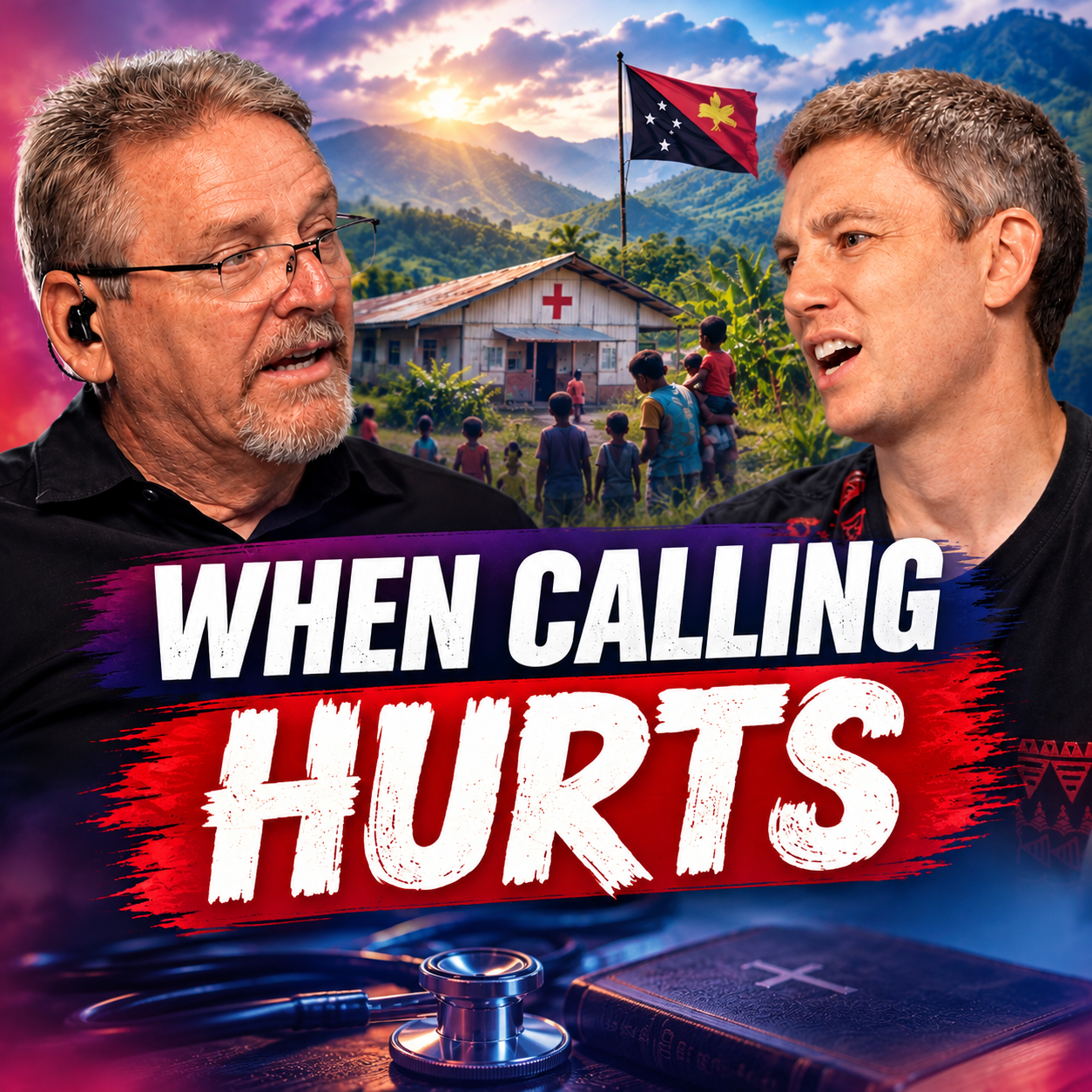
Well, today on Faith in Healthcare, I want to ask you a question. What happens when a young Christian physician who wants to change the world actually goes to one of those places where the need is greatest and discovers that while the world is beautiful, it's also a whole lot more broken than he imagined? And what happens when that healer discovers that loving, hurting people?
Well, it comes with wounds of its own.
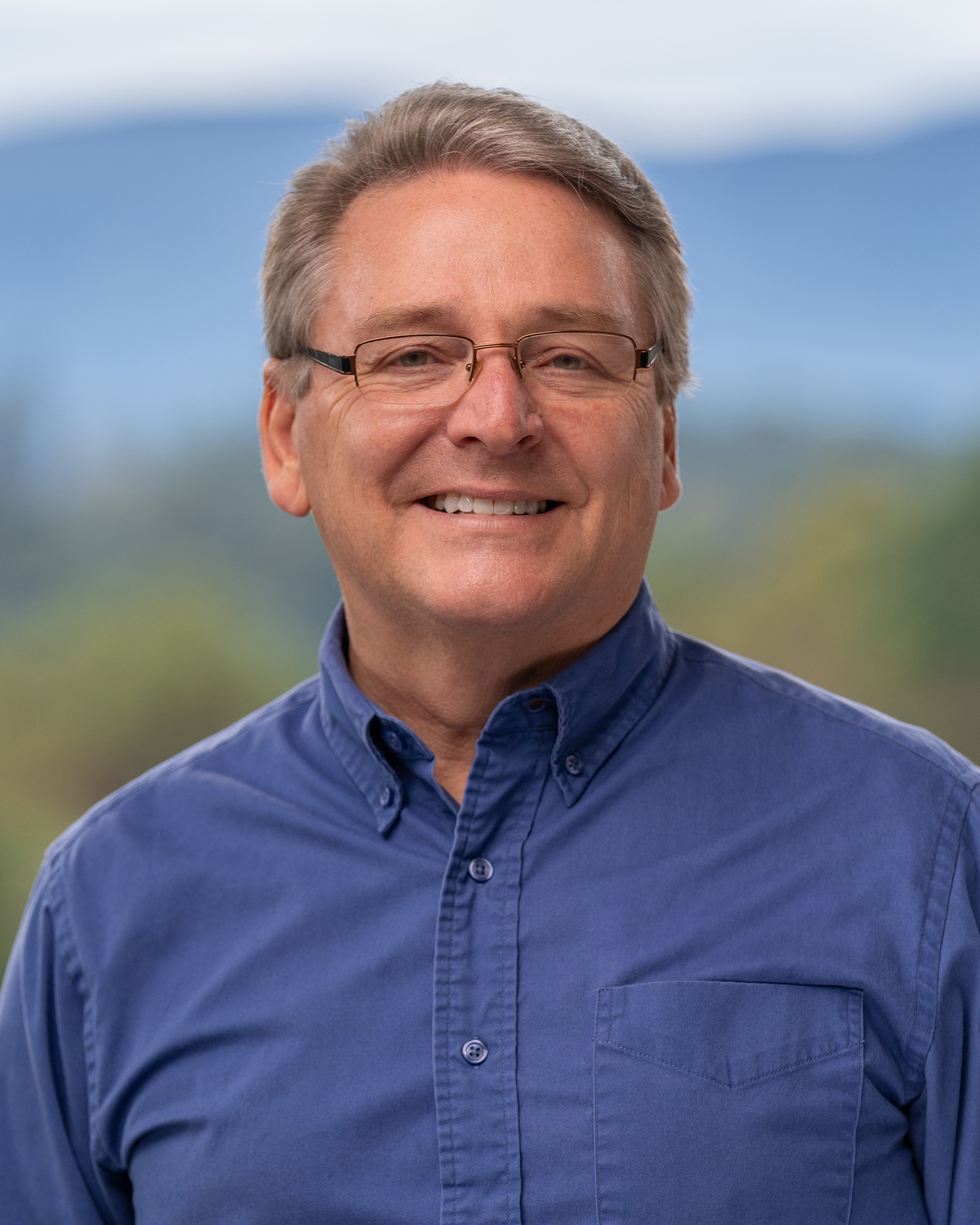
And that's the story at the heart of a new book entitled that Beautiful Question. It's written by Pastor Matthew Woodley about a journey that he shared with my guest today, his son, Dr. Matt Woodley. So, Matt, welcome today to Faith and Healthcare, a special episode where I get to have you in the studio.
[00:02:41] Speaker C: Yeah. It's so great to be here with you today, Mike.
[00:02:43] Speaker B: And the reason you're able to be here with me in the studio is that you are working here in Eastern Tennessee.
[00:02:49] Speaker C: Yeah, that' I just live right around the corner, Kingsport, and actually work in Bristol.
[00:02:52] Speaker B: Wow. And how long have you been here in Eastern Tennessee now?
[00:02:55] Speaker C: Just about a year, a year and a half now.
[00:02:57] Speaker B: Okay. ER doc. Working in the Bristol Hospital.
But that's not why you're here. Just because I could invite you over to take a Short ride. Your dad wrote a book, Pastor Matt Woodley, and entitled it that Beautiful Question. I think a basic question for our listeners, viewers is why that title, that beautiful Question?
[00:03:20] Speaker C: Yeah. So the beautiful question is, can you know the world? Can you really know the world in all of its brokenness and violence and sin and still love it?
And yeah, you'll have to wait for the answer to that.
[00:03:37] Speaker B: Well, here's the book, that Beautiful Question that just came out earlier this year.
Fairly easy read. I read it on vacation this summer and I have to tell you, Matt, a lot of memories came flooding back. You shared earlier today that you came and visited me at Tenwick Hospital about a little over 10 years ago.
And it wasn't long after that that you prepared, you and Tammy and your kids prepared to move all the way to Papua New Guinea. Right where today is Independence Day, I guess.
[00:04:04] Speaker C: That's right. That's right. I have my P and G shirt on. It is the 51st Independence Day of Papua New guinea today.
[00:04:10] Speaker B: Wow. Well, take us back, Matt, to when you were 15. You heard actually an old friend of mine that I have roomed with at a missionary conference, Dr. Joe Harvey, you heard him say, God calls people to where they are needed the most.
And you said that that moment helped set the course of your life.
So what did that idea mean, Matt, in the heart and mind of a 15 year old? And how did that eventually lead you and Tammy and kids to move in 2017, I believe to P and G.
[00:04:43] Speaker C: Yeah, at that point in my life, I was really, really getting excited about God and trying to see where he might lead me, what my life was going to look like. And so our church supported Dr. Joe Harvey and he was just in a home meeting speaking to our church.
And he just inspired me. And there's just been a couple moments when I felt God such clear direction in my life. And from that moment on, I knew that I was supposed to be a medical missionary. I felt that call. And it took a long time to get to papua New Guinea. Four years of high school, four years college, four years medical school, four years residency. But yeah, in 2017, Tammy and I and our two kids, Alon and MJ moved over from Pennsylvania to Papua New Guinea.
[00:05:31] Speaker B: And when you got there with this idea, lots of training, preparation by Samaritan's Purse. You were with the post residency program.
[00:05:39] Speaker C: Yep.
[00:05:40] Speaker B: You know, you believe that the world's need is the love of Christ and your medical training altogether, you were ready to tackle it. And then how long did it take before the reality the difficulties that I've heard about for a very long time from Dr. McCoy and the senior Dr. Radcliffe, who was our missionary of the year just a few years ago at cmda before the reality and the idealism began to fade and you realize this is a really hard place to serve.
[00:06:08] Speaker C: Oh, yeah. I mean, honestly, I was really idealistic going over there, so excited. I mean, CMDA Samaritan's Purse provided wonderful training to get you ready for some of the hard things that you would see.
Yeah, before I talk about exactly all those hard things, I just wanted to talk about some of the good things about Papua New Guinea. You know, when you first research Papua New guinea, you look at the news, you might see a lot of, a lot of bad things about domestic violence and tribal violence and sorcery, accusation violence. And I almost compare it to kind of when you're flying into the highlands. When you're flying into the highlands, you might see from up above these huge mountains, roaring rivers.
It just looks huge and scary and rough. But then when you get down on the ground, you'll see these beautiful flowers and these just butterflies and these colorful, singing, dancing birds, the birds of paradise and these quirky marsupials native to png. And it's almost like that when you, when you go and serve in Papua New guinea, those harsh realities, they're still there and they're really hard. But in reality, when you start to work among the people, you just fall in love with them so quickly.
They're welcome, their resilience, they're just such a tough and friendly and joy filled people.
But at the same time, there is a lot of hard things. There are a lot of hard things there. And during my first month there, I took care of a little boy named Jordan. He was 10 years old. He was the son of one of our pharmacy technicians.
And when I first saw him, he was sick. Sick enough to at least need blood work. And, and his CBC was showing that he was in a pretty rough spot. All of his bloodlines were down, he was pansytopenic. And we ended up doing a bone marrow. Had to take a few weeks to get the results back. Since we send our results to America to a volunteer pathologist who looks at it for us and confirmed our worst fears is all acute lymphocytic leukemia.
That's a bad diagnosis anywhere in the world, but in pg it's honestly basically a death sentence. And so we wrangled together some chemo, some chop therapy, and we gave to him through a few cycles and he did really well for a few months.
And then it came back, the cancer, and it hit him hard. And Jordan was such a sweet boy. He lived on station and Tammy and I led children's church. Tammy's a teacher and so we would see Jordan and get to know him very well through children's church.
And during those last couple months, while he was in another hospital getting blood or antibiotics, every Sunday he was admitted, he would make his way up to children's church just a couple hundred yards up the road and worship with us there.
And watching him struggle through that, through all, knowing that in America his chance of survival would be well over 90%.
And in PNG it was basically almost zero, was a really hard, hard thing to deal with early on.
[00:09:25] Speaker B: And I would assume like we did over the years in Kenya, we would try really hard to figure out some way, especially if it's someone related to a staff at the hospital. You're just, why can't we get the chemo?
Let's try. And I'm sure, especially if you have visitors, short term visitors around there, like, why don't you do this? And the realities of why you can't, patient after patient do that, just begin to grind you down. I want to back up just a little bit. The first message that I, that a book was coming was from your dad, the senior pastor, Matt Woodley, that said, hey, my son and I are teaming together to write a book. And Mike, would you, as I often get asked, would you write an endorsement? And I said, sure, send me the manuscript and then read the book this summer. I'm just curious as to at what point in time in your career after 2017 did senior, your dad, Matt Woodley, come out and see what was going on in your lives, you and Tam and your family and the ministry there at Cooget. Yeah.
[00:10:22] Speaker C: So he came out about four times actually and visited us. You know, he wanted to see his grandkids. And so he came and hung out with us and saw the ministry at Kujip. Yeah, Pretty early on, probably every term. So every, every two year term he would come out at least once.
[00:10:37] Speaker B: There were a few times over 20 years. I thought maybe I should, you know, maybe I should write a book. But the thing is, I mean, your schedule has over and over again how busy your life was in your seven or eight years. There's in P and G. So busy. But at what point in time did your dad say, do you mind supporting me and helping me? I'd like to write a book? When did that come about? In One conversation.
[00:10:57] Speaker C: Yeah, it actually started pretty early. This book has been a long time coming. It actually started while we were doing pretty well. He was reading Atul Gawande book and just talking to me about, you know, he has such good stories.
And, you know, I've read Atul Gawande as well. Great storyteller. And I was like, dad, you know, he has great stories, but he's mainly a great storyteller. And, you know, I think the stories at Kujip that I experience, all my colleagues experience, are actually better than Atul's stories. Then he started thinking about, you know, that's true, the stories you tell me. So I'd start recording story after story and sending it to him. And yeah, he got inspired to write a book.
[00:11:41] Speaker B: And he's been a writer, at least an editor even for Christianity Today, I
[00:11:45] Speaker C: guess, in his past.
[00:11:46] Speaker B: So this was right up his alley.
[00:11:47] Speaker C: Yes.
[00:11:48] Speaker B: So it was a stage project, I guess, over your seven or eight years at P and G. And when did you realize this is really coming together? This is going to be a book such that even Wycliffe or publishers, or was it Wycliffe publishers?
[00:12:04] Speaker C: William Carey.
[00:12:05] Speaker B: William Carey publishers put it together. Which says something, that this is more than just your average Joe writing a missionary story.
[00:12:12] Speaker C: Yeah.
So it actually started to become more of a concrete thing, honestly, probably right before we were about to leave. And it kind of came to a standstill for a while because, you know, my dad just didn't know if he should finish it because the end of the story isn't necessarily what people want, what people expected.
And I honestly felt too, a little bit awkward about him finishing it, just feeling that the story was a bit incomplete. But over months and months and times of prayer, we both decided that, you know, he should finish it because it's real. It's real life.
So that's what we did.
[00:12:52] Speaker B: I mentioned that we share a fair number of things in common at Tenwick. Our motto on the front side of the hospital, even on the water tower that welcomes people as they arrive, are these four words, which I think are four words that I've heard someone say are like the most incredible vision statement on the planet for a Christian, especially those who do healthcare like we do, we treat and Jesus heals.
That was on the walls of the hospital. I guess also at Kujip it was.
[00:13:23] Speaker C: Yeah, yeah. I remember seeing it at Tenwic and then seeing it also when I arrived at Kujip and it was a pleasant surprise.
Honestly. It's just the reality of life at coug, you know, our resources are quite slim. Many times I was actually surprised by what we could pull together, especially our surgeons. The things they could do were just incredible. But at the same time, we had limitations. We had lots of limitations and we would do the best we could. They're still doing it. They're doing the best they can with the resources they have to provide quality, up to date medical care as much as they can.
However, at the end of the day, they know. I knew that it was really up to Jesus and to be honest, it's the same here in America.
[00:14:10] Speaker B: I was hoping you would go there.
[00:14:12] Speaker C: Yeah, I mean, that's what I really learned in P and G. But coming back here, it's the reality here too. You know, we have all these specialties and resources and it gives us some semblance of control over the situation.
But in reality, our medical knowledge and capabilities compared to the God of the universe, the Creator of us all, is just a pittance. We still do, we try the best we can, but it's really in Jesus hands.
[00:14:41] Speaker B: When I came 10 years ago, I started in my mind and then more. I've said it, shared a few times on this podcast, what I call the disturbing disconnect that somehow in the mind of a Christian physician, dentist, other healthcare professional in the US is I need to go to Africa, I need to go to P and G. And then I can proclaim the truth that we treat Jesus heals.
And to me it's a dissociation that we need to be consistent. So again, thank you for bringing that up. I remember a Monday morning report about five years into my time at Timock Hospital, a third year family medicine resident who had covered the weekend on peds and about 20 of us. It was my first couple of years at Tenwick and she began to give report and then she began to start sobbing and she said, I've never seen in my three years of residency in medical school a child die. And gang, I had six children on my watch this weekend. Die. As I read your book, I mean that is very common. I mean, in any weekend or week it seems that you lose many children and that must really wear on you. So Matt, how do you move away from the child that you've just written up? The paperwork passed away from malnutrition or some treatable infection or maybe even abuse or violence, and then move on to the next kid and say, I'm going to be just as invested, I'm going to be just as vulnerable, loving this next child.
How did you get up every morning and continue to do that over time.
[00:16:15] Speaker C: Yeah, yeah. That's a tough question. And, yeah, the kids, the old mamas and the pregnant women, those are kind of the people groups I just fell in love with and just had a heart for serving.
And the kids and the infants and the neonates, child and infant mortality rate in PNG is very high, as you can imagine.
And that was a really harsh reality of Papua New Guinea.
Going up day after day, night after night. The nurse calling me again.
The child is. They call it restless, and that means they're about to code. And going up there and doing cpr, intubating them, giving them breaths and watching them die and seeing their lifeless faces and telling their mothers, I'm sorry, your child.
Your child is dead. And watching them wail and scream and tear their clothes and pound the ground, it still. Honestly, Mike, it still lives with me. And I still think about those.
Those kids and those infants.
Yeah. How did I keep going after that?
There's many ways. None of them easy. None of them fixed. Everything.
One is, I learned to grieve.
And the mothers and the staff at Kujip, they taught me how to do that.
When the child would die, the whole staff would cry. Everyone would cry. All the parents. You know, it's an open ward. Everyone would just cry together and come around that mother who had just lost their child.
And that communal grief was just so powerful.
Another way is I obviously talked to my colleagues who were experiencing the same thing, going through it.
I would get outside the hospital. There's an orphanage. We supported Pastor Ruth and Steven taking care of 65 P&G kids that were going to be well educated, well fed and loved and loved Jesus. Seeing them grow and thrive, just to get outside the hospital and see healthy kids and just lean on. My P and G staff as well. The P and G nursing staff there is just so wonderful. They're all just great embodiment of the love of Christ and the chaplains as well. So those are some of the ways that helped me to grieve and to continue working and taking care of those kids.
[00:18:53] Speaker B: I got a big smile and even a burst of laughter as I was reading about your mentor, Bill McCoy, and some of the peculiarities of his. He was in Africa first as a missionary, then moved to P and G, to Kujip, and just him dancing or doing some goofy things. I want to hear from you about Bill McCoy.
[00:19:15] Speaker C: Yeah, there's a chapter in there called the Dancing mentor. So Bill McCoy was my mentor for our first couple years In Papua New Guinea. One of my first patients, I was really nervous. I was on our medical ward. I had seen this patient with a stroke and so he came through to get the rerounding and I started giving my presentation. You know, I was really proud of it. It was so thorough about all the different examination I did and his glucose and whatever and he was just kind of listening half heartedly and then he just starts saying, do you know the name of that song?
And I was like, what song? He's like, you know that song? I was like, I don't know what you're talking about. Like, I'm just thinking about, where is this going? And then he's like, the bear goes over the mountain. The bear goes over the mountain. And then he takes the patient and he stands him up and just starts dancing with him.
[00:20:10] Speaker B: Oh dear. With a lot of people watching.
[00:20:12] Speaker C: Oh, it's an open ward, I said, and just everyone is just watching and laughing and the staff is just like, there goes Dr. Bill again. And I'm like, what am I? What is happening? What am I doing here? And then he sits the patient back down and he says, great job. And he just leaves. And so that was Dr. Bill for you.
[00:20:32] Speaker B: Oh wow.
[00:20:32] Speaker C: Just mixing just laughter and joy in the midst of such hard situations was actually became a huge lesson to me. I don't know if that was the lesson, I don't know. But that's what I learned that day.
[00:20:50] Speaker A: Before we continue with this week's episode, here's a special announcement for you.
CMDA has a special October offer for you.
For a gift of any amount, CMDA will send a free copy of Scott Klusendorf's book the Case for Equipping Christians to Engage the Culture.
To take advantage of this special offer, visit CMDA.org October and we will send this book out to you as soon as possible.
Have you ever considered how God might use your healthcare skills around the world?
Join the Global Missions Health conference in Louisville, Kentucky or online on November 12th through 14th.
Connect with others who share your heart for missions.
Plus be equipped and inspired to serve wherever Christ calls you around the world.
Learn
[email protected] events.
Looking for? Looking for a healthcare career that aligns with your faith? Or hiring someone who shares your values?
CMDA's Career Connection center connects Christian healthcare professionals with like minded employers.
Explore opportunities or post a
[email protected] connectioncenter let's jump right back into this week's episode.
[00:22:27] Speaker B: Infectious disease, malnutrition, chronic illnesses, even cancer. You know you grieve and struggle, as you have described, with families. But I think clearly what came out from your book to me and what I've heard from other missionaries coming out of PNG is this senseless violence and even threats toward missionary staff sometimes that I read in your book and have heard from others.
And so the violence, it just, it kept coming in waves. And, you know, we'll get to talking about that. Big question, did you make a difference and did you stem any of the tide of violence? And I suspect that maybe the answer is going to be it's still there today in the highlands of png.
I want to go back to how you dealt with loss and death and grieving. There was one particular teen, a 16 year old with a head injury, maybe part of that senseless violence.
And you began a prayer journal, I guess. Tell us about that.
[00:23:27] Speaker C: That was another way, which I knew we were getting to, and at the time I didn't know as much about this. And later, in different conferences and breakaways, you learned more about the ancient practice of lament, which became so vital for me to be able to lean on God in those really hard circumstances.
When you look at the Bible and especially the psalms, a great majority of them, at least a third of them, are psalms of lament, of people crying out to God, of just why God, where are you?
And just to know how powerful that can be. I had learned a lot about gratitude in my youth as a Christian, but I hadn't learned a lot about lament. And they're actually, you know, kind of two sides of the same coin.
They're both ways where we have to completely rely on God.
Because in a lament, you turn to God, you ask him something, you complain, you cry out with your complaints, and then at the end you trust in him. You ultimately know that it's in his hands. So that was a great way in my journal, in my time with the Lord on my bench overlooking the mountains every morning to help with these hard things.
[00:24:50] Speaker B: But this, in the timeline, this didn't happen right off the bat during your time. In fact, you're definitely a hero to your father. There's no question about it in the way he writes, as he should be very proud of his son, his namesake.
And I think the way he describes your early years at Kujip is, hey, when the going gets tough, tough mat gets going and sucks it up and bounces faster between patients with the ultrasound in hand and making this diagnosis and, you know, barking off these orders and moving on to the next patient.
But over time, the moral injury, the moral distress began to build up for young Dr. Matt Woodley.
[00:25:34] Speaker C: I almost feel like it's hard to read those first few chapters, and they were true chapters, but I'm just like, man, was I really that idealistic? And I really. Honestly, I was. And I had a lot of learning to do.
[00:25:49] Speaker B: Eventually, your body began telling you that something wasn't right.
Your hands began to shake as you were seeing patients. And so was there a particular day or a patient when you're like, I'm losing it, I'm losing it. I need help.
[00:26:04] Speaker C: Yeah.
So probably after about five years or so, we really started to struggle. My wife was working full time in the school. We had trouble getting volunteer teachers.
I was working as the medical director through Covid, and we had a lot of shortages, a lot of problems with the government and just so many patients. Our daughter got sick with osteomyelitis and had a huge, you know, pocket of pus in her hip and her whole pelvis had osteo. And we had to be evacuated to Australia.
And then both of our dads got sick back in the States.
And it was just. It was a really tough time. And what kept hitting me every day was just this line of people that I feel like we could just never get through.
So it was honestly just a normal day, but I guess every day is a bit abnormal. In Papua New guinea. You have a lot of excitement, but also a lot of hard things.
And I was just with a patient with just a COPD flare in my office room, and she was an older lady, which I told you I love the old P and G mamas. And my hand just started shaking uncontrollably. I was just thinking about that line and thinking about all the hard things, and I couldn't stop it.
I would start getting dizzy episodes and feel my heart racing, and everything was fine with me physically. It was just all these psychosomatic symptoms that were just building up in my body and my mind.
[00:27:38] Speaker B: So how did help come? I mean, and what did it take? I mean, generally, this isn't something you fix in just a matter of a week or so. There's generally a long period of time when you get to that place.
[00:27:50] Speaker C: Yeah, yeah. So that's actually kind of nearing somewhat of the end. You know, that was probably a few months before we went on our. Ended up going on a medical leave of absence.
We were going to go to Australia for a medical leave of absence, which was really more of a psychological leave of absence more than anything. Our family was really struggling. Our kids were doing great. Kids loved it there, but my wife and I, we were struggling. So we were set to go to Australia the next day.
And I just went up on a run, went running on a normal route up into the mountains.
And I had this strange experience where everybody I passed, you know, I'd greet them, they'd smile at me, but I would imagine something horrible happening to them.
And it wasn't just imagining. It was real. Things I had seen in the past.
Whether it was a woman being chopped by her husband with a machete or a young child dying. You know, it would just be this mom and baby mom holding her baby and happy and smiling. I imagine these.
These horrible things happening to them. I got to the top of the mountain and I looked over the valley, and I was like, God, what is happening?
And the valley just looked so. So dark. Even though it was a bright, sunny day, the beautiful mountain and valley. And I looked down on it, it was just dark. So I got back home and I sat on my bench and I was talking to God just like, what is happening, God?
Is this ptsd?
What is happening in my mind? And I was worried about going to Australia, and there was all these things swirling around in my mind, and everything in my mind just went blank.
Just like there's nothing in my mind. And then through that, all I could feel was God's love just pour over me in such a powerful way.
He just had me sit in that for a few. A few minutes. And then without answering any of my questions or concerns or anxieties, I could hear God saying to me, matthew, I love you.
And, Matthew, I love you.
And he said, it's okay.
You can go.
This is my people.
This is my place.
It may seem dark, it may seem hopeless, but I know what I'm doing.
I have people here, and I am here.
You've done a good job.
You've loved my people.
I know you love them. I know you care for them. But I am in control.
And your time here is done.
[00:30:48] Speaker B: Wow. Matt, how is God working in Tammy's heart and mind and life?
Fairly quiet most of the in the book on the family front, but, I mean, that's a huge part of our lives. And I could not have survived 20 years in Kenya without Pam's incredible support and resiliency. So what was happening behind the scenes with Tammy and your kids?
[00:31:10] Speaker C: Yeah. So Tammy. Tammy is such a wonderful woman, and I love her so much. And she did such a wonder, wonderful job in png, and she loved the people. Maybe Even more than I did. At the same time, it was hard for her. You know, she didn't necessarily fit the ideal missionary wife role. She loves to do things. She loves to be out and doing things, not necessarily in the home. And that's such a hard thing, to be honest, on the mission field because there's so much to do in the home for kids and cooking and cleaning and she loves to go around and in png, you're kind of trapped on this compound.
And so she did wonderfully at P and G, but it was a hard, it was a hard fit for her.
Yeah, she wasn't necessarily thriving there.
[00:32:01] Speaker B: Well, when you go home, you tell Tammy that I said, I have met hundreds and hundreds of spouses of medical missionaries. I have yet to meet a woman or a non medical male spouse who said, yeah, I think I was the ideal missionary spouse to my medical missionary husband or wife. I've yet to meet that individual, including my wife. I feel I wasn't ideal and God somehow helped get me through it and not walking alongside us. And of course, the double doctor, the double healthcare professional couple has its own challenges, I'm sure.
So you had colleagues there who, like Bill McCoy, been there for a very long time. Others had been there for a few years. And I know Dr. Cheryl Ueda, who's a general surgeon there as well.
[00:32:50] Speaker C: Absolutely.
[00:32:50] Speaker B: And her story is not too dissimilar from yours in terms of Kuchip being a very difficult place for a surgeon because so much is demanded of you, especially a young surgeon. So when you shared about what was happening to you, did Bill or the pediatrician that I read about in the book, or Cheryl or others say, you're not alone, We've also been through that, or we're going through that. So how did the team help you at that point in time, even though it was clear God was releasing you from Kuja?
[00:33:19] Speaker C: Yeah, so it was actually such a special time. Probably the most intimate time was the time of the few months when we were leaving.
You know, in PNG culture, it's important to let people know that you're leaving so they can grieve and say goodbye with you. So we were able to go to Australia, take a break, a breather, and then come back and be ready to share with our colleagues and with the staff there that we were leaving. They were such a great support to us and we were able to leave really well.
[00:33:51] Speaker B: Did the enemy whisper, you're a failure, you failed, you're leaving, you're leaving stuff on the plates of others Their job is going to get harder. I mean, it's kind of a rhetorical question, actually.
[00:34:02] Speaker C: Yeah. Oh, yeah, for sure, Mike. Yeah, it was. You know, this was my. This calling was so strong in me from when I was a teenager.
And so. And that was really my part of my identity.
And it was a good identity to be a medical missionary.
I remember coming home, the first home assignment, and working at an ER in the States and thinking, this is not what I'm meant to do. I meant to be a medical missionary. And that was so ingrained in me, and to have that ripped away from me was extremely difficult. But it also helped me grow and helped me realize that that's not my identity. I'm a child of God, and that's my true identity. And everything else from there is just working with God, working through me.
[00:34:54] Speaker B: And clearly, we haven't talked much about it, but your father was going through his own trials and tribulations in life. Having experienced a divorce, a move from, I believe, New York to Chicago, and having been pastored a busy church and involved in so many different things in ministry. And now suddenly all of that, I guess, seemed ripped away from him. And so he also is trying to answer that beautiful question, can I love the world that has left me wounded and is so broken, which I'm not liking a whole lot right now. You guys spent a fair amount of time talking about how totally different situations in ministry, but still having to answer that beautiful question, right?
[00:35:36] Speaker C: Yeah. The book is really about both of our stories and how they intertwine and how each of us were trying to wrestle with that question and how we come to kind of the same conclusion, but through different ways. And he had his own struggles he was working through as well.
[00:35:52] Speaker B: So as you were leaving, if your dad or someone else asked you this question, because your dad was pretty open with you in what he writes in the book, and I'm sure even more so in real life.
Hey, Matt, did you make a difference? Do you feel like you really made a difference? How did you answer the question then and how do you answer it today, a year and a half after leaving?
[00:36:11] Speaker C: Yeah, I think it would be the same answer now. I mean, there is no doubt in my mind that maybe not me, but through Christ in me, that I made a difference. You know, when people would ask about the work there, when I was on home assignment or volunteers coming, the answer I would give right away is, there's hardly a day that goes by that I wonder why I'm here. It just was so obvious. Every Day why you're there, even in the most difficult circumstances, when it feels like you're just helpless and not doing anything of significance of just patching up another woman that was abused by domestic violence or pronouncing another child dead. Even in the hardest circumstances, when people aren't getting better, which, by the way, most people still did get better, even when those in. In those difficult circumstances, that looking back, God had me there for a reason.
And whether it was to be the person that patched up that woman and prayed with her or to encourage the mother that had lost her child, the toll kind of started to wear on me. And so through that toll, I needed an outlet. So I actually started with the chaplains there, a palliative care program, really modeled off the palliative care home program at Tenwic.
And I was able to do trips to visit people in their houses and just sit down with them and pray with them, particularly those diagnosed with terminal cancer. There's one old papa that I remember very well. He was a big man, as they call him in png, which is a tribal leader.
And I saw him initially in the clinic.
He had come in with just weakness and weight loss, and he looked really thin. He was in rough shape when he came in. And so I sat him down. I did an ultrasound.
And when I did the ultrasound, it was immediately apparent that he had liver cancer, at least it was hard to know if it was primary, but it was everywhere.
So I prayed with him, talked to him about the Lord, and he just had a stone face on. Didn't even know if he heard anything. And so I set him up with our palliative care program. A couple weeks later, the chaplains and I, we somehow found his house back in the mountains.
And when we got there, it was overwhelming. There was hundreds of people there because he was a big man. He was a town chief.
And we got there, and all of these people were waiting for our arrival.
And we kind of made our way through the crowds and finally got to Jack in his house. And he was sitting on a mat on the lawn, waiting for us to sit down with him.
And just his whole demeanor had completely done a 180.
From the time that we saw him in the hospital to when we saw him at his house, he was smiling, he was joyful.
And he told us that when we sat down and we prayed with him and the chaplains prayed with him, he felt God's love for him, and he completely changed. It was just a complete 180, and there was hundreds of people all these young people that just got to hear the gospel message and the good news of Jesus in this way.
This kind of story was not an outlier.
Day by day, you'd feel your impact for Christ both medically, intellectually, and also spiritually.
So did I make a difference? Yeah. And honestly, I miss it. I miss it a lot.
[00:39:58] Speaker B: Yeah, but you're going back on a fairly regular basis. Tell us about those experiences.
[00:40:03] Speaker C: Yeah, so we actually just did our first trip back in June. We went for a month. One of the reasons why I picked Bristol was that the hospital would allow me to still go volunteer.
So we just made our first trip back.
We also needed mountains, so we were just kind of looking along the Appalachians trying to find a place to settle because we had mountains in png. And so we did our first trip back and it was. Man, going back was almost even more exciting just because the nursing staff, the P and G people are just, they're just so over the top and welcoming and joyful to see your face. And we just, we did have a really good trip going back.
[00:40:44] Speaker B: Yeah, I've enjoyed being a part every year. I shared with you earlier today for the pre field orientation for the post residency program Fellows with Samaritan's Purse. It's a program that's had a really high success rate. As in your case, after the first two years of the fellowship, carrying on as a, serving as a long term missionary as you did. One of the things that's been brought to my attention by the founder of that program, Dr. Dick Furman, is that there's a very high correlation between those who are involved in the student years and or resident years in a CMDA community, a local community. Tell me just a little bit. I don't know your background in terms of when you got familiar with or what part of CMDA were you involved with early on in your training?
[00:41:27] Speaker C: Yeah, so I went to Kansas City University of Medicine and Biosciences in Kansas City. So I was a CMDA member there.
That's really where I learned about Samaritan's Purse as well. Just going to Global Missions Health Conference and then throughout our time in Papua New guinea, we always had felt such a big support from cmda, seeing them at conferences and just networking with people and they've been a big part of my life.
[00:41:53] Speaker B: Yeah, okay, well, I'm glad you're one of that majority that Dr. Furman says in all the applications. Someone who is either a student leader or very heavily involved in their, in their student chapter. As we wind down this conversation.
What thoughts would you have admonition for those it seems like at least once a month, maybe twice a month, I have conversations with students or residents thinking about what you were thinking about. Age 15 and beyond is a cross cultural experience to a needy place. Like Joe Harvey said to you, God wants you to go where the need is greatest.
What admonition would you give to them? Would there be anything different that you would recommend for them than what you experienced in a preparation to serve cross culturally?
[00:42:37] Speaker C: Yeah, I think, you know a couple things. First of all, it's just so important to go, to be able to go somewhere, especially in a developing country because you're just so sheltered here in America with how the rest of the world actually lives and the struggles they actually face.
And you can see things on the news, but seeing it firsthand and not just seeing the bird's eye view of all the hard things, but seeing and meeting and getting to know people from a developing country that you can connect with.
It's just an experience you can't have without actually going there. So that's the first thing, I guess the second thing is just, just looking at your motivations for going. I mean even me, I think I had, I thought I had good motivations and many of them were. But many of the motivations I think came out of this really deep desire to just be someone important, to do something of significance in this world.
And that's not a bad thing.
But when that comes out of yourself and not from, from Christ and it was complicated because it was a mixture of both, then that gets a bit complicated. But yes, using resources from cmda, using resources from Samaritan's Purse, going with a reputable sending agency. Those are all really important things. Not just doing it on your own, doing pre field work, doing debriefing, finding a mentor. Those are all really important things.
[00:44:14] Speaker B: Excellent. Excellent. Well, thanks for being with me today here on Faith and Healthcare.
[00:44:20] Speaker C: Can I just say one more thing for you were asking about the students but I also want to give maybe a little bit of encouragement to our American doctors and surgeons.
[00:44:30] Speaker B: Fire away.
[00:44:31] Speaker C: Working here, you know I honestly I thought I would have a really hard time working in America.
You know, working in Papua New guinea is just, is so fulfilling. Every day is so deeply fulfilling to your life. And so I thought I'd have a really hard time but it has been so far, it has been very good
[00:44:54] Speaker B: to do tell what's making it so good.
[00:44:58] Speaker C: So I just, I have completely changed, you know, from being, from being on the medical.
From being a medical missionary, your work in the hospital and your spirituality are just. They're just combined. I can't separate them. And that I learned from the P and G people more than anything, and they changed me in that way. You just can't separate those two things. So when I'm treating someone in the hospital and I ask them, can I pray with you? They're shocked. And they just haven't had that happen many times before.
And to be able to combine those two in the hospitals in the US is still very deeply fulfilling. Now, don't get me wrong, I miss my P and G work, but working as a doctor in the States can still be very deeply fulfilling, both medically and spiritually.
[00:45:49] Speaker B: And there's so few in my generation and following maybe for another couple decades that have had any exposure to any sort of example, role model training on how to do what you have just described. And so this, the program that started in the 90s under the auspices of Dr. Stevens and Walt Larimore and Bill Peel, which is the saline solution, continues to develop and grow, has gone global and now it's back here in America under the title Program Sailing Process Witness Training.
When I ask this last August, new group nine, Samaritan's Purse, post residency program, missionaries going to the field, how many of you have been exposed, you're getting ready in a few months to go to Africa or png, wherever they were headed. How many of you have had any training whatsoever on how to integrate faith into a busy surgical or medical practice?
[00:46:48] Speaker C: Two.
[00:46:49] Speaker B: Two of the nine. Both of those two had been through the saline process witness training, but outside of that training, no other exposure.
And so it behooves us at cmda, I mean, one of our top priorities is to make folks like Matt Woodley and others who are down the road 10 or 15 years into practice, whether they're former missionaries or not, to be able to set the example for what it's like to respectfully be open to the Holy Spirit's leading, to do spiritual ministry. Because as a physician, the respect and the open doors, the crises, especially as an ER doc that you're facing day in and day out, the receptivity of patients, not in 100% of places in America, mind you, but certainly in our back door, you know, in our backyard here in Bristol and in so many places in Michigan where I practice, Indiana, the opportunities are legion.
[00:47:43] Speaker C: Absolutely. And you know, I'm sure it's the same in a clinic or before a surgery. You know, these things are so routine to us, but especially in the er. People don't come to the ER on their best day and they're just. They're so open for something, something deeper, a deeper connection both with their doctor and with just. With just some higher power or Jesus, if they're a Christian or whatever it may be. They're just. They're just ready and waiting for something deeper.
[00:48:17] Speaker B: I'd love for you to become one of our future trainers for saving process.
[00:48:21] Speaker C: All right.
[00:48:21] Speaker B: I think God has prepared you for this.
Thanks for joining me on Independence Day for P and G. And Lord, bless you and Tammy and your kids as you raise them up here in Eastern Tennessee. And I hope we'll get to see you around here for some local events. We have one November 6th here in eastern Tennessee, bringing the CMDA community together from the Tri Cities. All right, so God bless. Thanks for joining us today on Faith and Healthcare. Dr. Matt Woodley. And please thank your father for reaching out to me originally for that endorsement.
[00:48:52] Speaker C: Absolutely. Thanks a lot, Mike. It was great to be here with you.
[00:48:55] Speaker B: It's my blessing.
My thanks to Dr. Matt Woodley for sharing his story so openly.
Leaving Papua New guinea was extremely difficult for him, but it helped him see that being a medical missionary was never his truest identity.
He is a child of God first, and the difference that he made there is still real.
Maybe you're carrying the weight of a patient that you couldn't save or wondering whether your work is even making a difference. Friends, I hope that Matt's story encourages you to bring those questions honestly to the Lord and to let the people around you know when you're struggling.
Caring well for others includes admitting when we need care ourselves.
The question at the heart of this conversation doesn't have any easy answer, but Matt does point us to where it starts. With God's love for us in our own brokenness.
That's the love that makes it possible to keep on loving a broken world. Friends, we're going to share a link to that beautiful question, a father and son's quest for loving a broken world in our show Notes Today. To learn more about CMDA's resources and our community, just visit CMDA.org and if this conversation encouraged you, please consider sharing it with someone who might need it right now.
Next week, Dr. Johnson, Dr. Pierce joins me for a conversation with Dr. Ron Yee and Dr. Gary Cloud. It's all about mapping Christian healthcare training programs worldwide and how their findings can help us strengthen medical missions where the need is the greatest.
I want to thank you for listening to Faith in Healthcare today where our promise to you as a listener, or better yet, a subscriber to this podcast.
Whether you're a healthcare professional or a patient who loves Jesus Christ supremely well, it's this we will do everything that we can to keep your faith and your health care connected.
We'll see you next time, Lord willing.
[00:51:22] Speaker A: Thanks for listening to Faith and Healthcare, the CMDA Matters Podcast. If you would like to suggest a future guest or share a comment with us, please email cmdamatterscmda.org and if you like the podcast, be sure to give us a five star rating and share it on your favorite social media platform.
This podcast has been a production of Christian Medical and Dental Associations.
The opinions expressed by guests on this podcast are not necessarily endorsed by Christian Medical and Dental Associations.
CMDA is a non partisan organization that does not endorse political parties or candidates for public office.
The views expressed on this podcast reflect judgments regarding principles and values held by CMDA and its members and are not intended to imply endorsement of any political party or candidate.
[00:52:17] Speaker C: Sam.